
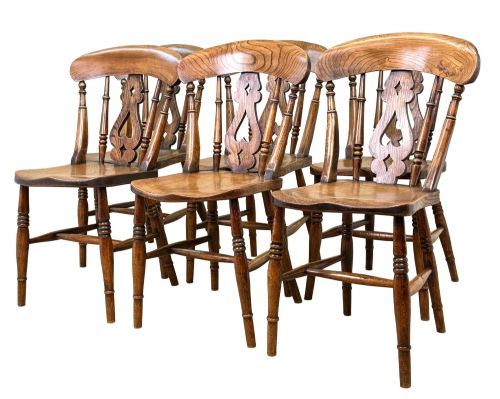
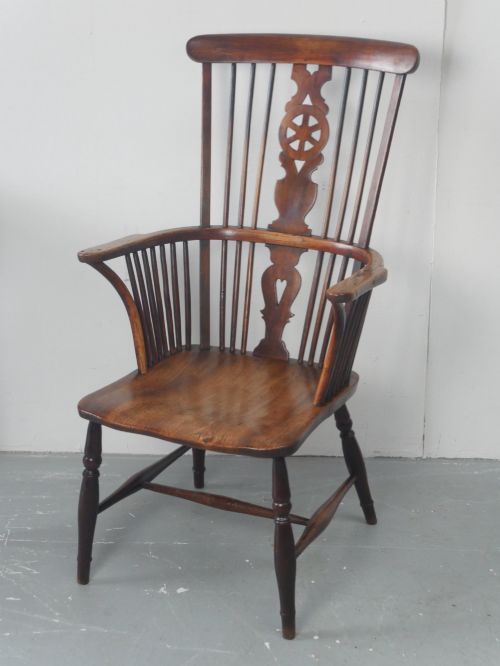
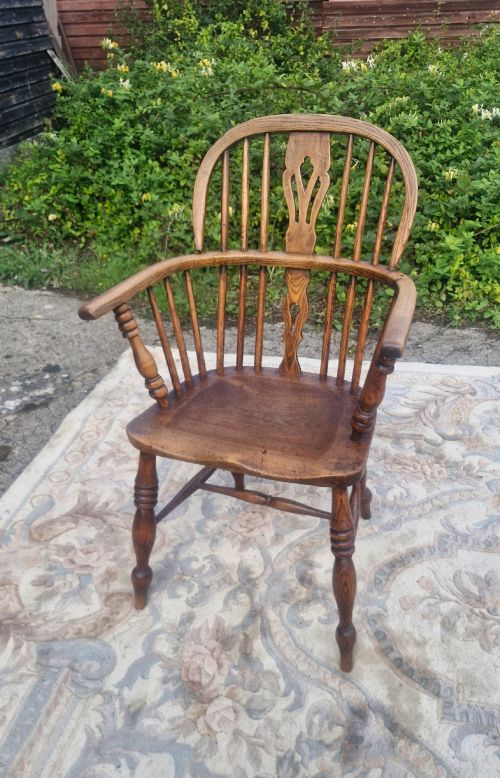

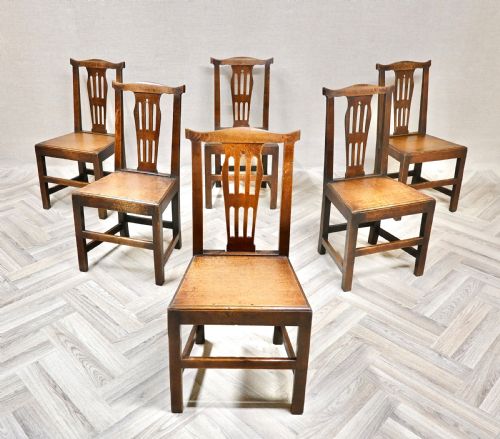
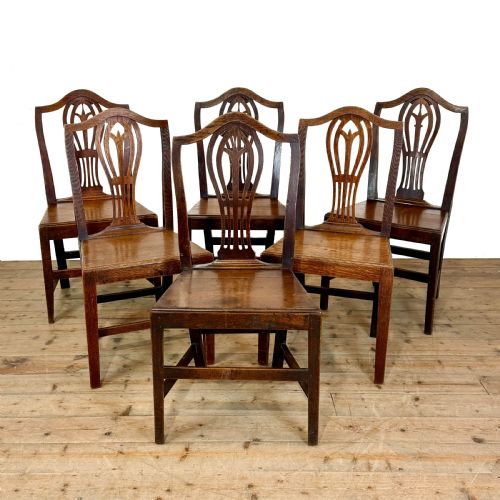
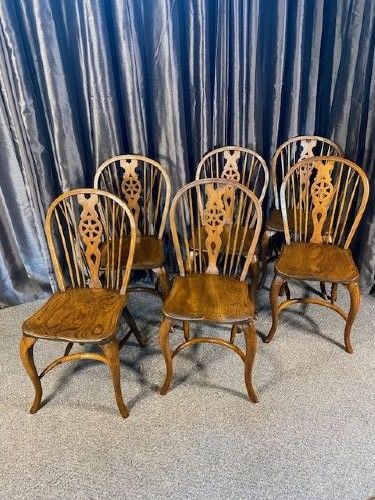

Pierced Splat Oak Chairs
Pierced splat oak chairs bring robust country character into a room, offering sturdy seating built with traditional regional craft.
Pierced Splat Oak Chairs
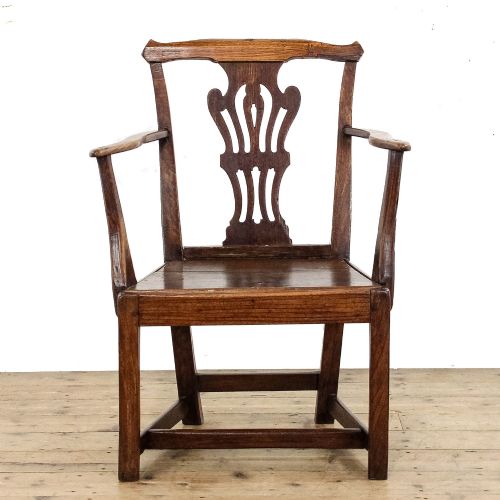
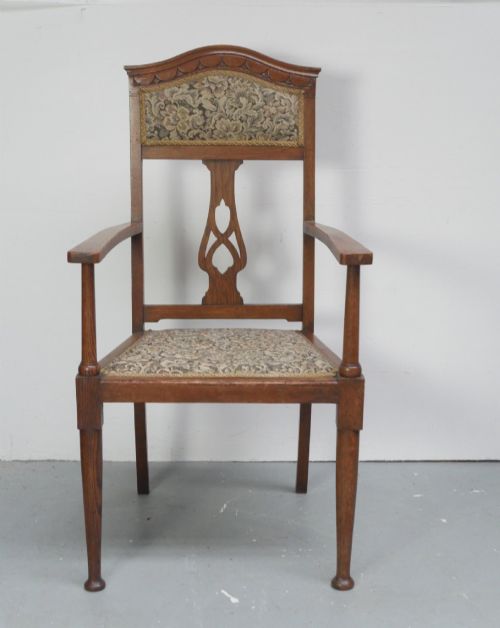
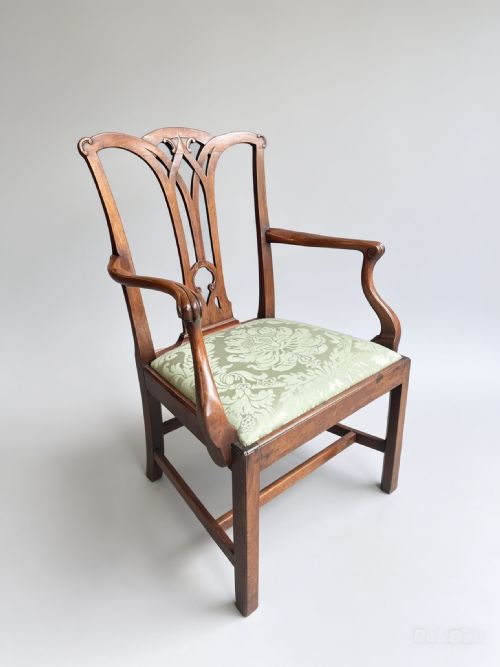
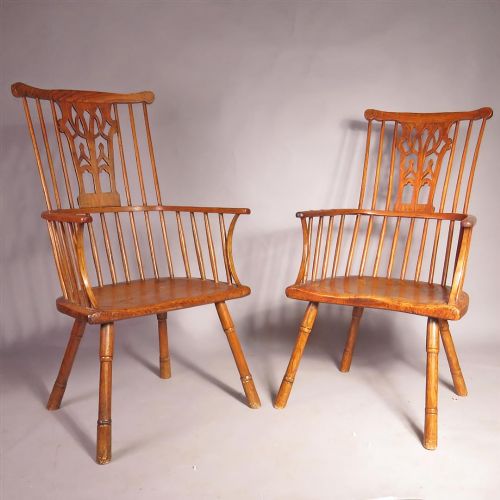
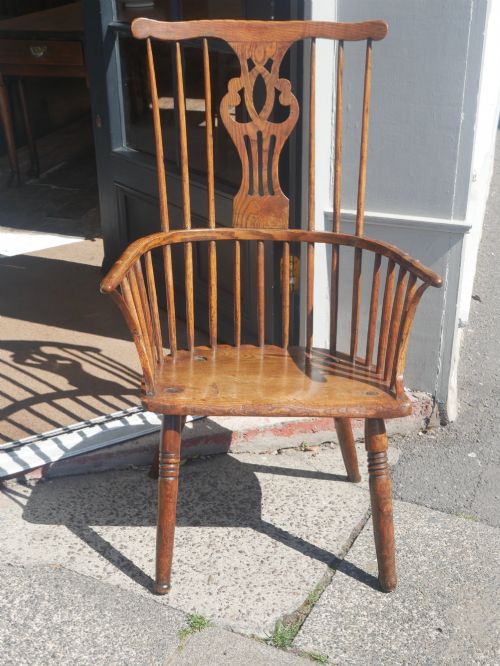
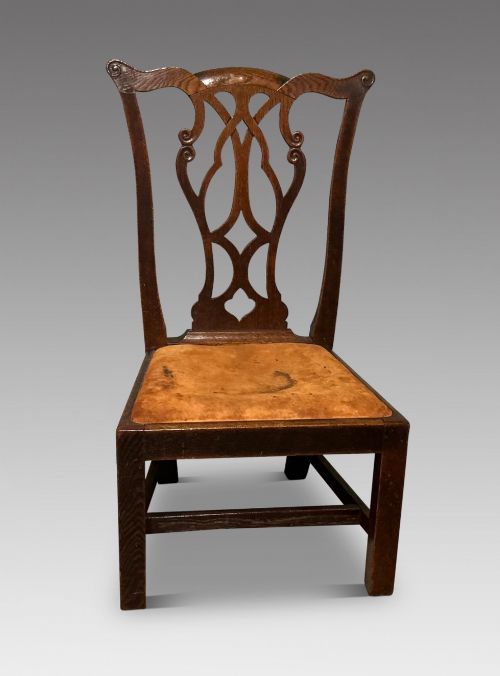
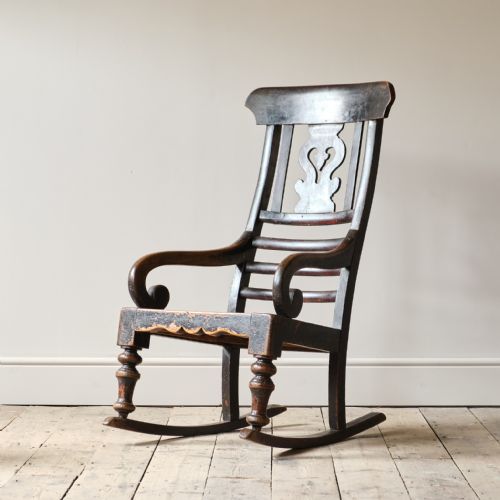
Pierced splat oak chairs span periods from the seventeenth century through the Edwardian era, taking forms such as kitchen dining chairs, side chairs, and armchairs. Buyers searching for pierced splat oak chairs encounter a mix of formal George III and Chippendale designs alongside vernacular country seating.
Makers utilised native hardwoods to supply domestic settings, resulting in durable seating that developed a timeworn patina over centuries of daily use.
How they were made
Carpenters constructed these seats using solid native timbers, pairing oak frames with seats formed from elm, ash, or beech. Regional workshops shaped spindles, legs, and armbows through turning and steam bending.
Splat patterns were sawn and pierced by hand to create central decorative motifs within the backrest. Joinery relied on mortise and tenon construction to secure the wooden components together without metal fasteners.
What varies in quality
Quality rests upon the crispness of the pierced splat carving and the harmony of the timber grain across matched sets. Chairs with well-proportioned arms and uncompromised structural integrity command greater attention.
The depth of the surface patina and the careful preservation of original wood surfaces distinguish superior examples from heavily restored pieces. Regional distinctiveness in the turning adds further distinction to provincial seating.
Wheelers of Arncroach
The Pierced Splat Oak Chairs Glossary
- Windsor
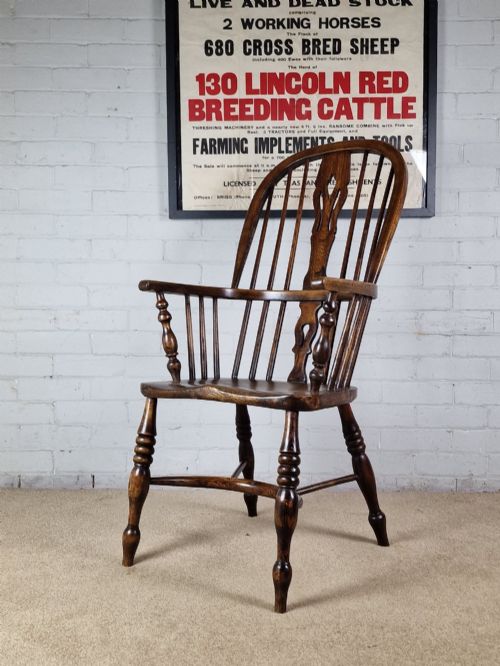
- A traditional chair style featuring a solid wooden seat into which the legs and back spindles are directly socketed. These designs often include bow backs and comb backs.
- Patina
- The surface sheen and colour developed by wood over years of handling and polish. It serves as a visual indicator of age.
- Corner chair
- A seating form designed to fit into room corners, typically featuring a curved backrest supported by multiple posts and a central leg at the front.
Pierced Splat Oak Chairs: Frequently Asked Questions
What defines a pierced splat?
A pierced splat is a shaped vertical wooden piece set in the middle of a chair back, featuring cut-out openings that form a decorative pattern.
Cabinetmakers shaped these designs to lighten the visual weight of the timber while adding ornamentation to dining and side chairs.
How do I identify regional Windsor chairs?
Regional attribution relies on specific turning details in the legs and spindles, along with the choice of secondary woods like elm or ash.
Thames Valley and Yorkshire examples often display distinct local characteristics in their armbows and saddle seats.
Are these chairs suitable for daily dining?
Most antique wooden chairs are built with robust mortise and tenon joinery that withstands regular use around a table.
Their solid timber construction provides stable support, though care should be taken to protect antique finishes from moisture.
What timber was used for the seats?
Chair makers frequently paired an oak frame with a solid elm, ash, or beech seat shaped for comfort.
Elm was chosen for its interlocking grain, which resisted splitting when the Windsor spindles and legs were wedged into place.