


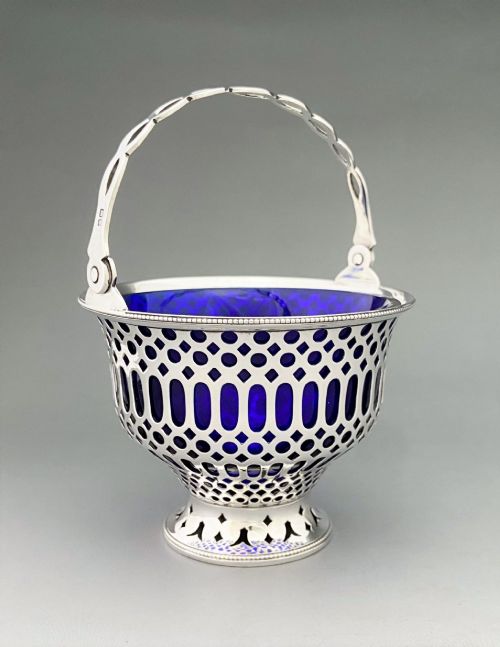


Pierced Silver Swing Basket
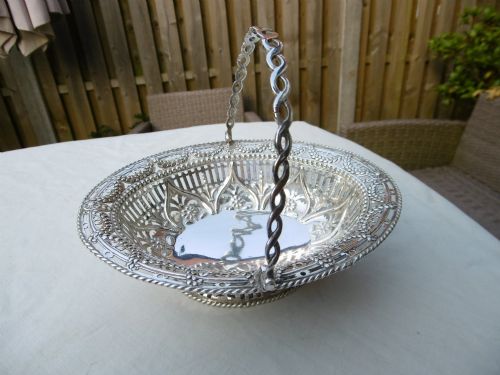
A pierced silver swing basket brings openwork metalwork and a moving handle together for serving sugar, fruit or bread.
Pierced Silver Swing Basket
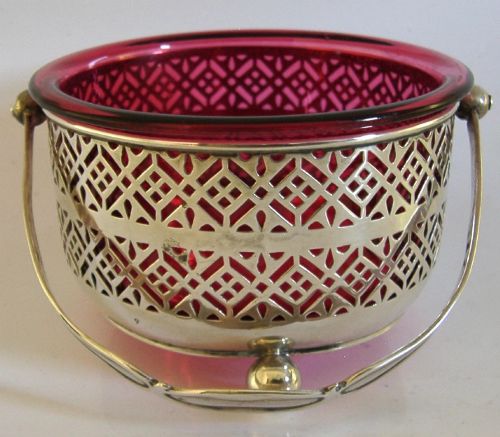
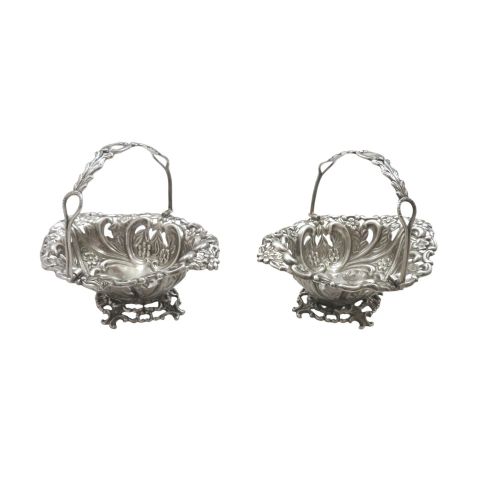
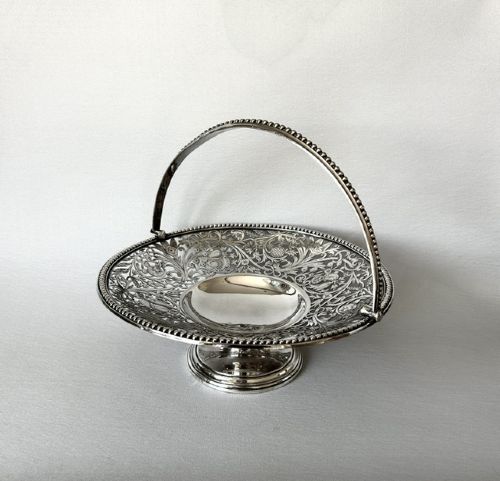
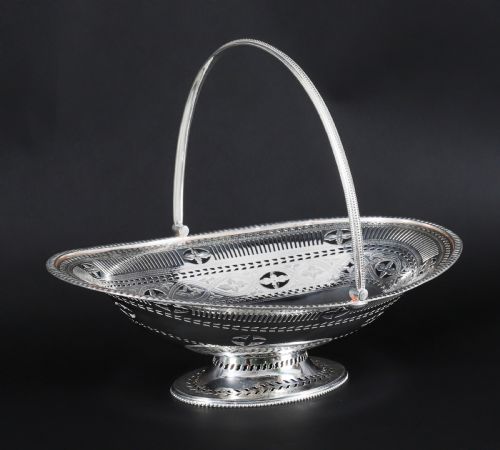
A pierced silver swing basket is an openwork metal vessel featuring a mobile arched handle, used for sugar, fruit, cake or bread. You encounter these primarily in Georgian, Victorian and Edwardian iterations.
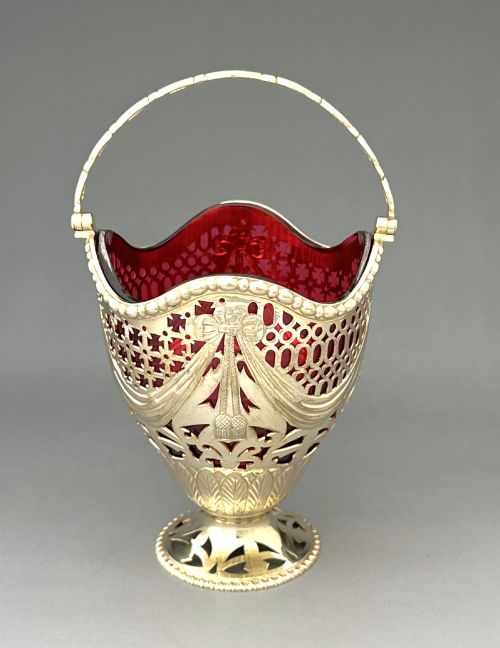
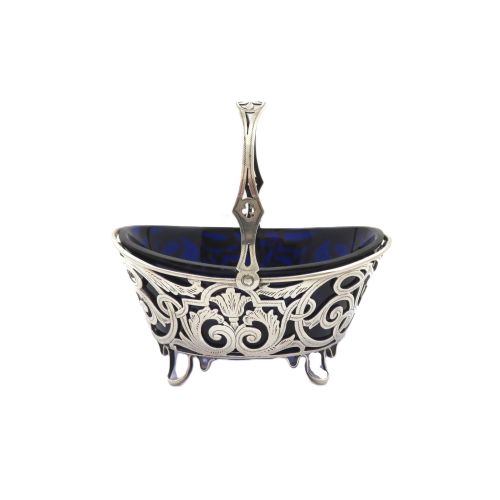
The forms range from small sugar baskets and cream pails with coloured glass liners to larger fruit, cake and bread baskets. Georgian examples share space with 19th-century silver-plated pieces and Edwardian solid silver fretwork.
Origins span English workshops from London, Birmingham and Sheffield, alongside Irish Georgian items.
Materials and technique
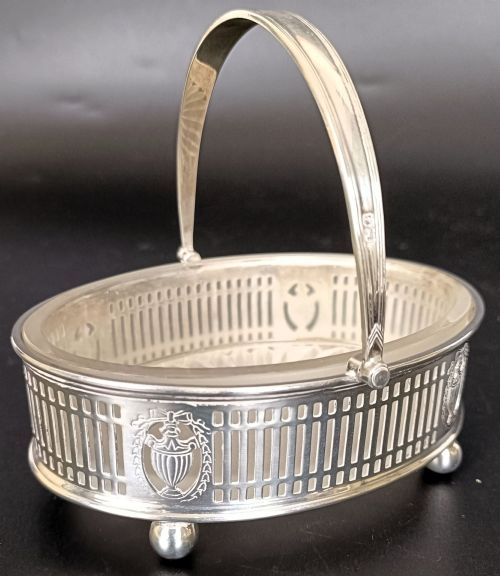
Makers construct these baskets in sterling silver, silver plate and silver-gilt, utilising intricate piercing, fretwork and lattice techniques to create openwork walls.
Many designs incorporate removable glass liners in cranberry, cobalt, ruby or rock crystal glass, contrasting with the polished metal exterior.
Craftsmanship and distinction
Quality rests on the precision of the piercing and fretwork, where crisp, intricate geometric or floral lattice separates finer pieces from simpler forms.
The substance of the handle mechanism and the balance of the swing handle contribute to the overall execution of the vessel.
Aldridge & Green·Samuel Herbert·William Bond·Hammond, Creake & Co·William Hutton & Sons·James Dixon & Sons Ltd·William Comyns·George Fox
The Pierced Silver Swing Basket Glossary
- Pierced silver
- Metalwork perforated with decorative patterns to create openwork designs. This technique reduces weight while maintaining structural integrity.
- Swing handle
- An articulated handle fixed to pivots on opposite rims of a vessel. It drops to the side when not in use.
- Silver-gilt
- Silver coated with a thin layer of gold on the surface. This finish adds warmth and protects the underlying metal.
- Fretwork
- Ornamental design created by cutting patterns through thin metal sheets. It produces intricate open fret designs on basket walls.
Pierced Silver Swing Basket: Frequently Asked Questions
What were pierced silver swing baskets used for?
These vessels served various functions at the table, holding sugar lumps, small fruits, bread, cakes or bonbons.
Versions with coloured glass liners held items that required a protective glass barrier inside the openwork metal frame.
How do I identify a Georgian basket?
Georgian pieces typically date from the eighteenth century and feature hand-pierced neoclassical ornamentation, Adam style details or simple punchwork.
Maker marks and hallmarks stamped on the silver help confirm the exact Georgian decade of production.
Are Edwardian baskets made of solid silver?
Edwardian examples appear in both solid sterling silver and silver plate, often displaying intricate lattice or fretwork.
Many Edwardian pieces from this period include cranberry, ruby or rock crystal glass liners.
How do I care for silver baskets with glass liners?
Remove the glass liner before cleaning the silver frame with appropriate metal polish to avoid staining the glass.
Wash the cranberry, cobalt or ruby glass liners separately in warm soapy water and dry them thoroughly.