


Pierced Silver Decanter Coaster
Pierced silver decanter coasters protect dining tables in style, and this selection ranges from George III silver to Edwardian plate.
Pierced Silver Decanter Coaster
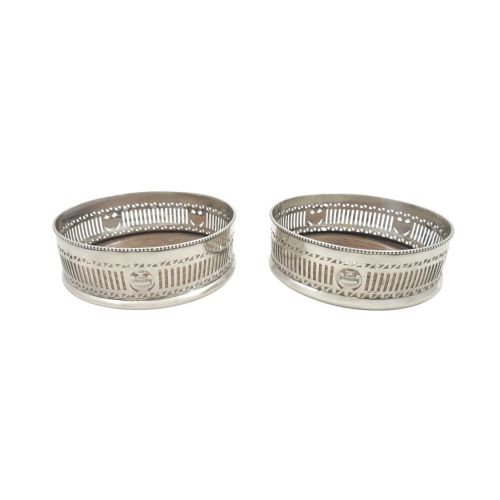
A pierced silver decanter coaster is a low, circular tray designed to hold a wine bottle or decanter as it circulates the dining table. These items protect polished wood surfaces from moisture rings while allowing the bottle to slide easily between guests.
The examples gathered here span from the Georgian period through the Victorian and Edwardian eras, encompassing both solid sterling silver and silver plate. The most common forms on this page are circular wine coasters, often encountered as matched pairs.
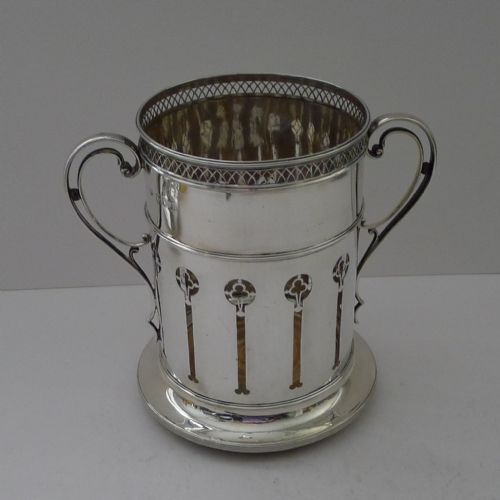
Design ranges from plain geometric piercing to elaborate Art Nouveau foliage and traditional George III decorative borders. Many incorporate turned wood bases fitted with a central silver button.
How they were made
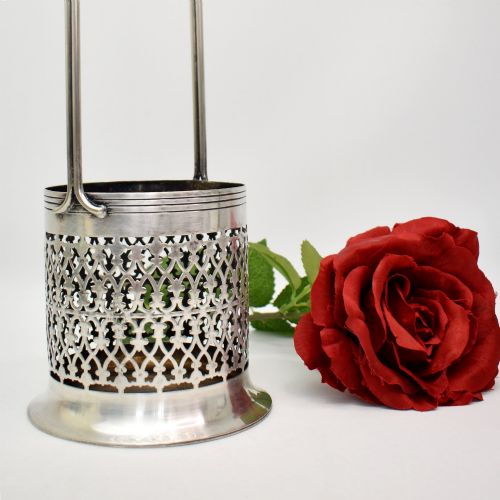
Makers utilised sterling silver or Old Sheffield plate, fusing thin layers of silver over copper bases in earlier pieces. Piercing was executed by hand or with early mechanical saws, removing metal to create intricate geometric, floral, or lattice patterns.
Turned wood bases, frequently fashioned from mahogany, were inserted into the metal galleries and secured underneath. Green felt or baize was typically applied to the underside to prevent scratching the mahogany dining table.
What varies in quality
Quality rests upon the crispness of the piercing work and the weight of the metal used in the gallery. Finer items retain sharp edges along the pierced apertures without distortion from polishing over the decades.
The choice of wood in the base and the condition of the original applied silver or Old Sheffield plate borders distinguish standard production from superior workshop output. Maker marks stamped into the rim or base also indicate the distinction of the origin.
Brook and Son·Asprey
The Pierced Silver Decanter Coaster Glossary
- Old Sheffield plate
- A composite material made by fusing a thin sheet of silver to a copper ingot before rolling it into sheets. This technique predates modern electroplating.
- Baize
- A coarse woollen fabric glued to the underside of the wooden base. It protects the dining table surface from friction.
- Decanter coaster
- A low tray fitted with a base, specifically sized for holding wine decanters. They are designed to slide along the table rather than lift.
Pierced Silver Decanter Coaster: Frequently Asked Questions
How do I clean a silver coaster?
Clean sterling silver items with a specialist silver polish and a soft cloth, taking care around any inserted wooden bases. Avoid getting moisture on the felt undersides.
Silver plated versions require gentler treatment to preserve the underlying metal layer beneath the plating.
Were these coasters used individually?
While individual examples exist, many were made and sold in matched pairs to serve port and sherry at the end of a meal. Larger collections occasionally included multiple coasters fitted for multi-bottle frames.
They circulated around the dining table in a set direction following the port service tradition.
How do I date an antique coaster?
Dating relies on assay office hallmarks stamped on sterling silver pieces, which indicate the exact year of manufacture. Stylistic clues such as George III gadroon borders or Art Nouveau floral piercing also narrow the production period.
Old Sheffield plate items usually lack date letters, requiring stylistic attribution to periods like the nineteenth century.
Can I use these for modern wine bottles?
Most standard wine and decanter bottles fit comfortably within the interior diameter of these nineteenth and early twentieth century items. Burgundy and Bordeaux bottles generally clear the pierced gallery walls without difficulty.
Extra-large modern bottles may exceed the historical dimensions intended for older vintage glassware.