

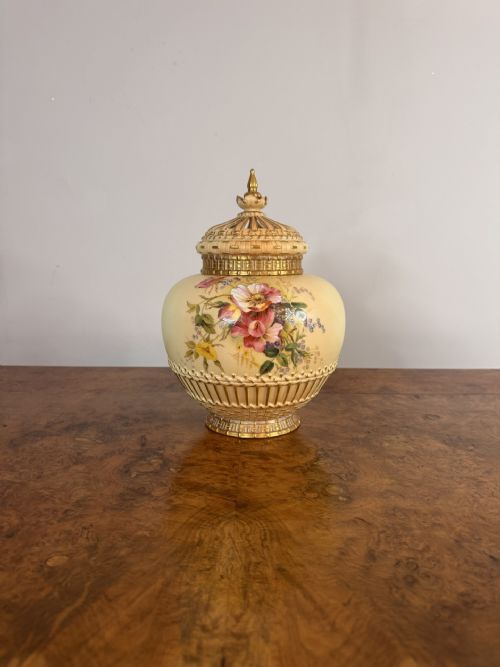


Pierced Porcelain Lid Urn
A pierced porcelain lid urn combines fine ceramic artistry with functional fragrance containment, offering collectors a striking centrepiece for traditional interiors.
Pierced Porcelain Lid Urn
When you search for a pierced porcelain lid urn, you encounter vessels designed to hold pot pourri and release scent through perforated covers. The forms range from small jars to large pedestal vases spanning the eighteenth century to the mid-twentieth century.
The selections available here include English works in ironstone, bone china, and porcelain alongside continental examples. Traditional English and Victorian styles dominate the offerings, often taking the form of decorative pots, jars, and lidded vases.
How they were made
Potters shaped these vessels from ceramic, porcelain, bone china, and ironstone before applying intricate perforations to the lids for scent diffusion. Artisans then decorated the surfaces using enamel painting, gilding, and gold leaf highlights.
Factories utilised specialised moulding and turning techniques to create pedestals, crown covers, and bulbous bodies. Skilled hands finished each piece with hand-painted motifs, notably featuring botanical and fruit subjects.
Pierced Porcelain Lid Urn Retail Price Guide 2026
Typical asking prices for pierced porcelain lid urn among the pieces listed under this phrase on Sellingantiques today, from the lower quarter to the upper quarter. They describe what is for sale here now, not the wider market.
Some nineteenth-century makers hid tiny painted beetles beneath the pierced lids just to surprise anyone refilling the pot pourri.
What varies in quality
The refinement of the pierced cover and the crispness of the ceramic moulding set superior examples apart from simpler production. Hand-painted detail, particularly on botanical or fruit scenes, demonstrates the skill of the artist.
The application of gold leaf and gilding influences visual depth, with richer surface treatments elevating the presence of the vessel. Consistency in the glaze and the overall balance of the pedestal or jar shape complete the standard of execution.
Royal Worcester·Masons Ironstone·Sitzendorf Porcelain·Derby·Herend
The Pierced Porcelain Lid Urn Glossary
- Pot pourri
- A mixture of dried petals and spices placed inside a lidded vessel to fragrance a room. The pierced cover allows the scent to disperse gently into the surrounding space.
- Ironstone
- A heavy, durable ceramic developed in the nineteenth century as a robust alternative to porcelain. It takes glazes and enamels effectively while offering structural strength.
- Blush Ivory
- A specialised soft cream-coloured porcelain ground developed by Victorian potteries, often accented with gilt highlights. It provides a warm background for floral painting.
- Gilding
- The application of gold leaf or gold powder to the ceramic surface for decorative emphasis. This technique highlights rims, handles, and moulded details.
- Crown cover
- A raised, domed lid featuring architectural or pierced detailing reminiscent of a crown. It serves as the primary functional element for scent release.
Pierced Porcelain Lid Urn: Frequently Asked Questions
How were these lidded urns used?
Historically, these vessels sat in principal rooms to freshen the air using dried flower petals and spices placed within the body. The pierced lids allowed aromatic scents to circulate freely.
Over time, their role shifted primarily toward decorative display, appreciated for their painted surfaces and sculptural presence on mantelpieces and pedestals.
How do I identify the period of an urn?
Dating relies on examining the ceramic body, glaze characteristics, and factory marks stamped or painted on the base. Stylistic cues such as Victorian floral painting or Edwardian blush ivory finishes provide further chronological context.
Manufacturing materials also shift across eras, moving from eighteenth-century soft-paste bodies to nineteenth-century ironstone and twentieth-century bone china.
How do I care for antique porcelain urns?
Preserving these pieces requires gentle dusting with a soft, dry cloth to protect delicate gilt highlights and painted enamel surfaces. Avoiding harsh cleaning agents prevents damage to the historic glaze.
Keeping them away from direct sunlight and fluctuating temperatures ensures the ceramic and any internal pot pourri remains stable.