




Royal Worcester Painted Jar
A royal worcester painted jar brings together porcelain and hand-painted artistry across Victorian and twentieth-century periods.
Royal Worcester Painted Jar
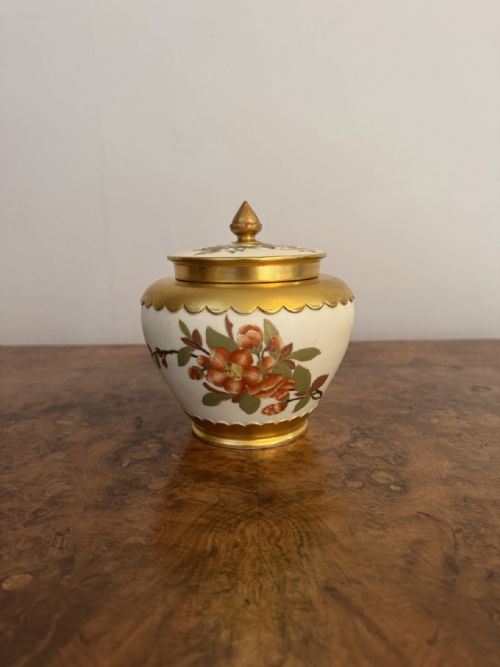
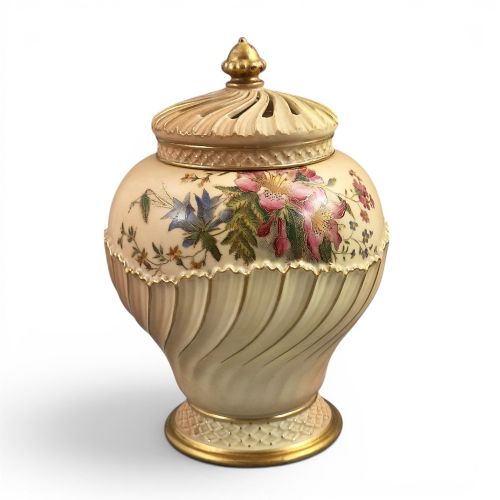
A royal worcester painted jar typically takes the form of a lidded pot pourri pot, ginger jar, or rose jar, often accompanied by a crown cover. These vessels originate from various periods spanning the late Victorian era through the mid-twentieth century.
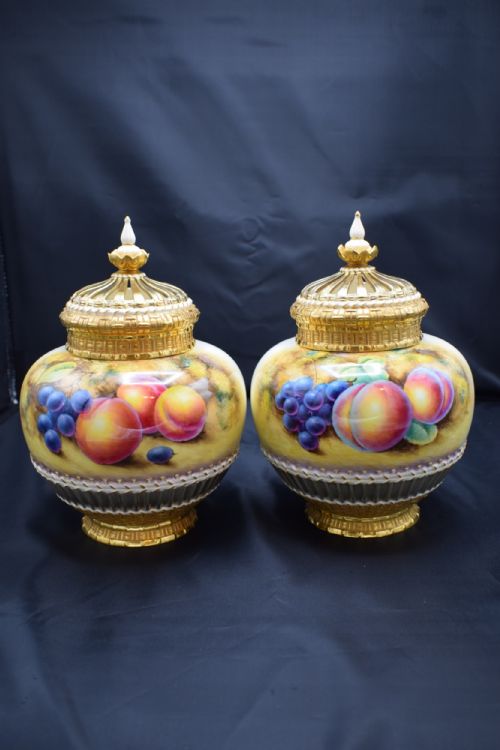
Buyers frequently encounter blush ivory ground pieces alongside later painted fruit studies and bird motifs. The selection encompasses diverse shapes, from ovoid jars to pedestal vases and urns.
Traditional English porcelain production defines these items, linking nineteenth-century decorative styles with mid-century artistry.
Materials and Techniques
Makers utilised fine bone china and porcelain as the primary base materials for shaping these jars and vases. Artisans applied complex glazing techniques, notably creating the characteristic blush ivory ground seen on many pieces.
Decoration relied on skilled hand-painting, frequently depicting fruit, birds, and botanical subjects. Gilding, gold leaf, and enamel details were added to accentuate the porcelain forms.
Several jars survived decades of household dusting while keeping their delicate crown covers completely intact.
Assessing Quality
Quality rests significantly upon the skill and reputation of the artist whose signature appears on the porcelain. Pieces painted by notable hands command attention for their detailed brushwork and compositional depth.
The complexity of the form and the richness of the gilding also distinguish finer examples from standard production. Well-preserved blush ivory grounds and intact crown covers complete the higher tier of these wares.
John Smith·Freeman·Jas Stinton·James Stinton·C Baldwyn·Hadley Ware·P Love·Kitty Blake·Shuck·Ayrton
The Royal Worcester Painted Jar Glossary
- Blush ivory
- A soft, matte cream-coloured porcelain ground introduced by the factory in the late nineteenth century. It often serves as a backdrop for floral or bird decoration.
- Pot pourri
- A perforated vessel designed to hold dried scented plant material. These jars frequently include inner lids and decorative crown covers.
- Ginger jar
- A ceramic container with a wide body and rounded shoulders originally used for spices. In this context, it functions as a lidded decorative vase.
- Gilding
- The application of gold leaf or gold paint to ceramic surfaces. It highlights handles, rims, and painted panels.
- Bone china
- A type of porcelain composed of bone ash, feldspathic material, and kaolin. It provides a strong, translucent body for detailed painting.
Royal Worcester Painted Jar: Frequently Asked Questions
What were royal worcester painted jars used for?
These jars served primarily as decorative objects within Victorian and Edwardian drawing rooms, often holding scented potpourri mixtures inside their pierced covers.
Over time, their function shifted toward pure display, prized for their artistic painted panels rather than domestic utility.
How do I identify a blush ivory piece?
Blush ivory pieces feature a distinctive, soft cream-coloured matte glaze that lacks the stark whiteness of standard porcelain. This finish was widely produced from the late Victorian period into the early twentieth century.
Examinations often reveal delicate floral or botanical motifs painted directly onto this warm ceramic ground.
Are all jars signed by the artist?
Many of the finer painted fruit and bird jars carry the signature or initials of the factory artist on the body. Prominent painters signed their work to denote individual craftsmanship.
Unsigned examples also exist from various periods, often focusing on standard floral decoration or blush ivory effects without specific artist attribution.
How should I display a lidded jar?
These vessels require stable placement on a flat surface away from direct traffic, particularly pieces that include matching covers or pedestals. Natural light helps reveal the detail in the hand-painted fruit and gilt accents.
Keeping the lid paired with the base maintains the original silhouette intended by the maker.