
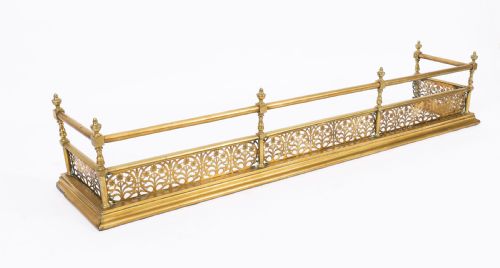

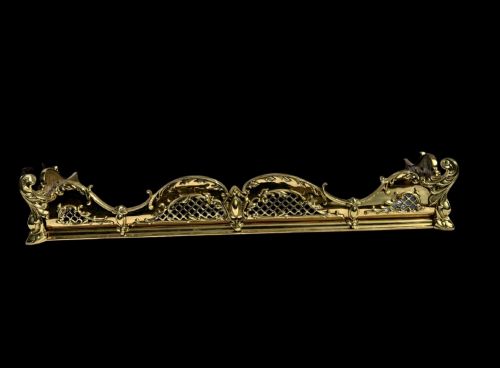


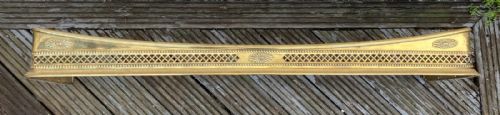


Pierced Brass Fireplace Surround
A pierced brass fireplace surround brings warmth and period character to a hearth, offering both structural guard and fine metalwork detail.
Pierced Brass Fireplace Surround
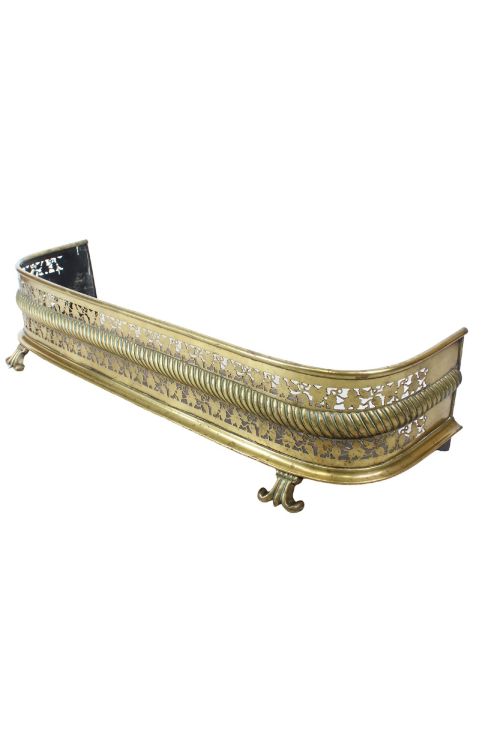
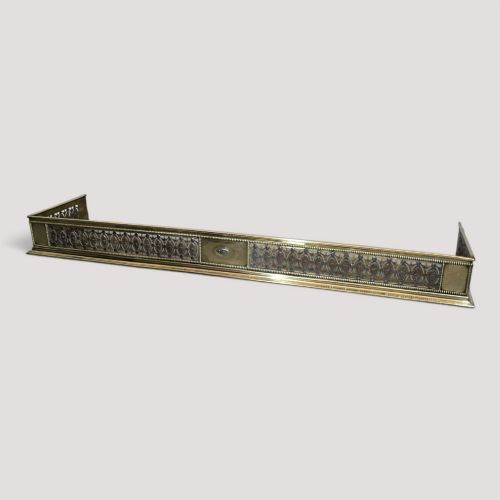
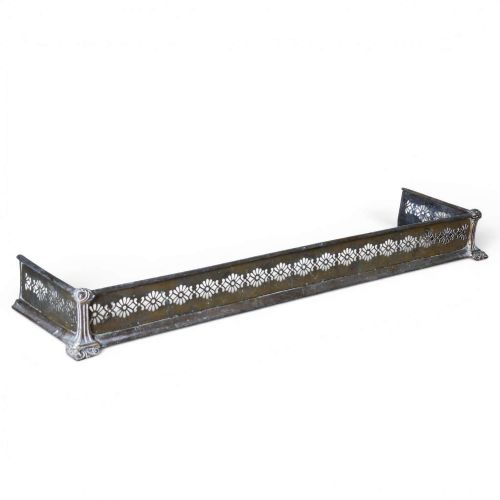
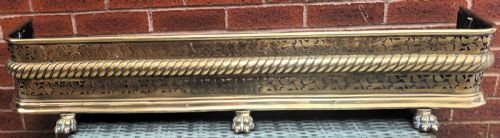
A pierced brass fireplace surround, also known as a fender or kerb, frames the hearth while containing embers and protecting the floor. These pieces date across the Georgian, Regency, and Victorian periods, reflecting shifting interior tastes from classical restraint to ornate industrial and botanical motifs.
The most common examples on this page hail from the nineteenth century and feature pierced brass panels. Makers combined this brasswork with iron, steel, or polished steel to build sturdy structures that handled daily use in period homes.
Forms range from small Victorian designs to large Georgian models paired with cut steel. Alongside standalone fenders, occasional listings include related fireplace accessories and tools to complete the hearth setup.
Materials and construction methods
Workshops utilised sheet brass for the main decorative bodies, piercing the metal by hand or machine to create repeating geometric, floral, or abstract patterns. This pierced work allowed warmth to radiate from the fire while hiding soot accumulation.
Foundations and internal frames typically relied on iron or steel for structural rigidity. Polished steel and cut steel components added contrasting metallic sheen against the warmer tone of the brass.
Listings span the Georgian, Regency, and Victorian periods, utilising brass, iron, steel, and cut steel.
Distinctions in craftsmanship and finish
Quality shows in the crispness of the piercing and the gauge of the brass used for the body. Thicker metal resists denting and holds sharper decorative outlines, whereas thinner plates lose definition over decades of polishing.
The integrity of the iron or steel framing underneath dictates the structural stability of the piece. Integrated components and well-finished joints separate standard utility guards from finer decorative examples.
The Pierced Brass Fireplace Surround Glossary
- Pierced brass
- Sheet metal perforated with decorative apertures. This technique lightens the visual weight of the fender while allowing heat circulation.
- Fender
- A low metal guard placed around the hearth. It keeps burning fuel contained and provides a physical barrier.
- Kerb
- An alternative term for a fender or surround. It refers to the low border framing the fireplace opening.
- Cut steel
- Faceted steel studs riveted to a metal backing to catch the firelight. This material appears on smarter Regency and Georgian examples.
- Polished steel
- Iron alloy finished to a bright reflective surface. It provides a stark metallic contrast to yellow brass.
Pierced Brass Fireplace Surround: Frequently Asked Questions
How do I measure for a fender?
Measure the width and depth of your hearth opening to ensure the surround fits comfortably around the perimeter without blocking foot traffic.
Take into account any protruding hearth stones or hearth rugs that sit within the footprint of the metal guard.
Can I use these with an open fire?
These surrounds were designed specifically to sit around active hearths, serving as a physical barrier against rolling embers and sparks.
Ensure the internal dimensions match your grate size so the metal is not subjected to direct, excessive flame contact.
How do I clean polished brass?
Use a soft cloth and a dedicated metal polish formulated for brass to remove tarnish gently without wearing away the underlying detail.
Avoid abrasive scouring pads that leave scratches on the pierced panels and dull the historical patina.
How do I tell Victorian from Georgian pieces?
Georgian and Regency examples tend to incorporate polished steel and cut steel details with restrained classical lines. Victorian pieces often embrace heavier cast elements, industrial looks, or intricate flower-pierced patterns.
Examine the construction joints and fastener types, as machine-threaded screws point towards nineteenth-century production.