



Pewter Platter Dish
A pewter platter dish brings centuries of tactile weight to a table, offering deep metal surfaces shaped by early English metalworkers.
Pewter Platter Dish
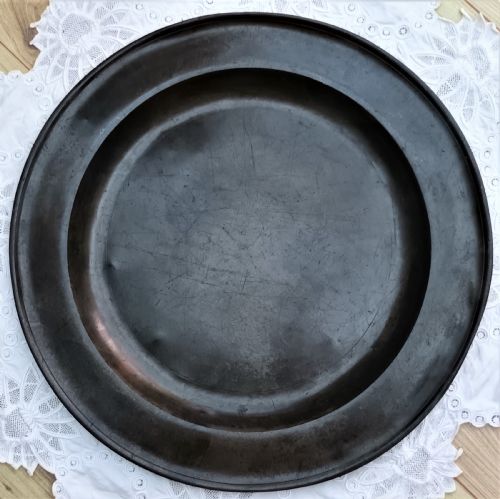
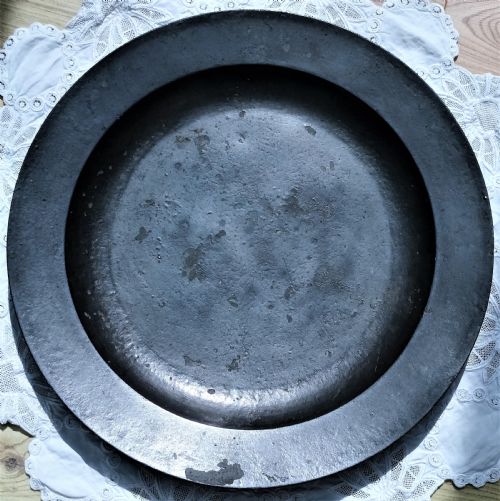
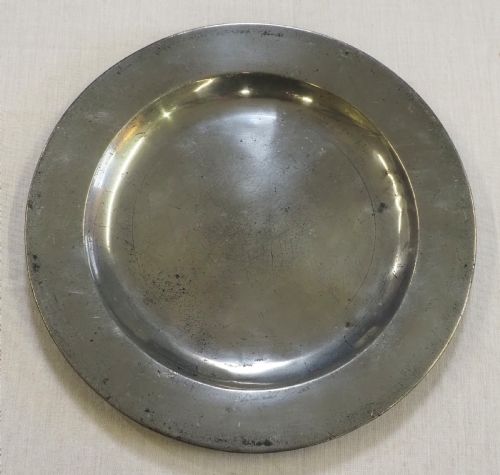
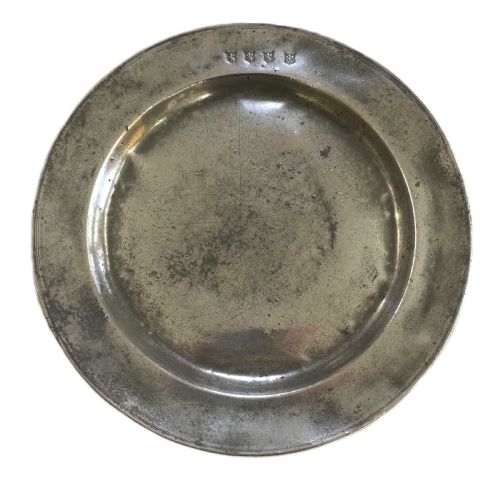
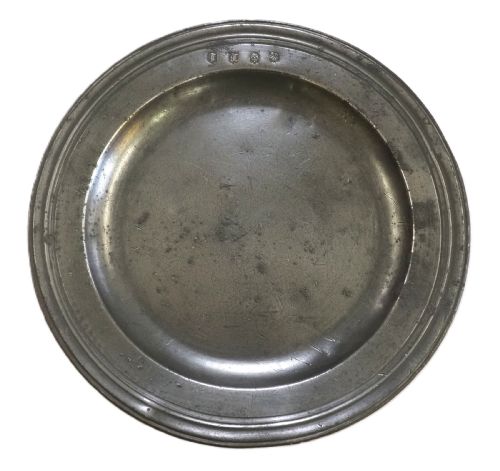
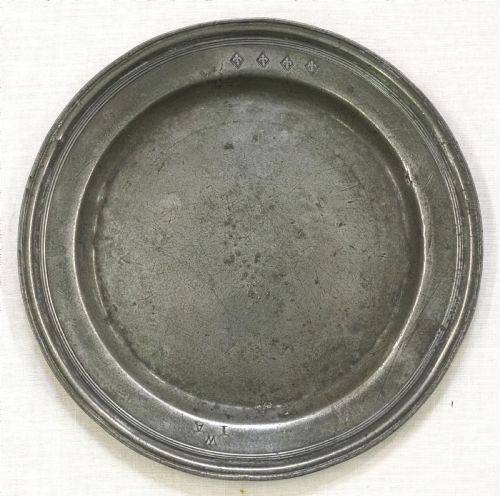
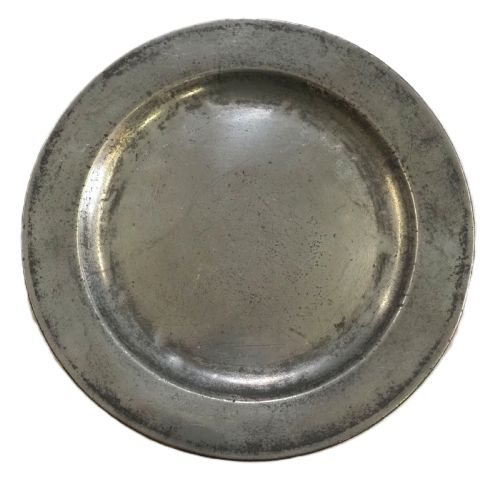
A pewter platter dish appears across the seventeenth, eighteenth, and nineteenth centuries, taking the form of broad rim chargers, deep dishes, and domestic plates. Buyers encounter substantial Charles II and Georgian examples alongside later Arts and Crafts wall plates.
The heavier pieces span centuries of English domestic dining and display, moving from wide, flat-rimmed seventeenth-century chargers to simpler eighteenth-century shapes. Plain, triple reeded, and multiple reeded edges define the stylistic variations met most often on this page.
Materials and technique
Pewter serves as the sole material for these objects, worked into heavy plates and chargers through casting and hammering. Artisans shaped the metal alloy into durable vessels, occasionally beating the surfaces all over to harden the material and create subtle light reflections.
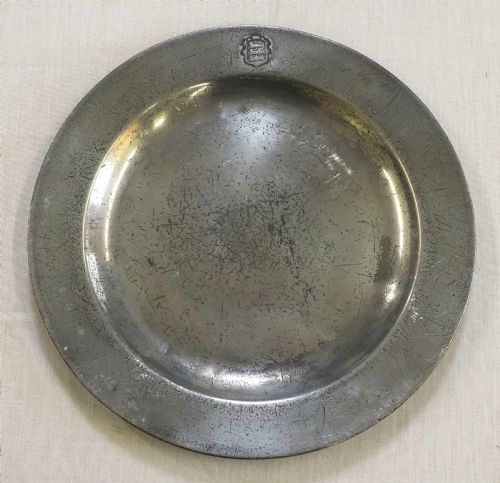
Makers finished rims with plain profiles, incised lines, or multiple reedings to give structure to the soft metal. Coats of arms and family crests were sometimes engraved directly into the broad surfaces for prominent households.
Listings span from the seventeenth century through to the late nineteenth century, executed entirely in pewter.
Gradations in quality
Quality depends upon the crispness of the maker touch marks and the structural integrity of the heavy alloy over centuries of use. Substantial broad rims with deep hammer marks or well-preserved armorial engravings represent the finer end of domestic metalwork.
Weight and balance distinguish superior chargers, as thicker gauge metal resisted warping during daily service. The precision of reeded rims and the clarity of maker stamps separate standard plates from workshop masterworks.
John Duncomb·Samuel Smith·T & H Compton·Richard King·Wood & Michell·John Trapp II·John Tubb·Robert Moulins II·Humphrey Evans II·Thomas Alderson·Thomas Templeman·Lawrence Dyer·Thomas Haward·Thomas Powell·Edward Leapidge I·Nehemiah Cloudesley·John Barlow·S Duncomb
The Pewter Platter Dish Glossary
- Charger
- A very large plate or dish used historically for serving meat at grand meals or as a base plate for smaller courses. These large vessels frequently display maker touch marks on the underside or rim.
- Reeded
- A rim decorated with parallel raised bands or mouldings circling the plate. Triple and multiple reeded variants add tactile depth to late seventeenth-century examples.
- Broad rim
- A wide, flat margin surrounding the central well of a charger. This expansive surface often bears engraved family crests or coats of arms.
- Touch mark
- A stamped symbol or maker signature pressed into the metal by the workshop. These marks allow researchers to identify individual pewterers and their working dates.
Pewter Platter Dish: Frequently Asked Questions
Can I use these plates for dining?
Older pewter contains varying compositions of metals that are generally unsuited for modern acidic foods. Displaying them on walls or using them dry for decorative arrangements protects the historic surface.
If utilised for food, restrict service to dry items like bread or fruit for brief periods. Most collectors prefer to appreciate them as decorative objects or table centerpieces.
What is a broad rim charger?
A broad rim charger is an unusually large plate featuring an expansive flat margin around a shallow central well. These substantial pieces dominated seventeenth-century dining tables before transitioning to sideboards for display.
The wide border frequently served as a canvas for engraved family crests and initials. Their heavy gauge metal makes them some of the most enduring survivals from the period.
How do I date a pewter plate?
Dating relies on stylistic clues such as rim width, reeding patterns, and the specific form of the maker touch mark stamped into the metal. Seventeenth-century pieces typically feature wider flat rims, while eighteenth-century examples trend toward simpler plain edges.
Comparing touch marks against historical pewterer records narrows the production window to specific decades. Hammer marks and engraving styles further help place an object within its era.