



Pewter Flagon Lid
These pewter flagon lid examples are historic metalware covers that complete antique vessels, prized by collectors for their authentic touch.
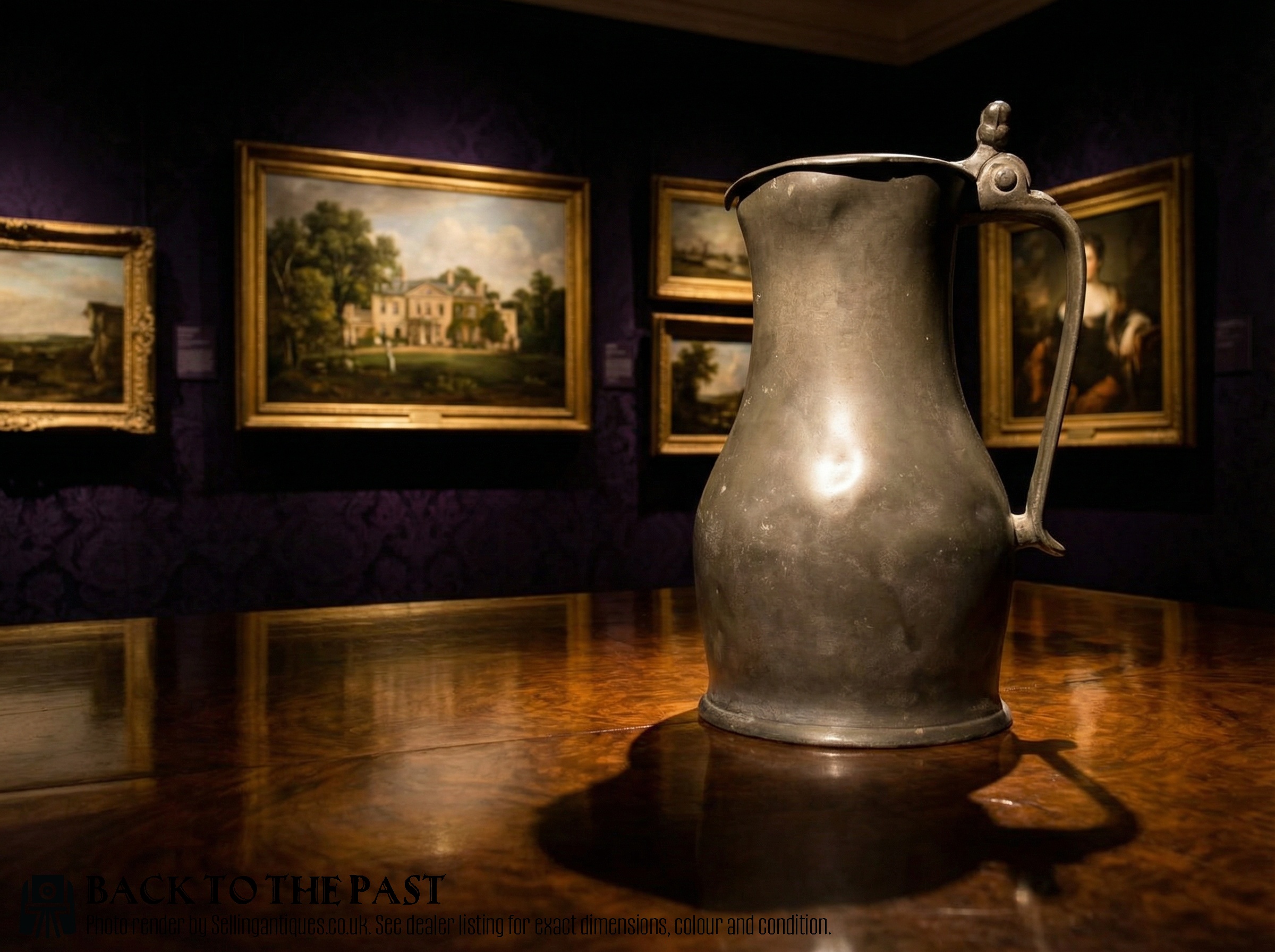
Pewter Flagon Lid
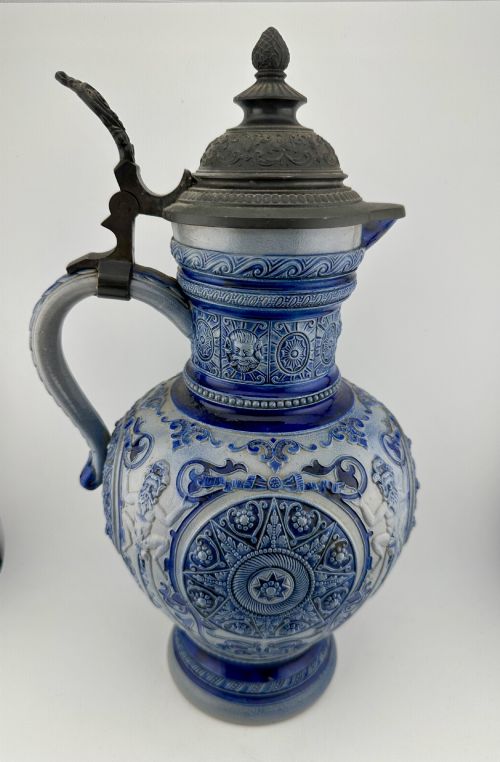
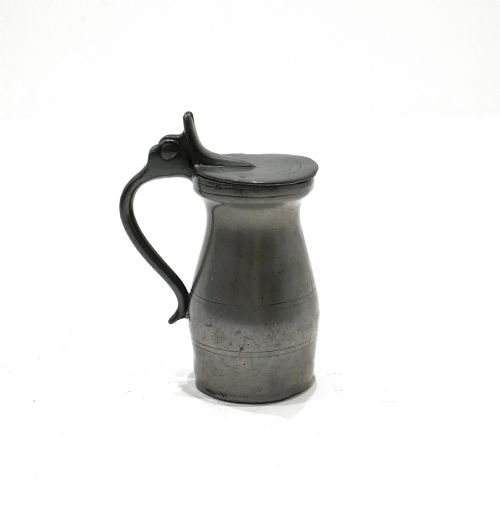
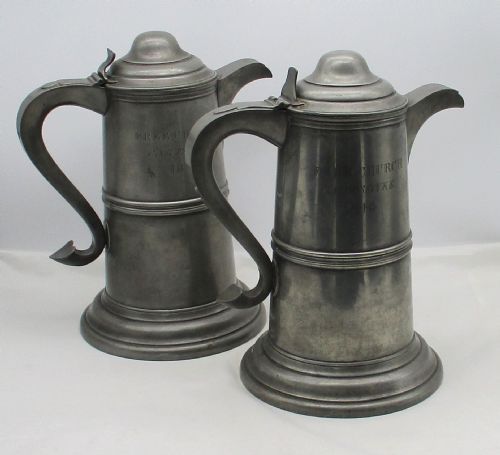
When you search for a pewter flagon lid, you look at components and complete vessels from the eighteenth and nineteenth centuries, spanning Georgian, Victorian, and Dutch Baroque styles. The version most likely to meet you on this page is an integral part of an antique English, Scottish, Irish, or Channel Islands flagon, measure, or tankard.
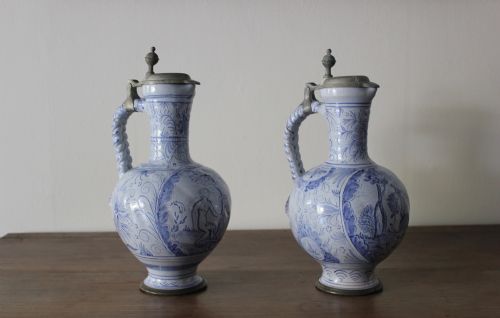
These pieces include flat lidded spirit measures, spire flagons, and crested tappit hens alongside related earthenwares like Delft blue glazed vessels. Origins stretch across London, Glasgow, Dublin, Jersey, Guernsey, and continental workshops in Germany and Flanders.
Buyers encounter everything from small half gill measures up to large quart flagons and giant German beer vessels. Each survivor demonstrates the distinct regional forms and capacities of its original domestic, church, or tavern setting.
How they were made
The objects are primarily formed from pewter, an alloy of tin traditionally combined with lead or copper, shaped through casting and hammering. Makers utilised moulds to produce the heavy bodies and hinged lids characteristic of these drinking vessels.
Pewter Flagon Lid Retail Price Guide 2026
Typical asking prices for pewter flagon lid among the pieces listed under this phrase on Sellingantiques today, from the lower quarter to the upper quarter. They describe what is for sale here now, not the wider market.
Listings span the eighteenth and nineteenth centuries, incorporating pewter, earthenware, and tin glaze across Georgian, Victorian, and Art Nouveau styles.
What varies in quality
Quality rests in the crispness of the original casting and the survival of makers' marks or ownership touchmarks stamped into the metal. Finer examples retain their original hinges and thumbpieces without modern replacement parts.
The weight of the metal and the balance of the lid upon the thumbpiece distinguish standard utility pieces from exceptional commissions made for churches or wealthy households.
John Heaney·Robert Iles·John De St Croix·Nicolas Le Cheminant·Carter
The Pewter Flagon Lid Glossary
- Flagon
- A large vessel used for holding liquids, often featuring a hinged lid and a handle for pouring. These pieces frequently served ecclesiastical or tavern purposes.
- Tappit Hen
- A traditional Scottish type of pewter measure characterised by a bulging body and a lid topped with a small knob. This form held specific capacity measurements such as the Scots pint.
- Spirit Measure
- A small metal container utilised for dispensing alcohol with legal accuracy. Examples include half gill and half pint sizes bearing period verification marks.
- Spire Flagon
- A tall vessel featuring a steeply tapered lid rising to a point. This particular silhouette is closely associated with eighteenth century English manufacture.
- Touchmark
- A small stamp impressed into pewter by the maker or guild to indicate origin and standard. These marks provide crucial evidence for dating and attribution.
Pewter Flagon Lid: Frequently Asked Questions
How do I date an old pewter flagon?
Dating relies on comparing the style of the lid, handle, and body shape with documented examples from specific regions and decades. Maker marks and touchmarks stamped into the metal also help narrow down the production period.
Changes in capacity standards and touchmark registries provide further clues for placing a piece within the eighteenth or nineteenth century.
Were these lids made separately from the vessels?
Makers typically cast the lid, body, and handle as distinct components before assembling them with cast pewter hinges and pins. This modular construction allowed craftsmen to shape each part accurately before final fitting.
The hinge mechanism required careful alignment so the lid would sit flush and lift smoothly against the thumbpiece.
What are Channel Islands flagons?
Channel Islands flagons originate from Guernsey and Jersey, possessing distinct regional forms that differ from mainland English styles. Local pewterers produced these vessels for domestic and official use.
Nicolas Le Cheminant and John De St Croix are among the documented makers working in these island communities.
How should I clean antique pewter?
Antique pewter requires minimal intervention to preserve the dark grey patina accumulated over centuries of age. Washing with warm water and mild soap removes surface dirt without harming the metal.
Harsh metal polishes strip away the historic surface and reduce the value, so collectors generally prefer to leave the natural oxidation untouched.