






Persian Wool Tapestry
These persian wool tapestry pieces bring rich tribal artistry and woven history straight to your floor or wall.
Persian Wool Tapestry
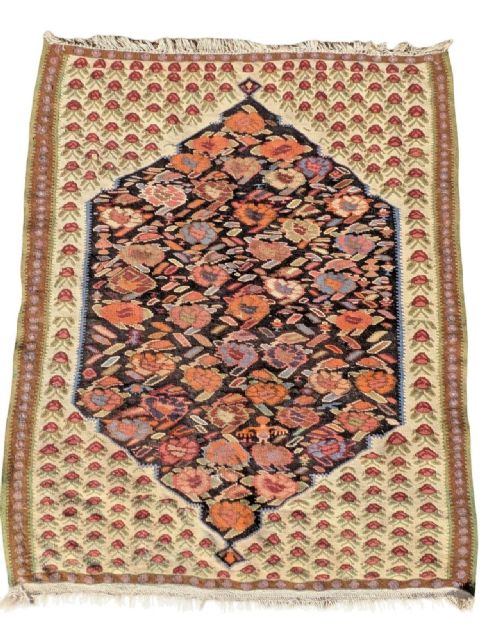
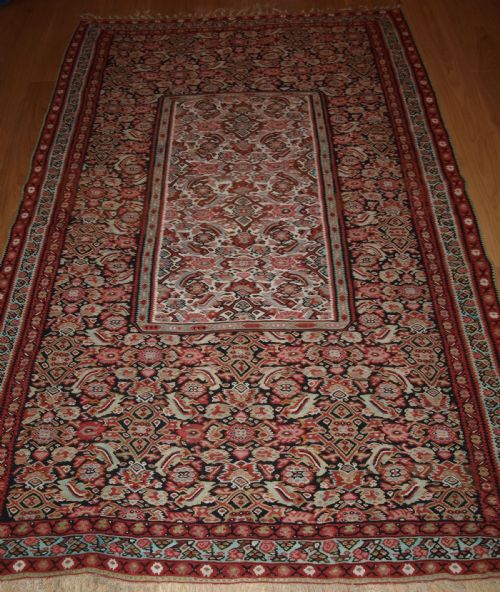
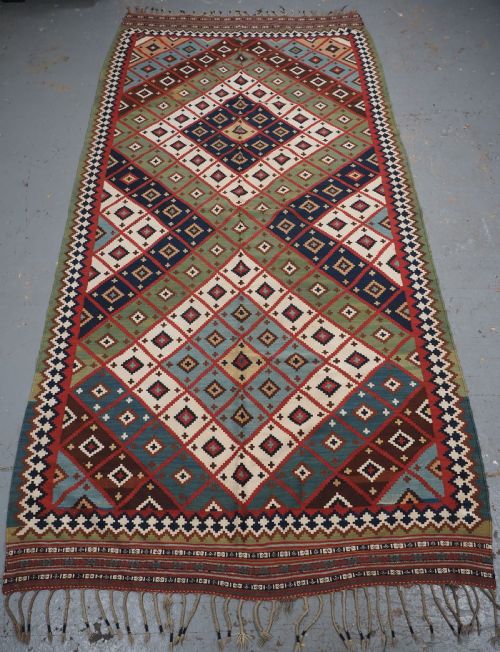
A persian wool tapestry search brings together flatweaves, pile rugs, and embroidered textiles originating from nomadic and village workshops across nineteenth and early twentieth century Persia. Buyers encounter tribal kilims, animal transport bags, floor coverings, and pictorial wall pieces created by regional groups such as the Qashqai, Shahsavan, and Senneh.
The selection on this page centres heavily on traditional flatweave kilims, saddlebags, and pictorial wool rugs dated from the mid nineteenth century up to 1930. These items reflect the domestic and nomadic lives of their makers, utilising locally sourced materials and distinct regional geometries.
Nomadic weaving traditions dictate the smaller formats and utility pieces, including cradle covers and bread sofres, alongside larger decorative room carpets. Every piece carries the specific aesthetic markers of its producing tribe, distinguishing southern nomadic output from northern workshop traditions.
Materials and construction
Weavers relied principally on handspun wool for the primary structure and pile, frequently combining cotton foundations and supplementary silk highlights to add structural stability and visual contrast. Natural dyes provided the foundational palette of soft earthy tones and rich saturated hues seen across the inventory.
Specialised techniques defined the regional output, ranging from slit-tapery kilim weaving and soumak wrapping to intricate silk and felt applique work. Artisans constructed bags, horse covers, and domestic textiles to withstand heavy daily use through dense knotting and tight flatweaving structures.
Persian Wool Tapestry Retail Price Guide 2026
Typical asking prices for persian wool tapestry among the pieces listed under this phrase on Sellingantiques today, from the lower quarter to the upper quarter. They describe what is for sale here now, not the wider market.
Listings incorporate items dated across the nineteenth and early twentieth centuries, utilising wool, cotton, silk, and natural dyes.
Judging quality in woven textiles
Quality rests upon the fineness of the weave, the crispness of the geometric or pictorial drawing, and the integrity of the natural dye palette. Superior examples display precise symmetry in tribal motifs and excellent preservation of the wool pile or flatweave structure.
The sophistication of the design, whether an eye-dazzler kilim or a portrait pictorial rug, separates standard utilitarian pieces from exceptional collector works. Handling and age-related wear affect individual pieces differently, but visual balance and original material purity remain the primary indicators of a superior textile.
Mohtasham Kashan·Kashkuli Tayefeh
The Persian Wool Tapestry Glossary
- Kilim
- An untufted flatweave textile produced by tightly interweaving warp and weft strands to create a flat surface without pile. These pieces function primarily as floor coverings, wall hangings, or ceremonial spreads.
- Soumak
- A brocade-like flatweaving technique where coloured weft threads wrap over and under the warp threads to produce a textured, durable surface. This method appears frequently on antique tribal bag faces and saddlebags.
- Sofre
- A flatwoven spread or cloth traditionally used for serving meals or kneading bread within nomadic households. These items typically feature stark geometric field designs specific to regional tribes.
- Khorjin
- A double saddlebag constructed for transport on animals, featuring dual pouches linked by a central web. Collectors prize surviving complete pairs or individual bag faces for their compact tribal designs.
Persian Wool Tapestry: Frequently Asked Questions
How do I clean an antique textile?
Surface dust should be gently removed using low-suction vacuuming without a beater bar, taking care to avoid damaging delicate fringes or older wool fibres.
Professional textile conservationists should handle deeper cleaning or washing to prevent dye migration and structural distortion.
Can I hang these rugs on walls?
Many flatweaves and smaller pictorial rugs lend themselves well to wall display, distributing the weight evenly across a supportive sleeve or specialised hanging system.
Direct attachment through nailing or heavy stitching should be avoided to prevent permanent tearing of the historic wool and cotton foundations.
What does a pictorial rug depict?
Pictorial examples feature figurative representations, historical portraits, or narrative scenes woven directly into the wool pile by skilled urban or workshop weavers.
These commemorative pieces often portray significant political figures or specific cultural events from the late nineteenth and early twentieth centuries.
How are different tribal origins identified?
Specific wool qualities, dye palettes, and structural characteristics point directly to the producing tribe, such as the distinct geometric symbols used by Shahsavan or Qashqai weavers.
Border motifs and end finishes further confirm the geographical region and nomadic group responsible for the piece's creation.