
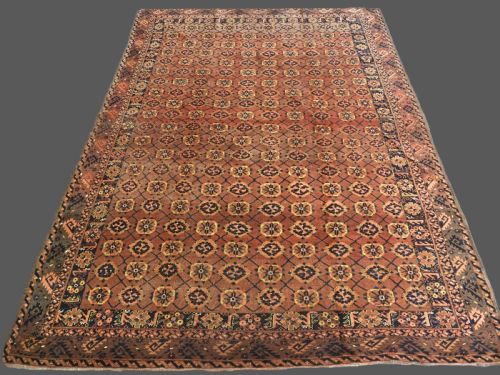
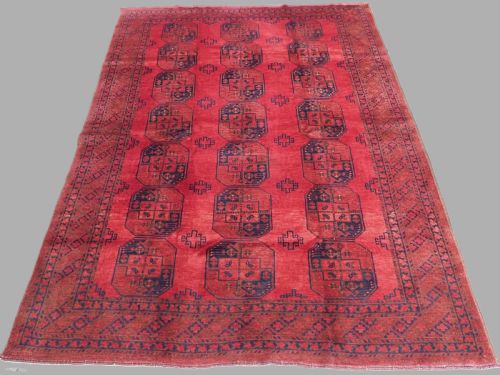
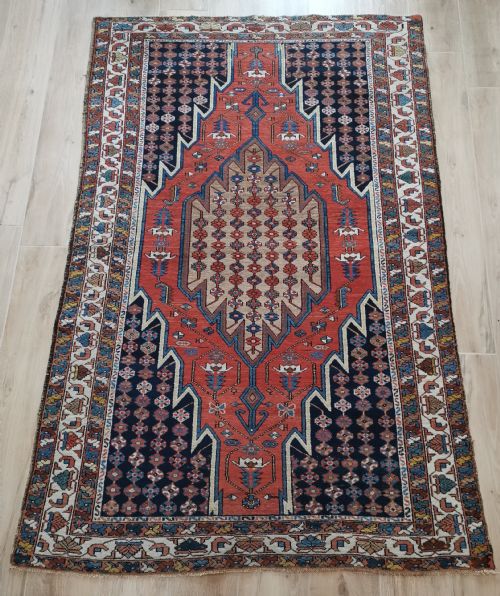


Persian Village Floor Rug
A persian village floor rug brings grounding texture and geometric history to a room through genuine tribal artistry.
Persian Village Floor Rug
A persian village floor rug represents the woven output of nomadic and settled communities across regions such as Hamadan, Malayer, Bakhtiari, and Heriz. These floor coverings bridge practical domestic furnishing and distinct regional tribal traditions.
The pieces on this page span from the mid-nineteenth century into the early twentieth century, taking the form of area rugs and larger carpets. Village weavers worked without formal printed patterns, relying instead on inherited tribal motifs and local memories.
Buyers encounter wool pile floor coverings displaying geometric medallions, all-over floral repeats, and stylized animal or tree motifs. Each piece reflects the specific aesthetic vocabulary of the valley or village where it was knotted.
How they were made
Weavers utilised hand-spun wool for the pile, yielding a soft yet resilient surface capable of withstanding generations of heavy floor use. Cotton foundations provided the structural warp and weft threads that kept the carpets stable.
Natural dyes extracted from local plants and minerals produced the characteristic palette of warm reds, deep indigos, soft creams, and earthy browns. Over time, these vegetable colorants mellow into nuanced, harmonious tones.
Village weavers occasionally inserted accidental asymmetry into border patterns, leaving physical proof of a quiet afternoon at the loom.
What varies in quality
Quality rests upon the density of the knotting and the crispness of the design execution, which dictates how sharply the geometric or floral motifs read against the ground. Finer knots permit more intricate detail and greater durability underfoot.
The depth and vibrancy of the natural dye palette also define the upper tier of these textiles. Pieces possessing rich, saturated colour combinations and balanced overall proportions command greater appreciation from collectors.
The Persian Village Floor Rug Glossary
- Warp
- The vertical threads stretched tightly on the loom that form the structural foundation of the rug. The exposed ends often terminate in fringes.
- Weft
- The horizontal threads passed alternately over and under the warp threads after each row of knots to bind the structure together.
- Pile
- The upright cut ends of the yarn that form the usable surface of the carpet. Its thickness and wool quality determine the tactile feel.
- Medallion
- A large central ornamental design motif placed in the middle of the field. Many village rugs anchor their entire composition around this single focal point.
- Natural dye
- Colouring matter derived from plants, insects, or minerals rather than synthetic chemicals. These dyes age with subtle tonal variations known as abrage.
Persian Village Floor Rug: Frequently Asked Questions
Where were these rugs made?
These textiles originate from various weaving centres, tribal valleys, and rural settlements across Persia, including the districts of Hamadan, Malayer, and the Heriz region.
Individual weavers produced them in domestic settings rather than large urban manufactories, incorporating local design traditions.
How do I care for my rug?
Protect the textile by placing a quality underlay beneath it to prevent slipping and reduce friction against hard floorboards.
Vacuum gently with the suction attachment rather than a rotating brush roll, and arrange for professional specialist cleaning when necessary.
Can I use these in high traffic areas?
The durable wool pile and sturdy cotton foundations make these floor coverings well-suited for everyday domestic use in living rooms or hallways.
Heavier weaves handle regular foot traffic comfortably while developing a softer patina over decades of daily life.
How do I identify village rugs?
Look for slightly irregular geometric layouts, spontaneous tribal motifs, and localized colour variations that distinguish rural work from city-made carpets.
Regional structures and specific wool characteristics often point directly to the specific valley or tribal group responsible for the weaving.