






Persian Tribal Weave Art
These pieces of persian tribal weave art are nomadic textiles carrying deep regional histories and practical utility into modern spaces.
Persian Tribal Weave Art
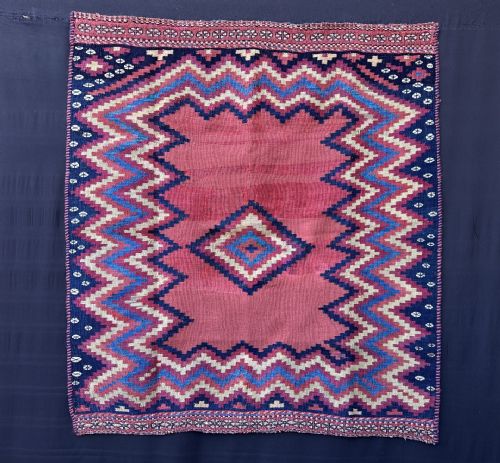
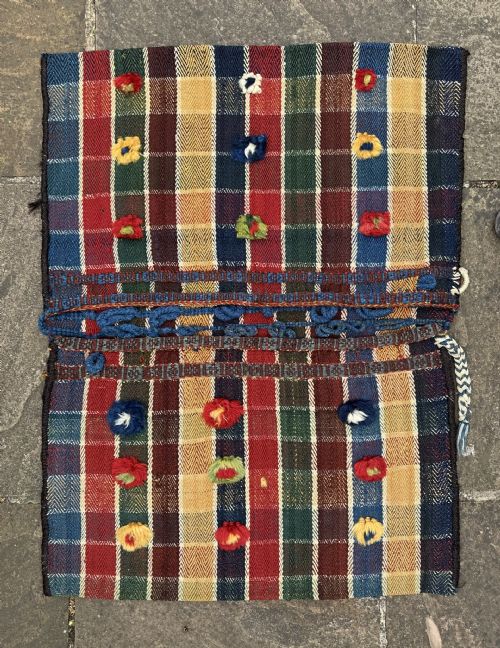
When you search for persian tribal weave art, you encounter utilitarian objects made by nomadic and village groups across Iran and neighbouring regions during the nineteenth and early twentieth centuries. These items served daily pastoral functions rather than purely decorative ones, emerging from tribal confederations such as the Qashqai, Afshar, Shahsevan, and Bakhtiari.
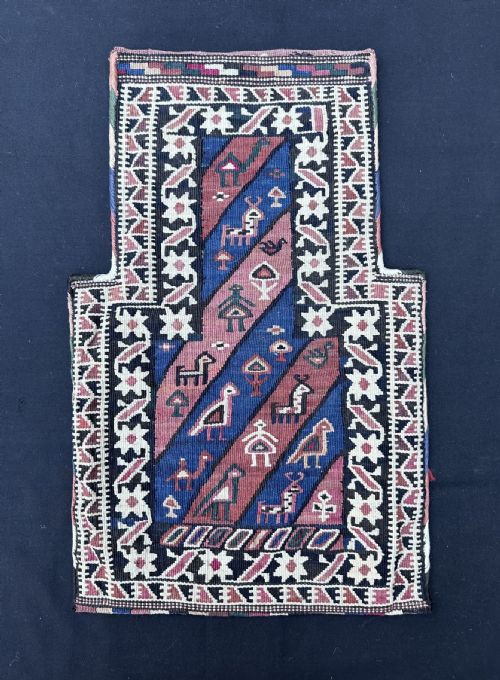
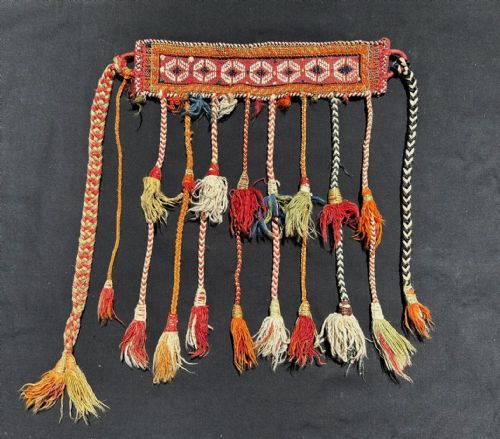
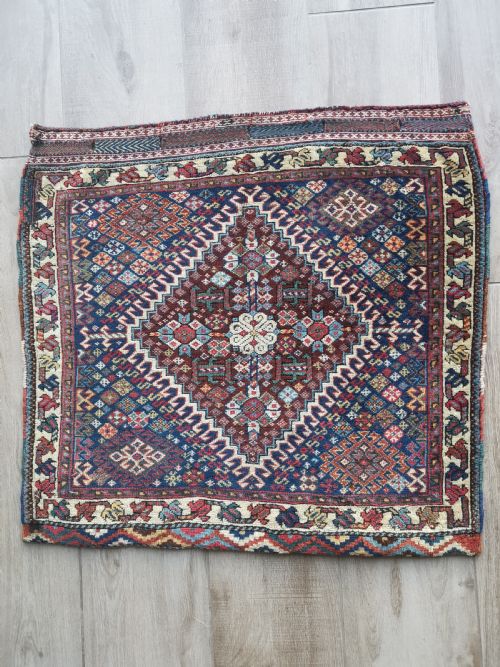
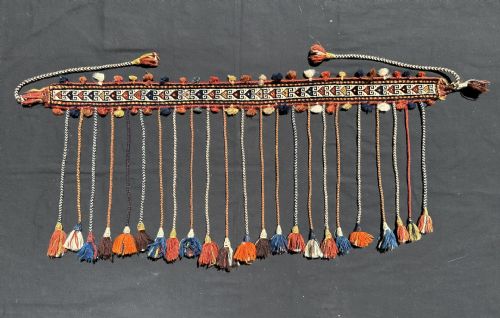
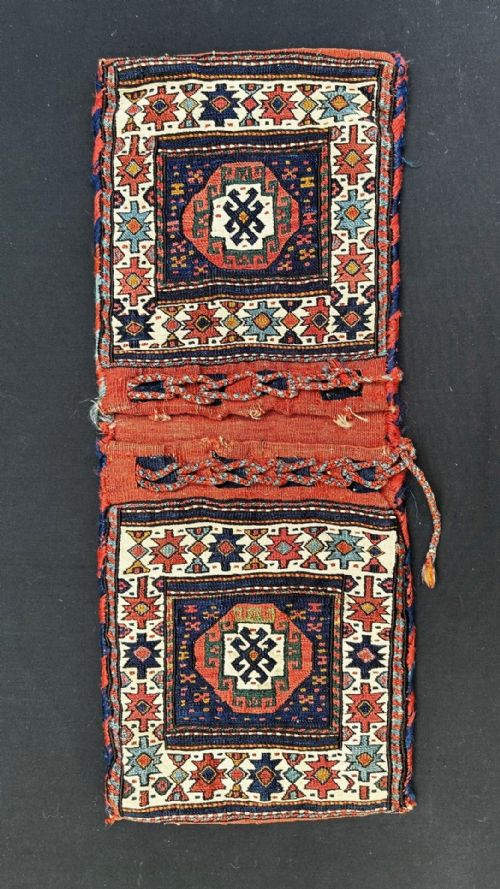
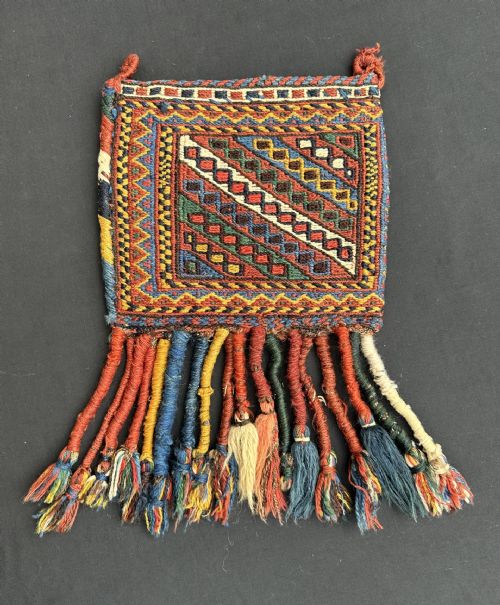
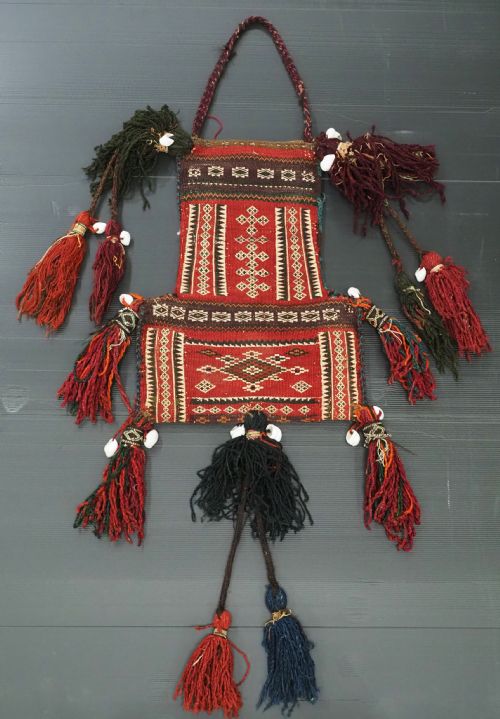
The objects on this page predominantly take the form of functional containers and trappings, including salt bags, saddle bags, horse decorations, bread sofreh, and small storage pouches. Such pieces reflect the specific domestic and nomadic lives of their makers, originating from diverse provinces like Kerman, Fars, and Khorassan.
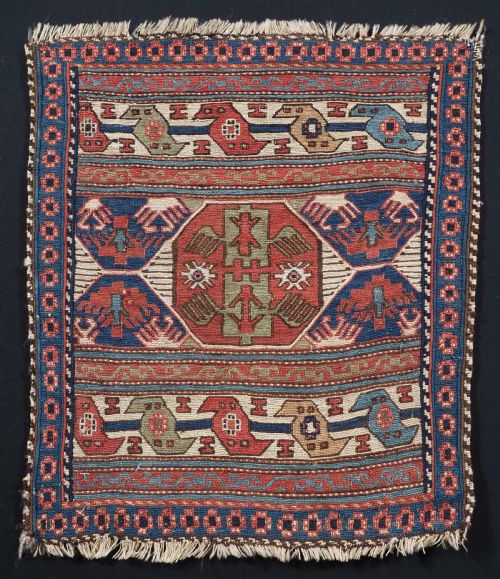
Dated examples frequently span the period from the mid-nineteenth century through to the early twentieth century, capturing a time before commercial dyes and mass production transformed village craft. Buyers find both complete double-faced bags and mounted fragments or bag faces that showcase individual tribal iconography.
Materials and Construction
The construction of persian tribal weave art relies heavily on locally sourced materials, principally hand-spun wool and cotton, alongside structural elements in goat hair, wood, and leather. Goat hair often reinforces the edges and high-wear areas of bags and storage pouches for added durability during migration.
Weavers utilised natural dyes to achieve rich colour palettes across flatweave, pile, and soumak techniques. Soumak wrapping creates a textured, durable surface often seen on salt bags and bag faces, while silk appears occasionally in specific decorative formats like jajim.
Persian Tribal Weave Art Retail Price Guide 2026
Typical asking prices for persian tribal weave art among the pieces listed under this phrase on Sellingantiques today, from the lower quarter to the upper quarter. They describe what is for sale here now, not the wider market.
Listings for persian tribal weave art incorporate materials such as hand-spun wool, cotton, goat hair, and silk.
Assessing Quality and Execution
Quality in these textiles depends significantly on the fineness of the weave and the precision of the tribal motifs executed by the maker. Tighter knotting or more complex soumak work allows intricate geometric and animal designs to remain sharp and legible.
The depth and condition of natural dyes also dictate the visual strength of a piece, alongside the intact survival of original side-cords, closures, and structural supports. Pieces retaining their full form, such as complete pairs of kilim bags or undisturbed horse decorations, preserve their original context more completely.
The Persian Tribal Weave Art Glossary
- Namakdan
- A traditional Persian salt bag woven by nomadic tribes to store rock salt for livestock. These containers typically feature a narrow neck and a flared base.
- Soumak
- A flatweaving technique where pattern threads are wrapped over and under warp threads to produce a durable surface resembling embroidery. This method creates a pronounced texture on the face of bags and trappings.
- Chanteh
- A small nomadic vanity bag or personal pouch used for carrying small possessions. They often display concentrated tribal designs on the front face.
- Sofreh
- A flatwoven spread or cloth used for sharing meals or preparing bread dough. They are usually square or rectangular in format.
- Jajim
- A lightweight, double-faced flatwoven textile often constructed in narrow strips stitched together. They serve primarily as coverlets or decorative spreads.
Persian Tribal Weave Art: Frequently Asked Questions
What are tribal bags used for?
Nomadic groups utilised these woven bags for practical storage during seasonal migrations across Persia. They held salt, wheat, personal items, and household goods within the tribal camp.
Over time, these functional containers transitioned into decorative objects for collectors who appreciate their authentic cultural roots and textile structure.
How do I identify different tribal origins?
Specific tribes employed distinct colour combinations, structural techniques, and geometric or animal motifs. Examining the weave structure and regional patterns helps attribute pieces to groups like the Afshar or Qashqai.
Provenance notes and specific village regions recorded in listings further clarify the geographic source of each textile.
Are these pieces made with natural dyes?
The majority of nineteenth and early twentieth century nomadic weavings rely on traditional natural dye sources. These materials produce organic shades that mellow gracefully over decades of exposure.
Inspect the wool under natural light to observe the subtle tonal variations characteristic of traditional dye methods.
How should I display a bag face?
Many collectors mount flat textile pieces, such as bag faces or small fragments, onto neutral backing materials for wall display. This protects the wool structure while showcasing the design clearly.
Keep mounted textiles away from direct sunlight to preserve the integrity of the natural dyes and fibres.