




Persian Sarouk Rug
A persian sarouk rug brings resilient wool pile and intricate floral design from West Persia into a room.
Persian Sarouk Rug
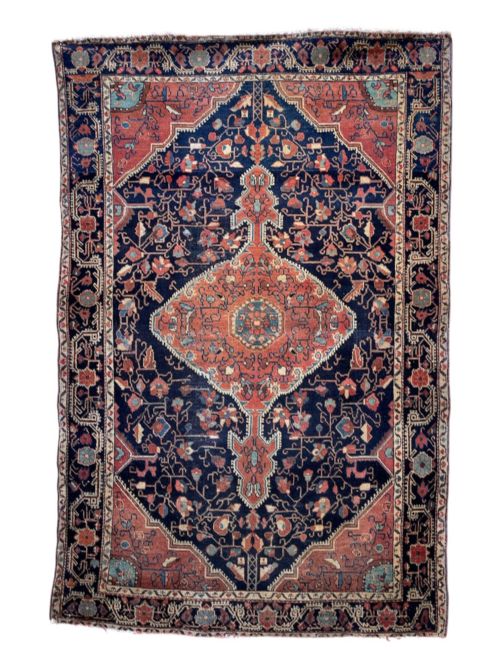
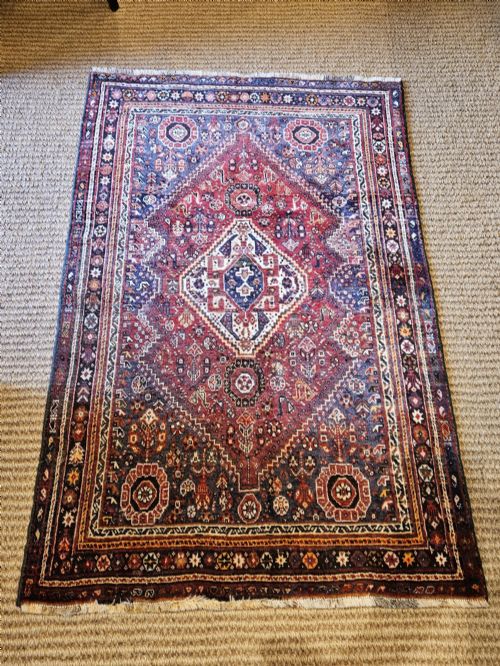
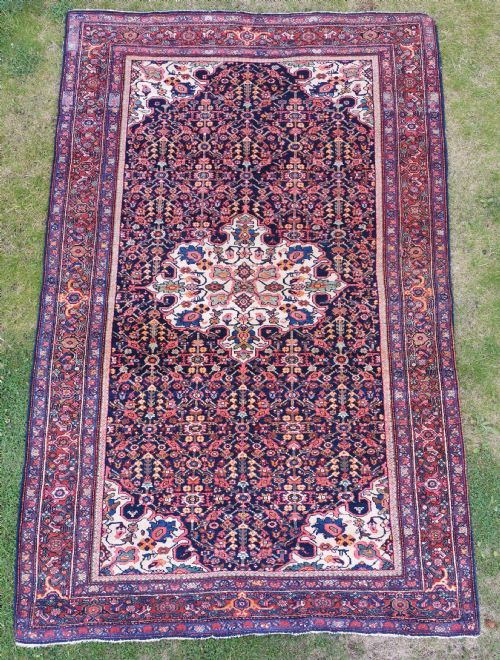
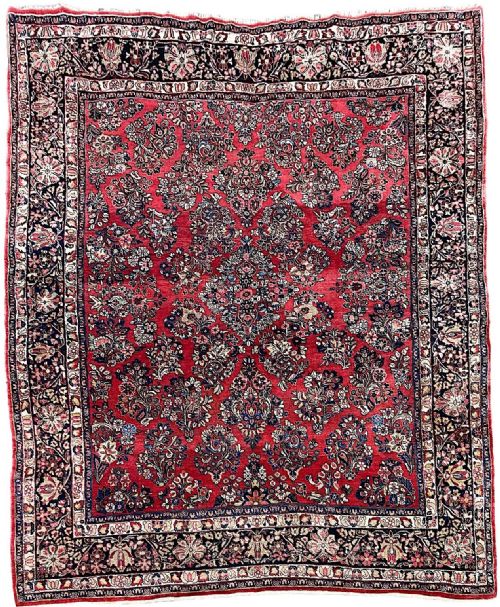
A persian sarouk rug is a woven floor covering originating from West Persia, encompassing village pieces and room-size carpets alike. The selections span compact formats alongside long narrow runners and large carpets dating from the late nineteenth century into the 1930s. These floor coverings bridge formal workshop output and village traditions from centres such as Jozan, Ferahan, and Mohajeran.
Most examples encountered here date around 1900 to 1920, representing traditional Persian design executed with dense floral motifs or boteh patterns. Buyers will find both small scatter rugs and expansive formats reaching over seven metres in length. The region's distinct village weaving traditions shape the character of these pieces, whether produced in Sarouk itself or the wider Hamadan district.
How they were made
These textiles rely on hand-spun wool pile knotted firmly onto cotton foundations, yielding a dense and resilient structure designed for daily use. The spinning and dyeing methods produce durable surfaces that retain structural integrity across generations of foot traffic.
Weavers employed traditional asymmetric knots on vertical looms, combined with sturdy cotton warp and tuft threads to maintain tension and shape. Natural dyestuffs create the characteristic soft colour palettes seen across rust backgrounds and floral fields.
Persian Sarouk Rug Retail Price Guide 2026
Typical asking prices for persian sarouk rug among the pieces listed under this phrase on Sellingantiques today, from the lower quarter to the upper quarter. They describe what is for sale here now, not the wider market.
What varies in quality
Quality rests upon knot density and the crispness of the woven floral design, distinguishing finely carded village pieces from coarser utility goods. A tighter weave allows intricate botanical motifs and birds or pomegranates to render with sharp definition.
The handle and flexibility of the wool foundation also determine the calibre of the piece, alongside the preservation of the original pile depth. Higher-grade examples maintain substantial wool height across the surface, whereas lower tiers show significant wear down to the cotton foundation.
The Persian Sarouk Rug Glossary
- Sarouk
- A village and weaving centre in West Persia known for dense wool pile and refined floral carpets. Pieces from this tradition often feature symmetric or asymmetric knots on cotton foundations.
- Boteh
- A stylised almond or paisley motif representing a floral spray or cypress tree. This ancient Persian design appears frequently in village and workshop carpets.
- Ferahan
- A neighbouring West Persian weaving region associated with exceptionally fine nineteenth-century rugs. Pieces bearing this attribution often display intricate geometric floral arrangements.
- Jozan
- A specific village near Sarouk known for producing high-quality rugs with fine weaves and soft colour palettes. These pieces share stylistic roots with the wider Sarouk tradition.
- Runner
- A long, narrow carpet format designed for hallways, corridors, or staircases. Examples in this tradition include exceptionally extended proportions.
Persian Sarouk Rug: Frequently Asked Questions
Where were these rugs made?
These floor coverings originate from West Persia, specifically around the village of Sarouk and nearby districts like Jozan and Ferahan. Local weavers utilised regional materials and traditional motifs passed down through generations.
Production spanned from the nineteenth century into the twentieth century, encompassing both specific village workshops and broader regional centres within the Hamadan area.
How do I care for an old rug?
Regular gentle vacuuming without a rotating beater bar prevents dust accumulation within the wool pile. Professional cleaning suited for antique textiles preserves the natural lanolin in the wool.
Keeping the piece out of direct, harsh sunlight protects the soft vegetable dyes from fading over time. Using an appropriate underlay prevents slipping and cushions the cotton foundation against hard floors.
What is a village rug?
A village rug is woven on domestic looms in rural communities rather than large urban manufactories. These pieces often reflect local design interpretations and spontaneous artistic choices by individual weavers.
They combine regional wool resources with traditional patterns unique to specific valleys or tribal groups across Persia.
How can I tell the age of a piece?
Age is assessed through structural indicators such as the type of wool, the construction of the cotton foundation, and the composition of the dyes. Stylistic elements like specific floral arrangements and colour combinations also offer clues to the period of manufacture.
Comparing construction techniques with dated examples helps narrow down production to specific decades between the late nineteenth century and the 1930s.