





Persian Qashqai Bag
These persian qashqai bag pieces are woven nomadic textiles originating from south-west Persia, prized for their rich tribal patterns.
Persian Qashqai Bag
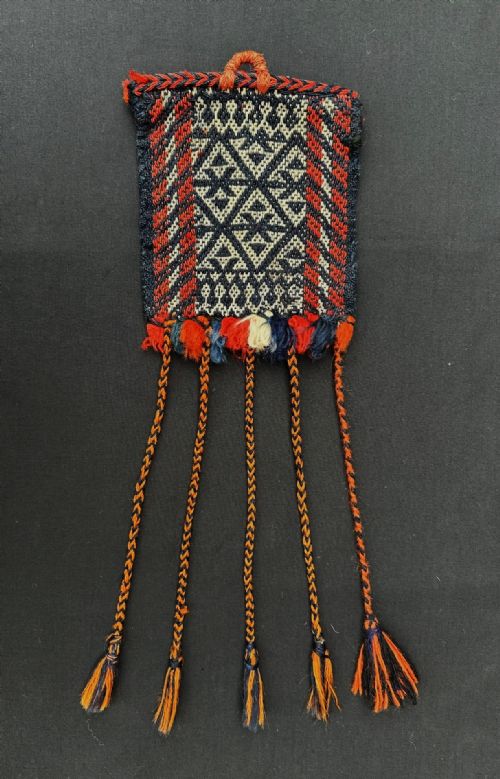
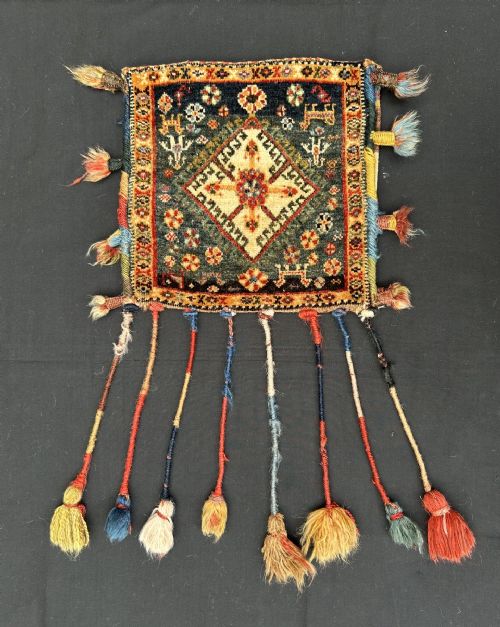
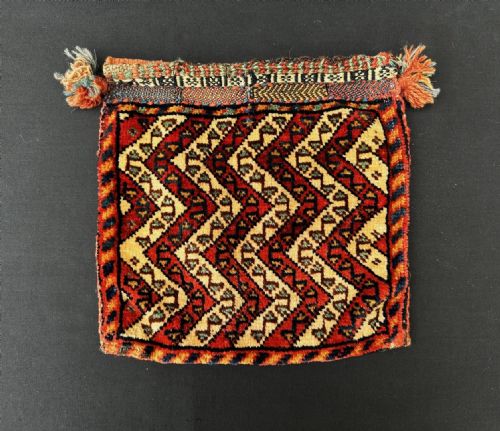
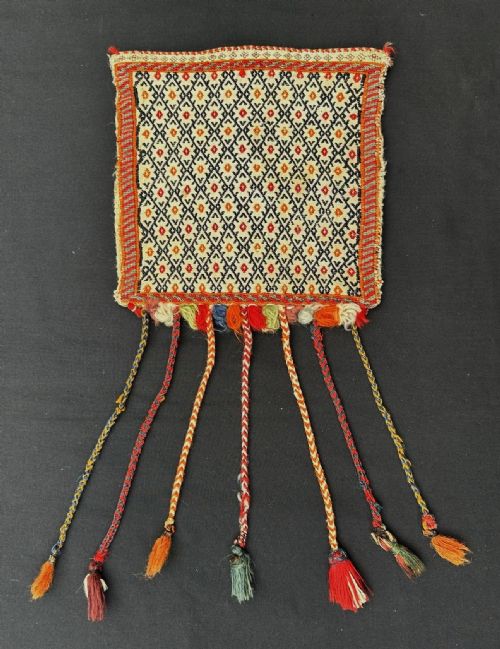
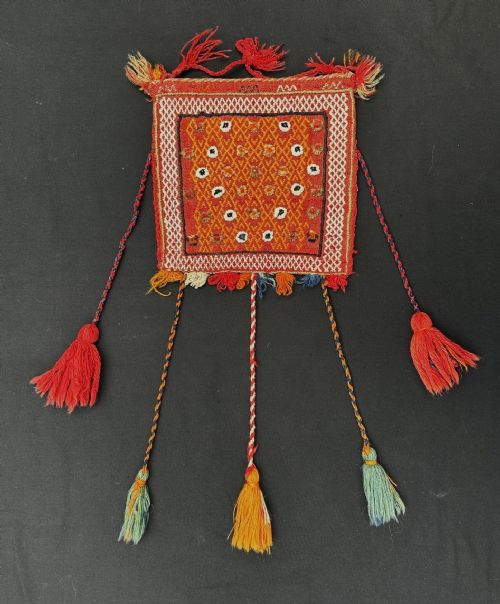
A persian qashqai bag encompasses tribal textiles and utility pieces originating from the Fars province in south-west Persia. These items include vanity bags, salt bags, spindle bags, and saddlebag faces created by nomadic confederacies and sub-tribes.
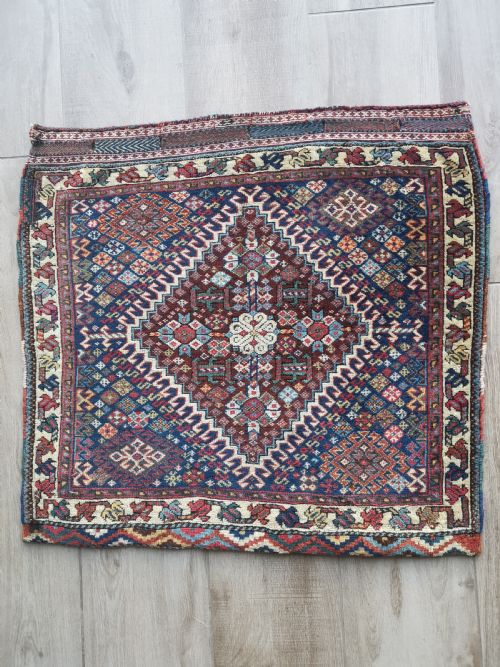
The pieces on this page span several decades, featuring examples from the nineteenth century up to the early twentieth century. Buyers will frequently encounter individual bag faces and half-saddlebags displaying traditional tribal formats.
Materials and construction
The construction of these textiles relies primarily on hand-spun wool and cotton foundations, combined with pile knotting or flatweave techniques. Natural dyes provide the palette seen across the surviving pieces.
Weavers from sub-tribes such as the Bolvardi, Kashkuli Tayefeh, Shekarlu Tayefeh, and Darrehshuri employed durable loop and knot configurations suited to nomadic utility.
Some salt bags survived because salt absorbs moisture, keeping the inner wool curiously dry while the nomads crossed damp river valleys.
Distinctions in quality
Quality rests upon the fineness of the knotting and the complexity of the tribal design work, such as central medallions or banded patterns. Tighter structures and well-preserved natural dyes elevate certain examples.
The precision of the weave and the intact condition of the edges and pile indicate the level of craftsmanship invested by the nomadic maker.
The Persian Qashqai Bag Glossary
- Bag face
- The decorative front portion of a nomadic storage bag, often preserved independently after the plain weave back has worn away. These panels showcase the primary motifs and knotting.
- Saddle-bag
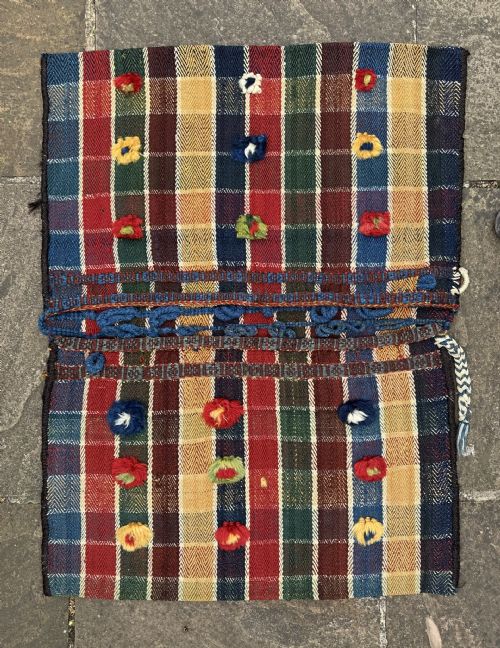
- A paired utility container designed for transport on animals, comprising two compartments joined by a central web. Surviving examples frequently appear as separated halves.
- Natural dyes
- Colourants derived from plant and mineral sources prior to the widespread adoption of synthetic alternatives. They yield the harmonious tones characteristic of older tribal weaving.
- Tayefeh
- A sub-tribe or clan grouping within the broader Qashqa'i confederacy of Fars province. Specific stylistic traits often connect individual pieces to these distinct groups.
Persian Qashqai Bag: Frequently Asked Questions
What is a persian qashqai bag used for?
These nomadic pieces served practical storage functions within tribal life, holding salt, vanity items, water pipes, or spoons during travel. Their sturdy construction protected daily belongings across the Fars province.
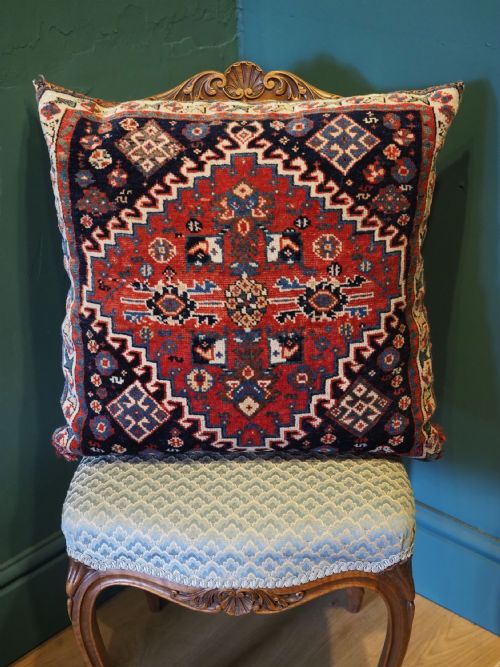
Today, collectors preserve them as decorative wall hangings, small rugs, or cushion covers. Their robust wool structure allows them to function in domestic interiors much as they did originally.
How old are these bags?
The pieces available range from the nineteenth century into the early decades of the twentieth century. Many examples date from the eighteen-eighties and eighteen-nineties.
Determining age involves examining the wool quality, the nature of the natural dyes, and the structural wear. Tribal attributions to specific sub-tribes also help anchor their historical timeframe.
Where were they made?
Originating in south-west Persia, these textiles come from the Fars province and the traditional migration territories of the Qashqai confederacy. Different sub-tribes like the Kashkuli and Darrehshuri produced work within this region.
The local environment and available materials directly influenced the wool and dye palettes used by these nomadic groups.
How do I care for a textile bag?
Maintenance requires gentle vacuuming without a rotating brush to remove dust from the wool pile. Keeping the textile away from direct sunlight preserves the natural dyes.
Professional cleaning tailored to antique rugs ensures the cotton and wool foundations remain stable. Avoiding excessive moisture protects the integrity of the flatweave and pile.