

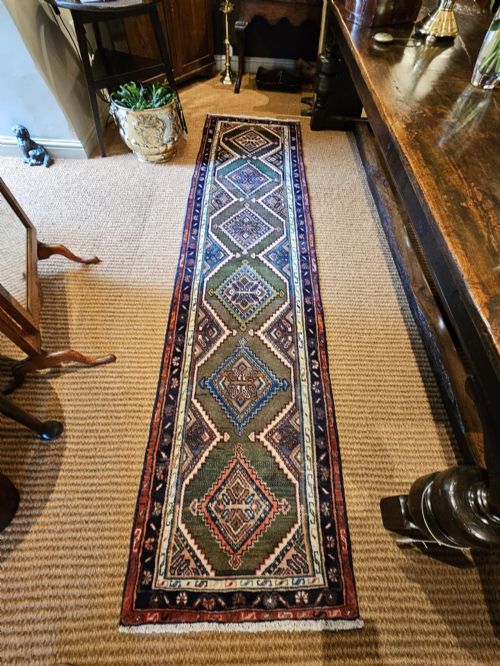
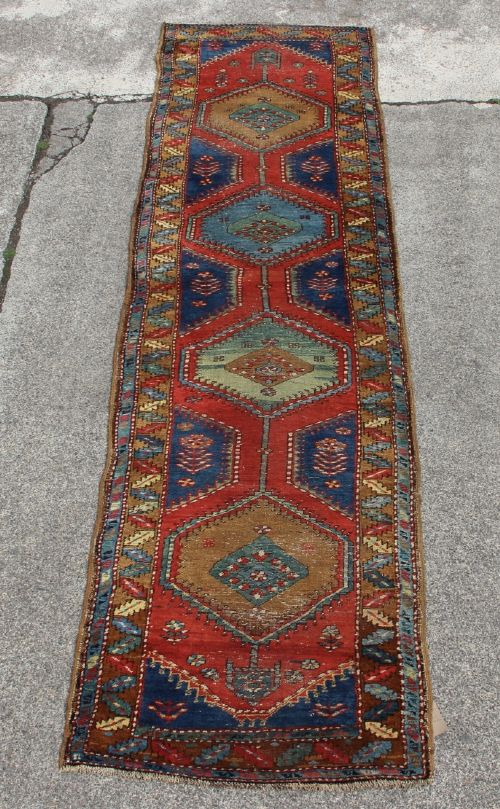
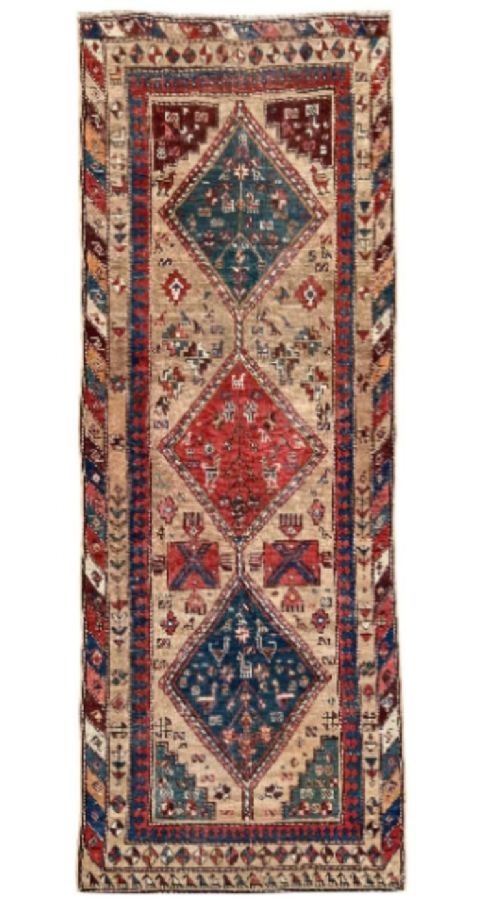
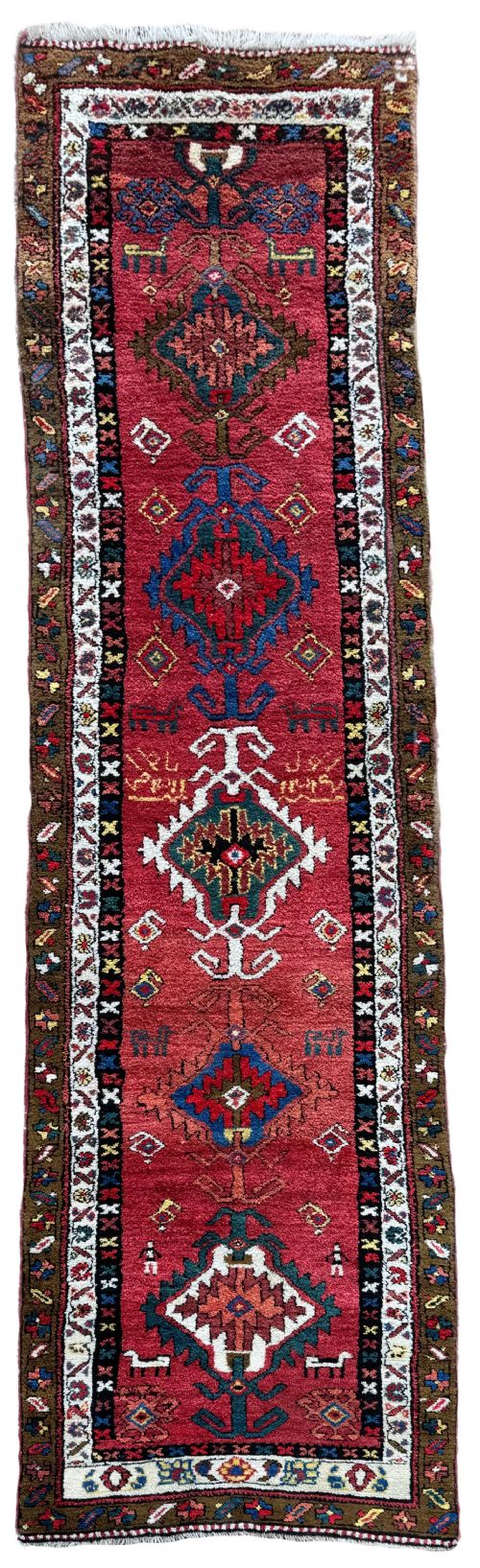
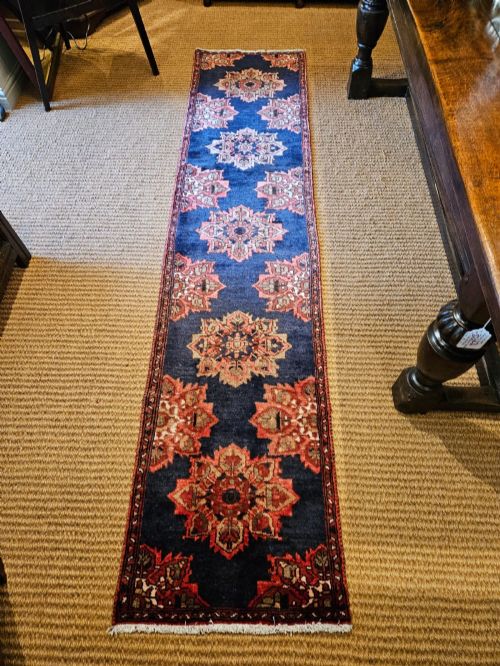
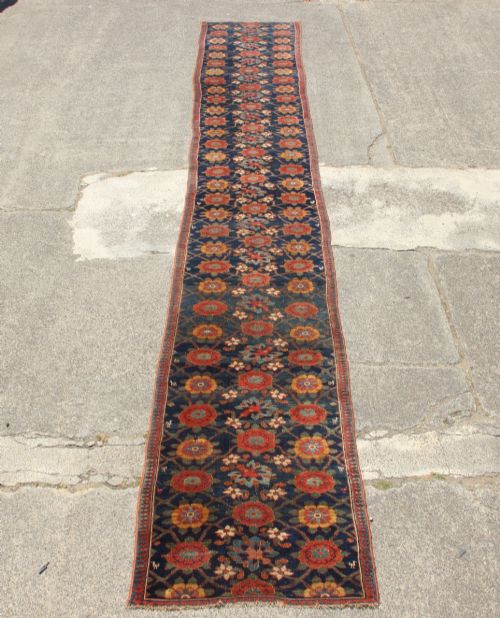
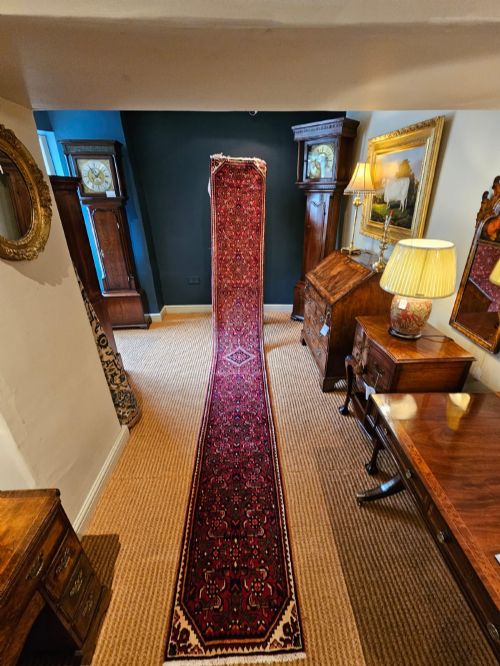
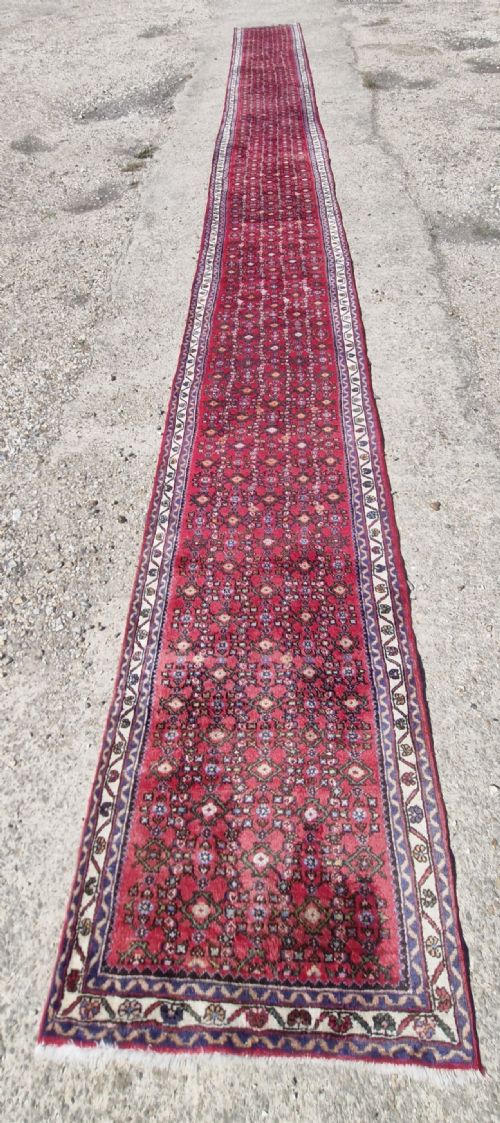

Persian Long Carpet Runner
A persian long carpet runner brings a distinct linear geometry and heavy floor coverage to narrow rooms and hallways.
Persian Long Carpet Runner
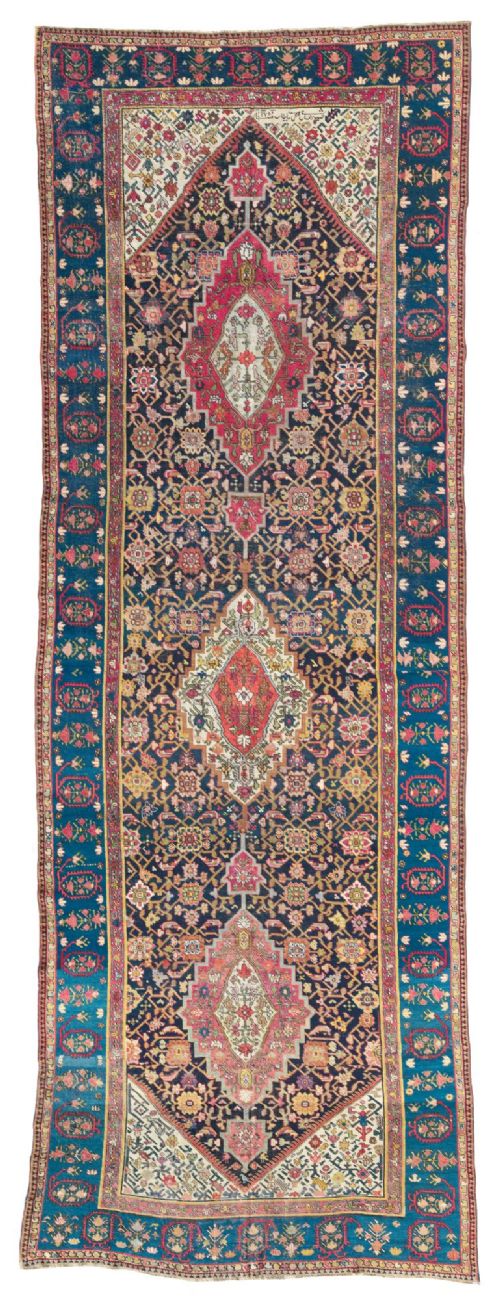
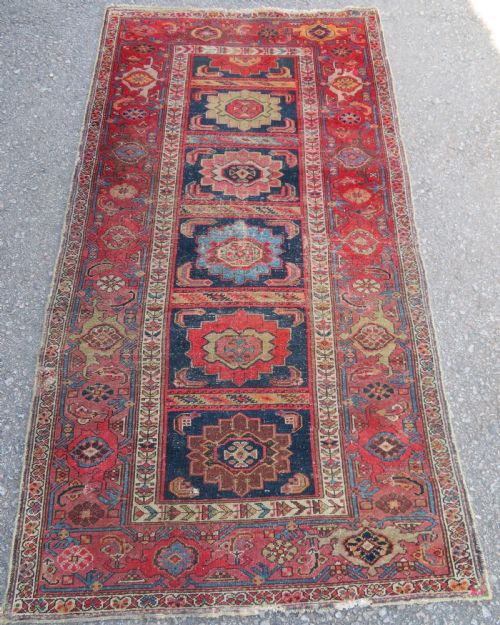
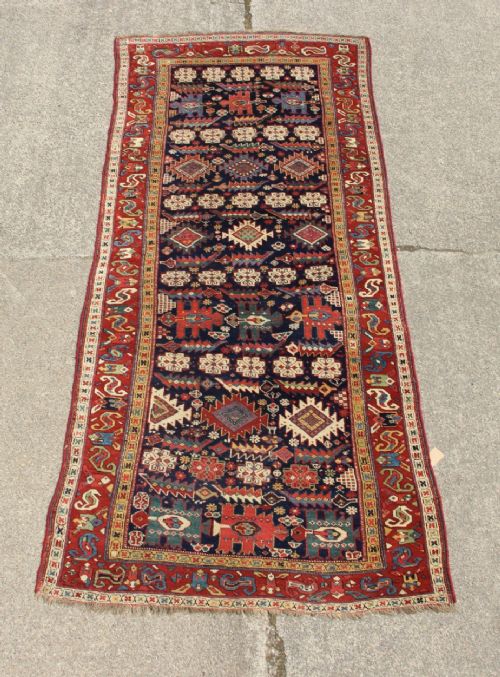
A persian long carpet runner provides narrow, elongated floor coverings suited for corridors, landings, and extended rooms. The selections span the nineteenth century through the early twentieth century, originating from regional weaving centres and tribal groups across Iran and the Caucasus.
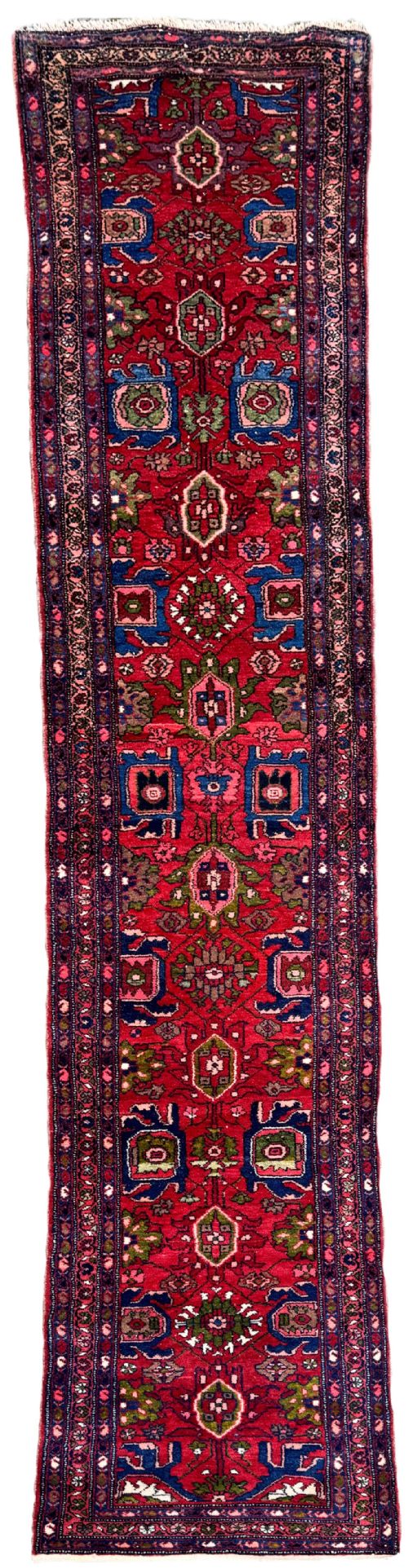
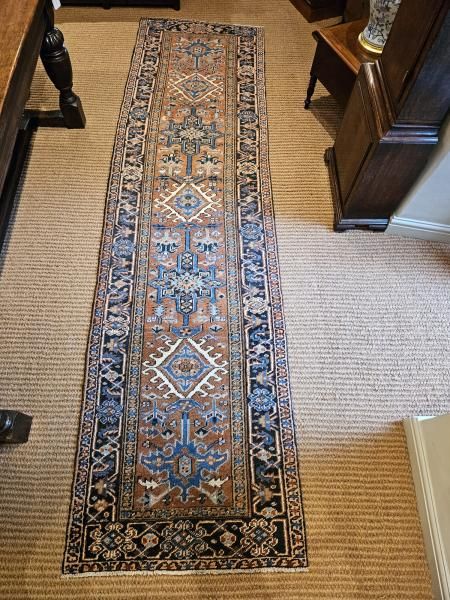
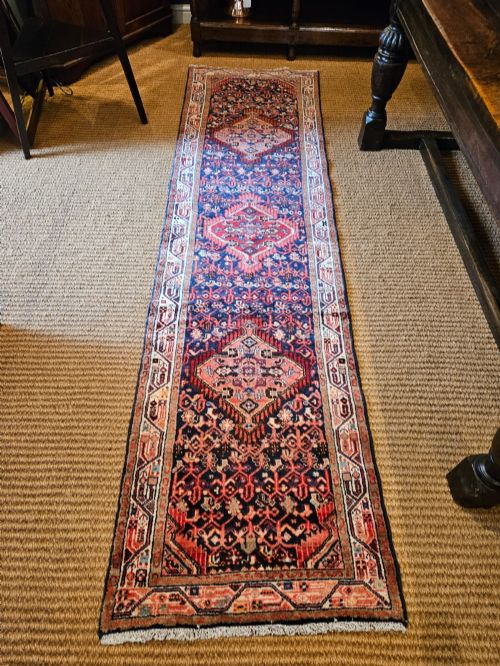
Buyers encounter regional designations such as Heriz, Hamadan, Bidjar, and Kurdish pieces in these formats. These items range from modest hallway lengths exceeding two metres to substantial formats stretching past five metres.
The aesthetic vocabulary encompasses traditional geometric medallions, repeated field motifs, and directional tribal patterns. Each format serves a functional architectural role while carrying the distinct visual language of its weaving origin.
Materials and Construction
The physical build relies predominantly on wool pile knotted onto cotton or wool foundations. Artisans utilise hand-spun wool for the pile, which absorbs natural dye variations with depth and subtle tonal shifts across the surface.
Weavers employ traditional vertical looms, tying symmetric or asymmetric knots by hand to secure the dense pile. Foundation warps andwefts are beaten down firmly during construction to produce a rigid, durable textile capable of withstanding heavy corridor footfall.
One extraordinary nineteenth-century hallway survivor stretches to an impressive thirty-two feet in length.
Assessing Quality
Quality rests in the precision of the knotting density and the clarity of the underlying design geometry. Tighter knots allow intricate drawing in medallions and borders to remain crisp and legible rather than blurred.
The integrity of the foundation warps and the original selvedges dictate the structural stability of the piece. Superior examples maintain balanced proportions and even pile wear without compromising the structural grid of the weaving.
The Persian Long Carpet Runner Glossary
- Runner
- A long, narrow carpet format specifically designed for hallways, corridors, and stairs. These pieces prioritise linear proportions over standard square or rectangular room dimensions.
- Kelleh
- A large format carpet that is longer than a standard rug but narrower than a full hall carpet, bridging the gap between medium and extended room sizes.
- Heriz
- A rug-producing region in northwest Iran known for bold geometric medallions and robust structural weaving. Pieces from this area typically display strong angular drawing and earthy palettes.
- Bidjar
- A town in western Iran famous for heavy, densely packed pile carpets woven by Kurdish artisans. These textiles are often described as iron rugs due to their exceptionally rigid foundations.
- Hamadan
- A major trading hub and weaving region encompassing numerous villages that produce distinctive geometric and medallion runners. These pieces utilise varied wool qualities and traditional local dye palettes.
- Kilim
- A flatweave textile produced without a knotted pile, occasionally associated with runner structures. The technique creates a lightweight, reversible fabric with sharp geometric pattern transitions.
Persian Long Carpet Runner: Frequently Asked Questions
Where should I place a long runner?
These pieces suit narrow architectural spaces such as hallways, long landings, and galley kitchens. Their elongated proportions guide movement down corridors while protecting high-traffic wooden or tiled floors.
Ensure you measure the corridor width and length carefully, leaving a uniform border of exposed flooring around the perimeter of the textile for a balanced appearance.
How do I care for an antique wool runner?
Regular gentle vacuuming without a rotating power head prevents dust accumulation in the dense wool pile. Professional rug cleaning is recommended periodically to preserve the integrity of natural fibres and dyes.
Position a quality underlay beneath the textile to prevent sliding on hard floors and to reduce friction between the foundation and the floor surface during daily use.
How can I tell different regional types apart?
Regional attribution relies on examining the structural density, border designs, and palette choices. Heriz runners display bold geometric medallions, while Kurdish and Bidjar pieces often feature denser, heavier foundations with intricate repeated patterns.
Hamadan runners frequently incorporate camel hair tones and distinctive diamond or pole medallion layouts characteristic of village production centres.
What does pile wear indicate on an old runner?
Gradual thinning of the wool pile is a natural consequence of age and corridor foot traffic. Even, low pile often reflects decades of domestic use in active family homes.
Uneven wear or exposed foundation threads indicate localized stress points that require professional conservation to prevent further structural degradation.