




Persian Kashan Carpet
A persian kashan carpet brings enduring central Persian artistry into a room through intricate floral designs and hand-knotted wool or silk.
Persian Kashan Carpet
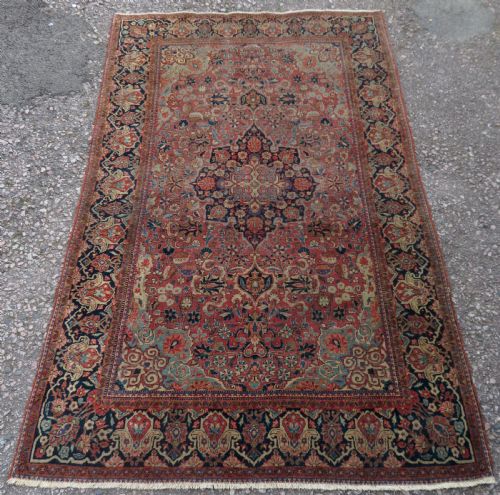
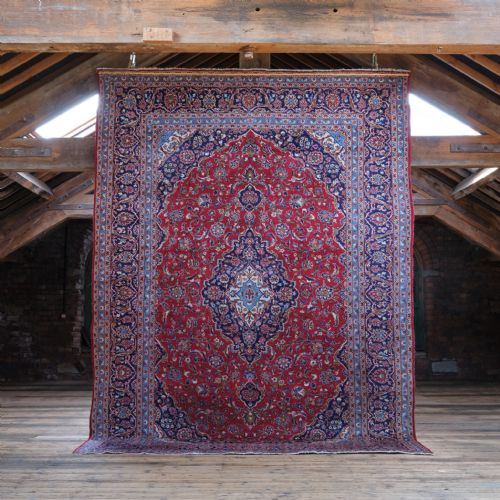
When searching for a persian kashan carpet, you are looking at floor coverings originating from central Persia, primarily produced across the nineteenth and early twentieth centuries. These pieces appear as standard rugs, large area rugs, and expansive palace-size carpets.
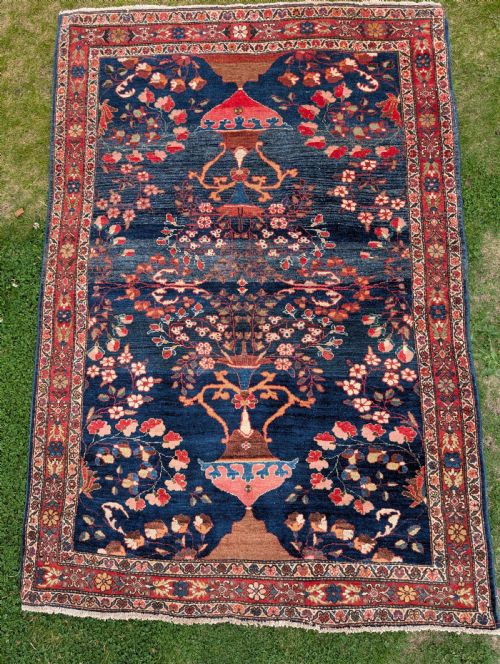
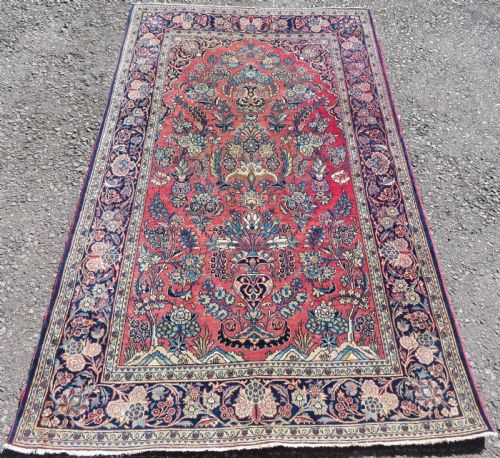
The most common examples you will encounter on this page date from the Edwardian era up to the 1940s, reflecting traditional Persian styles alongside specific pictorial and prayer rug formats. Makers utilised classic motifs such as central medallions, flower and vase arrangements, and all-over patterns.
How they were made
These textiles were hand-knotted using cotton foundations with pile materials varying between standard wool, soft kork or kurk wool, part silk, and fine pure silk. Artisans in central Persia constructed the dense pile to support intricate curvilinear designs and detailed pictorial portraits.
Dyers employed rich colour palettes, noted in surviving examples for rose pink grounds, deep reds, and balanced contrasts that define the regional output.
Listings span from the late nineteenth century through to 1940, incorporating cotton, wool, silk, and kork wool materials.
What varies in quality
The distinction between standard examples and the finest works rests upon knot density and the choice of pile material, with pure silk and fine kork wool achieving superior definition in floral motifs. Master weavers executed complex pictorial and prayer designs with greater precision and nuance.
Older nineteenth-century pieces and specific attributed works demonstrate higher refinement in hand-knotting technique and material selection compared to later twentieth-century production.
Mohtasham·Haroon·Dabir
The Persian Kashan Carpet Glossary
- Kashan
- A city in central Persia renowned for historic carpet production and sophisticated workshop output. Pieces from this centre typically display dense floral ornamentation.
- Mohtasham
- A master weaver or workshop associated with exceptionally fine nineteenth and early twentieth-century Kashan production. These rugs often feature superior wool quality and tight knotting.
- Prayer rug
- A specialised rug format featuring a mihrab or niche design used historically for personal devotion. They frequently incorporate floral vase motifs.
- Knot density
- The number of knots per square unit, which determines the clarity of the woven design. Higher counts allow for intricate curves and finer details.
- Medallion
- A central ornamental motif set into the field of a carpet. Traditional Persian designs often place a star or floral medallion at the exact centre.
Persian Kashan Carpet: Frequently Asked Questions
How do I date an old Kashan carpet?
Dating relies on stylistic clues, structural materials, and historical markers recorded in the weave, such as specific portraits or period attributions from the nineteenth and early twentieth centuries.
Examining the specific wool type, such as fine kork wool or silk, alongside the colour palette helps place the piece within eras like the Edwardian period or the 1920s.
Where were these carpets made?
These textiles originated in Kashan, a historic city located in north-west central Persia within the Isfahan province. The region established a lasting reputation for sophisticated weaving techniques and workshop traditions.
Production extended from regional town workshops to larger palace-size commissions created for domestic and international markets.
Are silk Kashan rugs different from wool ones?
Silk Kashan rugs utilise pure silk or part-silk piles on cotton foundations, offering an exceptionally fine handle and luminous surface sheen. Wool versions provide a heavier, more resilient pile suited to everyday floor placement.
Both material types display the same intricate central Persian floral and medallion layouts.