




Persian Baluchistan Rug
These persian baluchistan rug examples bring genuine nomadic character into a room through rich wool work and traditional tribal designs.
Persian Baluchistan Rug
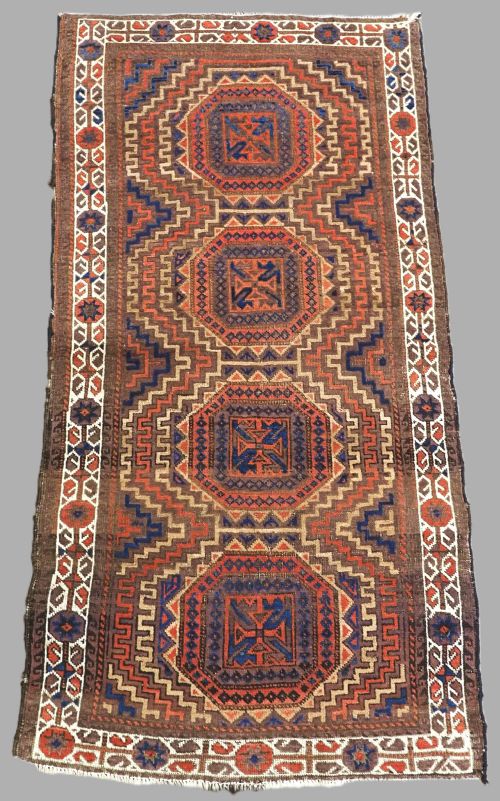
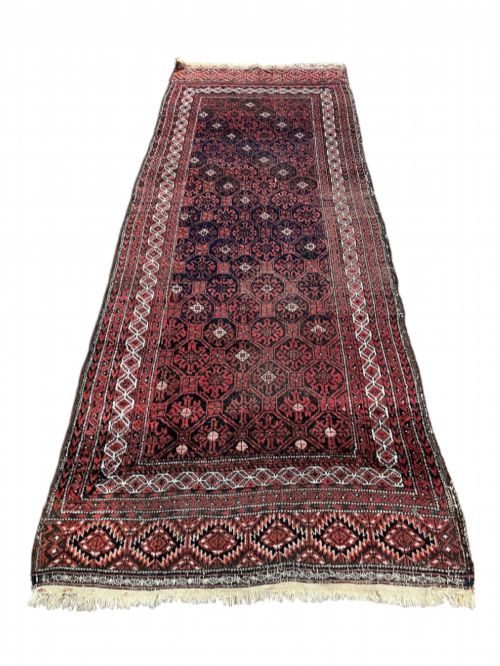
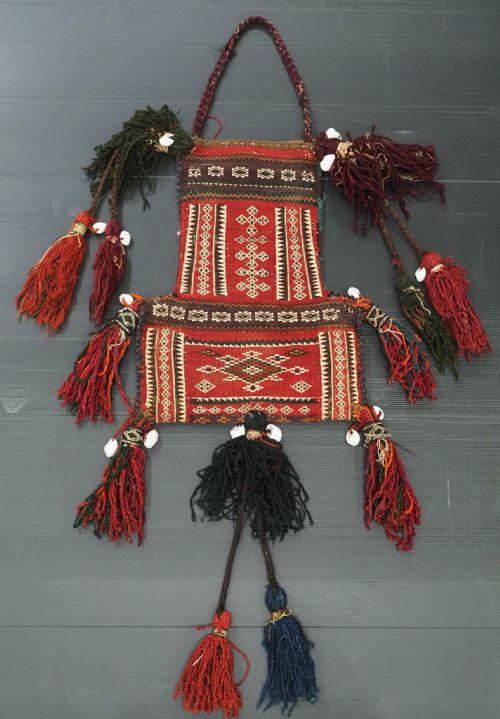
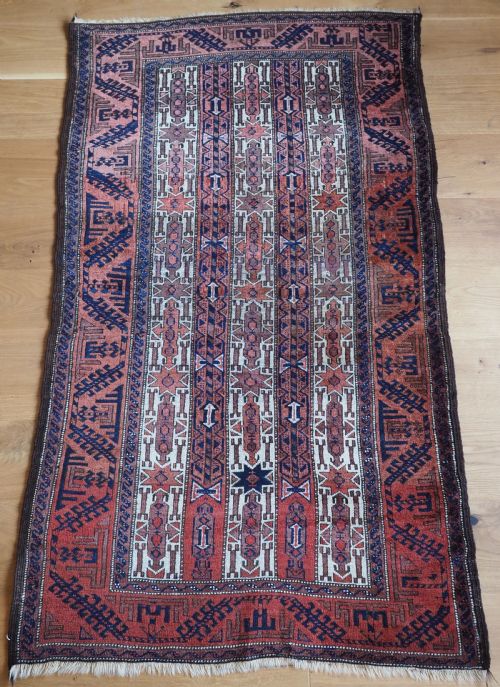
A persian baluchistan rug connects modern interiors to the textile traditions of tribal weavers working across nineteenth and early twentieth century periods. Buyers searching for a persian baluchistan rug encounter various forms, ranging from standard rugs and runners to specialised items such as prayer rugs, cushions, saddle bag faces, kilims, and salt bags.
Dating primarily from the late nineteenth century through to the 1920s, these pieces reflect the practical artistry of nomadic life. A buyer meets both full format floor coverings and smaller utility containers adapted into decorative elements for contemporary living spaces.
Materials and construction
The foundation and pile rely heavily on wool and pure wool, providing the dense structure necessary for nomadic floor coverings and utility bags. Additional structural elements incorporate cotton and goat hair to strengthen borders and selvages against heavy daily wear.
Certain specialised pieces integrate organic decorative elements such as cowrie shells into their finished presentation, adding textural contrast to the woven wool surface. These material choices reflect the resourceful traditions of tribal makers utilising locally available resources for both durability and ornamentation.
Listings feature pieces spanning from the late nineteenth century up to the 1920s, constructed from wool, cotton, and goat hair.
Distinctions in quality
Quality in these tribal textiles rests on the tightness of the weave, the clarity of traditional motifs like guls and Herati patterns, and the integrity of the wool pile. Superior examples maintain crisp structural geometry and secure edges across both large runners and smaller formats like salt bags.
The nuance in artistic expression also distinguishes finer pieces, particularly those featuring uncommon design elements such as human figures, scarce white ground stripes, or specific tribal attributions. The handling of natural materials and the precision of regional patterns separate standard utility weaving from exceptional nomadic artistry.
Zaggar Mengal Baluch Nomads·Salar Khani·Mahdad Khani Tribe
The Persian Baluchistan Rug Glossary
- Gul
- A medallion motif commonly found in tribal weaving, often repeated across the field to form the primary pattern. These octagonal or polygonal symbols carry distinct cultural meanings for the weaving groups.
- Herati
- A recurring floral lattice design featuring a central rosette enclosed by leaves, flanked by curved fish-like motifs. This classical Persian pattern appears frequently in regional tribal adaptations.
- Kilim
- A flat-weave textile produced without a pile, resulting in a lightweight structure suitable for various decorative uses. These pieces often display bold geometric stripes and banded chevrons.
- Prayer rug
- A specialised format featuring a mihrab or arch design indicating the direction of prayer. These rugs served personal devotional functions within nomadic camps.
Persian Baluchistan Rug: Frequently Asked Questions
What is a persian baluchistan rug?
A persian baluchistan rug is a traditional tribal textile hand-woven by nomadic groups in regions spanning Khorasan and South East Persia. These pieces date predominantly from the late nineteenth century up to the 1920s and reflect distinct cultural patterns.
Buyers encounter various formats beyond standard floor rugs, including runners, kilims, prayer rugs, and functional bags. Each item utilises locally sourced materials to create durable furnishings with unique tribal character.
How were these rugs used originally?
Nomadic weavers created these textiles for practical daily life within tribal camps, using them as floor coverings, blankets, and division screens. Smaller formats served specific domestic functions for carrying and storing salt or personal possessions.
Utility items like saddle bag faces and salt bags demonstrate how functional objects doubled as expressions of tribal identity and artistic skill. Today, these historical items transition easily into decorative interior accessories.
How do I style a tribal rug at home?
Integrating these textiles into a modern interior works best by placing them in low-traffic areas or mounting smaller formats like salt bags and kilims on walls as art. Their rich wool textures and geometric motifs complement both contemporary and traditional room schemes.
Allowing the piece to serve as a focal point draws attention to its regional patterns and historical depth. Pairing runners and smaller rugs with natural wood floors highlights the warmth of the original materials.
How can I tell the age of a piece?
Dating relies on examining the specific weave structure, wool quality, and traditional design elements characteristic of late nineteenth and early twentieth century production. Pieces from this era often display subtle irregularities inherent to hand-spun materials and natural dye palettes.
Comparing structural details such as selvedges and end finishes against documented examples helps establish the likely period of manufacture. Tribal attributions and specific regional motifs further assist in narrowing down the date.