





Persian Balouch Carpet
These persian balouch carpet examples are tribal wool rugs of distinct character, offering rich geometric patterns that ground an interior with genuine nomadic heritage.
Persian Balouch Carpet
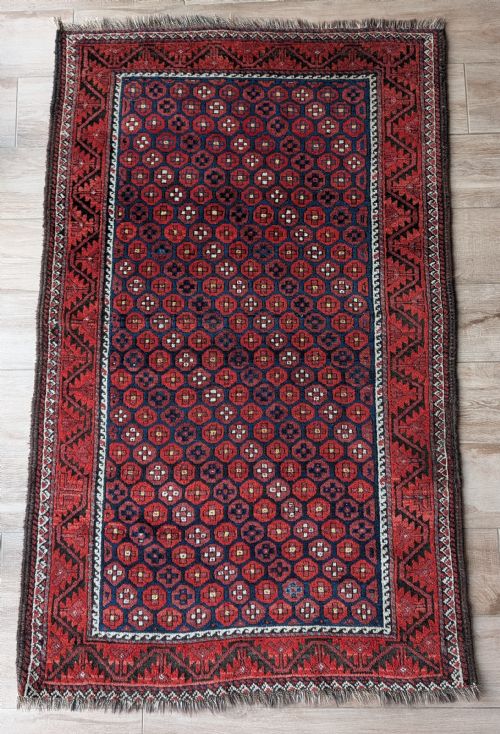
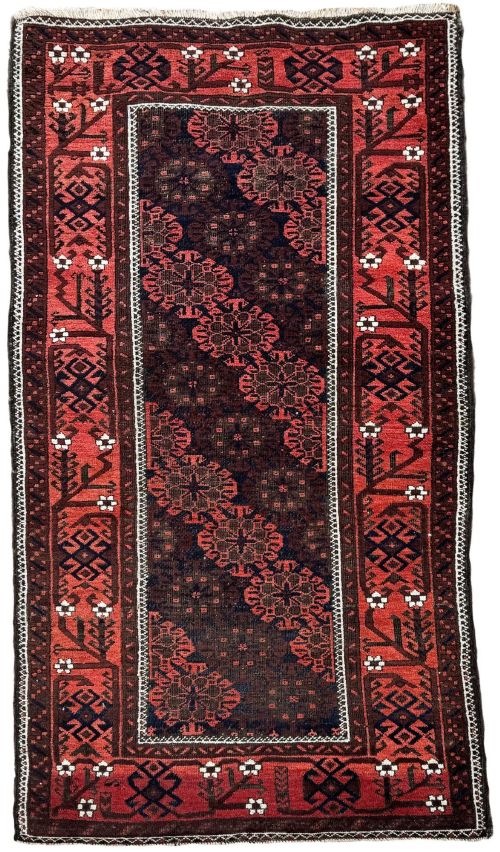
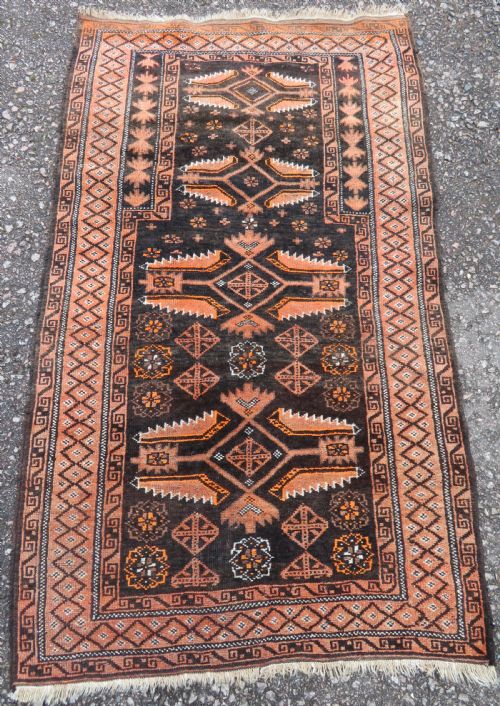
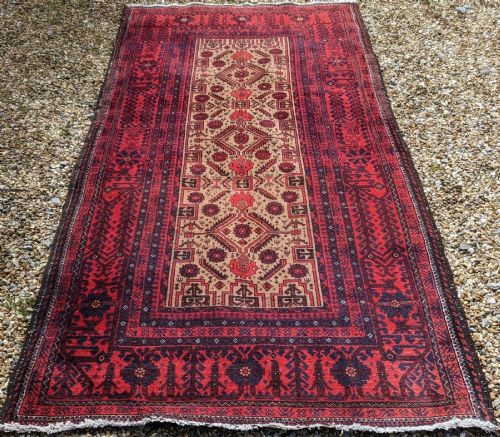
When you search for a persian balouch carpet, you encounter hand-knotted tribal wool rugs and runners produced across nomadic traditions. The pieces appearing here span from the late nineteenth century into the early decades of the twentieth century, including examples dated through the 1880s, 1900s, 1910s, 1920s, and 1930s. Most examples take the form of smaller floor coverings, prayer rugs, and hallway runners.
The aesthetic is rooted in tribal design vocabulary, featuring distinct motifs such as guls, Herati patterns, and Mina Khani variant designs. These pieces originate from Baluch tribal weavers alongside Afghan and Salar Khani traditions, carrying the classic hallmarks of nomadic weaving. You will frequently find dense wool construction in formats suited for smaller spaces or corridors.
How they were made
These textiles rely entirely on traditional hand-knotting techniques executed by tribal makers using durable natural materials. The foundational structure typically utilises sturdy cotton or wool warps and wefts to support the heavy pile.
Weavers sourced local sheep's wool for the pile, yielding a resilient surface capable of enduring generations of domestic use. The manipulation of this wool produced the characteristic dense handle seen across nineteenth-century and early twentieth-century examples.
Persian Balouch Carpet Retail Price Guide 2026
Typical asking prices for persian balouch carpet among the pieces listed under this phrase on Sellingantiques today, from the lower quarter to the upper quarter. They describe what is for sale here now, not the wider market.
Listings for this phrase encompass pieces spanning from the late nineteenth century through the 1930s, constructed entirely in wool.
What varies in quality
The standard of a weaving is defined by the tightness of the knotting and the crispness of the geometric motifs. Finer examples display meticulous execution of intricate guls and complex field designs that demonstrate exceptional hand-eye coordination from the maker.
Material selection and dye depth also separate standard production from superior pieces. Deeper saturation and more complex tribal patterns distinguish the most accomplished examples within the surviving corpus.
The Persian Balouch Carpet Glossary
- Gul
- A repeating medallion or octagonal motif often found in tribal weavings. These geometric emblems frequently form the primary field pattern of nomadic carpets.
- Herati
- A classic Persian repeating pattern composed of a floral rosette framed by curved leaves. This design appears frequently in regional village and tribal rugs.
- Mina Khani
- A symmetrical all-over design layout featuring alternating rosettes and flowers linked by lattice lines. This traditional motif is adapted in various regional tribal weaving traditions.
- Prayer rug
- A small format textile featuring a mihrab or arch design indicating the direction of prayer. These pieces were traditionally used for personal devotion.
Persian Balouch Carpet: Frequently Asked Questions
How are these rugs used?
These pieces function primarily as floor coverings, hallway runners, and small accent rugs within domestic interiors. Their manageable proportions allow them to fit easily into specific living spaces.
Certain formats also serve as prayer rugs, while others add concentrated patches of tribal pattern to wooden floors or hallways.
How do I live with these carpets?
Living with these textiles involves placing them in areas with moderate foot traffic to preserve the wool pile. Using an appropriate underlay helps keep the rug stable on smooth flooring.
Regular gentle care ensures the wool fibres remain resilient over time. They integrate well into both traditional and modern interior schemes.
How do I tell periods apart?
Distinguishing periods relies on observing structural wear, wool characteristics, and design complexity. Nineteenth-century examples often display deeply saturated natural dyes and organic wool variations.
Pieces from the early twentieth century shift slightly in palette and weave density while retaining traditional tribal iconography. Comparing structural foundations helps determine approximate dates.