


Period Wingback Chair
A period wingback chair brings draught-excluding comfort and classic proportions to a room, offering the warmth of centuries past.
Period Wingback Chair
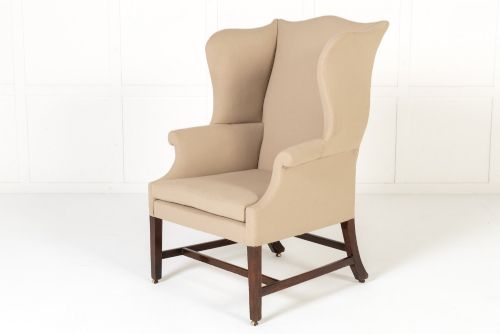
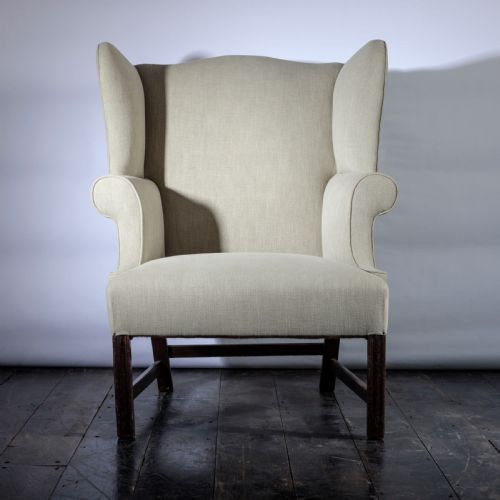
A period wingback chair is a substantial armchair featuring protective side wings designed to shield the sitter from draughts near open fires. The form spans several eras, appearing across the eighteenth and nineteenth centuries into the Edwardian period and the early twentieth century.
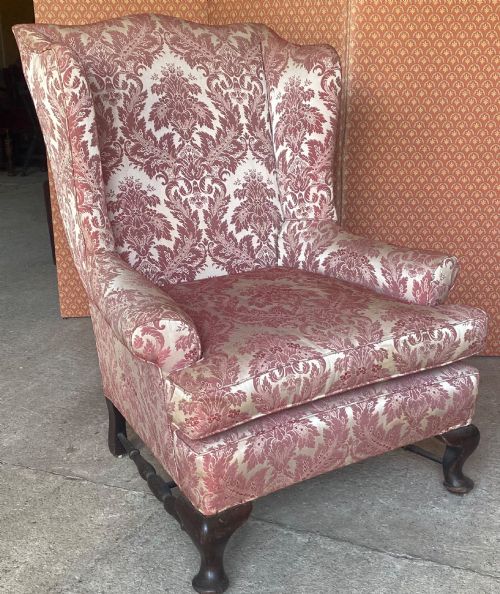
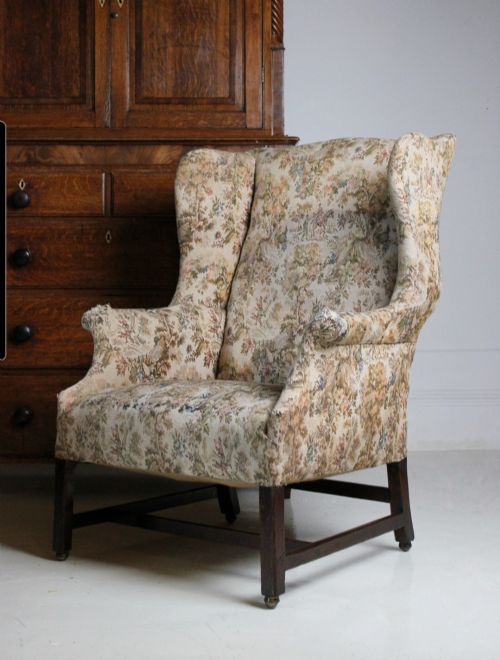
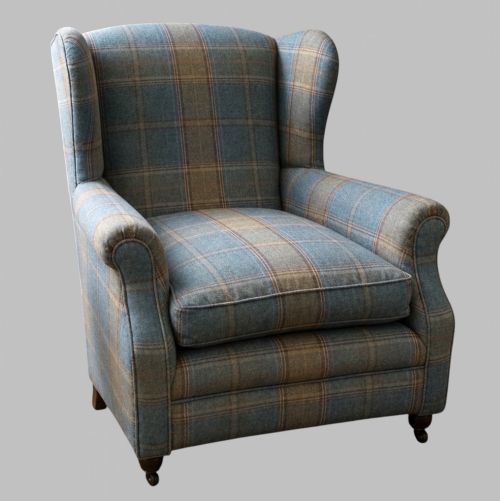
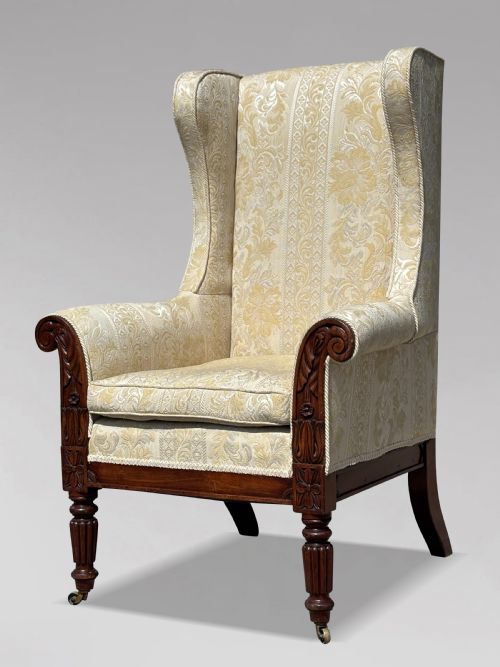
The versions most commonly met on this page include eighteenth-century mahogany examples and nineteenth-century William IV pieces, alongside later Edwardian and nineteen-twenties revivals. These armchairs frequently arrive upholstered in fabrics such as calico, linen, damask, hessian, and wool plaid, or finished in brown leather.
Makers shaped these seats into variations including barrel-backed forms and bergère styles with deep buttoned backs. Buyers seek them for their architectural silhouettes and historical presence within traditional and country house interiors.
Materials and construction methods
Traditional frames rely on hardwoods such as mahogany and walnut, chosen for their structural strength and durability over generations. Joinery techniques connect the timber frame securely to support the deep seat and characteristic high back.
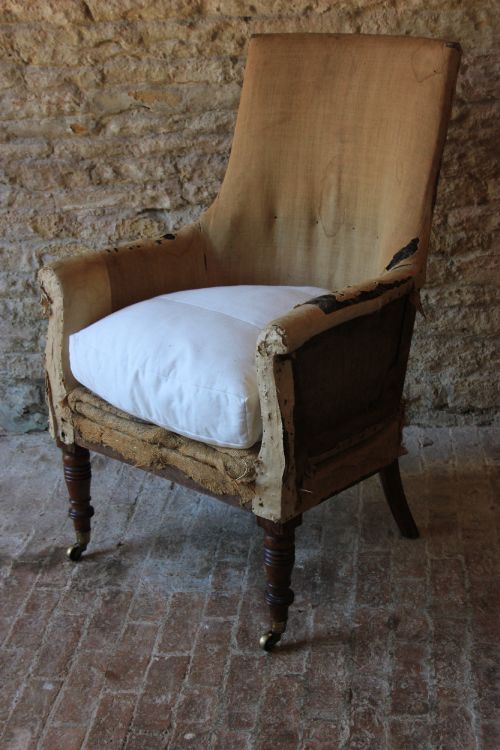
Upholstery materials range from sturdy hessian and calico foundations to decorative top covers in silk damask, linen, and patterned wool. Brass tacks often secure the fabric edges, adding a metallic detail to the wooden framework.
Listings feature woods including mahogany and walnut, alongside fabrics such as damask, calico, hessian, and leather across multiple centuries.
Assessing quality and craftsmanship
Quality in a wingback chair rests upon the integrity of the wooden frame and the proportions of the wings relative to the seat. Finer pieces display crisp carving on the cabriole or straight legs and balanced curves that maintain elegance from every angle.
The standard of upholstery and the choice of covering fabric also dictate the finish, ranging from simple calico ready for new cloth to rich damask or supple leather. Original timber patination and untouched frame construction elevate a piece far above later recreations.
The Period Wingback Chair Glossary
- Wingback
- An armchair featuring high side panels designed to trap heat from a fireplace and deflect cold air. This form developed during the late seventeenth century and endured through the Georgian and Victorian eras.
- Bergère
- A closed-arm armchair with upholstered panels on the sides, often associated with eighteenth-century French design and Edwardian revivals. It provides a lighter visual weight than a fully padded wing chair.
- Barrel back
- A seating style where the curved back rail flows continuously into the arms in a circular sweep. This design wraps closely around the sitter for added warmth and enclosure.
- Damask
- A reversible figured fabric traditionally woven in silk, wool, or linen, featuring intricate patterns. It appears frequently as a decorative upholstery choice on formal period seating.
Period Wingback Chair: Frequently Asked Questions
What is a wingback chair?
A wingback chair is an upholstered armchair with projecting side panels attached to the armrests or back. These wings were originally designed to shield the sitter's face and head from draughts in large rooms.
Over time, the form evolved through various stylistic periods from the eighteenth century onwards. Today, these chairs serve as both functional seating and prominent decorative focal points.
How do I date a wing chair?
Dating relies on examining the timber species, leg design, and construction methods hidden beneath the upholstery. Eighteenth-century examples often feature mahogany or walnut frames with distinct stretcher arrangements and hand-carved details.
Later nineteenth-century and Edwardian pieces frequently show heavier proportions or revival styles such as Queen Anne or William IV. Comparing the stretcher placement and secondary woods helps narrow down the era of manufacture.
Where should I place a wing chair?
These chairs suit living rooms, studies, and bedrooms where their high backs create a sense of enclosure and privacy. Placing one beside a fireplace or in a reading corner highlights their original purpose as draught-excluding seats.
Their substantial silhouette also makes them effective pieces for balancing large open spaces or anchoring empty corners. Pairing them with a matching footstool enhances their comfort in modern living arrangements.
Are these chairs comfortable?
Period wing chairs offer deep seating and high backrests designed for relaxed sitting and reading. The supportive wings provide a convenient rest for the head while blocking peripheral light and air movement.
Comfort levels often depend on the condition of the internal webbing and padding. Many antique examples feature traditional horsehair stuffing which provides a firm and supportive sit.