
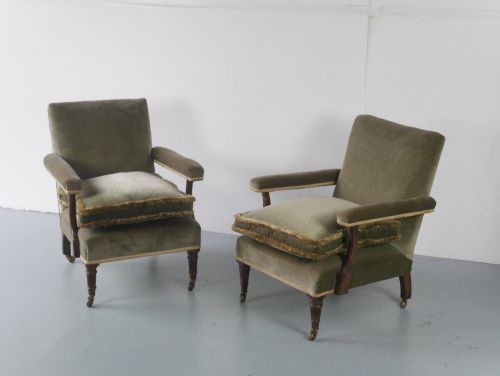
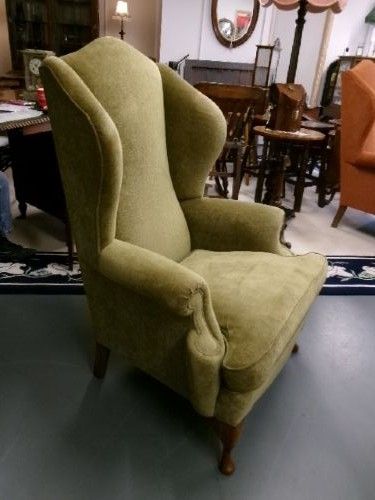
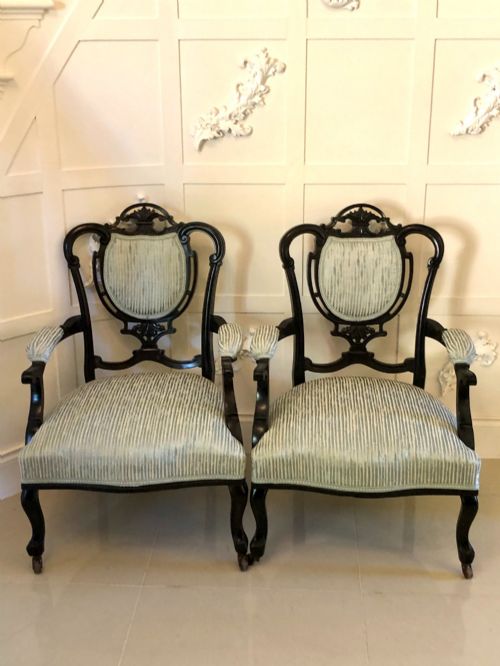
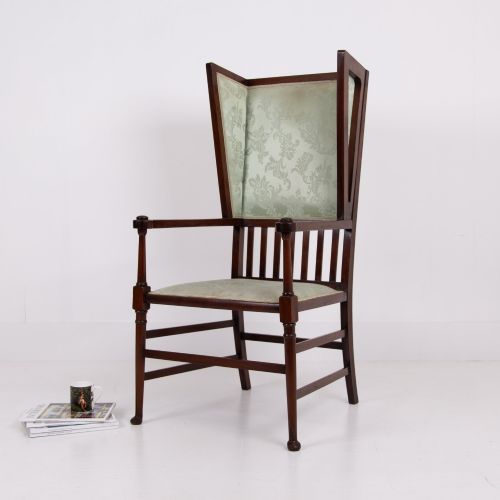
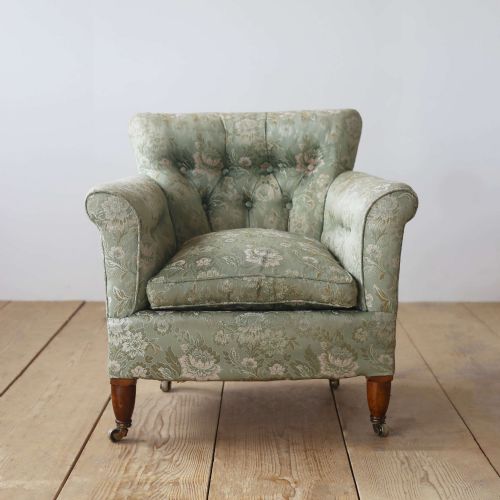
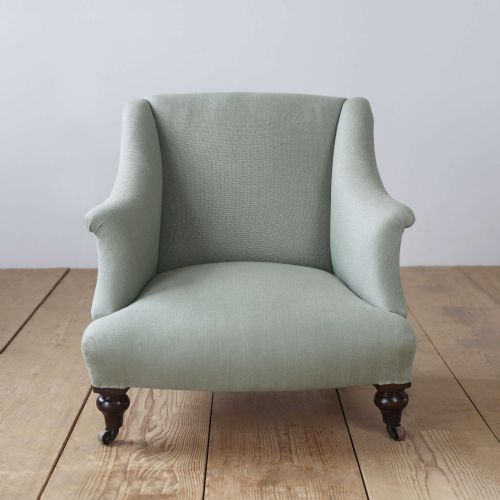
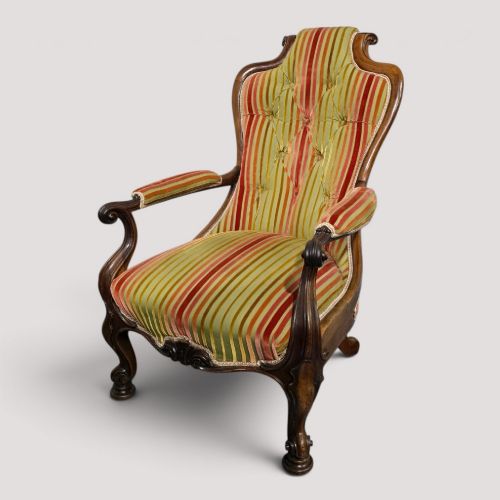
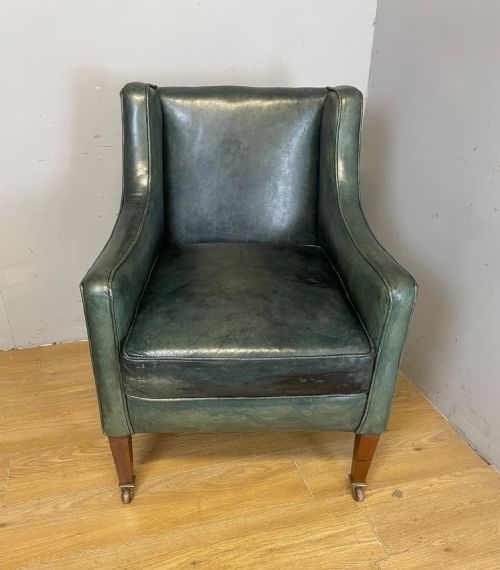
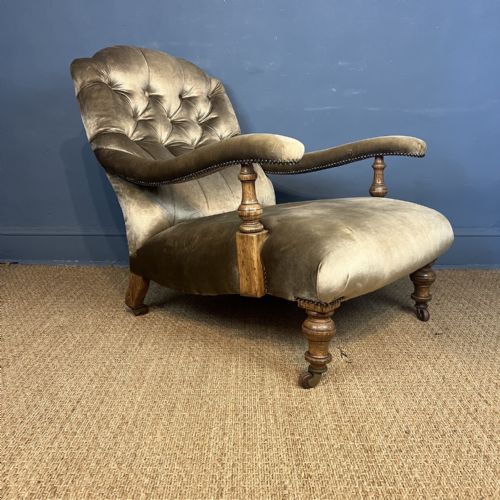
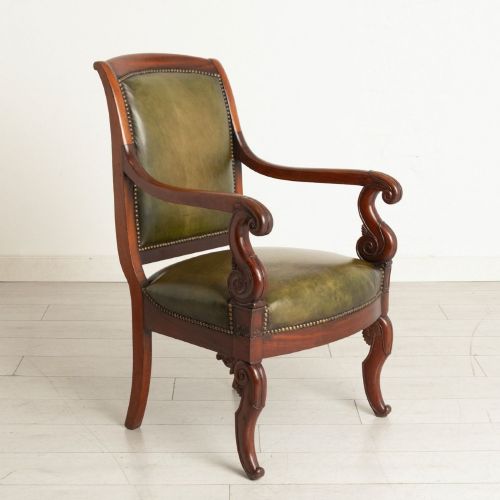
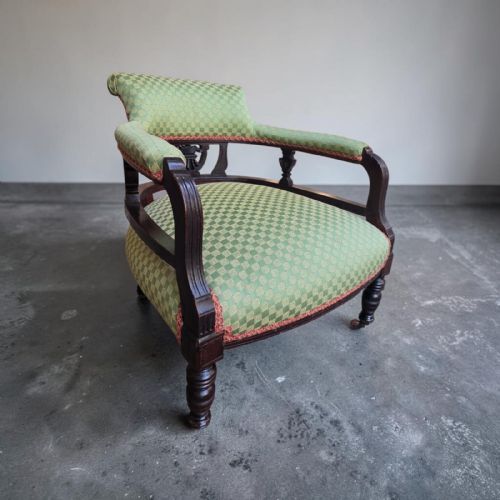
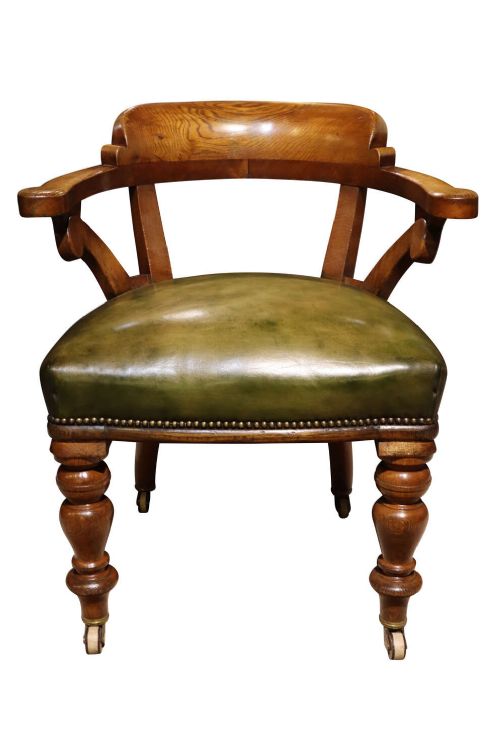
Green Reading Armchair
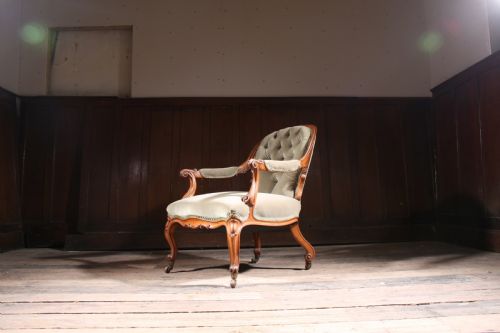
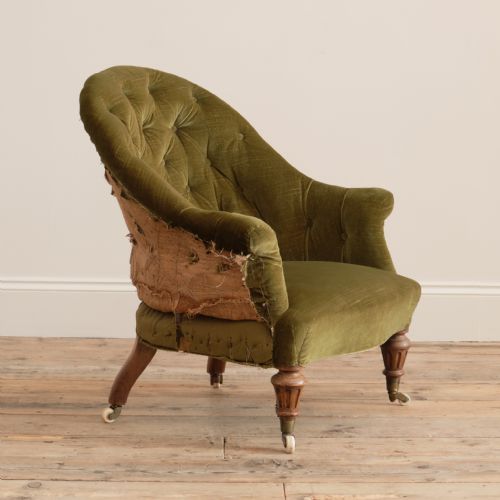
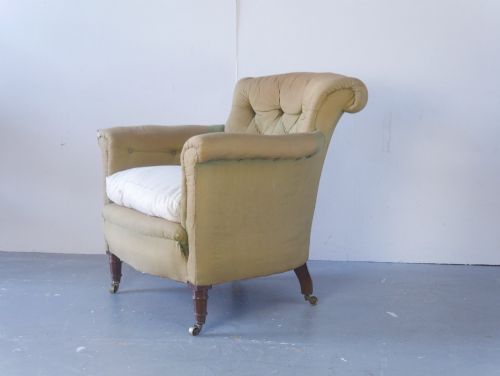
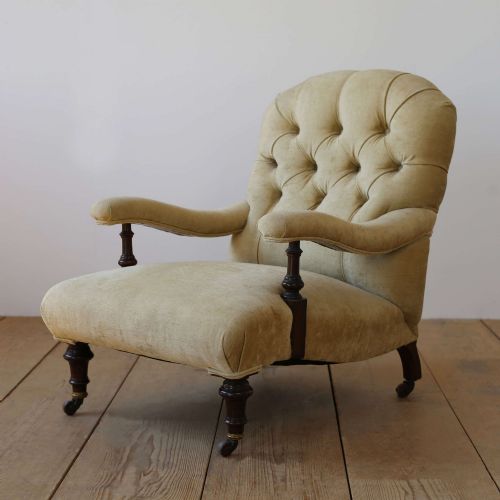
A green reading armchair brings deep upholstery and rich leather to a study, offering a place to sit for hours with a book.
Green Reading Armchair
A green reading armchair combines supportive armrests with deep seating designed for long hours of study or repose. These pieces appear across Victorian, Regency, and Edwardian periods, taking the form of library chairs, desk chairs, and spacious wingbacks.
The selections available run from substantial mahogany library chairs upholstered in green leather to elegant cane-backed bergères and barrel backs. Mahogany, walnut, and rosewood frames dominate, often paired with buttoned leather or textile covers.
Makers such as Gillows, Howard and Sons, and Holland and Sons appear among the offerings, alongside country house pieces and comfortable open armchairs. Buyers find proportions ranging from diminutive frames to oversized gentleman's chairs.
Distinctions in Craftsmanship
The refinement of the timber carving and the integrity of the frame separate standard seating from exceptional library chairs. Carved details on mahogany and walnut show the hand of skilled cabinet makers, particularly on pieces bearing maker stamps.
The grade of the leather upholstery and the resilience of the traditional interior stuffing dictate the comfort and longevity of the seat. Superior examples maintain firm structural joinery and well-preserved surface polishes across the arms and legs.
Listings span the nineteenth and early twentieth centuries, featuring Victorian, Regency, and Edwardian periods in mahogany, walnut, and oak.
Gillows·Howard and sons·Holland and Sons·Hampton and sons·Heals
The Green Reading Armchair Glossary
- Bergère
- An enclosed armchair with stuffed upholstery and cane panels set into the wooden frame. This French style gained popularity in the Regency and Victorian periods.
- Library chair
- A substantial armchair designed for reading rooms, typically fashioned from mahogany or walnut with leather upholstery. These chairs often feature generous proportions and padded armrests.
- Wingback
- An armchair with high back and flanking side panels designed to shield the sitter from drafts. Early examples rest on cabriole legs.
- Tub chair
- A curved armchair where the back rail flows continuously into the arms to form a rounded enclosure. Upholstered versions offer snug support for reading.
- Button leather
- A leather upholstery style featuring deep indentations secured by buttons. This technique creates a tufted surface common on nineteenth-century gentleman's chairs.
Green Reading Armchair: Frequently Asked Questions
How do I identify a Regency armchair?
Regency armchairs typically date from the early nineteenth century and display classical restraint through clean lines and mahogany or faux rosewood finishes. Sabre legs and cane panels often accompany these designs.
Library chairs from this era pair dark timbers with green leather upholstery suited to study rooms.
Where should I place a wingback chair?
Wingback chairs suit studies, libraries, and living rooms where their high backs and side panels create a private seating area. Their proportions look best away from walls or near a fireplace.
Pairing a green leather wing chair with a mahogany desk or bookshelf highlights its traditional origins.
What is a bergere armchair?
A bergere is an upholstered armchair featuring exposed wooden frames and woven cane sides or back panels. Originating in France, these chairs became popular in British homes during the Regency and Victorian eras.
Caned bergères offer a lighter visual profile compared to fully stuffed library chairs while maintaining firm support.