



Period Watercolour
A period watercolour brings the delicate pigment and paper of past centuries directly to your wall, offering intimate portraits and landscapes that capture the texture of history.
Period Watercolour
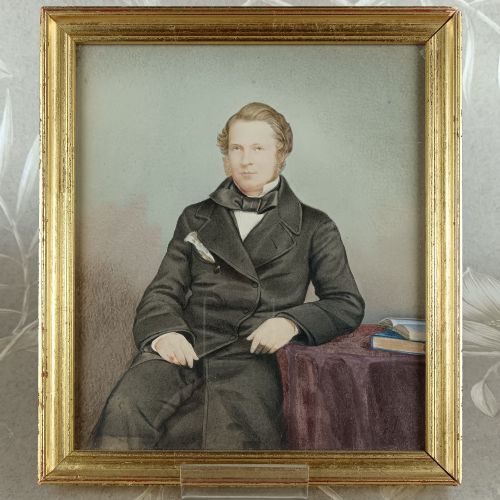
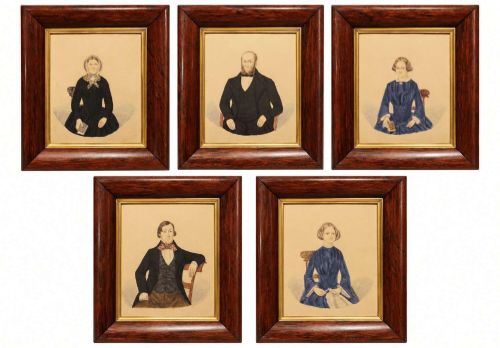
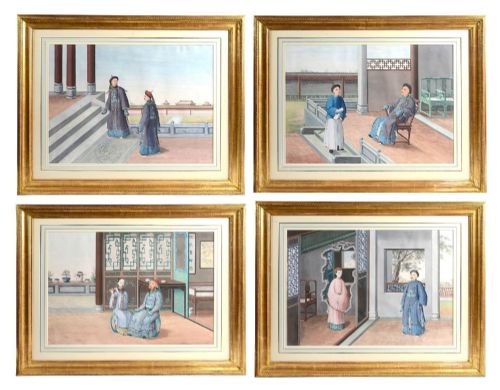
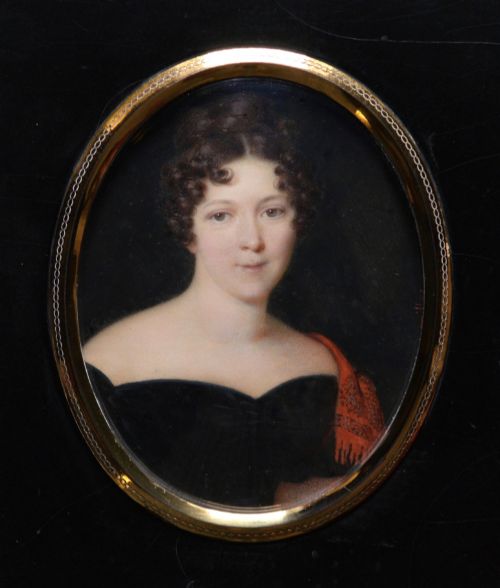
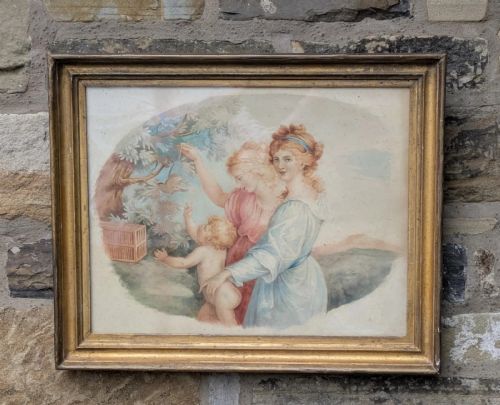
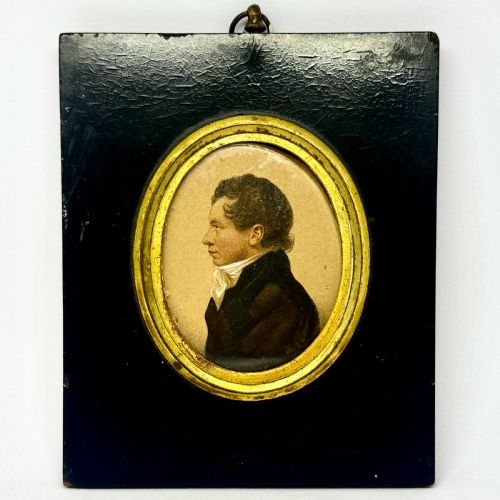
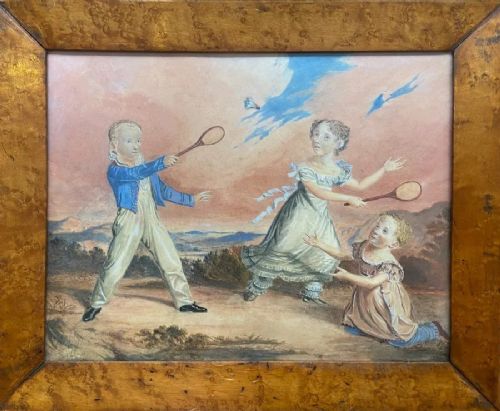
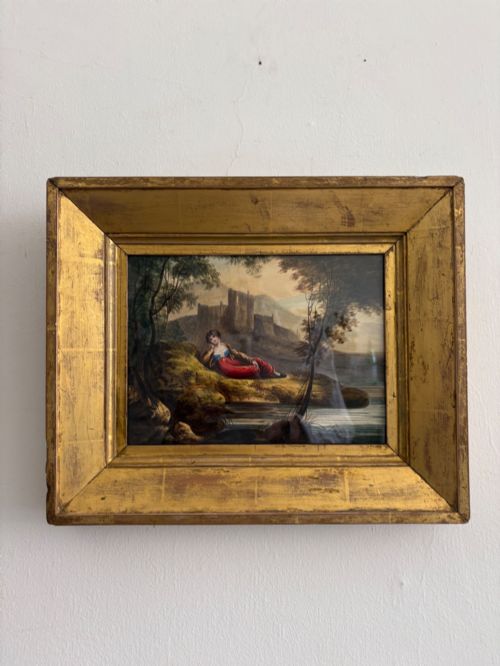
A period watercolour captures a specific moment on paper through translucent pigment, spanning delicate miniature portraits of Georgian families to expansive Regency landscapes and Victorian character studies. When searching for a period watercolour, buyers encounter diverse subjects ranging from classical scenes and country pursuits to Chinese Canton export works and Japanese paintings.
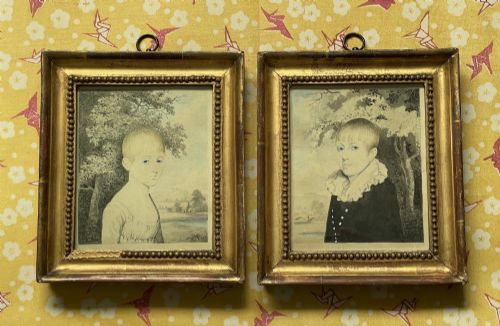
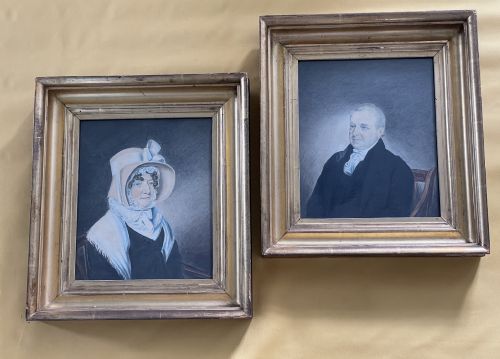
The works on this page lean heavily towards 19th-century portraits and scenes, alongside Georgian groupings and early 1900s depictions. Framed pieces often arrive housed in period wooden or gilt frames, preserving the original presentation of the artwork.
How they were made
Artists applied watercolour and occasionally gouache directly onto paper, sometimes working on silk, utilising the white of the ground to illuminate the pigments. Watercolour painting required swift, confident brushwork since mistakes on paper could rarely be corrected.
Makers set these delicate works behind glass within timber frames, employing gilded wood, ebonised surfaces, and brass fittings to protect the fragile paper sheets from moisture and handling.
Period Watercolour Retail Price Guide 2026
Typical asking prices for period watercolour among the pieces listed under this phrase on Sellingantiques today, from the lower quarter to the upper quarter. They describe what is for sale here now, not the wider market.
What varies in quality
The distinction between ordinary and exceptional works rests upon the artist's command of line and the preservation of pigment vibrancy over time. Finer paintings retain their original colour saturation without excessive fading from light exposure, while weaker examples suffer from dull tones and flat, uninspired composition.
The quality of the surrounding frame significantly influences the piece, with period giltwood or ebonised surrounds providing a more authentic context than modern replacements.
Henry Travis·George Kilburne·Philip Richard Morris·Gaston Cornil·Alice Anne Renshaw·John Augustus Atkinson·Thomas Woolnoth·Edith E Caswall·Emma Kendrick·James H Hulse·B. Kaufmann·Thomas Ivester Lloyd·Takashi Nakayama·Frederick Thomas Baynes·Robert Kemp
The Period Watercolour Glossary
- Gouache
- An opaque water-based medium often combined with watercolour to build heavier highlights and solid areas of colour. It gives certain portrait miniatures and landscapes a richer, denser surface texture.
- Portrait Miniature
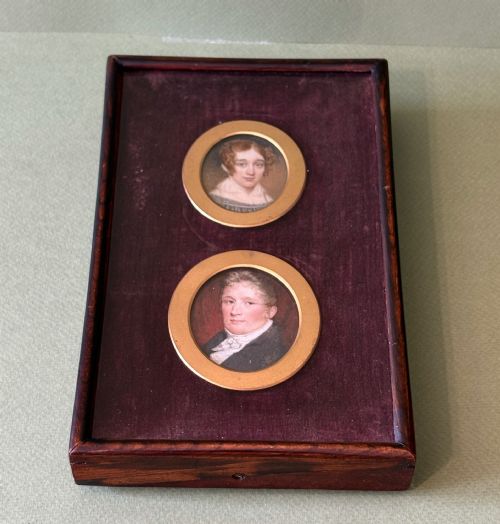
- A small, highly detailed painting, frequently executed on paper or ivory, designed for intimate viewing or portable display. These works often capture family members or prominent historical figures.
- Ebonised frame
- Wood treated to imitate ebony, providing a dark, stark contrast that highlights the lighter tones within a watercolour. This framing technique appears frequently on 19th-century pieces.
- Chinese Export
- Works produced in China specifically for Western markets, often featuring traditional local scenes rendered in a hybrid style. Canton watercolours are a prime example of this cross-cultural trade.
- Giltwood
- Timber coated with a thin layer of gold leaf or gold paint, used extensively to frame fine art during the Georgian and Regency periods. It adds a warm, reflective border to the painting.
Period Watercolour: Frequently Asked Questions
How do I care for a period watercolour?
Keep the artwork away from direct sunlight to prevent the delicate pigments from fading over time. Maintaining a stable indoor humidity protects the paper and the original frame from warping.
Ensure the glass remains sealed to block dust and moisture from settling on the fragile surface of the paper.
Are these paintings always framed in period surrounds?
Many examples retain their original wooden, giltwood, or ebonised frames from the Georgian, Regency, or Victorian eras. These housings show appropriate signs of age that match the artwork inside.
Some pieces have been reframed later in their lifespan to ensure better structural protection and presentation.
What subjects are most common in these works?
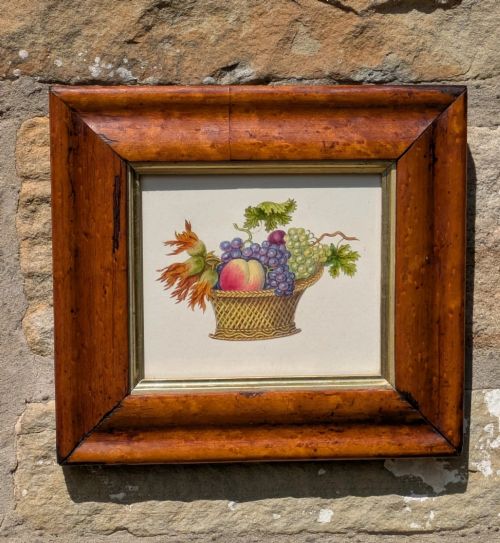
Portraits dominate the selection, ranging from single miniatures of gentlemen and young ladies to family groupings and character studies. Landscapes, classical scenes, and botanical or fruit arrangements also appear frequently.
Export pieces bring international perspectives, including traditional Japanese compositions and Chinese Canton views.
How can I tell a genuine 19th-century watercolour apart?
Examine the paper stock for appropriate texture, watermark evidence, and natural ageing characteristics typical of the 1800s. The pigments used in older works often display a specific matt finish distinct from modern synthetic paints.
Look for framing construction methods and backing materials that correspond with the stated period of creation.