
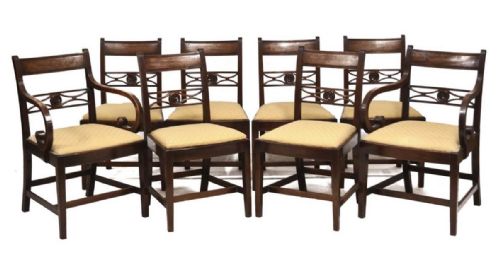
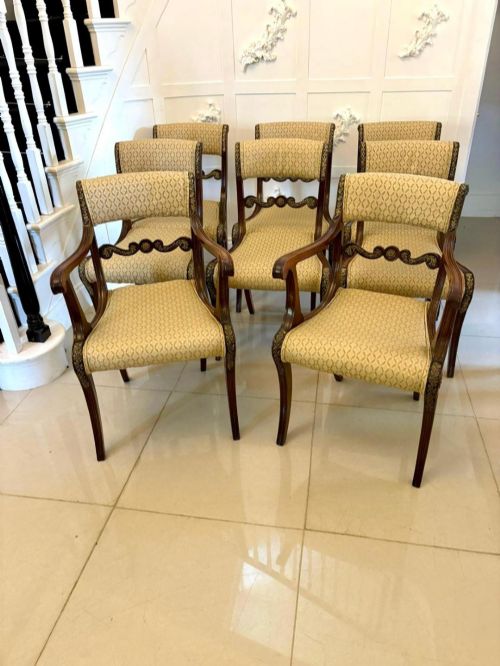
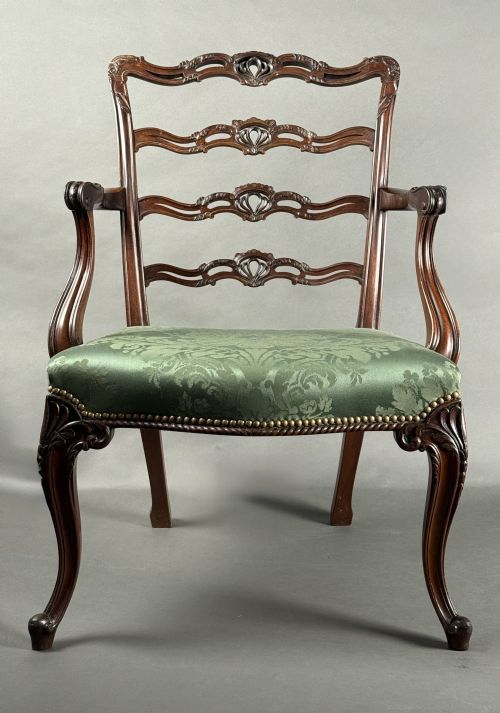
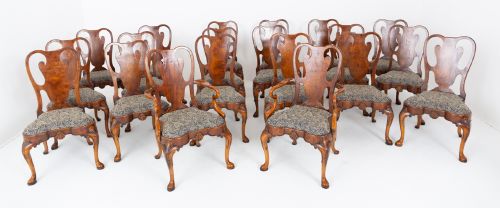
Period Style Carver Chairs
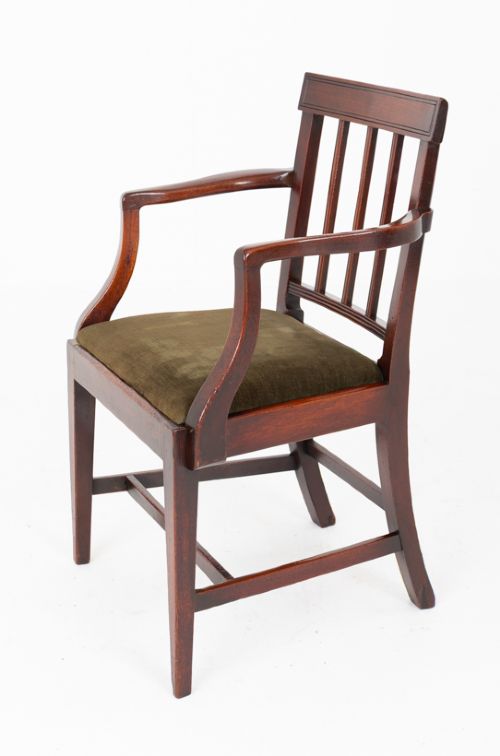
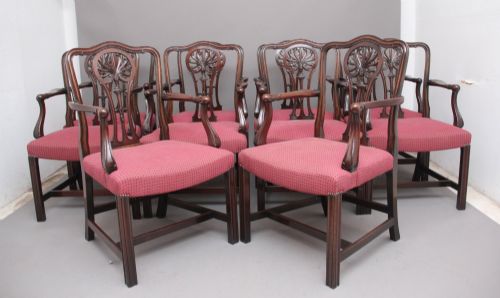
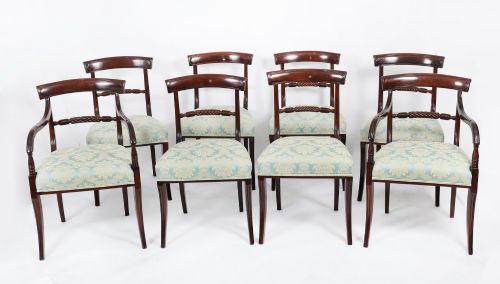
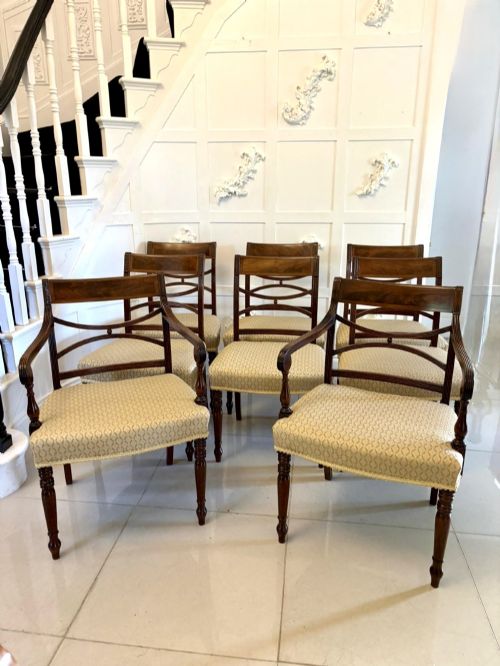
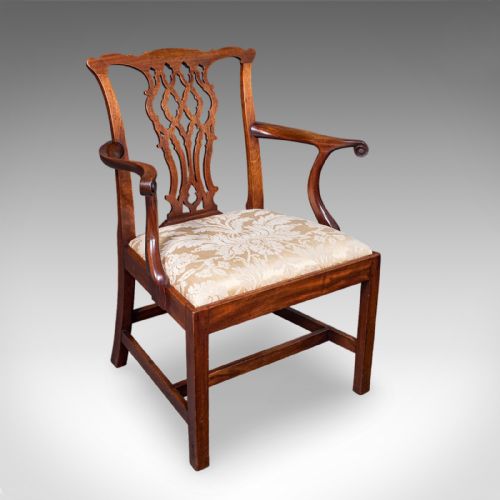
Period style carver chairs bring formal seating with integrated armrests into a dining space, drawing on Georgian, Regency and Victorian designs.
Period Style Carver Chairs
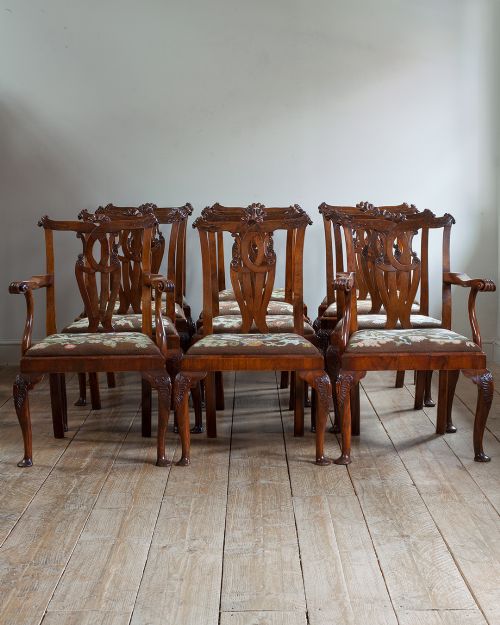
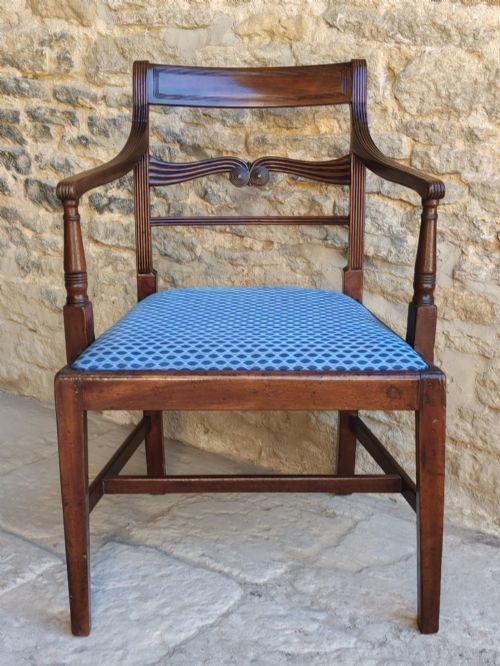
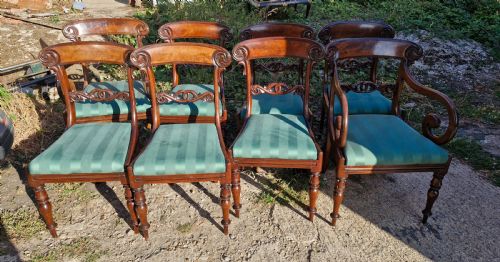
Period style carver chairs offer sturdy timber framing combined with upholstered or cane seating designed for the heads of dining tables. You encounter pieces spanning the eighteenth century through to twentieth-century revivals.
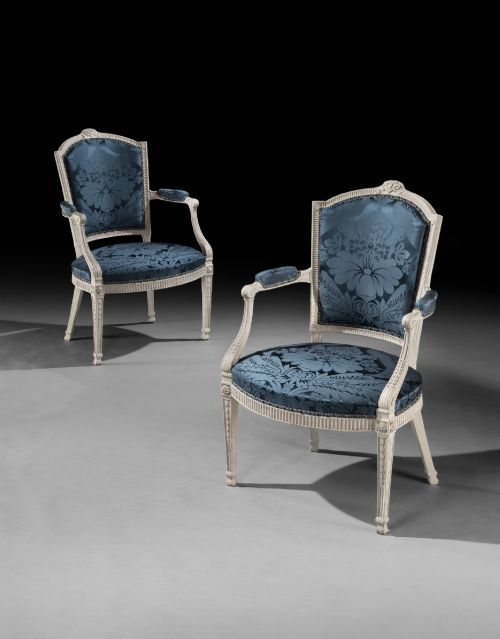
The selections here range from authentic Georgian and Regency originals to later Victorian and Edwardian interpretations built in the manner of Chippendale, Sheraton and Hepplewhite.
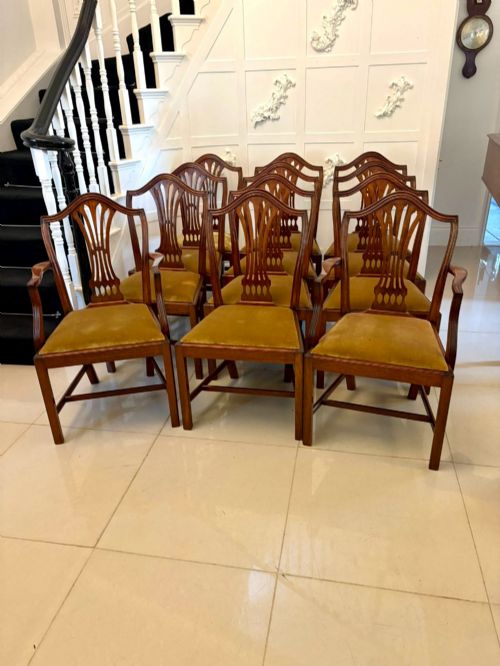
Armchairs and elbow chairs appear frequently alongside larger dining sets, providing matching seating for principal guests or study use.
Construction and Materials
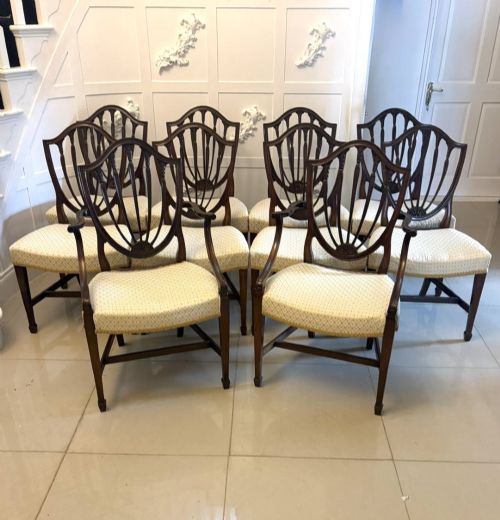
Cabinetmakers built these carver chairs primarily using solid mahogany, walnut, maple and elm, often shaping the timber into curved armrests, shield backs and lyre motifs.
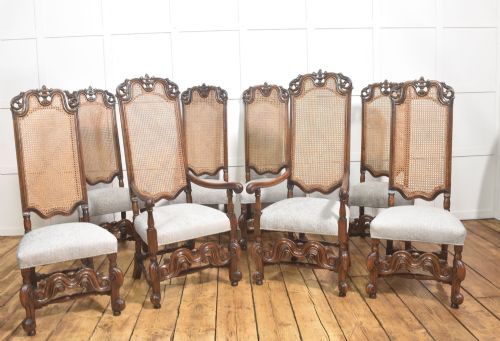
Upholstery techniques applied to the seats incorporate textile, fabric, velvet and tapestry, sometimes secured over cane panels or drop-in frames.
Decorative details rely on hand carving, painted surfaces and brass accents integrated directly into the wooden framework.
Makers occasionally added faux birds-eye maple decoration to satisfy Edwardian tastes for exotic timber finishes without the cost.
Assessing Quality
The standard of a carver chair rests upon the crispness of its wood carving and the integrity of its joinery at the arm joints and leg junctions.
Finer examples display careful timber selection with well-matched grain patterns, whereas simpler or later revival pieces utilise straightforward secondary woods and less intricate detailing.
Alfred Allen of Birmingham·Maple and Co
The Period Style Carver Chairs Glossary
- Carver chair
- An armchair designed specifically for use at the end of a dining table. These pieces feature distinct armrests to accommodate formal attire.
- Shield back
- A chair back shaped like a heraldic shield, popularised during the late eighteenth century by designers such as Hepplewhite and Sheraton.
- Lyre back
- A chair splat formed in the symmetrical shape of a classical stringed musical instrument. This motif appears often on Regency models.
- Cane seat
- A seating surface woven from peeled rattan strips. It provides a lightweight, flexible alternative to solid wood or upholstered pads.
Period Style Carver Chairs: Frequently Asked Questions
How do I identify a Georgian carver?
Georgian carvers typically exhibit robust mahogany construction with carved splats, straight or cabriole legs, and understated structural proportions. Authentic pieces date from the eighteenth or early nineteenth century.
Later revivals from the Victorian and Edwardian eras imitate these specific eighteenth-century characteristics.
Are these chairs suitable for daily dining?
These chairs function well for everyday dining when constructed from durable hardwoods like mahogany or walnut. Many examples feature newly updated upholstery to suit modern use.
Care should be taken with antique cane panels and delicate painted finishes during routine daily handling.
What is the difference between a carver and an armchair?
The terms are often used interchangeably in the trade to describe timber seating with armrests. Specifically, a carver refers to a dining chair with arms intended to match a set of single chairs.
Armchairs may also encompass library seats, elbow chairs and parlour furniture built for general seating.