
Period Storage Chest
When you search for a period storage chest, you are looking at centuries of domestic utility built from solid oak and mahogany.
Period Storage Chest
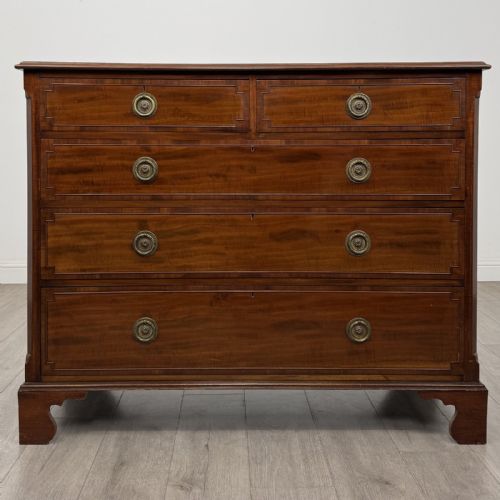
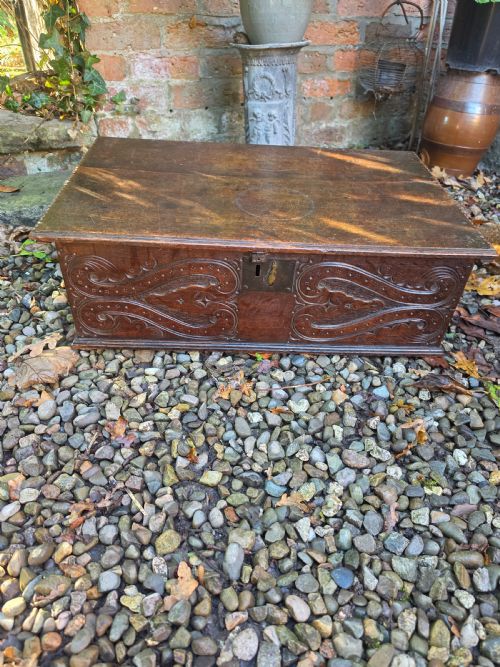
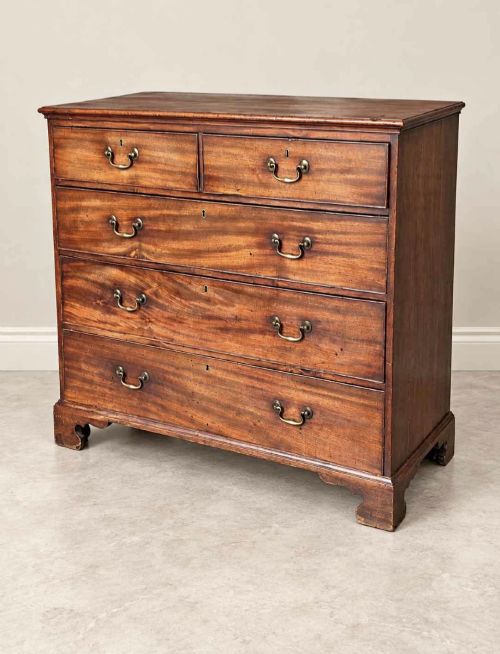
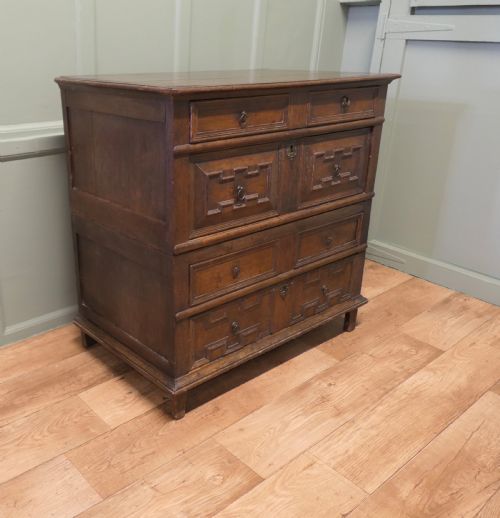
A period storage chest covers a diverse group of domestic furnishings designed to hold linens, documents and personal possessions. The selection spans utilitarian coffers from the sixteenth and seventeenth centuries through to refined mahogany drawer units of the Georgian and Regency eras.
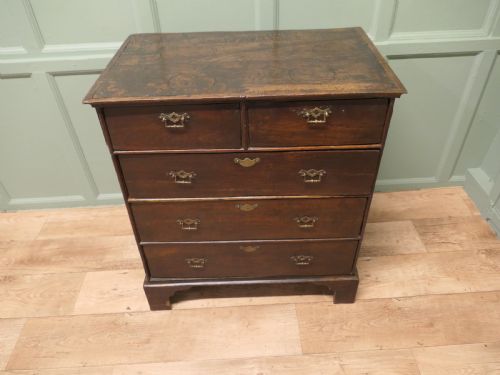
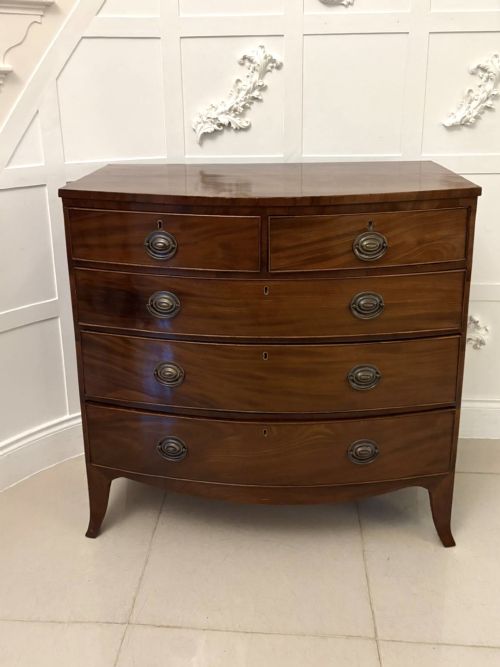
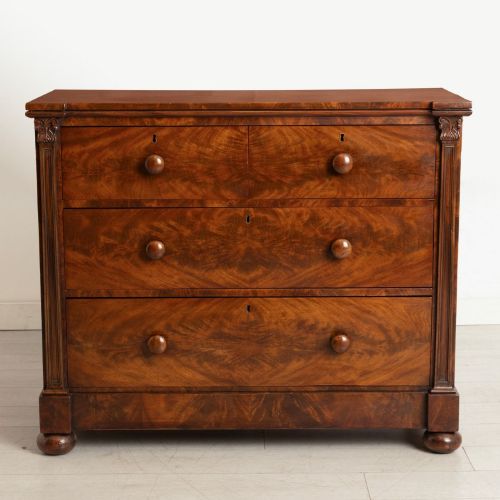
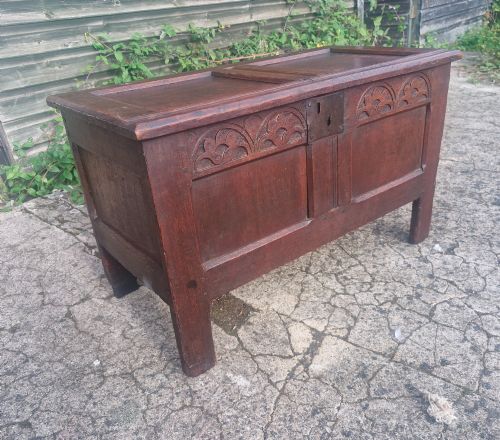
Buyers will most frequently encounter oak coffers and mahogany chests of drawers among these listings. These forms reflect the changing domestic needs of households from the sixteenth century onwards, moving from heavy boarded boxes to multi-drawer case furniture.
How they were made
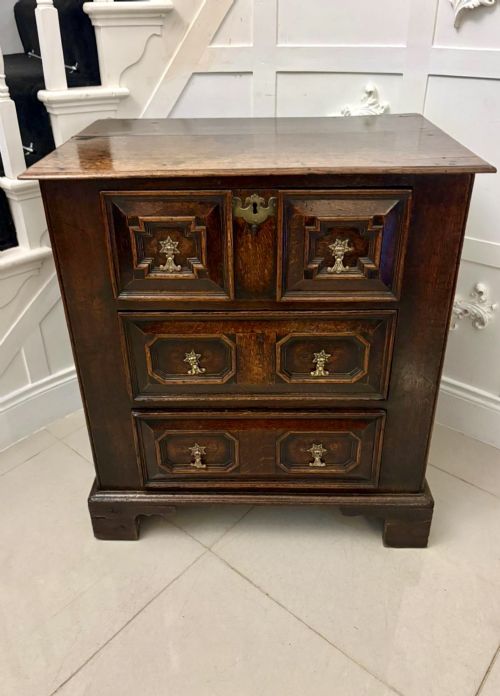
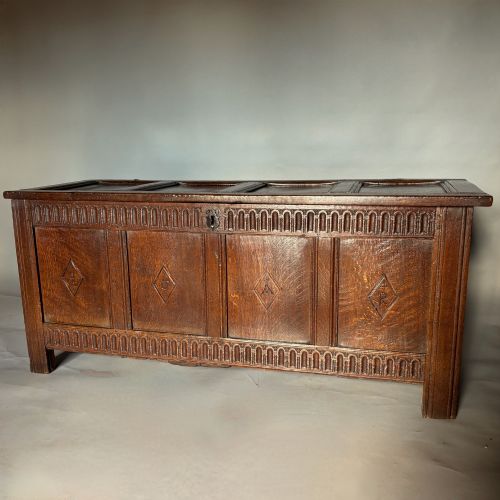
Construction relies heavily on native oak in the earlier centuries, utilising joined frameworks, panels and pegged joints. Surface decoration on these pieces often incorporates carved motifs, geometric mouldings and occasionally marquetry inlay.
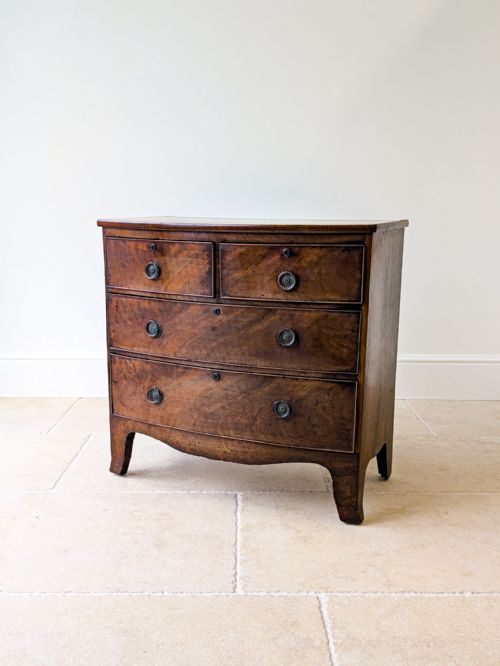
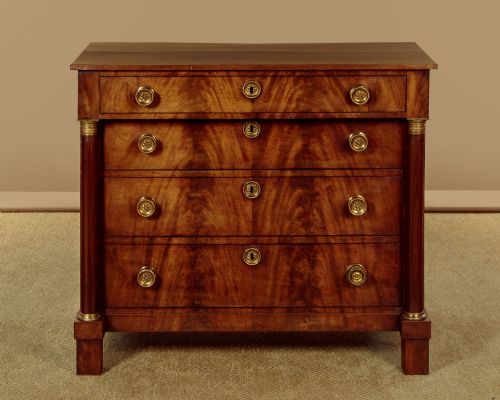
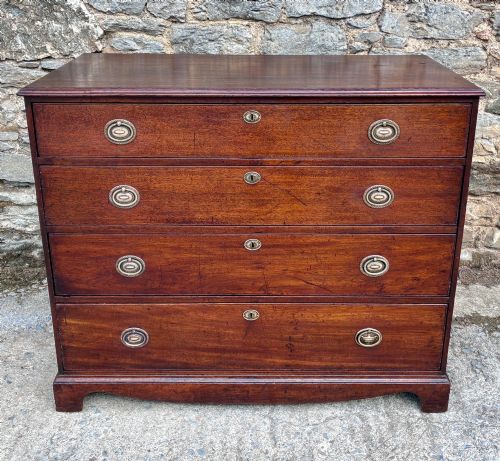
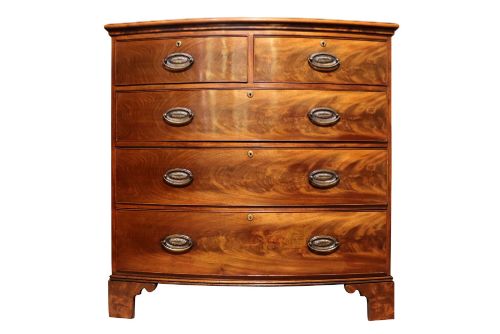
Later pieces from the eighteenth and nineteenth centuries utilise dense hardwoods such as mahogany, walnut and flame mahogany veneers. Cabinetmakers shaped these into bow fronts and chest-on-chest configurations, finished with brass hardware and handles.
Some seventeenth-century oak chests retain traces of bygone candle wax dripped inside the lid during late-night textile sorting.
What varies in quality
The standard of timber selection and joinery marks the primary difference between standard utility items and exceptional pieces. Grain matching on flame mahogany fronts and intricate carving on seventeenth-century oak panels indicate workshop skill.
Proportion and architectural integrity dictate the standing of a piece within its period. Untouched original surfaces and retained period brasses elevate a storage chest above examples that have undergone heavy structural intervention.
The Period Storage Chest Glossary
- Coffer
- A heavy wooden box or chest used for storing valuables, linens or documents. These form the earliest category of domestic storage found in seventeenth-century homes.
- Mule chest
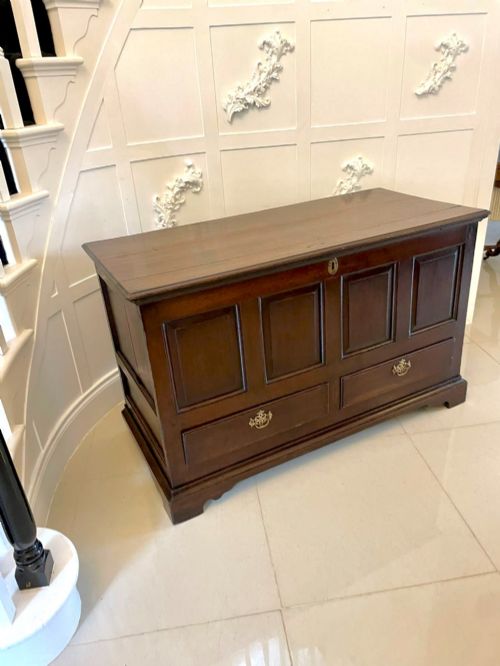
- A storage chest fitted with one or more drawers beneath the main internal compartment. They bridge the functional gap between simple coffers and modern chests of drawers.
- Bow front
- A convex, curved front elevation popular on chests of drawers during the Regency and Georgian periods. This technique softens the rigid rectangular profile of case furniture.
- Linen press
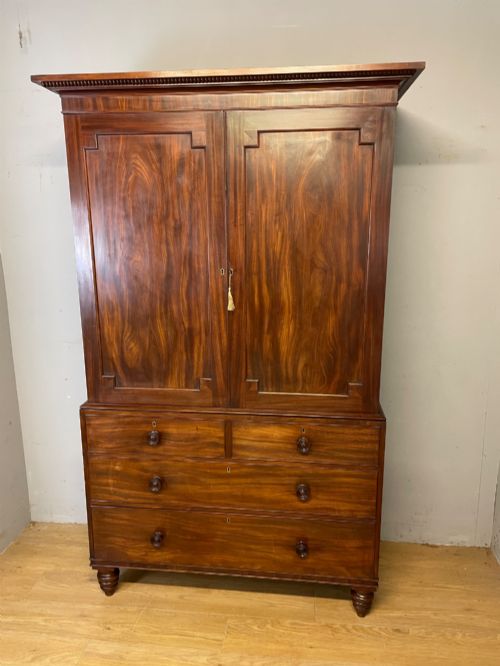
- A tall storage piece comprising upper cupboard doors enclosing sliding trays, sitting above a chest of drawers base. They were designed specifically to store household linens flat.
Period Storage Chest: Frequently Asked Questions
How do I date an oak coffer?
Dating relies on construction methods such as hand-split panels, pegged frame joinery and tool marks left by early adzes and saws. Secondary woods and fastener types provide further clues to the decade of manufacture.
Stylistic indicators like carved strapwork, stile extensions and geometric mouldings help place an oak coffer within the sixteenth or seventeenth century.
What is a mule chest?
A mule chest combines the top-opening compartment of a traditional coffer with the accessible bottom drawers of a chest of drawers. This hybrid design gained popularity in the seventeenth and eighteenth centuries.
The addition of drawers allowed owners to access frequently used items without lifting the heavy lid of the chest.
Where were bow front chests placed?
Bow front chests of drawers were typically used in bedrooms and private dressing rooms during the Georgian and Regency periods. Their curved profiles saved floor space while offering generous internal volume.
They functioned primarily for storing folded garments, linens and personal accessories in well-to-do households.
How do I care for antique mahogany?
Keep antique mahogany storage pieces away from direct sunlight and strong heat sources to prevent timber splitting and veneer lifting. Maintain a stable indoor humidity level to protect the wood.
Apply a traditional beeswax polish sparingly and buff with a soft cloth to preserve the natural patina without building up chemical residues.