

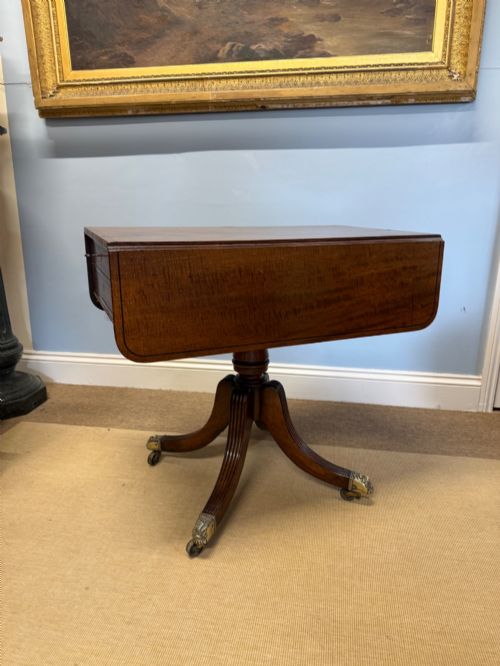
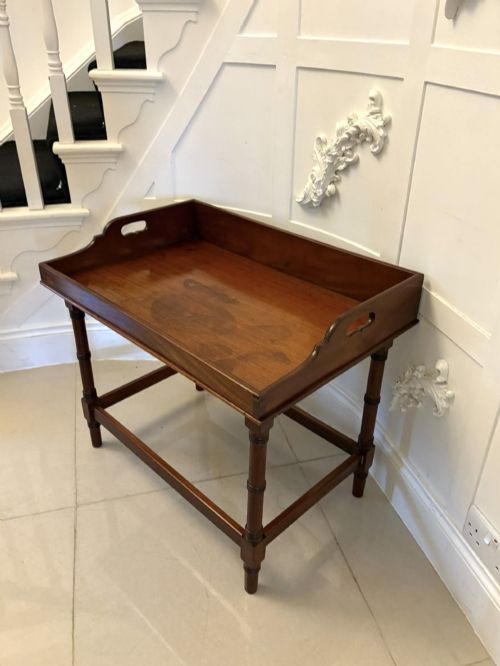
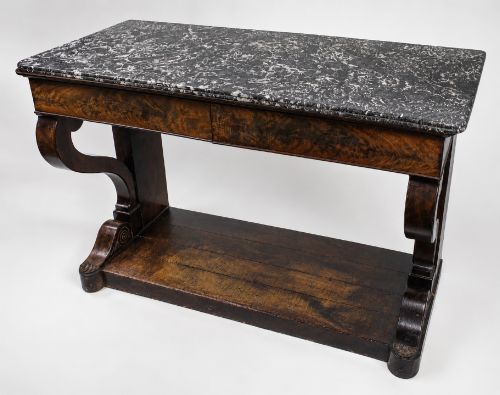
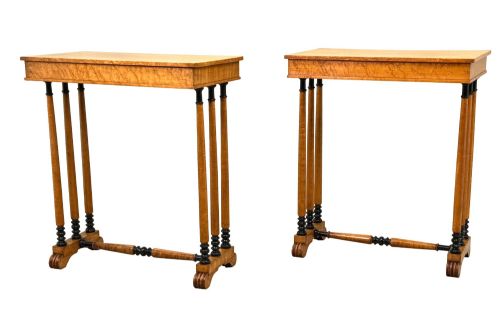
Period Sofa Table
A period sofa table brings classic proportion and understated elegance to a room, designed originally to stand before a sofa.
Period Sofa Table
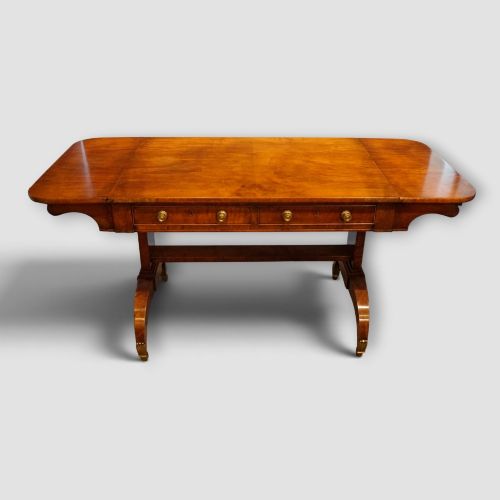
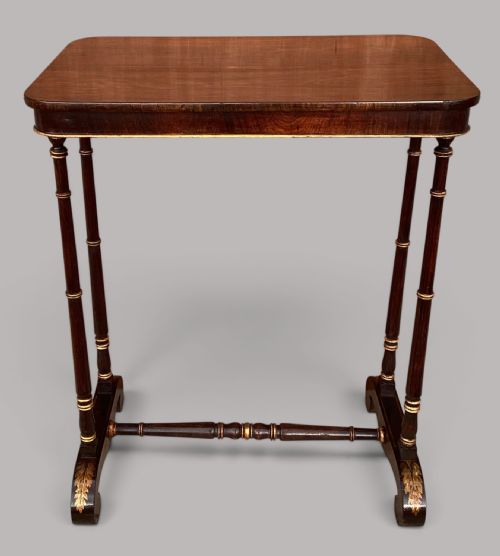
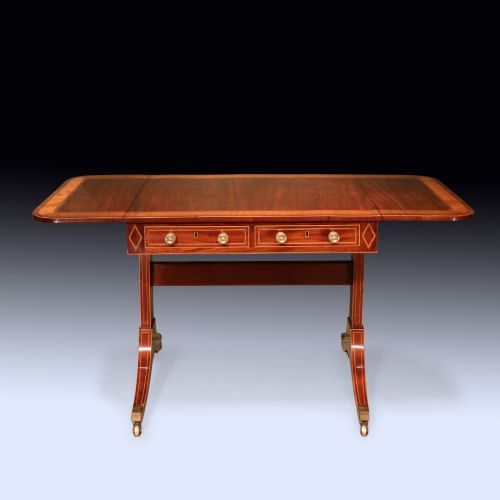
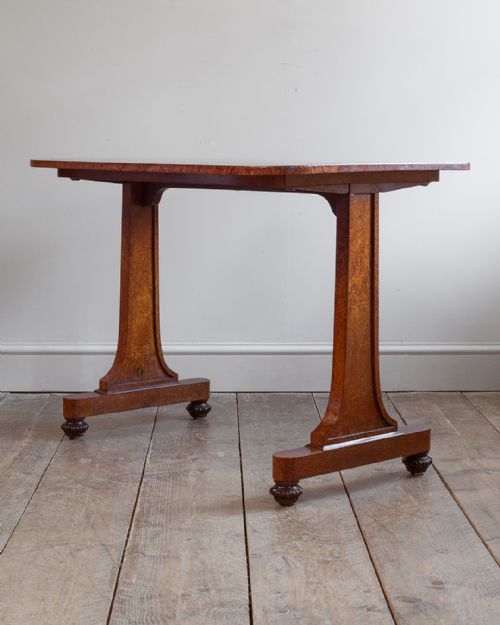
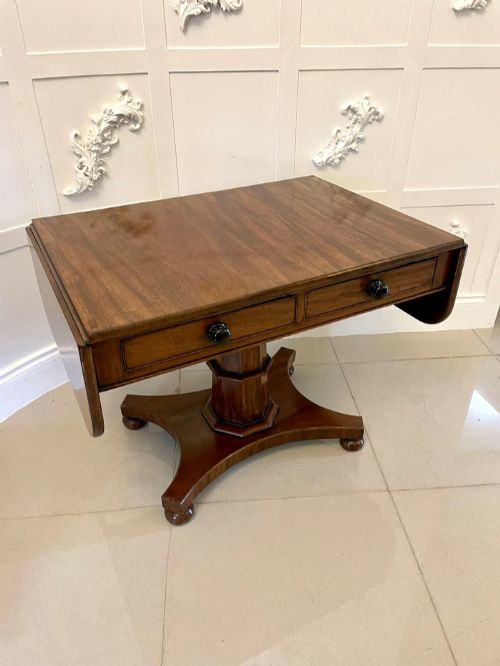
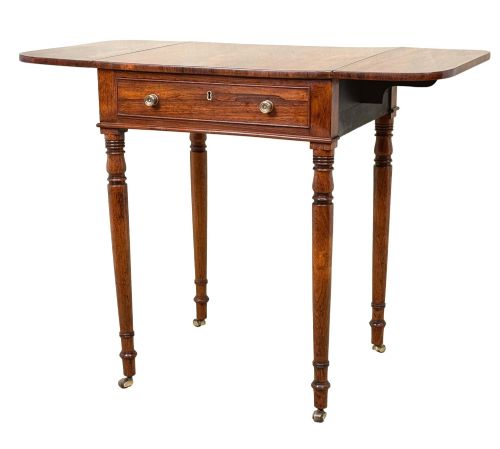
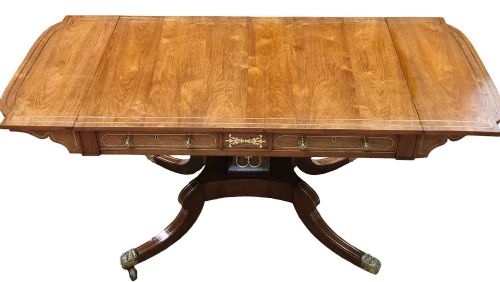
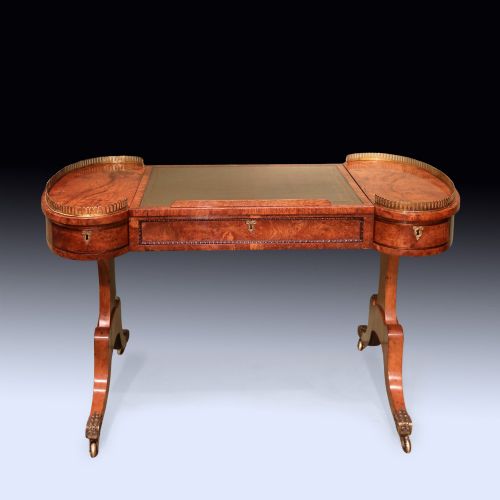
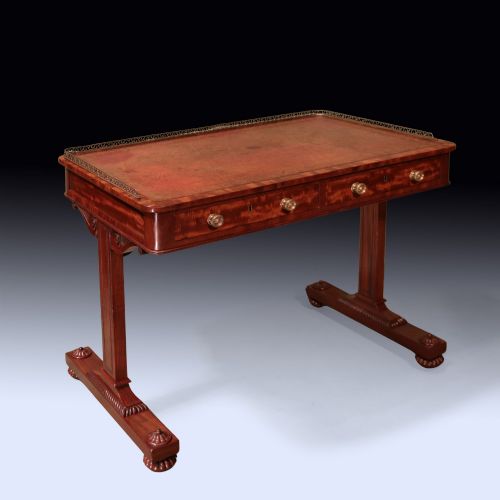
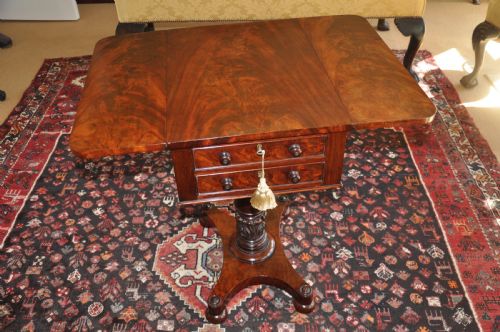
A period sofa table is a rectangular, freestanding piece designed to sit directly in front of seating, often equipped with drop leaves at either end. The examples found here span the Regency, Georgian, and Victorian eras, alongside related forms such as library tables, writing tables, and Pembroke tables.
Mahogany and rosewood dominate the selection, frequently paired with satinwood or goncalo alves veneers. These timbers reflect the cabinet-making tastes of the late eighteenth and early nineteenth centuries.
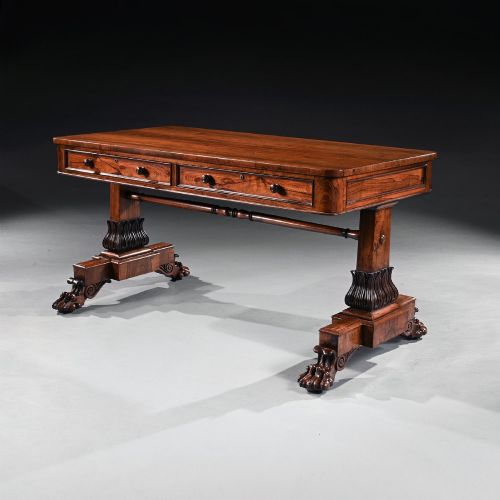
The version most likely to meet you on this page is the Regency rosewood or mahogany sofa table, often fitted with twin pedestals or end supports and brass mounts.
Materials and Construction
Cabinet-makers of the period relied heavily on solid mahogany and dense rosewood, selecting cuts with rich figuring and natural warmth. These primary timbers were often enhanced by contrasting stringing in satinwood or ebony.
Brass inlay and mountings formed a key decorative technique, particularly during the Regency era, where cut brass strips were set flush into dark wood surfaces.
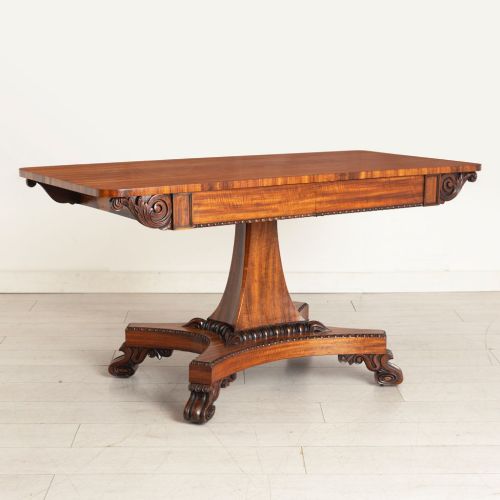
Structural stability was achieved through robust end-support trestles, pillar-and-claw pedestals, and carved lion paw or dolphin bases that supported the weight of the drop leaves.
Period Sofa Table Retail Price Guide 2026
Typical asking prices for period sofa table among the pieces listed under this phrase on Sellingantiques today, from the lower quarter to the upper quarter. They describe what is for sale here now, not the wider market.
Some nineteenth-century makers concealed miniature writing slopes and velvet-lined compartments inside drawers meant for secret love letters.
Assessing Quality
The distinction between ordinary and exceptional pieces lies in the choice of timber and the precision of the cabinet-work. Superior examples feature highly figured mahogany or burr veneers selected with care to match across the top and leaves.
Secondary details reveal the hand of the maker, such as the crispness of carved wooden feet, the integration of brass inlay, and the careful dovetailing within the drawer linings. Modest pieces often rely on simpler geometric forms without inlay or carved supports.
Jean-Joseph Chapuis
The Period Sofa Table Glossary
- Drop leaf
- A hinged flap on either end of a table top that can be raised to increase surface area or lowered when space is restricted.
- Goncalo Alves
- A dense exotic hardwood with distinctive figuring, used in high-status furniture during the nineteenth century.
- Satinwood
- A pale, lustrous timber imported from the tropics, utilised for contrasting inlay and banding.
- Lyre end
- A form of table support shaped to resemble an ancient stringed instrument, common in Regency design.
- Pembroke table
- A small occasional table featuring two hinged drop leaves and typically a single drawer.
Period Sofa Table: Frequently Asked Questions
What is a period sofa table used for today?
These tables function well behind a sofa, as a slim desk, or placed against a hallway wall. Their drop leaves allow them to adapt to different spaces.
They provide a practical surface for lamps and books while introducing historical character to an interior.
How do I distinguish Regency from Georgian pieces?
Georgian pieces tend to show heavier proportions in solid mahogany with understated carved details. Regency examples introduce exotic veneers like rosewood and brass inlay.
Regency design often favours architectural supports such as lyres, pillars, and animal paw feet.
Are the drop leaves sturdy enough for daily use?
The hinged flaps are supported by pivoting wooden arms known as fly brackets. When properly adjusted, these brackets hold the leaves firmly in place.
They are designed to bear normal weight, though heavy pressure should be avoided on the unsupported edges.
Why do some tables feature faux drawers?
Many sofa tables were designed to stand away from walls in the centre of a room. Cabinet-makers added dummy drawers on the reverse side to maintain visual symmetry.
This ensures the piece looks finished from any angle.