
Period Sideboard
A period sideboard brings dining rooms and hallways together, offering deep storage and striking timber grain from centuries past.
Period Sideboard
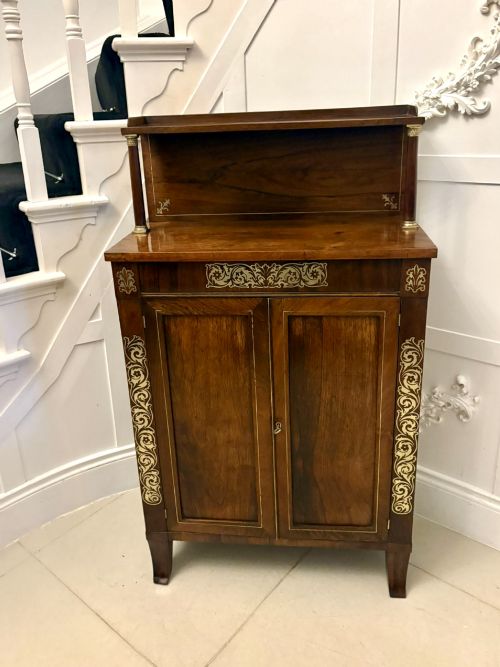
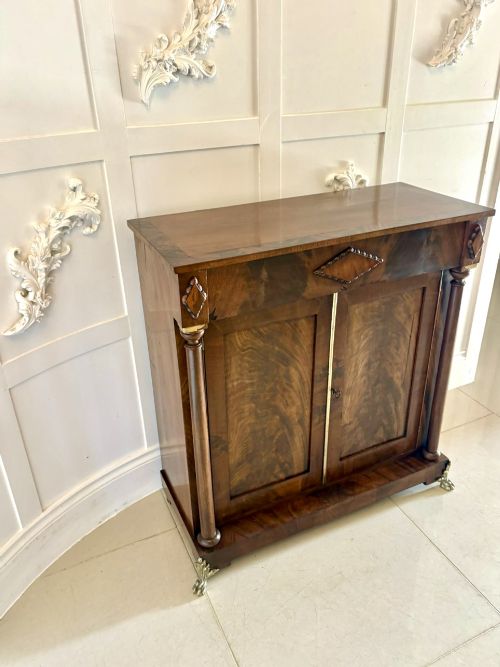
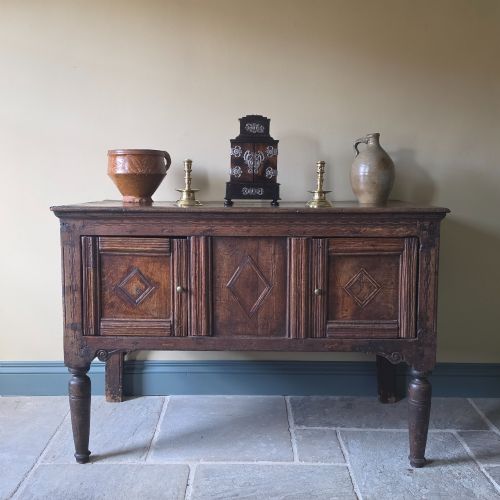
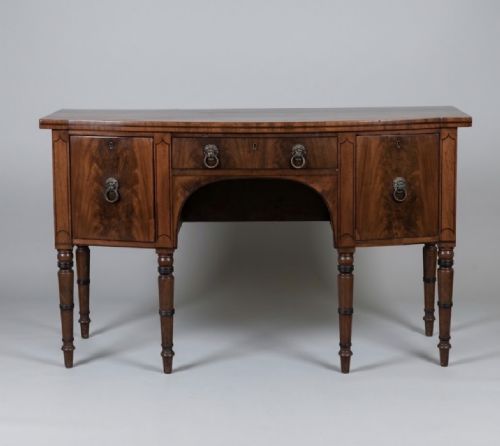
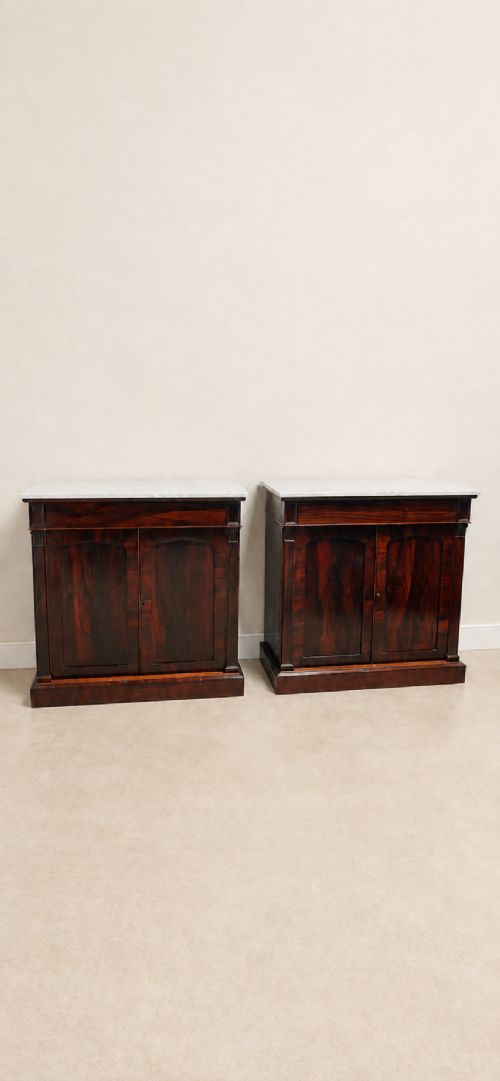
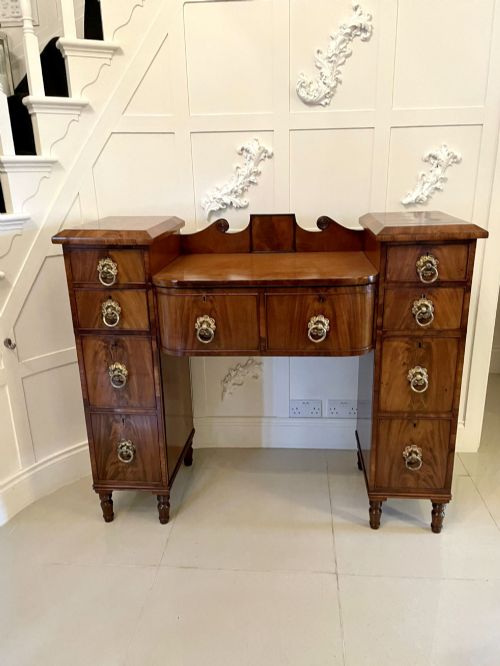
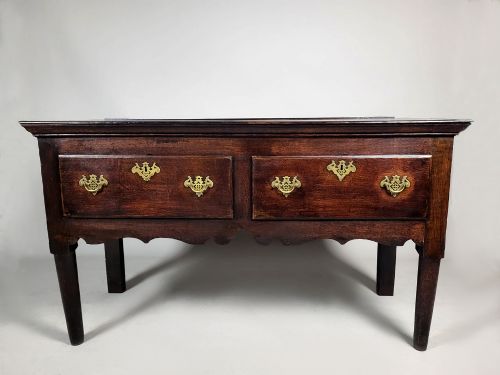
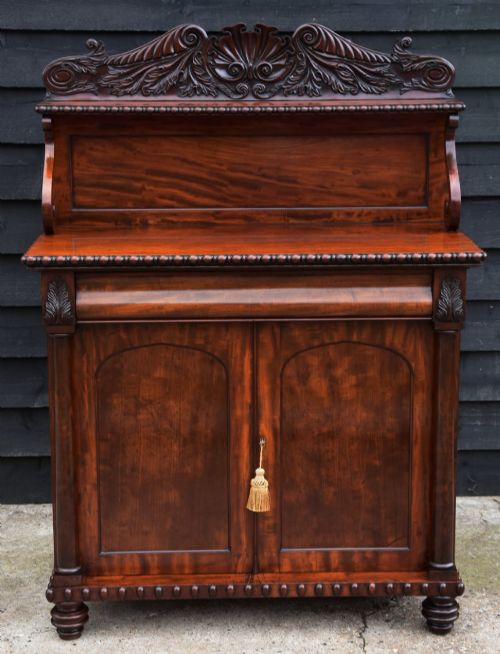
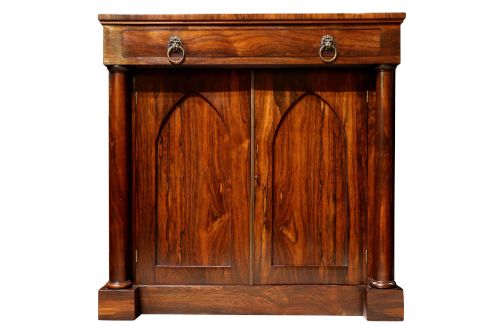
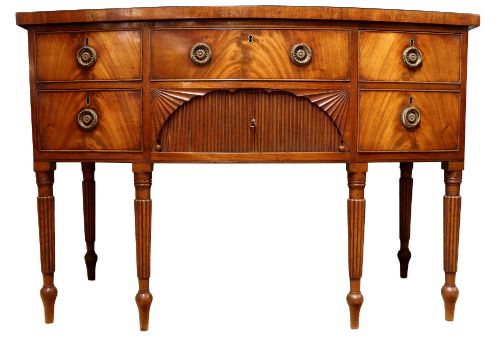
When you search for a period sideboard, you encounter a diverse range of large dining room and hallway storage furniture spanning several centuries. The selection on this page encompasses formal Georgian mahogany servers, elegant Regency rosewood chiffoniers, and sturdy 17th century oak dresser bases. These pieces served primarily to store dining silver, linens, and serving dishes while providing a surface for display during meals.
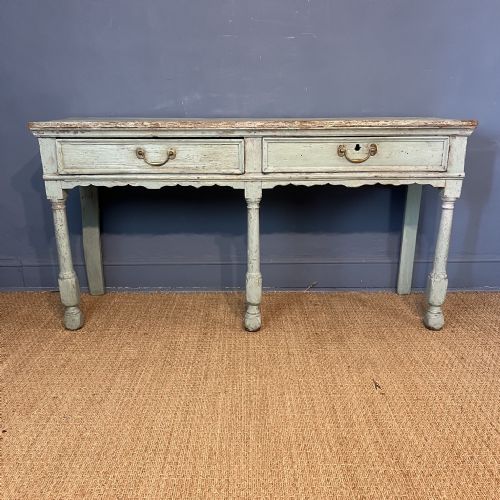
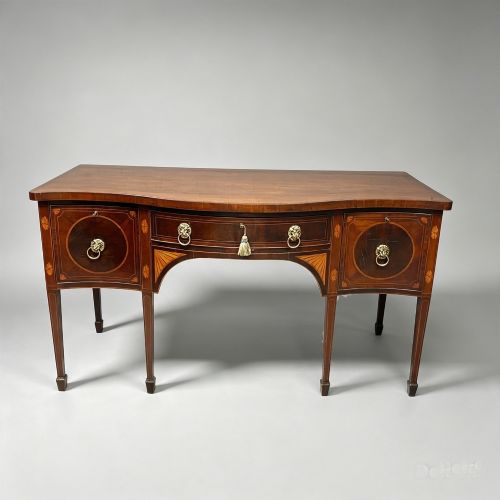
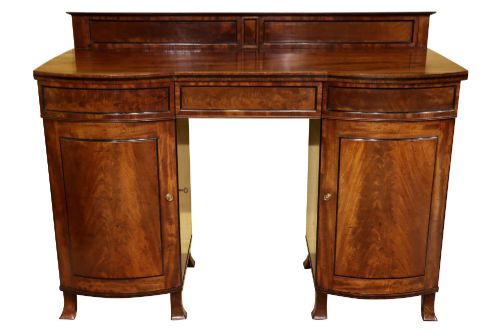
The versions met most frequently here date from the late 18th and early 19th centuries, particularly the Regency and George III periods. These range from bowfront and serpentine cabinets to compact chiffoniers and pedestal sideboards fitted with cupboards and drawers. Earlier examples in oak and walnut from the 17th and early 18th centuries also appear, often taking the form of low dresser bases or court cupboards.
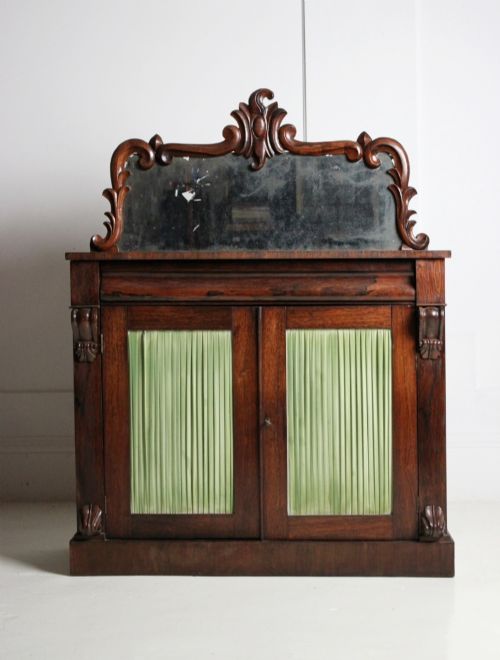
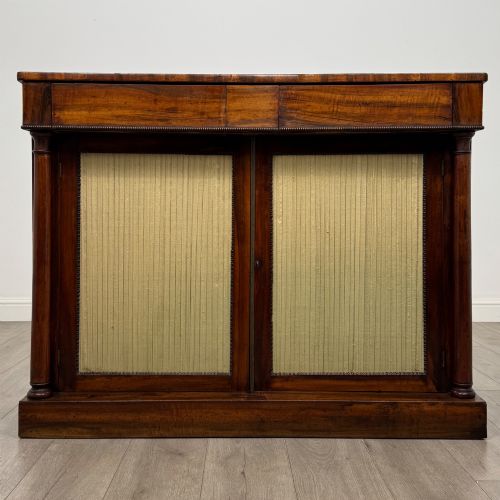
Cabinet makers designed these items to anchor the principal rooms of substantial houses, balancing functional capacity with refined architectural proportions. Formats vary from long serving tables to breakfront configurations and brass-mounted side cabinets with silk panelled doors. Each type reflects the domestic habits and entertaining styles of its specific era.
Materials and construction
Cabinet makers relied heavily on dense tropical hardwoods, choosing solid mahogany, flame mahogany veneer, and rich rosewood for formal 18th and 19th-century pieces. These timbers were selected for their deep colour and pronounced grain, often enhanced by intricate inlay work and contrasting stringing. Earlier items depended on native timbers, utilising solid oak and walnut shaped by hand into robust panels and geometric mouldings.
Metal and glass components played a crucial functional and decorative role across these eras. Brass handles, escutcheons, and mounts punctuate the timber surfaces, while silk panels, fabric inserts, and glazed doors soften the appearance of enclosed cabinets. Construction techniques combined pegged mortise and tenon joints in earlier oak pieces with sophisticated dovetailed drawer boxes and veneered carcases in later Georgian workshops.
The listings span eight distinct historical periods, from 17th-century oak up to early 20th-century mahogany.
Judging the standard of execution
The distinction between ordinary utility items and exceptional pieces rests upon the precision of the timber selection and the fluency of the cabinet work. Superior examples display carefully matched flame mahogany or rosewood veneers that flow seamlessly across drawer fronts and doors, showing deliberate consideration of grain patterns. Lesser pieces rely on standard planking with minimal attention to visual continuity or decorative harmony.
Refinement in secondary details elevates a piece through the execution of inlaid stringing, carved mouldings, and the integration of original brass hardware. The structural integrity of internal framing, drawer linings, and backboards demonstrates the standard of the workshop that produced the item. Master craftsmen ensured that functional elements like drawers and doors operated with precise tolerances that endure across generations.
The Period Sideboard Glossary
- Bowfront
- A convex, outwardly curved front elevation popular on Georgian and Regency serving cabinets.
- Chiffonier
- A compact sideboard or low cabinet, frequently fitted with shelves or a raised gallery, prominent in Regency interiors.
- Dresser Base
- A low rectangular cabinet fitted with drawers and sometimes cupboards below, originating in earlier centuries before the addition of upper plate racks.
- Serpentine
- A front contour characterised by a convex central section flanked by two concave curves, demanding high skill in cabinet making.
- Goncalo Alves
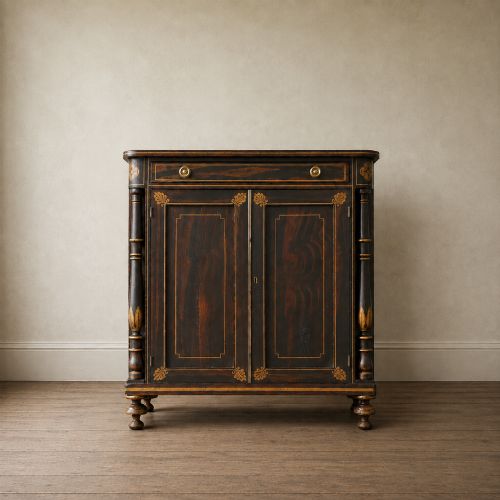
- A dense exotic timber with distinctive contrasting dark striping, utilised for decorative effect on select Regency and Victorian cabinets.
Period Sideboard: Frequently Asked Questions
What is the difference between a sideboard and a chiffonier?
Sideboards were traditionally larger pieces designed for dining rooms to hold heavy serving platters and cutlery, featuring long surfaces and multiple cupboards or drawers.
Chiffoniers are smaller, lower cabinets developed during the Regency period, often incorporating enclosed cupboards below and sometimes small shelves or galleries above for display.
How do I identify a Georgian sideboard?
Georgian pieces, particularly those from the George III era, typically display classical proportions with straight, bowfront, or serpentine outlines in rich mahogany.
They often incorporate delicate stringing, satinwood inlay, and tapered square legs or brass-mounted feet characteristic of late 18th-century neoclassical design.
Where were these pieces used in the home?
These cabinets occupied principal dining rooms, serving as practical staging areas for meals and secure storage for expensive silver and glassware.
Over time, smaller variations like chiffoniers and side cabinets migrated into morning rooms and libraries to store books and display decorative objects.
How do I care for antique mahogany and rosewood?
Maintain these timbers by keeping them away from direct sunlight and sudden temperature shifts that can cause veneers to lift or timber to split.
Apply traditional beeswax polish sparingly and buff with a soft cloth to preserve the natural lustre of the aged wood without building up heavy chemical residues.