



Period Secretaire Drawer
Period secretaire drawer pieces combine a standard chest or cabinet form with a hidden writing desk surface, offering practical storage alongside a concealed workspace.
Period Secretaire Drawer
When you search for period secretaire drawer furniture, you encounter sophisticated case pieces primarily originating from the eighteenth and nineteenth centuries. These items merge everyday storage forms like chests of drawers, tallboys, and bookcases with a clever fold-down writing compartment.
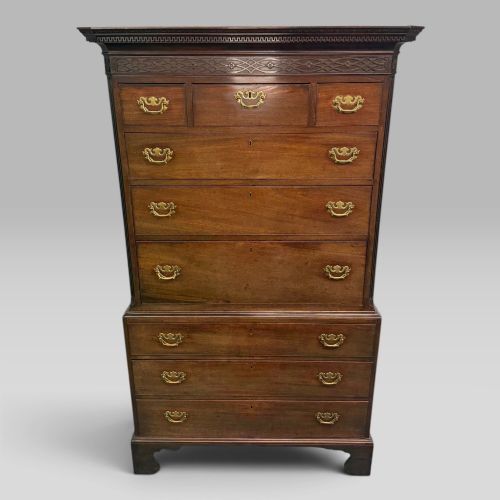
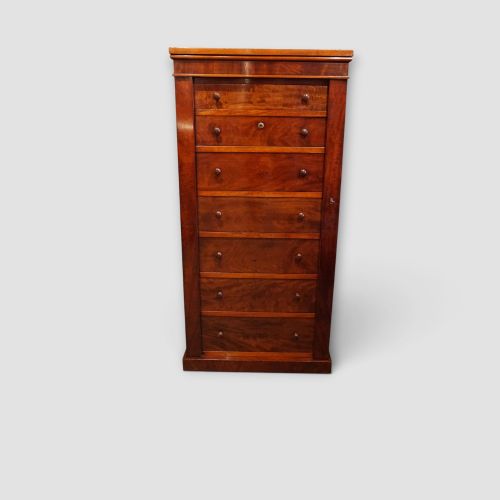
The most common formats on this page include George III mahogany tallboys and chest on chest designs, alongside Regency and Victorian chests. Makers integrated the secretaire drawer discreetly behind a standard top-drawer facade to maintain clean exterior proportions.
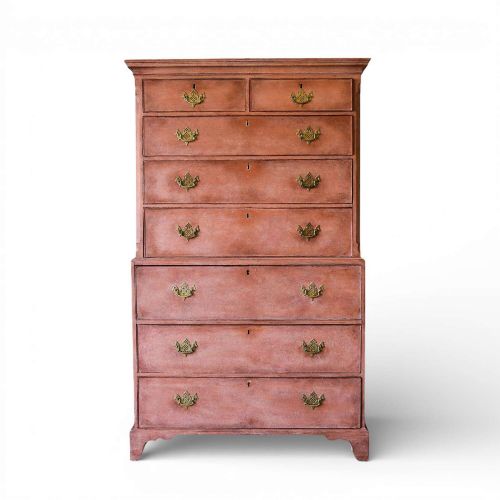
Stylistically, these pieces draw heavily on Chippendale and Sheraton idioms, frequently utilising flame mahogany veneer, satinwood, or painted finishes. Each piece demonstrates how cabinetmakers hid functional writing spaces inside traditional furniture outlines.
Materials and construction
Cabinetmakers built these carcases predominantly using solid mahogany, oak for drawer linings, and figured veneers such as flame mahogany and satinwood. These primary hardwoods provided the structural stability required for deep drawers and complex internal writing compartments.
Secondary elements involved brass drop handles, leather or baize writing surfaces, and occasional ormolu mounts or glass doors. Surface decoration relied on fine wood veneers, painted finishes, and careful inlay work rather than heavy structural carving.
Period Secretaire Drawer Retail Price Guide 2026
Typical asking prices for period secretaire drawer among the pieces listed under this phrase on Sellingantiques today, from the lower quarter to the upper quarter. They describe what is for sale here now, not the wider market.
Many secretaire drawers include hidden miniature compartments behind pigeonholes, designed for storing secret correspondence and small valuables.
What separates the tiers
Quality in these secretaire pieces rests on the precision of the internal pigeonholes, small drawers, and hinge mechanisms housed within the pull-out desk compartment. Superior examples feature complex internal stationery layouts with secret compartments and finely fitted small drawers.
The selection of timber grain, particularly matched flame mahogany veneers or figured walnut, dictates the visual appeal of the exterior facade. Structural integrity, clean drawer linings, and original brass hardware further distinguish finer workshop output from standard production.
The Period Secretaire Drawer Glossary
- Secretaire drawer
- A top drawer fitted with a drop-front and internal writing compartments, allowing a chest or cabinet to function as a desk.
- Tallboy
- A tall case furniture piece formed by stacking one chest of drawers upon a second, larger base chest.
- Flame mahogany
- A decorative wood veneer cut from branches or fork joints of the mahogany tree to create a distinctive flickering flame pattern.
- Baize
- A coarse woolen material traditionally used to line writing surfaces and gaming tables within antique desk furniture.
- Ormolu
- Gilded bronze ornamentation applied to furniture surfaces, commonly found on later nineteenth-century pieces.
Period Secretaire Drawer: Frequently Asked Questions
What is a secretaire drawer?
A secretaire drawer is a specialised upper drawer fitted with a hinged front that folds down to reveal a writing surface, pigeonholes, and small drawers.
This clever mechanism allows a standard chest of drawers or bookcase to double as a compact writing desk while keeping the room's formal appearance intact.
How do I use a secretaire daily?
To use the desk function, you typically release internal latches or locks, pull the drawer forward, and fold the front panel down to form a horizontal writing surface.
When you finish writing, simply fold the front back up, push the drawer closed, and secure any internal locking flaps.
Are these pieces Georgian or Victorian?
The selection spans multiple eras, including eighteenth-century George III pieces, Regency designs, and mid-nineteenth-century Victorian examples.
Georgian and Chippendale pieces tend to favor solid mahogany and classical proportions, whereas Victorian examples often incorporate burr walnut, inlaid details, and ormolu mounts.
What woods were used?
Cabinetmakers primarily constructed these pieces using solid mahogany, oak drawer linings, and decorative veneers like flame mahogany and satinwood.
Later Victorian items also introduce burr and figured walnut alongside painted finishes and metal mounts.