





Period Salon Sofa
A period salon sofa brings architectural presence and rich upholstery to a formal room, offering refined seating from the nineteenth and early twentieth centuries.
Period Salon Sofa
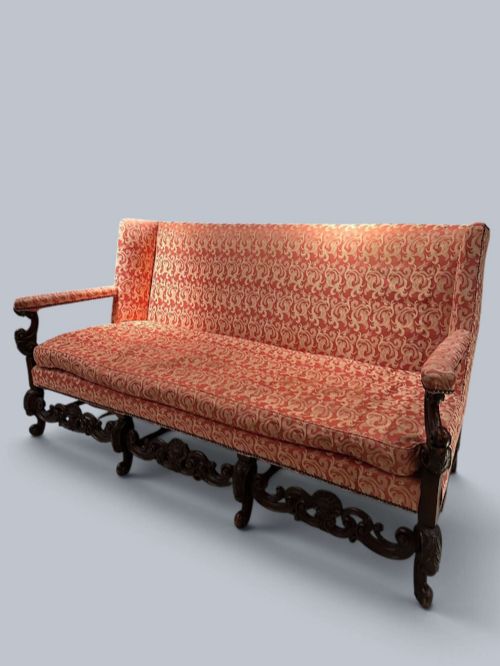
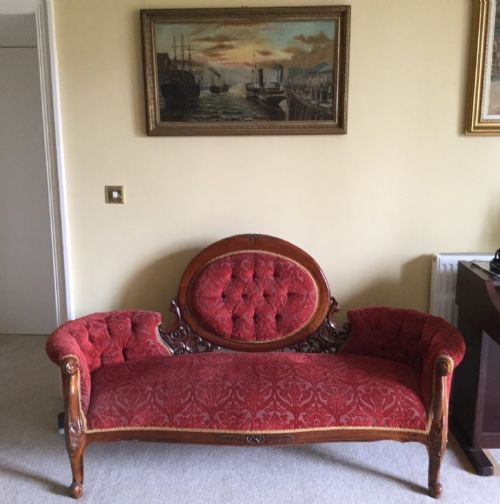
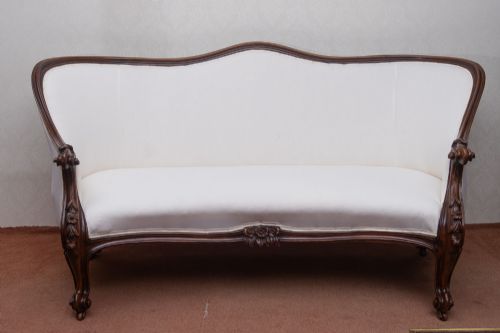
A period salon sofa provides grand seating rooted in historical revival designs and nineteenth-century domestic interiors. These items range from single settees to complete matched suites designed for formal entertaining and drawing rooms.
The versions most commonly met on this page span the Victorian and Edwardian eras, incorporating French revivals and English cabinet-making styles. Makers and workshops drew heavily upon Louis XIV, Louis XVI, and Louis Philippe aesthetics to create ornamented frames.
Forms include double-ended settees, three-seater frames, and large giltwood couches designed for prominent placement in a reception room. Each piece reflects the formal social requirements of its period through deep springing and generous proportions.
How they were made
Frames rely upon dense timber construction using walnut, mahogany, satinwood, and ebonised woods, often enhanced by carved ornamentation and gilding. Cabinet-makers shaped these hardwoods to support complex scrollwork and architectural crestings.
Upholstery techniques combined traditional webbing and sprung settees with luxury textiles such as damask, brocade, linen, tapestry, and rich fabric. Brass fittings and detailed hand-carving completed the structural and decorative assembly.
Period Salon Sofa Retail Price Guide 2026
Typical asking prices for period salon sofa among the pieces listed under this phrase on Sellingantiques today, from the lower quarter to the upper quarter. They describe what is for sale here now, not the wider market.
Listings feature items spanning the nineteenth century through the Edwardian period, utilising walnut, mahogany, satinwood, and giltwood frames.
What varies in quality
Quality rests upon the crispness of the timber carving and the architectural proportion of the frame, separating standard production from exceptional cabinet work. The depth of the wood shaping and the integrity of the original giltwood or polished surface dictate the visual impact.
The grade of the upholstery materials and the retention of supportive sprung bases determine the functional standard of each settee. Pieces that retain fine textiles and robust internal construction represent the upper tier of surviving examples.
Jas / James Shoolbred
The Period Salon Sofa Glossary
- Giltwood
- Wood that has been coated with gold leaf or a gold-coloured metallic finish. This technique highlights carved details on formal nineteenth-century frames.
- Brocade
- A rich shuttle-woven fabric featuring raised decorative patterns. It frequently appears as a heavy covering on period salon seating.
- Settee
- A long upholstered seat with a back and arms, designed to accommodate multiple people. The term is often used interchangeably with sofa in historical inventories.
- Aesthetic Movement
- A late nineteenth-century design style emphasising artistic visual qualities over moral narrative. Pieces from this movement often feature ebonised wood and refined linearity.
- Louis Philippe
- A mid-nineteenth-century French style characterised by restrained curves and comfort. It avoids the excessive ornamentation of earlier royal revivals.
Period Salon Sofa: Frequently Asked Questions
What is a period salon sofa?
A period salon sofa is a formal nineteenth or early twentieth-century seat designed for a drawing room or reception space. These items draw on historical French and English styles.
They serve as both functional seating and decorative centrepieces, featuring carved wooden frames and textile upholstery.
How were these sofas used?
These sofas were placed in formal reception rooms to accommodate guests during social calls and evening gatherings. Their generous proportions and sprung bases provided comfortable seating for polite society.
Today, they function similarly as statement seating in large living areas or traditional drawing rooms.
How do I live with a salon sofa?
Living with a period salon sofa involves balancing its formal presence with everyday interior use. Placing the piece away from direct sunlight protects sensitive silk, brocade, and damask fabrics from fading.
Regular gentle care of the timber frame and professional cleaning for the upholstery ensure the sofa remains stable and visually striking.
How do I tell periods apart?
Periods are distinguished by changes in wood choice, carving depth, and upholstery style across the nineteenth century. Earlier items often feature heavy giltwood and elaborate French Rococo Revival carving, while Edwardian pieces introduce lighter satinwood.
Examining the structural lines and decorative motifs helps assign a piece to Victorian, Edwardian, or specific revival eras.