

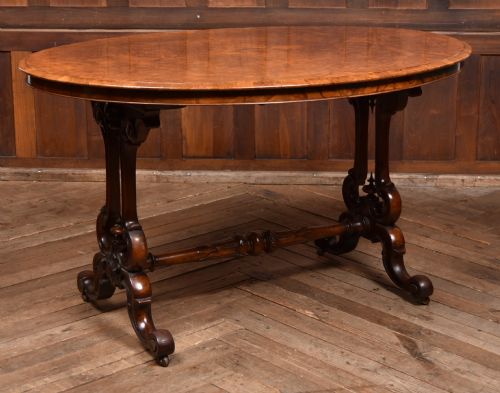
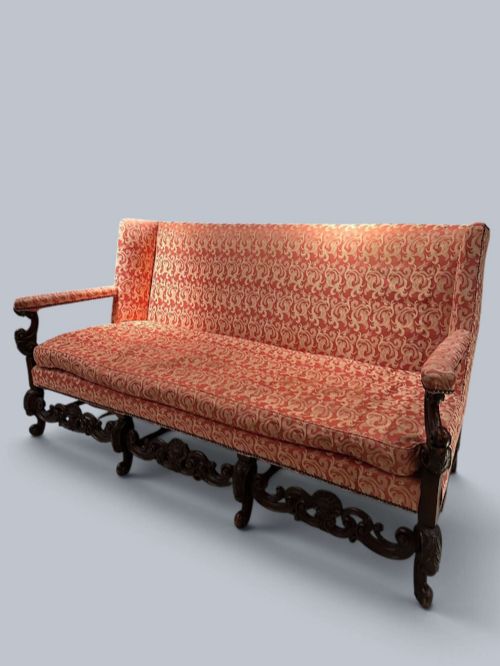
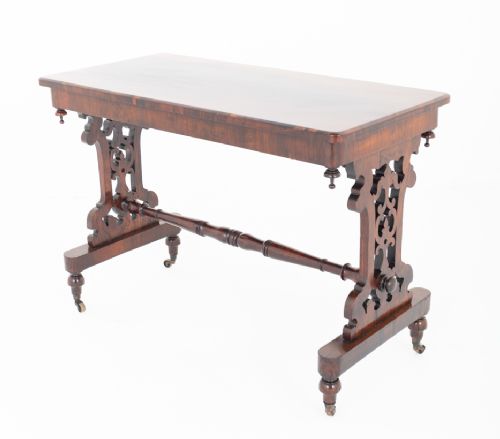
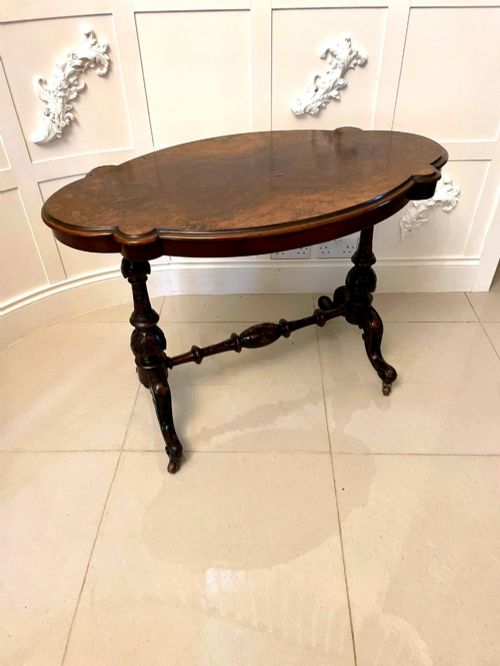
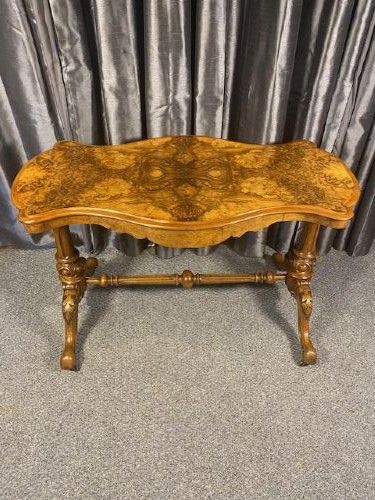
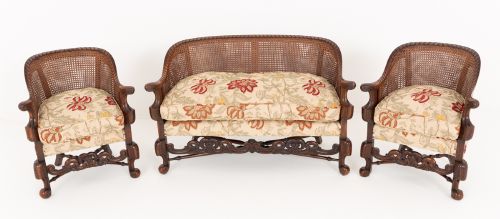
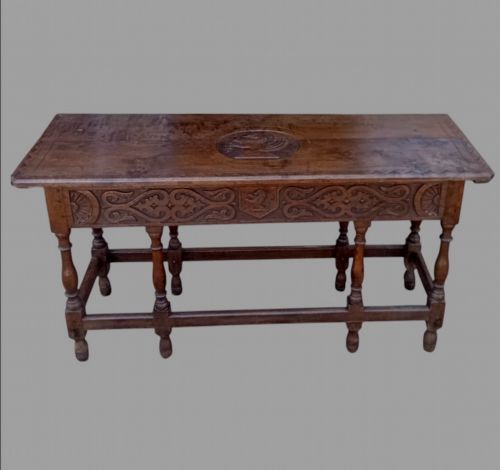
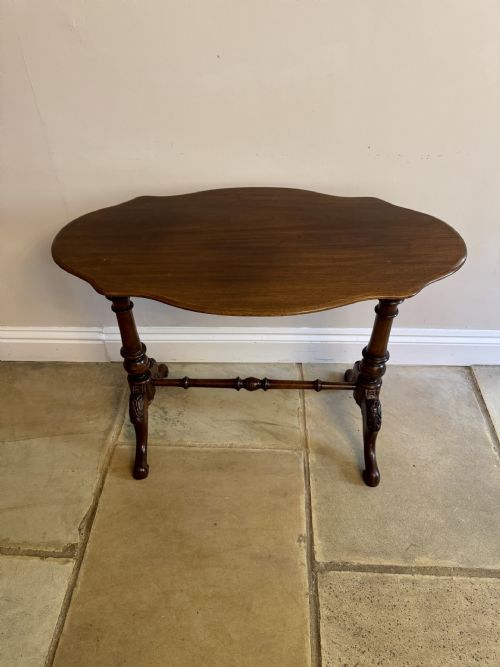
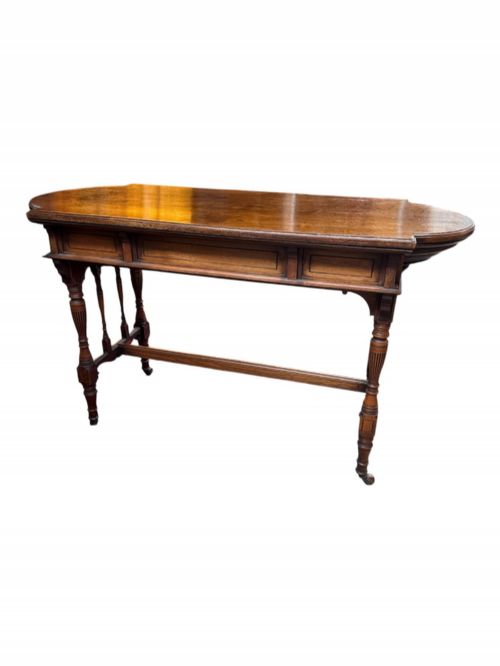


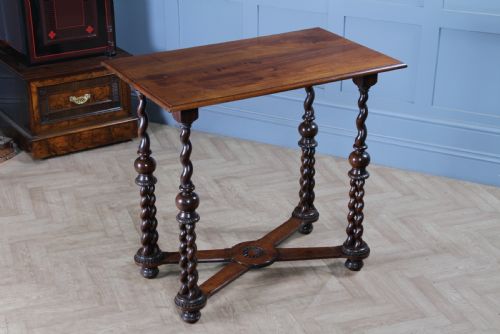
Carved Stretcher Sofa
A carved stretcher sofa is a substantial piece of period seating designed for formal rooms, combining sturdy timber frames with decorative underframes.
Carved Stretcher Sofa
When searching for a carved stretcher sofa, buyers encounter seating forms anchored by solid timber underframes and nineteenth-century styling. The selection includes periods ranging from the Victorian era into the Edwardian years, drawing on earlier design revivals.
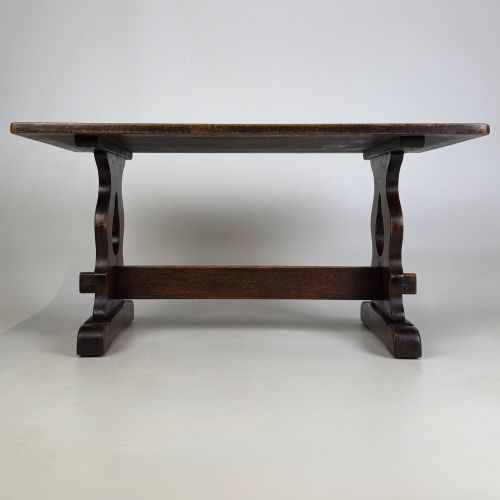
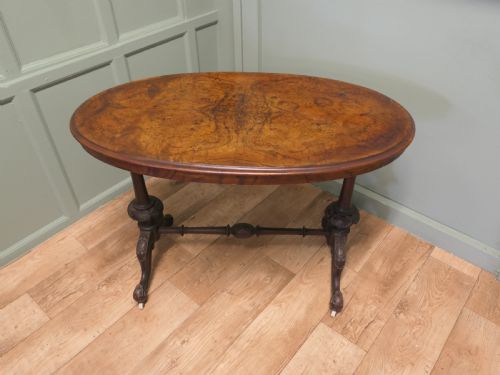
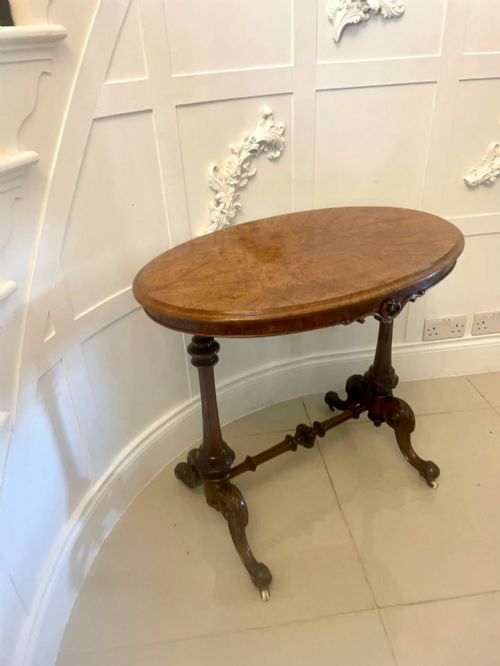
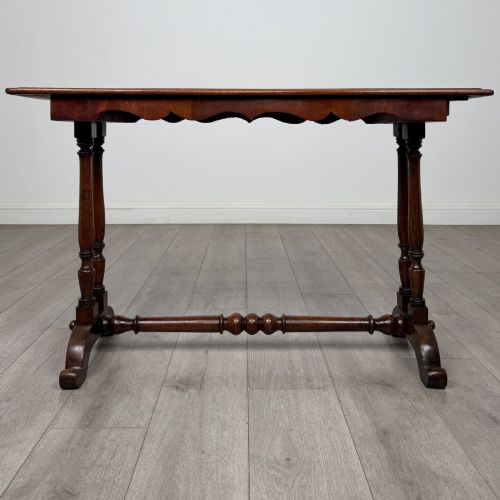
Most examples rely on dense hardwoods such as walnut and mahogany, often enhanced by decorative carving along the structural stretchers that brace the legs. These pieces reflect the heavy craftsmanship of the nineteenth century and subsequent revival periods.
Materials and construction
Makers utilised solid hardwoods, notably walnut, burr walnut, oak, and rosewood, for both the main frames and the supporting stretchers. These timbers provided the necessary strength to support carved ornamentation while maintaining structural integrity.
Joinery relied on traditional framing techniques, allowing artisans to integrate carved wooden stretchers near the base for added rigidity. Selected pieces also incorporated brass hardware or ceramic elements alongside the primary wood construction.
Carved Stretcher Sofa Retail Price Guide 2026
Typical asking prices for carved stretcher sofa among the pieces listed under this phrase on Sellingantiques today, from the lower quarter to the upper quarter. They describe what is for sale here now, not the wider market.
Listings incorporate items spanning from the early nineteenth century through the Edwardian period, predominantly constructed in walnut, mahogany, and oak.
Judging the work
Quality rests in the crispness of the timber carving and the careful selection of figured woods like burr walnut and rosewood. Superior examples demonstrate refined proportions and harmonious integration between the upper frame and the lower stretchers.
Plainer execution in secondary timbers indicates utilitarian workshop production rather than high-end cabinet work. The depth and definition of the carved elements remain key indicators of the maker's skill.
The Carved Stretcher Sofa Glossary
- Stretcher
- A horizontal timber connecting the legs of a table or sofa to provide structural stability. These are frequently turned or carved for decorative effect.
- Burr walnut
- A highly figured timber veneer prized for its swirling grain patterns. It was frequently applied to prominent surfaces during the Victorian period.
- Rosewood
- A dense, dark tropical hardwood used in high-status nineteenth-century furniture. It takes a fine polish and shows distinct grain variation.
- Barley twist
- A carved wooden detail resembling a spiralling rope. This motif appears frequently on nineteenth-century supports and stretchers.
Carved Stretcher Sofa: Frequently Asked Questions
What periods do these pieces come from?
The available selection spans the nineteenth century, including Victorian production and Edwardian pieces, alongside later revivals of earlier styles.
Craftsmen during these periods drew inspiration from Georgian and William and Mary designs while utilising contemporary timber stocks.
Which woods were used for these frames?
Makers predominantly worked in hardwoods such as walnut, burr walnut, mahogany, oak, and rosewood.
These materials offered the density required for structural stability and detailed carving.
How do stretchers affect the design?
Stretchers connect the lower legs to reinforce the frame against daily movement and weight.
On finer pieces, these structural braces received elaborate turning or hand carving to match the overall aesthetic.
Where should I place a heavy wooden piece?
These substantial items suit principal reception rooms or libraries where their timber tones complement traditional interiors.
Ensure placement avoids direct heat sources to protect the polished wood surfaces.