

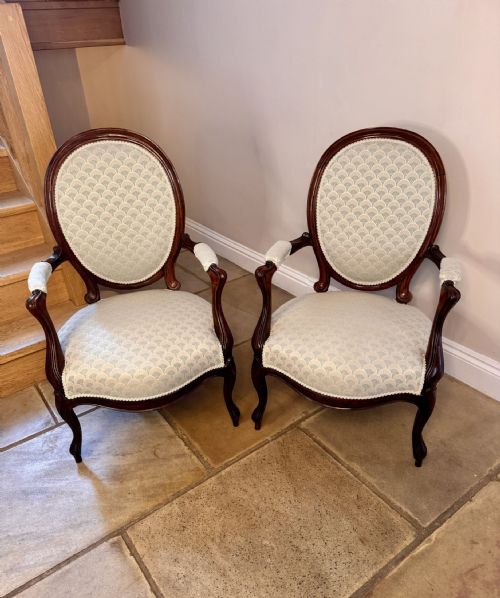
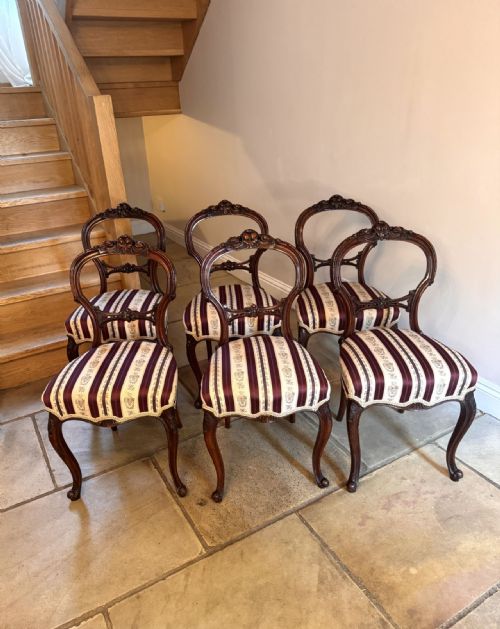
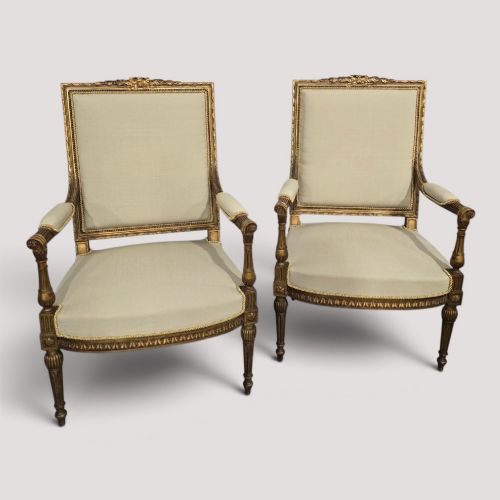
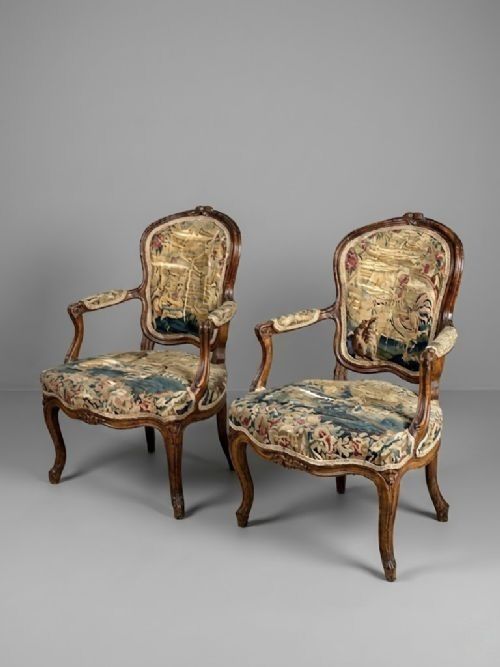

Period Salon Chairs
Period salon chairs bring ornate French and English elegance to a room, offering comfortable seating through intricate woodwork and luxurious upholstery.
Period Salon Chairs
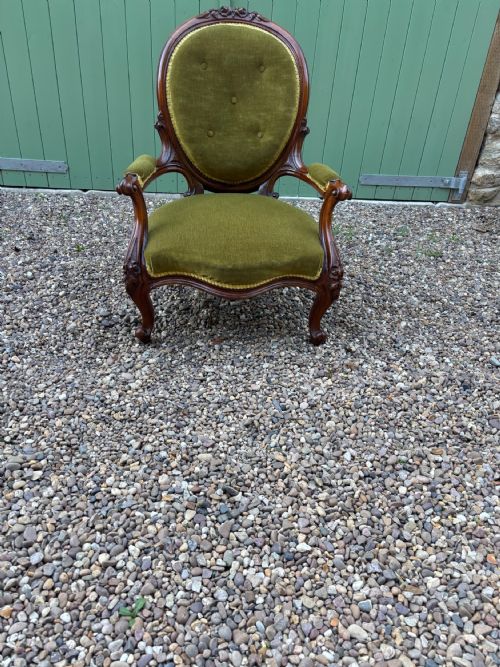
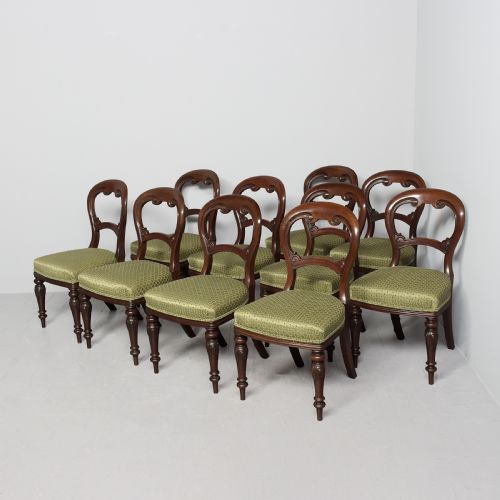
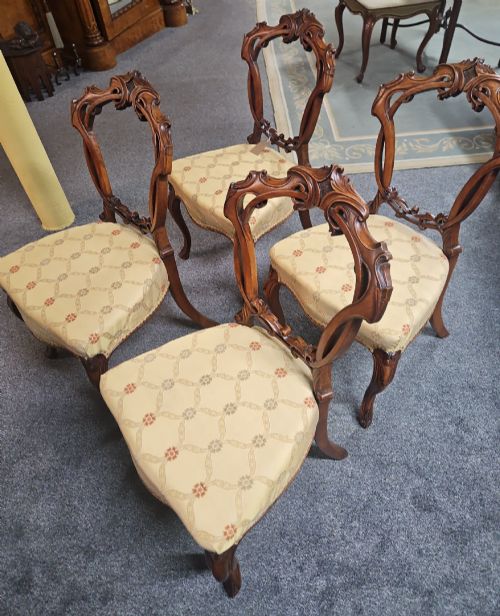
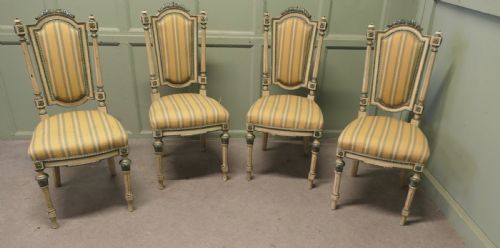
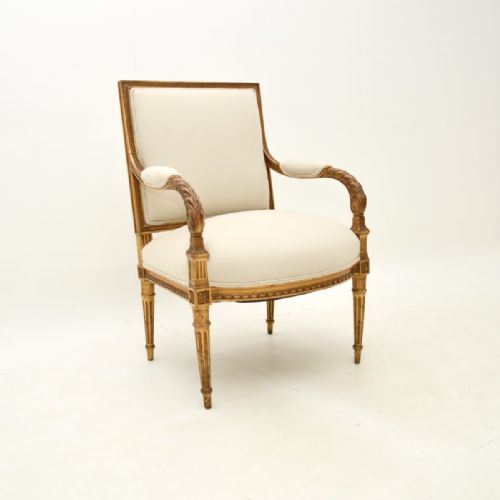
Period salon chairs comprise seating designed for formal reception rooms, encompassing armchairs, side chairs, and larger matching suites. These pieces originate from various historical eras, with Victorian and nineteenth-century French designs appearing frequently in this selection.
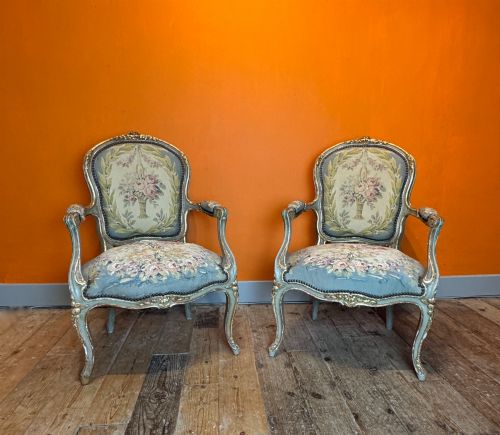
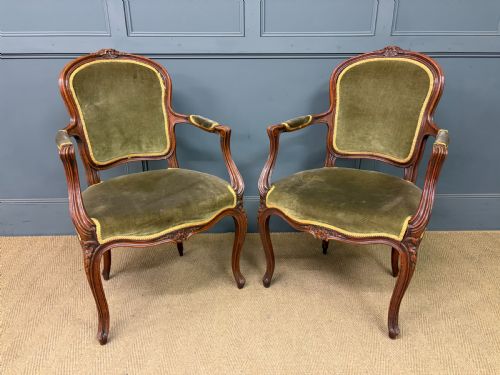
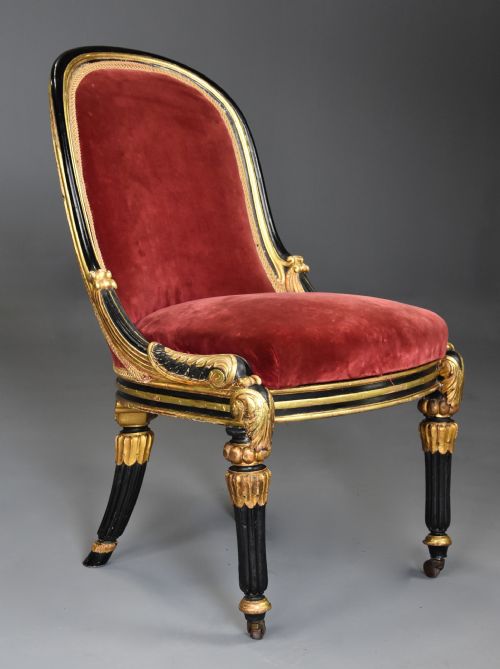
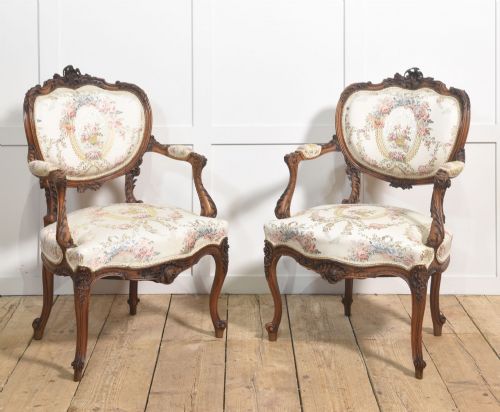
Buyers encounter diverse styles such as Louis XVI, Louis XV, and Edwardian interpretations alongside classic British Victorian forms. Frames range from carved walnut and mahogany to gilded wood finished with traditional textiles, velvet, or tapestry covers.
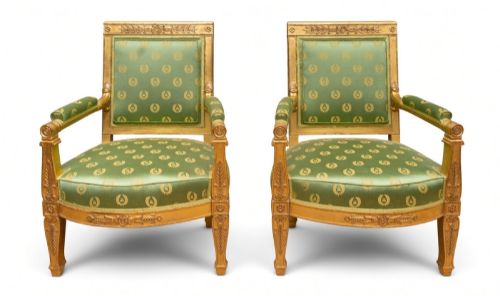
The assortment includes individual side chairs, matched pairs of armchairs, and larger sets suitable for dining or drawing room use. Each piece reflects the formal entertaining habits of its respective century, bridging decorative art with practical seating.
Materials and Craftsmanship
Cabinetmakers utilised hardwoods such as walnut, mahogany, beech, and rosewood to construct robust structural frames. These timbers permitted deep carving, crisp turnings, and inlaid details characteristic of refined furniture production.
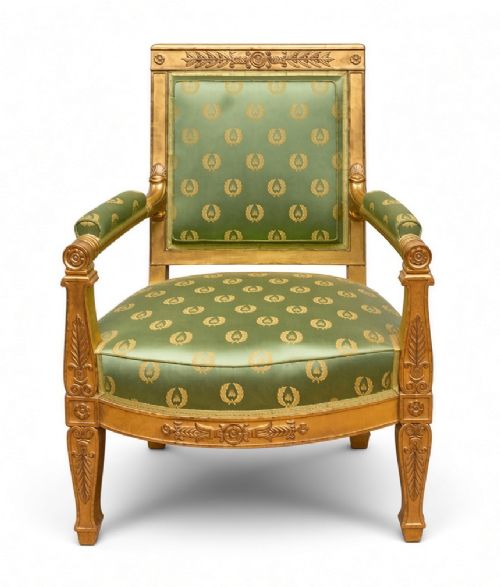
Gilding, paint finishes, and parcel-gilt treatments transformed timber surfaces on continental pieces, particularly within French Louis-inspired designs. Craftsmen applied gold leaf over prepared grounds to achieve a brilliant metallic lustre.
Upholstery involved traditional methods using webbing, springs, and horsehair stuffing beneath textile coverings like brocade, damask, and needlepoint tapestry. Artisans secured these materials with decorative brass tacks or gimp braid.
Period Salon Chairs Retail Price Guide 2026
Typical asking prices for period salon chairs among the pieces listed under this phrase on Sellingantiques today, from the lower quarter to the upper quarter. They describe what is for sale here now, not the wider market.
The selection spans eras from the late eighteenth century through the Edwardian age, highlighting Victorian and French revival styles.
Distinctions in Quality
The refinement of the woodcarving dictates the overall standard of a chair, separating mass-produced items from bespoke workshop commissions. Crisp, deeply undercut foliage and balanced proportions indicate superior hand-tooling by skilled artisans.
The integrity of the frame construction and the original finishing materials influence value and historical authenticity. Pieces retaining untouched gilding, period timber patination, and traditional joinery command greater appreciation than heavily altered examples.
The sophistication of the upholstery textiles and the fidelity of the period style contribute to a piece's standing. Authentic French proportions and high-grade woven coverings elevate the execution above simpler domestic interpretations.
Jacob-Desmalter·Jas James Shoolbred
The Period Salon Chairs Glossary
- Fauteuil
- An open-armed upholstered armchair with exposed wooden framing, typical of French seating design. The arms often feature padded elbow rests.
- Bergère
- An enclosed upholstered armchair featuring solid sides filled with cane, rush, or fabric upholstery. These seats typically incorporate a loose down cushion for added comfort.
- Giltwood
- Timber that has been coated with a thin layer of gold leaf. This finish was widely applied to formal European salon furniture to reflect candlelight.
- Brocade
- A rich shuttle-woven fabric featuring raised decorative patterns. It frequently incorporates metallic threads of gold or silver alongside silk.
- Ebonised
- Wood finished to resemble ebony through staining or painting. This dark treatment gained popularity during the Victorian and Aesthetic periods.
Period Salon Chairs: Frequently Asked Questions
Can I use antique salon chairs for daily seating?
Many period salon chairs remain structurally robust enough for regular use when the wooden frames are sound. However, historical seating often sits lower and more upright than modern furniture.
Consider the condition of the internal webbing and springs before committing a chair to heavy daily service. Professional conservation or reupholstery can often reinforce antique frames for modern living.
What is the difference between an armchair and a fauteuil?
An armchair is a general term encompassing various seated furniture with side supports for the arms. These can include fully upholstered English library chairs as well as wooden dining carvers.
A fauteuil specifically denotes a French upholstered armchair featuring an exposed wooden frame and open sides. This continental form places greater emphasis on carved gilding and decorative woodwork.
How should I care for gilded wood frames?
Dust gilded surfaces gently with a soft, dry ostrich feather brush to prevent the accumulation of abrasive particles. Avoid liquid cleaners, modern polishes, or damp cloths, which can damage delicate gold leaf.
Keep antique chairs away from direct sunlight and strong heat sources to prevent the wood from splitting. Stable room humidity preserves both the timber substrate and the ancient gesso layers beneath the gilding.