
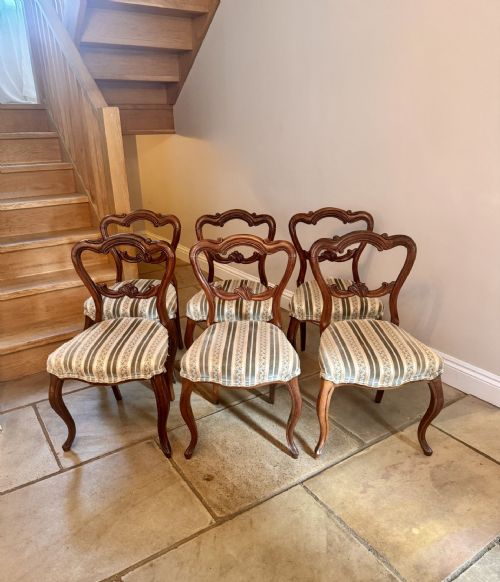
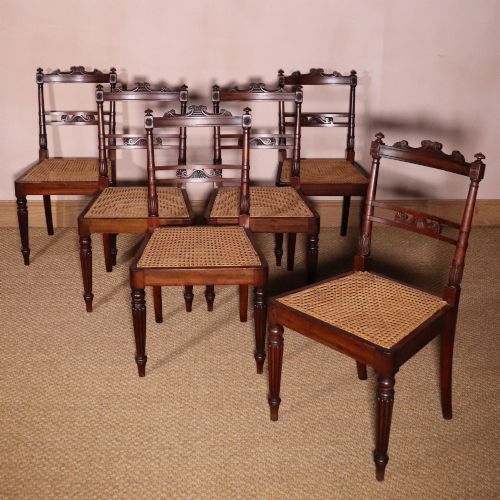
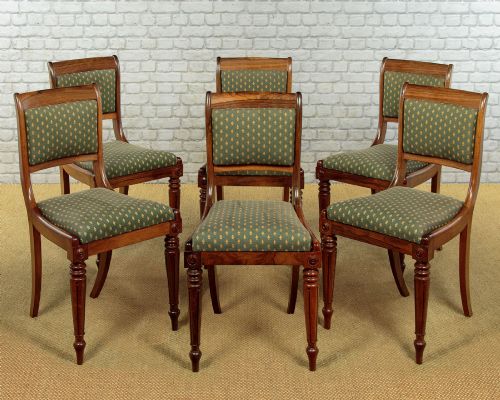
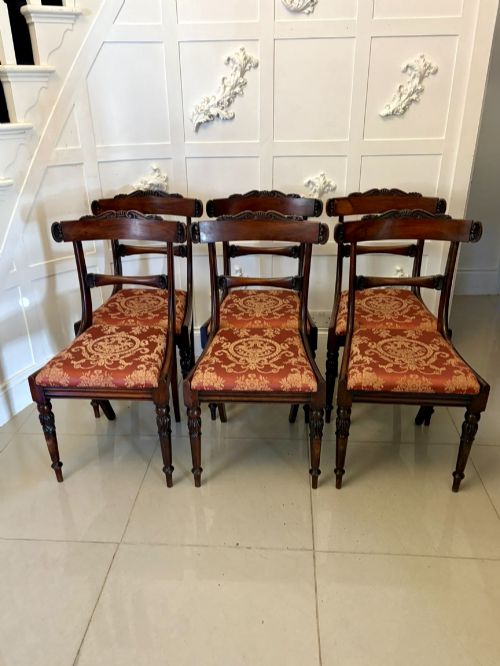
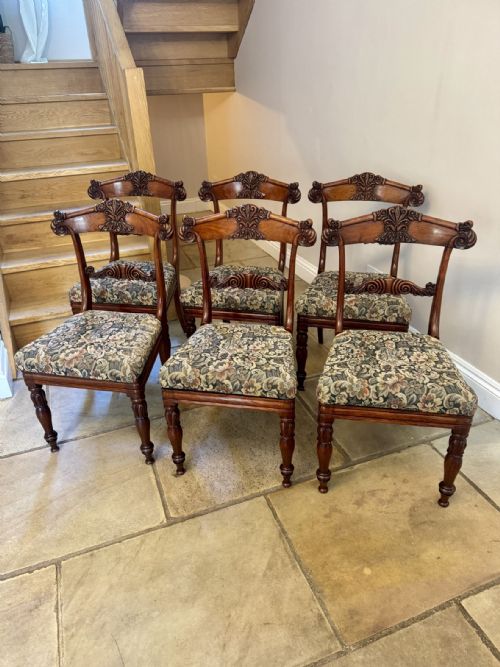
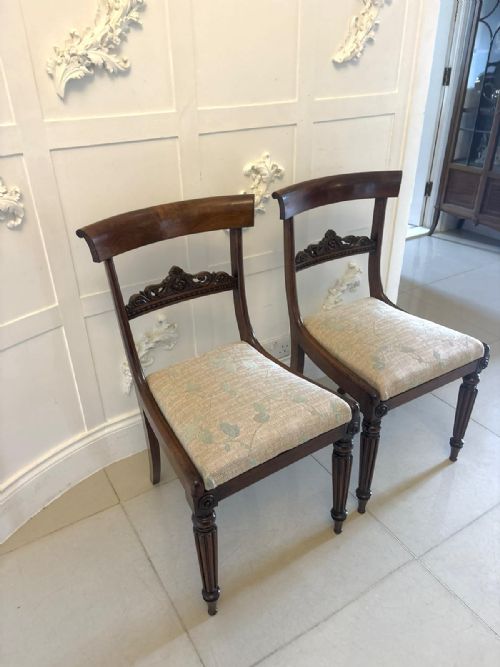


Period Rosewood Side Chairs
Period rosewood side chairs bring architectural timber and classical line into a room, offering enduring seating for a dining table.
Period Rosewood Side Chairs
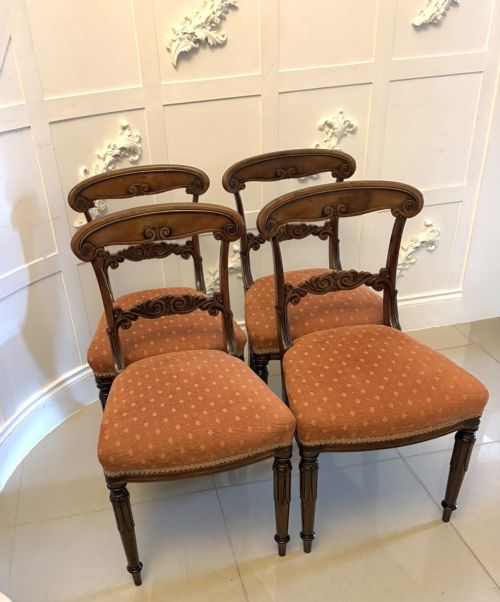
Period rosewood side chairs are primarily encountered as sets of dining seating originating from the Regency and Victorian eras. These items display classical proportions, often taking the form of upright dining chairs or occasional seating designed to sit against a wall when not in use.
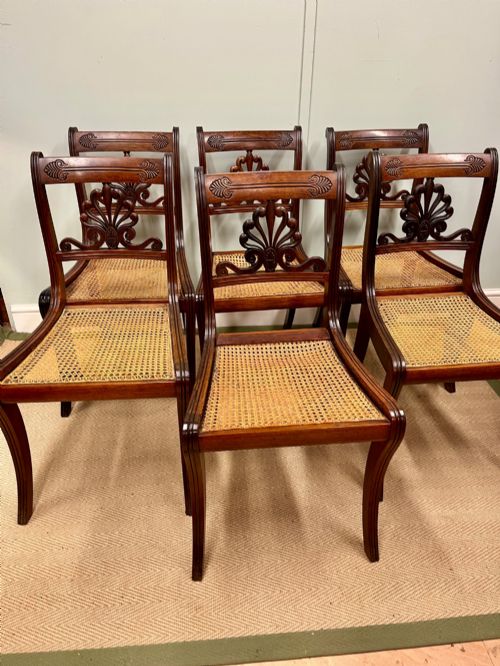
The selections span early nineteenth-century Regency production, including late Regency examples, alongside William IV and mid-Victorian pieces. Buyers will frequently encounter large matched sets of six or eight, as well as smaller pairs and individual chairs.
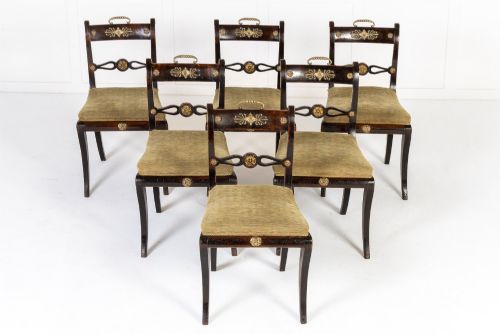
Forms incorporate distinct regional and stylistic variations, ranging from English Regency and Greek Revival models to William IV Anglo-Indian interpretations and Chinese Qing Dynasty Hongmu throne chairs. Simulated or faux rosewood finishes also appear alongside solid timber constructions.
Distinctions in standard
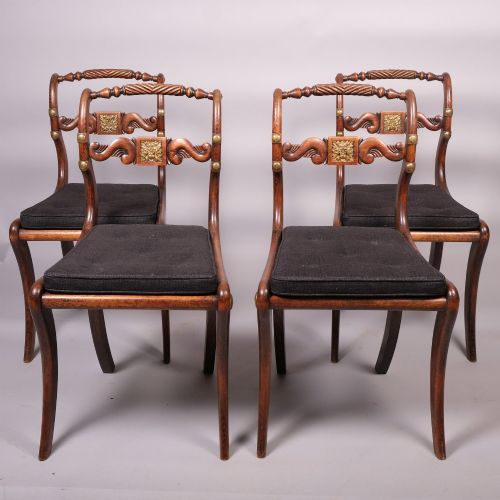
Quality separates through the crispness of timber carving, the precision of brass inlay work, and the integrity of the original rosewood grain. Superior examples display deeply articulated wooden ornament and balanced proportions that reflect rigorous cabinetmaking standards.
The survival of matched sets rather than assembled groupings elevates the standing of a collection. Consistency in timber colour, uniform wear across the frames, and intact original structural elements separate standard seating from exceptional examples.
Listings feature solid rosewood alongside simulated finishes, incorporating brass inlay, cane panels, and textile upholstery across multiple nineteenth-century periods.
John Gee
The Period Rosewood Side Chairs Glossary
- Regency
- A stylistic period spanning the early nineteenth century defined by classical restraint and inspiration from ancient Greece and Rome. This era produced clean architectural lines and refined timber work in domestic seating.
- William IV
- A transitional design phase bridging Regency and early Victorian aesthetics, characterised by heavier scrollwork and robust proportions. Chairs from this period frequently utilise substantial rosewood sections and bold carved motifs.
- Simulated Rosewood
- A surface treatment where common timber is painted or grained to imitate the rich dark figuring of genuine rosewood. This decorative technique offered a fashionable finish during the nineteenth century.
- Hongmu
- A traditional Chinese term for dense hardwoods, including rosewood, utilised in elite furniture production. These timbers allowed for intricate carving and heavy structural forms.
- Grecian
- A design influence drawn from classical antiquity, featuring saber legs, curved top rails, and scrollback profiles. It remains a defining characteristic of early nineteenth-century seating.
Period Rosewood Side Chairs: Frequently Asked Questions
How do I date period rosewood side chairs?
Dating relies on stylistic markers such as saber legs, curved top rails, and brass inlay typical of Regency design, contrasted against the heavier proportions of William IV or the balloon backs of the Victorian era. Examining the timber grain, construction joints, and upholstery methods provides further temporal context.
Cabinetmaking techniques evolved across the nineteenth century, shifting from crisp classical carving towards more voluminous Victorian flourishes. Comparing structural framing against established period archetypes clarifies the decade of manufacture.
Were these chairs used only for dining?
While the vast majority function as dining seating, side chairs were historically placed around the perimeter of parlours, drawing rooms, and halls to be brought to tables as needed. Their narrow profiles allowed them to line walls without obstructing interior circulation.
Individual examples also served as occasional seating or desk chairs in private studies. Their decorative timber frames ensured they contributed to the aesthetic scheme of a room even when unoccupied.
What is simulated rosewood?
Simulated or faux rosewood is a decorative painted finish applied to alternative hardwoods to mimic the appearance of expensive tropical rosewood. Craftsmen used graining techniques to replicate the distinctive dark figuring and reddish-brown tones of the genuine timber.
This practice allowed makers to offer fashionable furniture matching prevailing aesthetic tastes at a different economic tier. The underlying wood remains sturdy while presenting a polished visual facade.
How should I care for rosewood furniture?
Rosewood benefits from stable indoor humidity and protection from direct sunlight, which can fade the rich natural timber tones over time. Regular dusting with a soft, dry cloth preserves the polished surface without building up chemical residues.
Upholstery requires separate attention depending on whether the fabric is textile, velvet, or leather. Maintaining consistent environmental conditions prevents timber shrinkage and protects structural joints from loosening.