


Traditional Parlour Chairs Set
A traditional parlour chairs set brings formal nineteenth-century seating together in matched groups for the principal rooms of the house.
Traditional Parlour Chairs Set
A traditional parlour chairs set comprises matching seating intended for formal reception rooms, drawing rooms and parlours. These sets predominantly appear as groups of dining or salon chairs, often supplemented by larger parlour suites containing sofas and armchairs.
The selections span the Regency, Victorian and Edwardian eras, reflecting changes in domestic entertaining and formal interior decoration across the nineteenth and early twentieth centuries. Sets typically range from small groups of four to larger gatherings of twelve matching chairs.
How traditional parlour chairs set examples were constructed
Cabinet makers utilised dense hardwoods such as mahogany, rosewood and walnut for the structural frames, allowing for slender yet robust proportions. Timber was frequently turned, carved or inlaid with contrasting veneers and marquetry details.
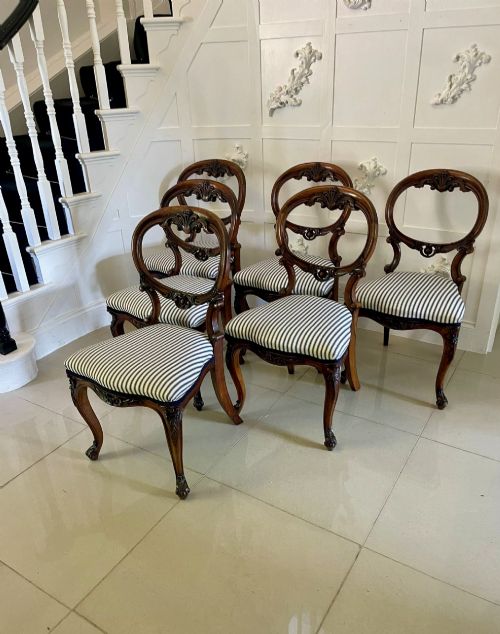
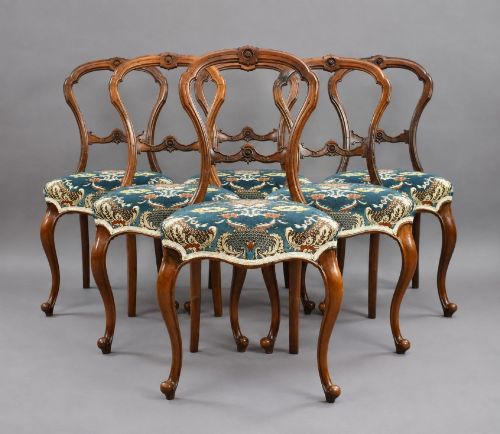
Upholstery formed a central part of the construction, employing traditional textile coverings such as velvet, damask and patterned fabrics over sprung or stuffed seats. Frames often featured the distinctive curved balloon back shape characteristic of the period.
Balloon backs offered nineteenth-century sitters lumbar support while keeping dining rooms looking delightfully buoyant.
What varies in quality across traditional parlour chairs set pieces
Quality rests upon the selection of cabinet timbers and the depth and crispness of the hand carving on the frame. Dense grains and rich natural colour in the mahogany or rosewood distinguish superior examples from simpler production.
The integrity of the frame construction and the fidelity of the matching across the entire set determine overall worth. Sets that retain their original timber matching and cohesive proportions command greater regard than assembled groups.
Charles Roodhouse
The Traditional Parlour Chairs Set Glossary
- Balloon back
- A chair back formed in a continuous rounded loop resembling an inflated balloon. This design gained widespread popularity during the Victorian period.
- Marquetry
- Decorative woodwork where small pieces of veneer are fitted together to form pictorial or geometric patterns on the surface. It frequently appears on Edwardian salon furniture.
- Salon suite
- A coordinated group of seating furniture designed for a formal drawing room or parlour, usually comprising a settee and matching chairs.
- Regency
- An English design style spanning the early nineteenth century, characterised by classical restraint and refined proportions derived from Greco-Roman models.
- Damask
- A reversible figured fabric with patterns formed by weaving, traditionally utilised for formal upholstery and drapery.
Traditional Parlour Chairs Set: Frequently Asked Questions
How many chairs come in a traditional parlour chairs set?
Sets vary considerably in size, ranging from small groupings of three or four chairs up to larger dining sets containing six, eight or twelve pieces.
Matching suites may also include small sofas or pairs of armchairs alongside the side chairs to furnish a complete room.
Where were these chairs used in the home?
These chairs were placed in formal reception spaces such as parlours, drawing rooms and dining rooms where guests were received.
They served both a practical seating function and a decorative role that displayed the household's social standing.
How do I identify a Victorian parlour chair?
Victorian chairs frequently feature dark hardwoods like mahogany or rosewood, often shaped into the characteristic rounded balloon back.
Carved details, turned legs and traditional fabric upholstery further mark them out as products of the mid to late nineteenth century.
Can I mix different wood tones in a parlour?
While individual pieces within a set match in timber and finish, nineteenth-century rooms often accommodated a variety of wood tones.
Sticking to related Victorian or Regency periods helps maintain visual harmony when combining different seating groups.