





Period Rosewood Dining Chairs
Period rosewood dining chairs bring substantial dark timber and refined classical forms to a dining room, offering seating that spans the Regency and Victorian eras.
Period Rosewood Dining Chairs
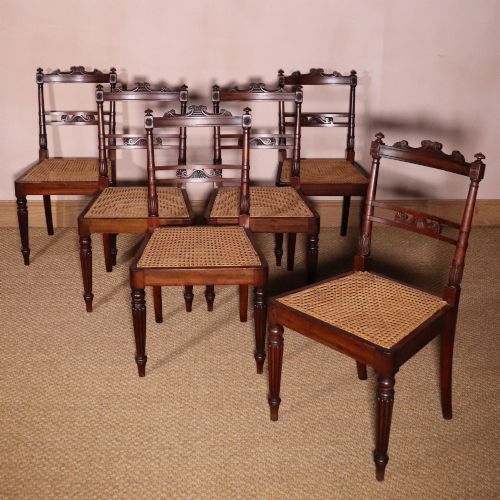
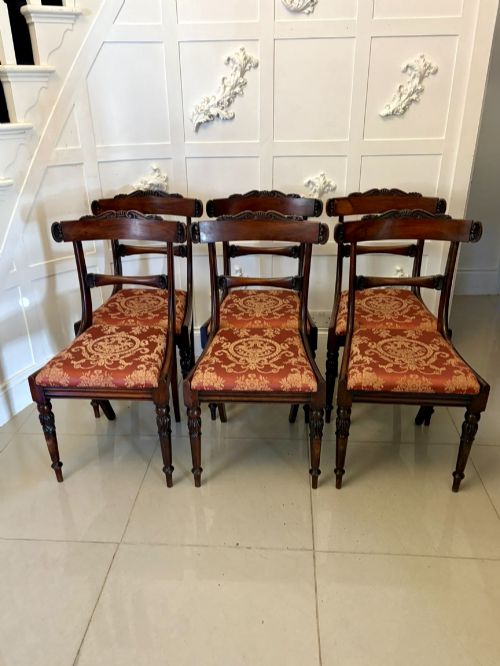
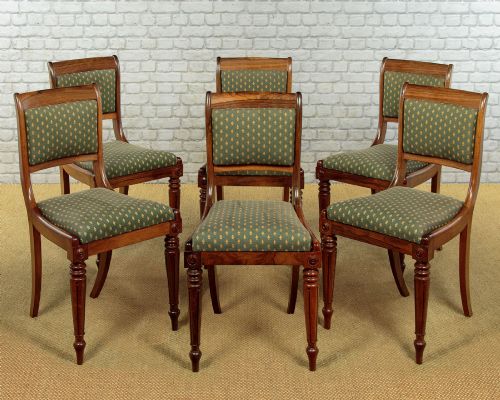
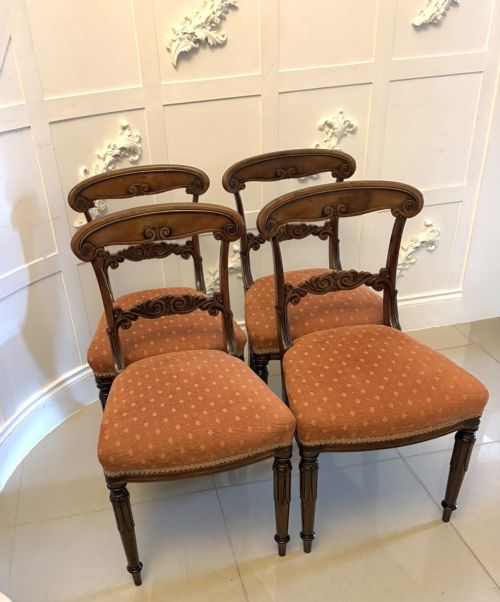
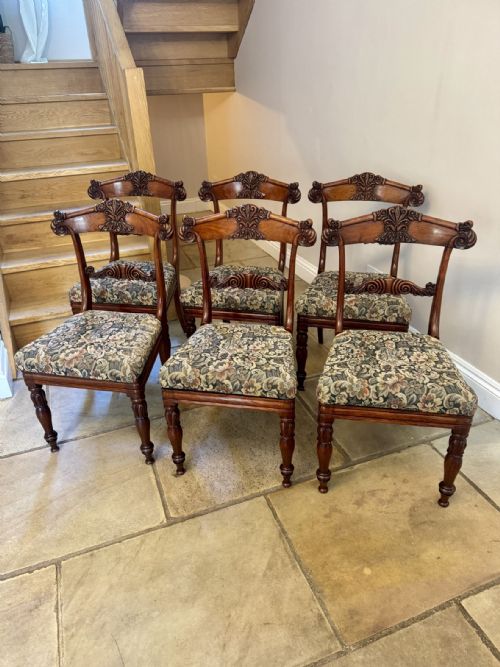
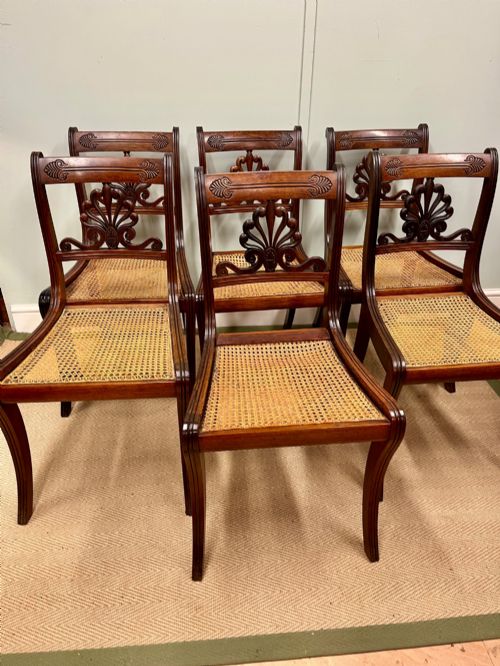
Period rosewood dining chairs encompass dining chairs, side chairs, armchairs, and elbow chairs produced across the nineteenth century. The phrase most frequently leads to sets of six or four chairs originating from the Regency and Victorian periods.
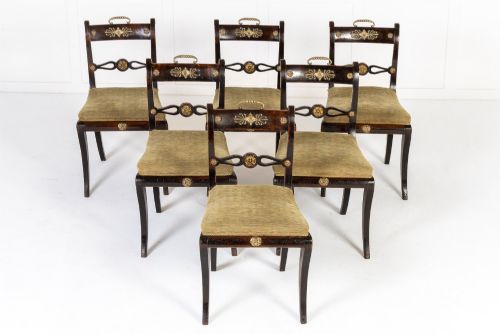
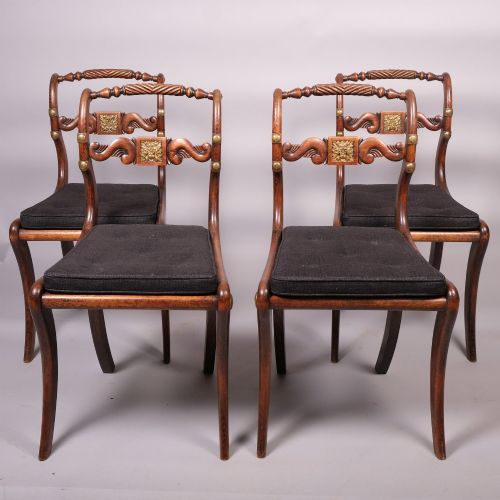
The selections span distinct historical designs including William IV, late Regency, and Greek Revival styles. Buyers encounter both solid timber frameworks and painted finishes designed to mimic the rich grain.
Originating predominantly from nineteenth-century English workshops, these seating options range from intimate pairs to larger matched sets of ten or twelve pieces.
Materials and construction
Makers utilised dense rosewood timber alongside simulated or faux rosewood finishes to achieve deep, figured grain patterns across the frames. Brass inlay frequently accented the crest rails and splats of Regency examples.
Upholstery materials including fabric, velvet, leather, and cane provided seat cushioning and support within carved and turned wooden structures.
Period Rosewood Dining Chairs Retail Price Guide 2026
Typical asking prices for period rosewood dining chairs among the pieces listed under this phrase on Sellingantiques today, from the lower quarter to the upper quarter. They describe what is for sale here now, not the wider market.
A small child's chair with a buttoned leather seat and turned rosewood frame waits quietly among the full-sized dining sets.
Gradations in quality
Quality differences rest in the crispness of the wood carving, the precision of brass inlay work, and the structural integrity of the frame joints. Higher tier examples demonstrate superior timber selection and more elaborate stylistic detailing such as rope twist or Greek Revival motifs.
The consistency across a matched set heavily influences the standing of the pieces, as larger sets maintaining uniform colour and original joinery command distinct attention.
John Gee·Gillows of Lancaster·Gillows
The Period Rosewood Dining Chairs Glossary
- Rosewood
- A dense, heavily figured timber valued for its deep dark colour and polished finish. It served as the primary material for high-end nineteenth-century seating.
- Simulated Rosewood
- A painted or grained surface finish applied to alternative timbers to imitate the appearance of true rosewood. This technique provided a decorative option during the Regency period.
- Brass Inlaid
- Metal strips or motifs embedded directly into the wooden surface of the chair. This decorative method frequently appeared on Regency period dining chairs.
- Balloon Back
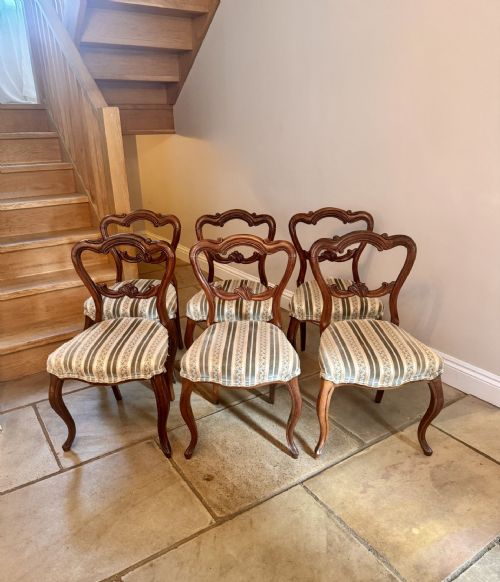
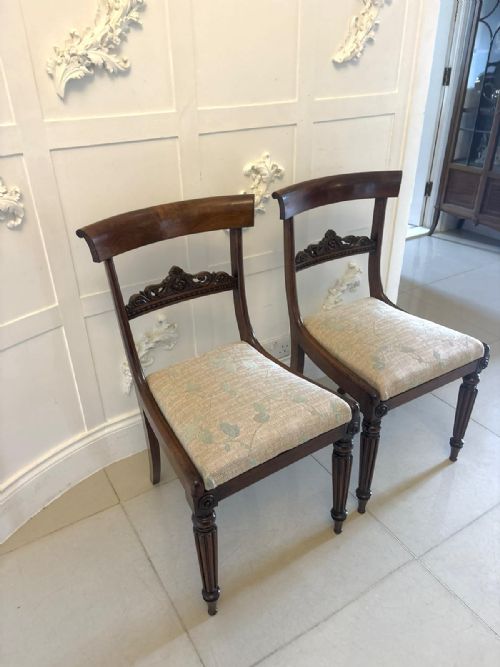
- A rounded, closed-loop chair back shaped like a balloon that became popular during the Victorian era. The form supported upholstered panels or carved wooden splats.
- Rope Twist
- A carved wooden member resembling a twisted rope cord. This decorative turning appeared frequently on the top rails of Regency chairs.
Period Rosewood Dining Chairs: Frequently Asked Questions
How many chairs come in a typical set?
Sets commonly appear in groups of four, six, or eight pieces, though larger groupings up to twelve chairs exist in the records. Matching sets of six represent the most frequent configuration encountered by buyers.
Individual pairs and single elbow chairs also appear alongside larger dining sets for mixed room arrangements.
What is the difference between Regency and Victorian styles?
Regency chairs draw heavily on classical Greek and Roman motifs, frequently featuring brass inlay, saber legs, and rope twist top rails. The timber finishes emphasise sharp architectural lines and contrasting grain.
Victorian pieces transition toward softer rounded silhouettes, exemplified by the popular balloon back form and heavier carved wooden members.
How do I identify simulated rosewood?
Simulated or faux rosewood is created by painting or graining a lighter domestic timber to mimic the dark figured appearance of genuine tropical rosewood. Close inspection under good light reveals brushwork or grain patterns applied over a base wood.
This alternative technique was utilised during the Regency period to offer decorative elegance at a different scale of production.
Were these chairs used only for dining?
While designated primarily as dining chairs, many pieces function equally well as side chairs or occasional seating in drawing rooms and hallways. Armchairs and elbow chairs served specific seating roles at the ends of dining tables or beside desks.
The varied forms reflect the flexible domestic arrangements of nineteenth-century households.