


Period Parlour Seating
Period parlour seating brings together dining chairs, sofas, and occasional seats designed for formal reception rooms across the nineteenth century.
Period Parlour Seating
Period parlour seating encompasses dining chairs, occasional chairs, sofas, and settees produced primarily during the Victorian and Regency eras. These pieces formed the essential furniture for formal reception spaces in nineteenth-century homes, catering to entertaining and domestic comfort.
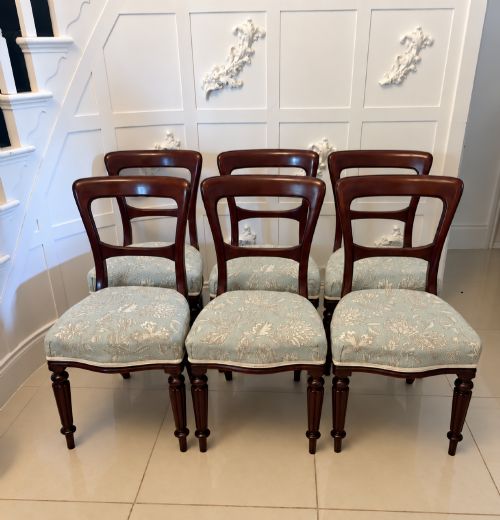
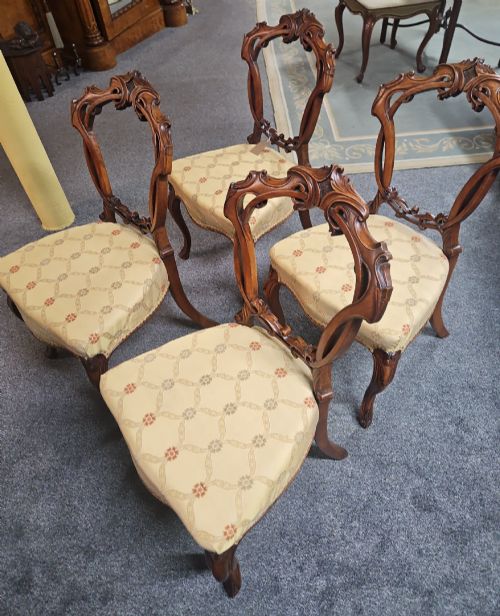
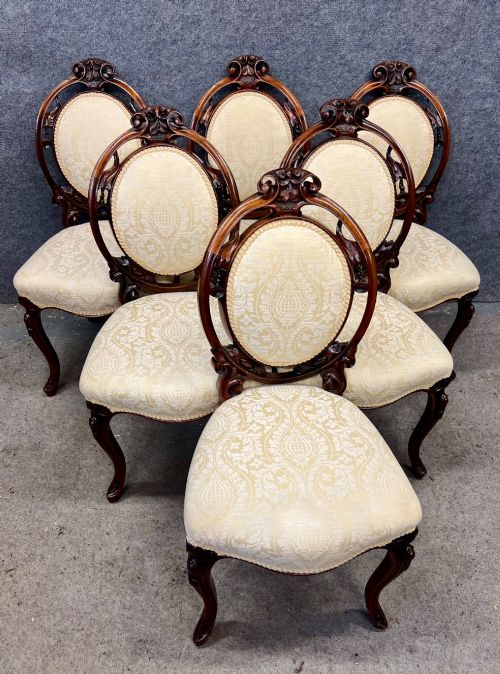
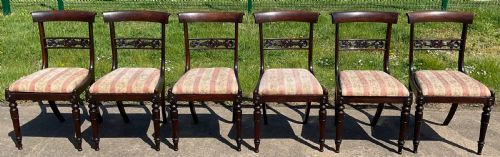
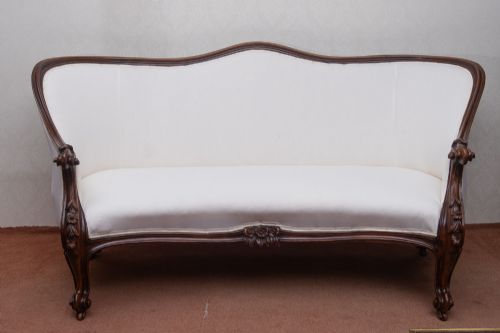
The selections encountered here range from large sets of dining chairs in mahogany or walnut to individual occasional chairs, gilt wood armchairs, and substantial settees. Dining chairs frequently appear in matched sets of four, six, or twelve.
Makers drew on diverse stylistic influences, producing pieces in the Victorian Rococo Revival, Louis XVI style, Neoclassical taste, and Grand Regency manner. This stylistic variety reflects the shifting interior fashions across the decades from eighteen hundred to nineteen hundred.
Materials and construction methods
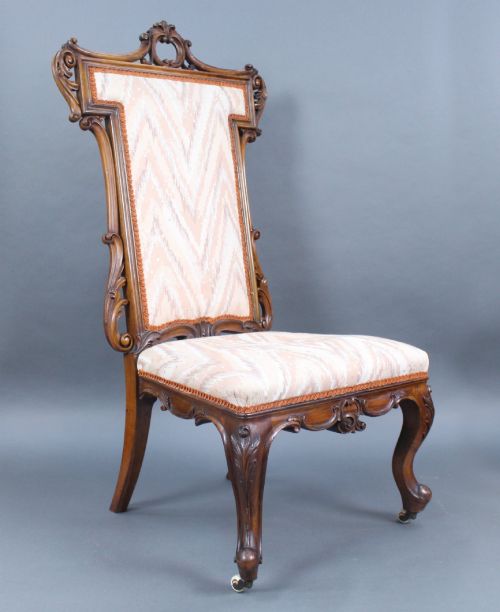
Cabinetmakers relied heavily on dense hardwoods such as mahogany, walnut, and rosewood to construct sturdy frames capable of supporting intricate carving and turning. Giltwood also appears on French-influenced salon seating, providing a bright metallic finish.
Upholstery formed a central component of these seats, utilising various fabrics and textiles supported by internal webbing and stuffing. Many chairs incorporated exposed wooden frames around padded sections, combining structural timber with soft coverings.
Listings span the nineteenth century, encompassing Regency and Victorian eras through to nineteen hundred, utilising mahogany, walnut, rosewood, and giltwood.
Distinctions in quality
Quality in these chairs and sofas rests upon the selection of timber and the depth of skill in the carving. Dense, well-figured mahogany or rosewood combined with crisp, hand-carved details marks out the superior examples from simpler production.
The integrity of the frame construction and the scale of the matched sets dictate much of the desirability. Complete sets of six or twelve dining chairs match in grain and form, whereas assembled groups show minor discrepancies in timber and proportion.
The Period Parlour Seating Glossary
- Fauteuil
- An open-armed upholstered armchair with exposed wooden sides, originating from French seating design. These chairs typically feature carved walnut or giltwood frames.
- Settee
- A medium-length upholstered seat designed for multiple occupants, often placed in parlours or drawing rooms. They share stylistic traits with contemporary sofas and armchairs.
- Occasional chair
- A light, movable chair intended for specific tasks or supplementary seating within a room. They often exhibit decorative carved walnut or mahogany frames.
- Giltwood
- Timber treated with gold leaf or a gold-coloured metallic finish for decorative effect. This treatment frequently appears on nineteenth-century French-style salon furniture.
- Reeded legs
- Cylindrical furniture supports carved with parallel convex mouldings resembling bundled reeds. This decorative turning is common on Regency and Victorian mahogany dining chairs.
Period Parlour Seating: Frequently Asked Questions
What defines period parlour seating?
Period parlour seating comprises chairs, sofas, and settees manufactured during the nineteenth century for formal domestic rooms. The category includes dining sets, occasional chairs, and upholstered settees.
These items reflect the dominant design movements of their time, ranging from Regency rosewood to Victorian walnut and mahogany.
How were dining chairs sold?
Dining chairs from this era were typically produced in matched sets for household dining rooms. These sets commonly number four, six, or twelve matching chairs.
Finding a complete set of twelve or even six uniform chairs indicates a substantial original commission.
What woods were used?
Cabinetmakers utilised dense tropical and domestic hardwoods for framing chairs and sofas. Mahogany and walnut appear with great frequency across English dining and occasional seating.
Rosewood and giltwood also feature prominently, particularly on pieces influenced by Regency taste or French salon designs.
How do I care for upholstery?
Period seating often relies on traditional textile coverings and internal padding that require gentle maintenance. Regular vacuuming with a soft brush attachment prevents dust accumulation on delicate fabrics.
Exposed wooden frames benefit from periodic dusting and appropriate wax care to preserve the finish of the mahogany or walnut.