
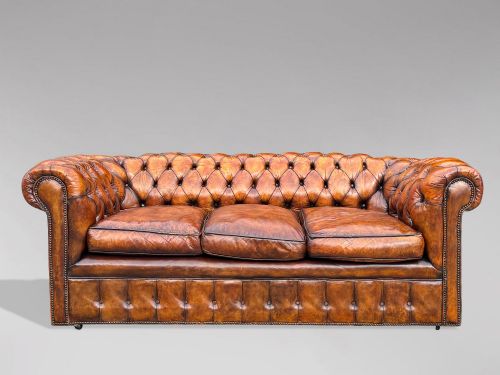
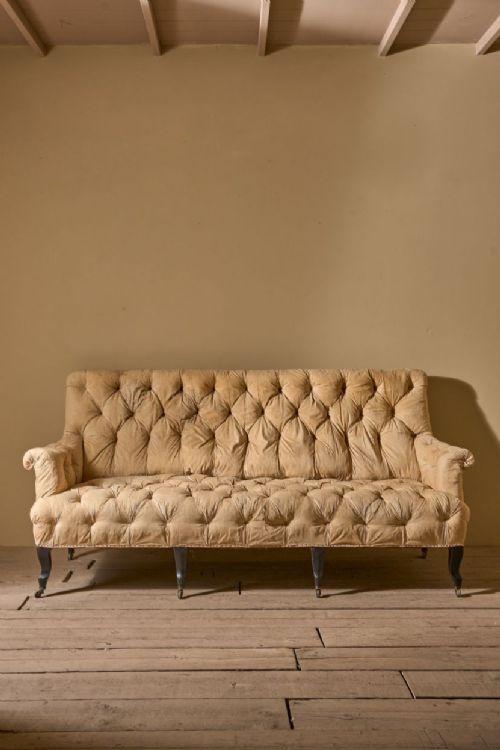
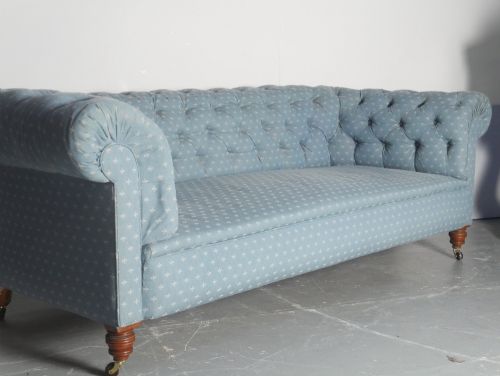
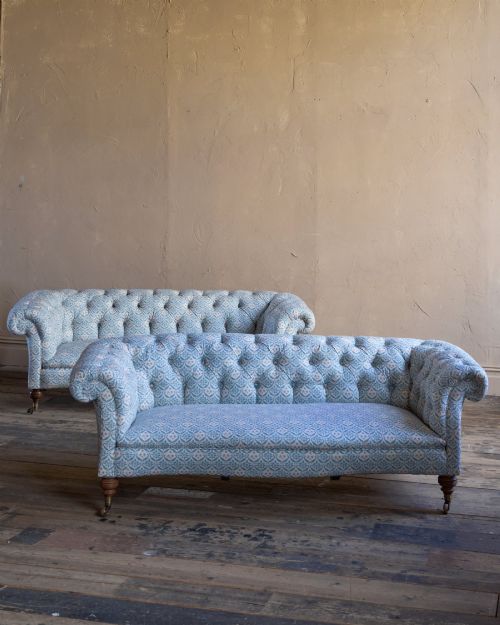
Button Tufted Couch
A button tufted couch offers deep, sprung comfort anchored by historic framework, bringing distinguished nineteenth and early twentieth century seating into a modern interior.
Button Tufted Couch
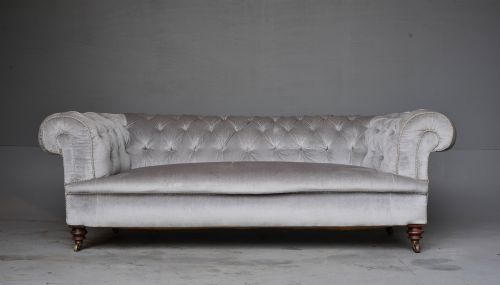
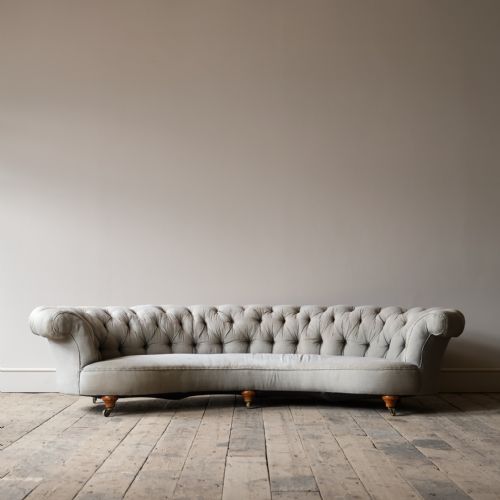
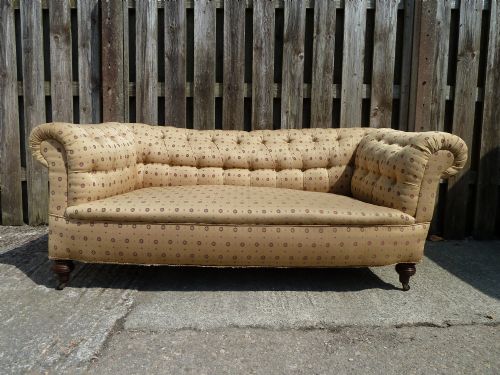
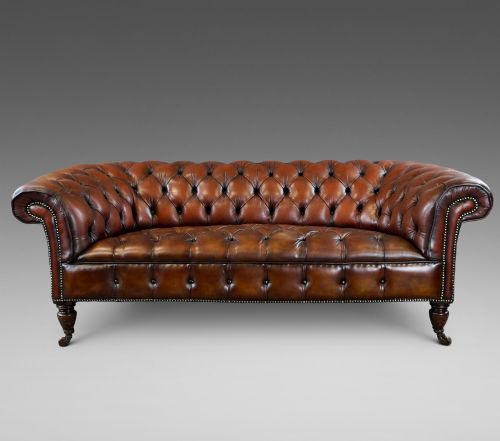
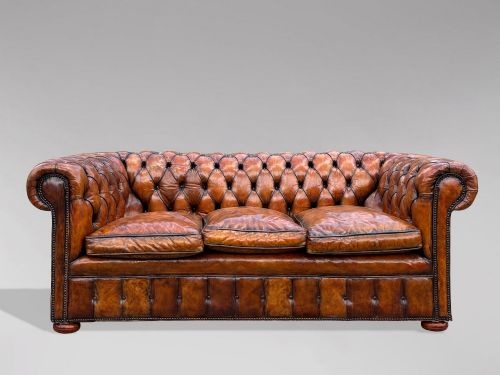
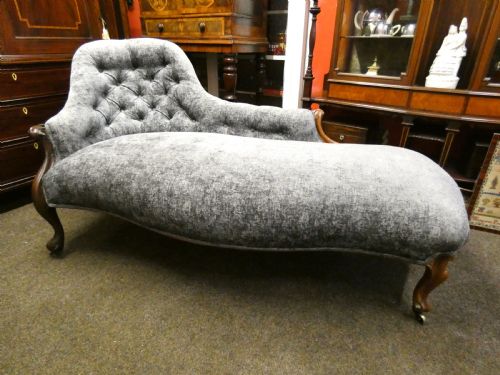
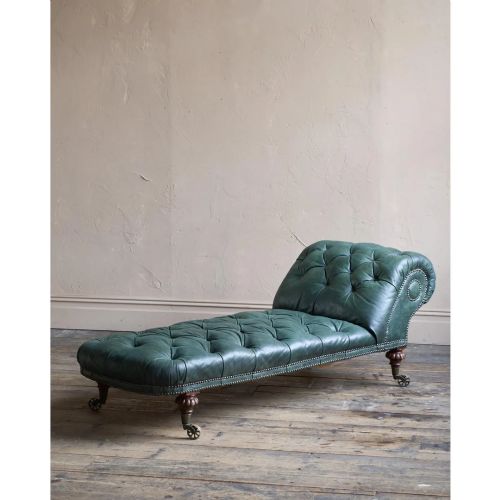
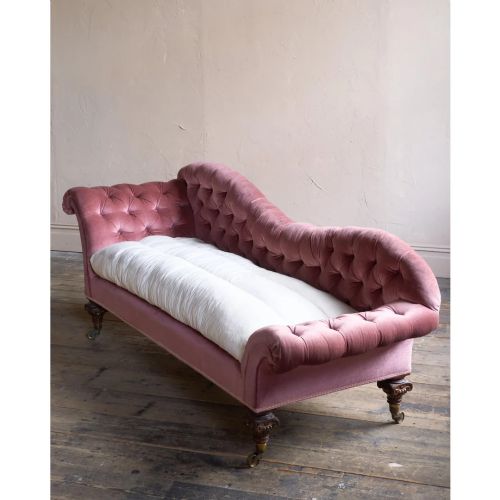
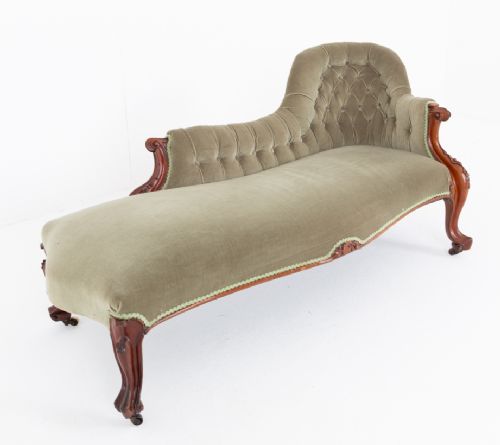
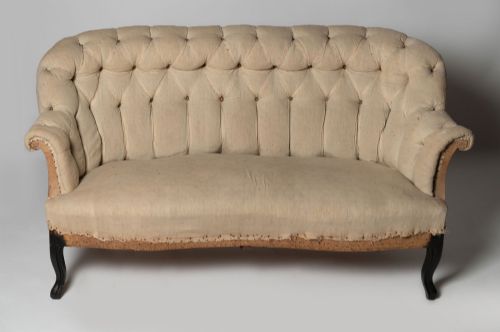
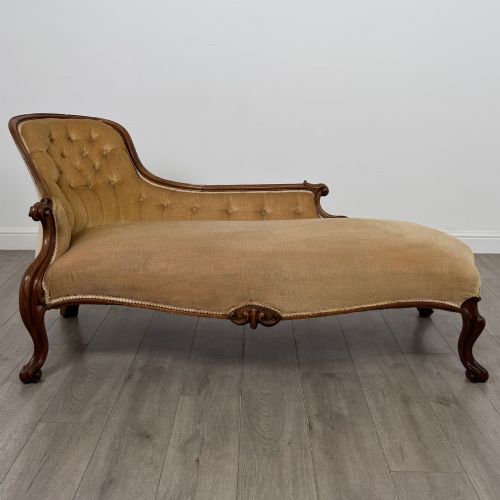
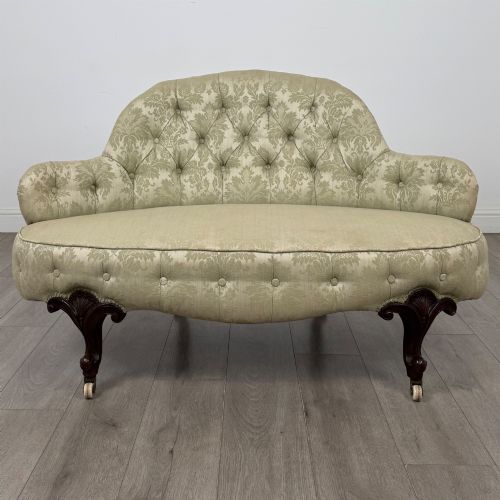
A button tufted couch encompasses traditional chesterfields, spoon-back settees, and chaise longues originating from the nineteenth and early twentieth centuries. These pieces appear in forms ranging from compact nursing seats to large multi-seater couches designed for formal reception rooms.
The Victorian era dominates the selections, alongside Napoleon III and Edwardian examples. Buyers most frequently encounter classic leather chesterfields and mahogany-framed chaise longues featuring characteristic deep buttoning across the backrests and seats.
How they were made
Framework relies on timbers such as mahogany, walnut, and rosewood, carved or turned to support heavily upholstered bodies. Structural integrity stems from traditional joinery supporting complex internal springing and stuffing.
Upholstery materials combine leather, velvet, and various woven fabrics secured with deep buttoning. Traditional interiors utilise coil springing and horsehair stuffing beneath the outer covering to maintain shape and resilience.
Listings feature wood types including mahogany, walnut, rosewood, and general timber alongside leather, velvet, and fabric coverings.
What varies in quality
The refinement of the timber carving and the architectural proportion of the frame dictate the initial calibre of the piece. Finer examples display meticulous joinery and carefully selected cabinet woods that maintain stability over centuries.
The execution of the upholstery and the quality of the leather or fabric define the tactile and visual standard. Superior execution involves precise button placement and durable stuffing materials that withstand sustained use without losing contour.
Howard & Sons·Holland & Sons·H. Goodall & Sons
The Button Tufted Couch Glossary
- Chesterfield
- A large padded couch traditionally upholstered in leather with arms and back of the same height. This form remains a staple of nineteenth century seating design.
- Chaise longue
- An upholstered sofa in the shape of a chair that is long enough to support the user's legs. These day beds often feature a single raised end for resting.
- Spoon-back
- A padded chair or settee back shaped in the outline of an oval spoon. This style is frequently observed on mid-nineteenth century Victorian seating.
- Coil adoring
- An alternative descriptor for traditional coil spring installation within upholstered furniture frames. It provides the foundational bounce and support for deep seating.
- Horsehair gilled
- A traditional stuffing method utilising cleaned horsehair to pack and shape upholstered sections. This material offers firm, breathable resilience.
Button Tufted Couch: Frequently Asked Questions
How do I date a Victorian chesterfield?
Dating relies on examining the timber frame construction, upholstery techniques, and overall stylistic markers. Pieces from the mid-nineteenth century often display heavier rosewood or mahogany framing and hand-dyed leather.
Later Victorian and early twentieth century examples introduce modified spring systems and different wood choices such as walnut or unpolished timbers. Maker stamps or labels, when present, provide the most precise chronological indicator.
How do I care for antique leather?
Antique leather requires gentle cleaning and regular conditioning to prevent the hide from drying and cracking over time. Avoiding direct sunlight and excessive heat preserves the natural oils within the material.
Applying specialised leather balms maintains the suppleness of nineteenth century hides without altering their historic patina. Professional conservation is recommended for pieces requiring structural leather repair.
Where should I place a chaise longue?
A chaise longue functions effectively in bedrooms, studies, or drawing rooms where its elongated form can be appreciated from multiple angles. Placing the piece away from direct heat sources protects the historic wood and upholstery.
Sufficient floor space allows the asymmetric silhouette of the day bed to serve as a distinct focal point within a room. They pair well with traditional low tables or reading chairs.