
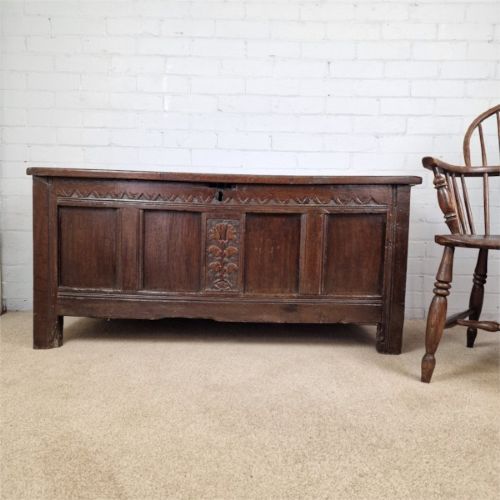
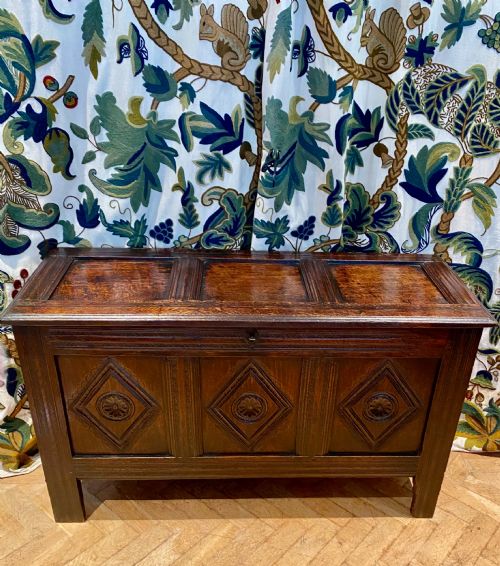
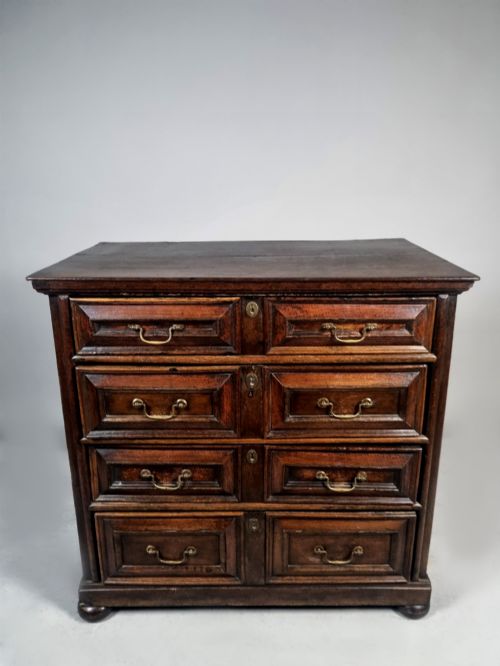
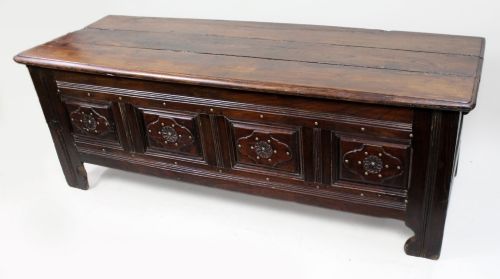

Period Oak Storage Coffer
A period oak storage coffer is a robust domestic container built to hold household textiles and valuables, offering tactile connection to centuries of English and European craftsmanship.

Period Oak Storage Coffer
When you search for a period oak storage coffer, you encounter heavy wooden chests dating principally from the sixteenth, seventeenth, and eighteenth centuries. These utilitarian forms served generations for securing garments, linen, and documents before fitted wardrobes became common domestic fixtures.
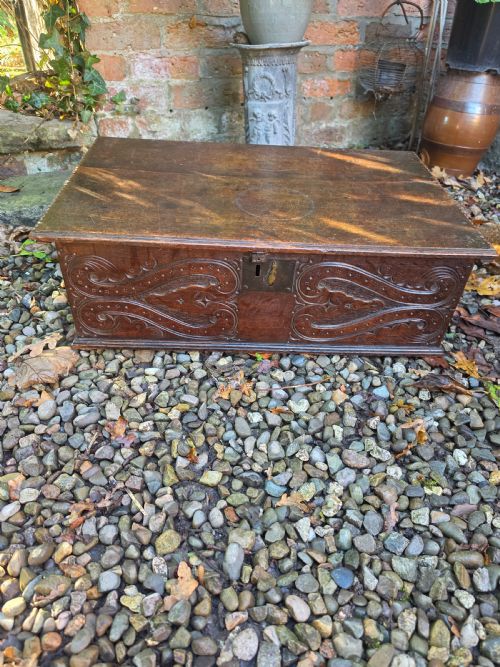
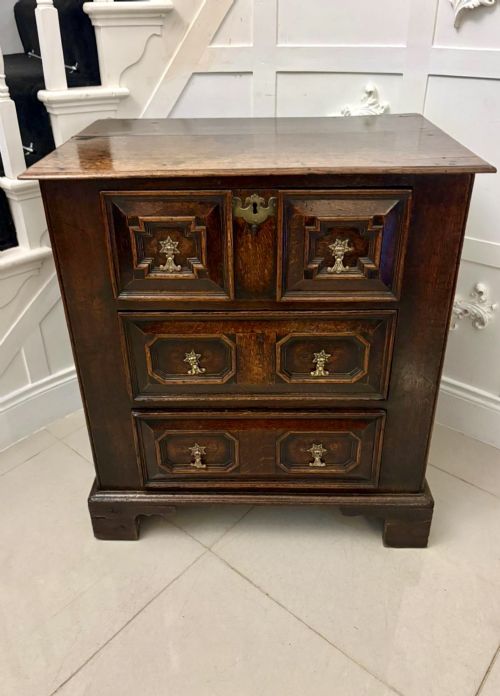
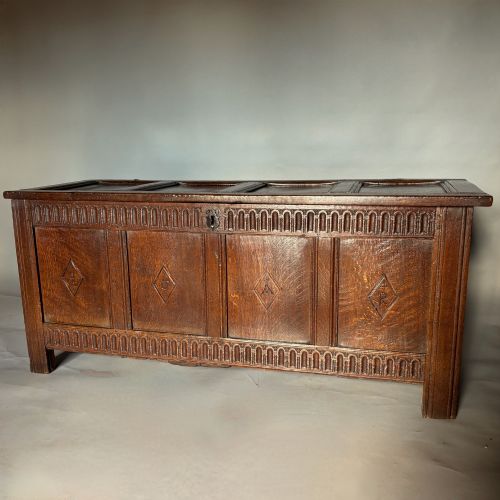
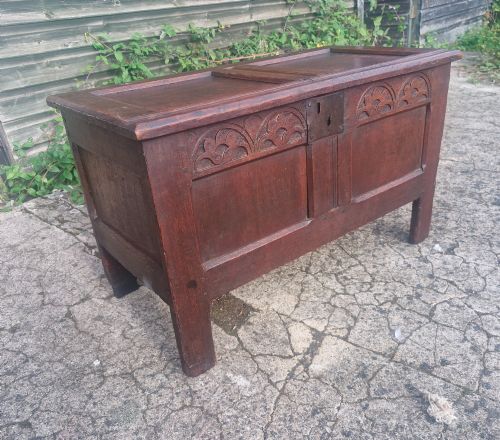
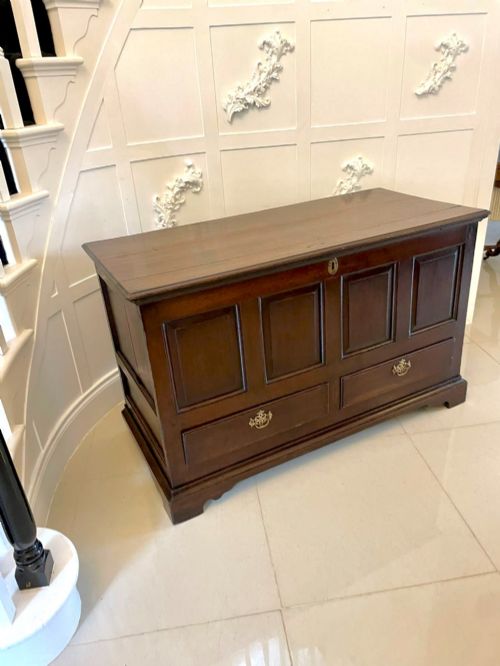
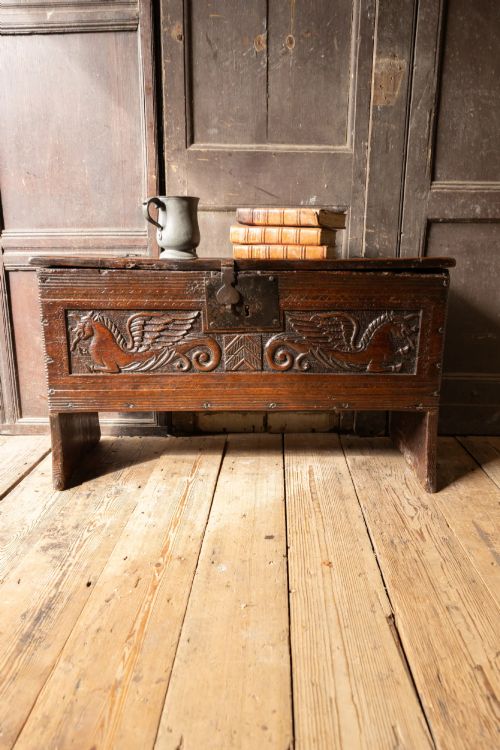
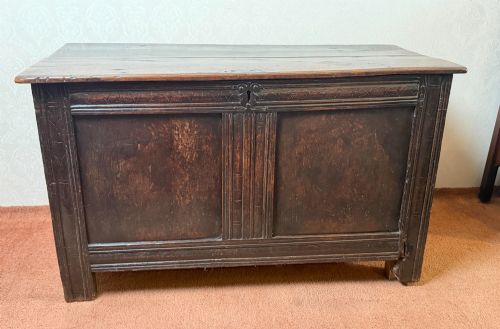
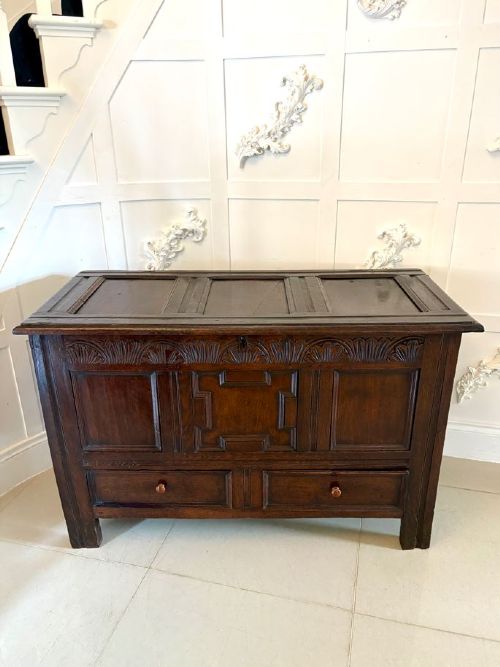
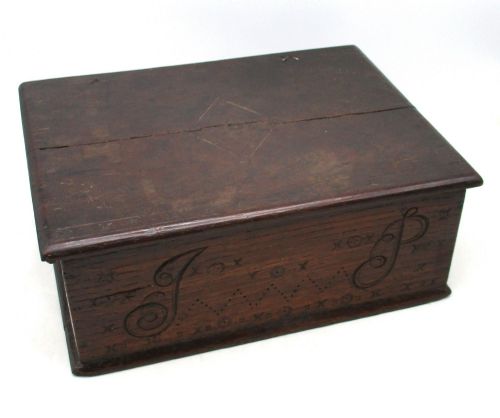
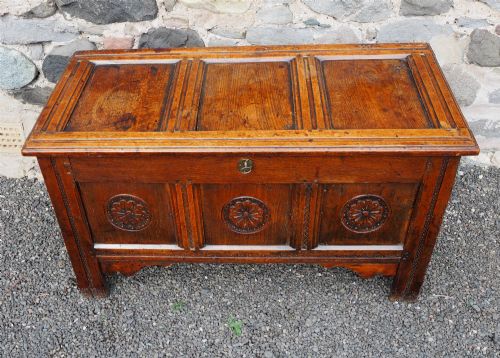
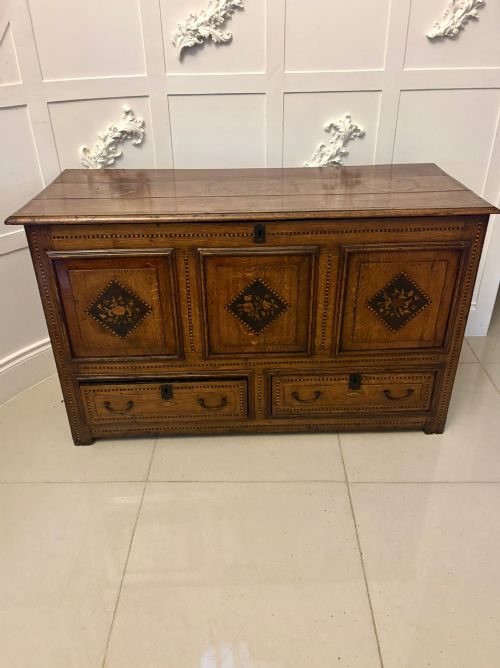
The specimens meeting you on this page appear as joined oak coffers, panelled chests, mule chests with lower drawers, and smaller document or bible boxes. Their origins stretch across English regions such as Dorset and the Gower Peninsula, alongside examples from France, Flanders, and Wales.
Many survivors retain deep historical character through carved friezes, linenfold panels, and structural joinery that reflects the dominant aesthetic of the Elizabethan, Jacobean, and Georgian eras. Their enduring utility lies in their simple capacity to anchor a room while holding blankets or modern household items.
How they were made
Makers constructed these pieces primarily from solid oak, utilising pegged frame-and-panel techniques to accommodate the natural expansion and contraction of timber over decades of fluctuating humidity. Iron and brass hinges, locks, and brackets reinforced lids and corners against heavy daily use.
Surface ornamentation involved skilled hand carving, fluting, and occasional marquetry inlay using mixed woods and walnut to create geometric or floral patterns. Finished surfaces developed deep patination through decades of waxing and handling, preserving the tool marks of the original joiner.
Several items include discrete internal compartments originally designed for storing precious tallow candles away from hungry mice.
What varies in quality
The calibre of a piece rests heavily on the crispness of the original hand carving and the architectural proportion of the panel framing. Pieces featuring complex geometric marquetry or dated inscriptions demand higher regard than plain utilitarian boxes.
Integrity of timber and originality of hardware distinguish superior survivals from heavily restored examples. Retaining original floorboards, hinges, and lid cleats elevates a coffer's historical standing among collectors.
The Period Oak Storage Coffer Glossary
- Joined coffer
- A chest constructed using frame-and-panel joinery rather than simple boards nailed together. This method provided structural strength during the sixteenth and seventeenth centuries.
- Mule chest
- A storage chest fitted with one or more drawers beneath the main compartment. It bridges the transition between the traditional coffer and the modern chest of drawers.
- Linenfold
- A style of wood carving representing folded linen cloth, popular on panels during the Tudor and Elizabethan periods. It adds vertical texture to otherwise plain rectangular faces.
- Patina
- The surface sheen and colour developed by wood over centuries through light exposure, natural oils, and repeated polishing. It serves as a visual indicator of age and handling.
- Stile
- The vertical upright member in a frame-and-panel construction. It forms the outer boundary that holds the central floating panel in place.
Period Oak Storage Coffer: Frequently Asked Questions
How were oak coffers used historically?
These chests served primarily to store valuable textiles, household linen, and family documents in domestic and ecclesiastical settings. Their heavy construction and robust locks also allowed them to function as makeshift seating or tables.
Over centuries, their placement shifted from the main chambers of great houses to hallways and parlours. Today, they continue this domestic service as blanket boxes or window seats.
How do I identify a seventeenth century coffer?
Seventeenth-century examples typically display pegged frame-and-panel construction, hand-split oak boards, and period specific decoration such as lunette carving or geometric panels. Iron strap hinges and candle boxes fitted inside are common markers of this era.
Comparing the joinery style and timber grain against dated reference pieces helps confirm the period. Many retain contemporary carving or owner initials that point to their decade of origin.
Where should I place an oak coffer at home?
An oak coffer suits placement at the foot of a bed, beneath a window, or as a focal point in a hallway. Its flat lid provides a surface for displaying decorative objects while the interior conceals bulky items.
Keep wooden chests away from direct heat sources and dramatic humidity shifts to protect the antique timber. Regular application of a neutral beeswax maintains the historic surface.
What is the difference between a coffer and a mule chest?
A standard coffer consists of a single top-loading compartment accessed by lifting the lid. A mule chest incorporates one or more drawers built into the base beneath the main storage well.
This drawer addition emerged as domestic storage needs evolved during the seventeenth and eighteenth centuries. It allowed users to access smaller garments without opening the main lid.