

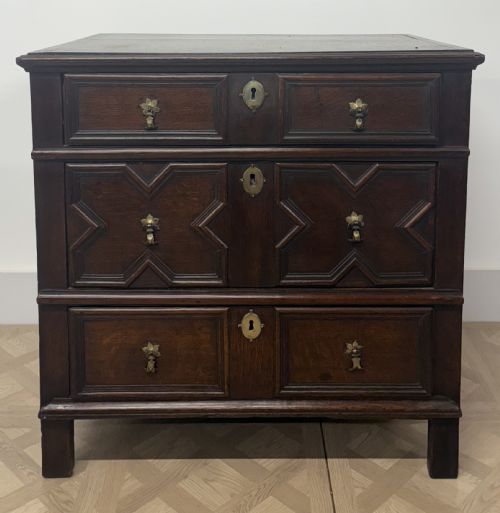
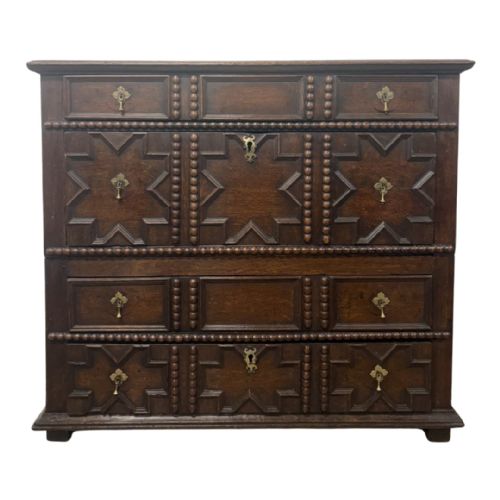
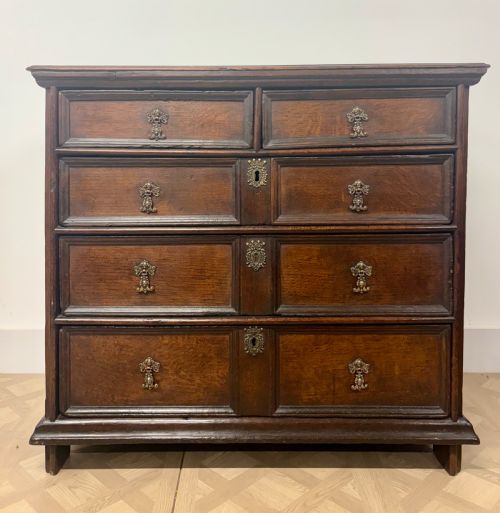
Period Oak Drawers
Period oak drawers bring centuries of functional British craft into a modern interior, offering robust storage built from timber with a deep, lived-in character.
Period Oak Drawers
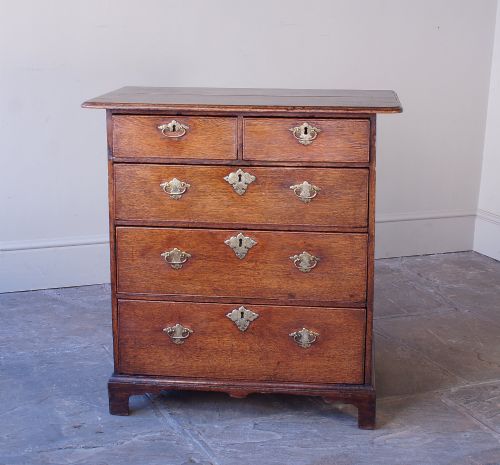
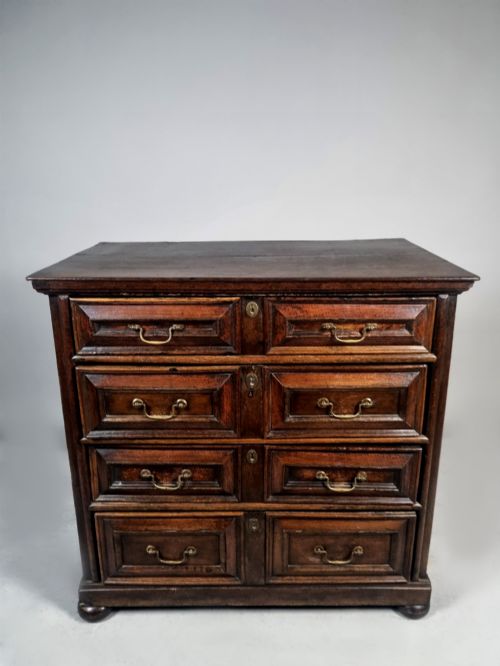
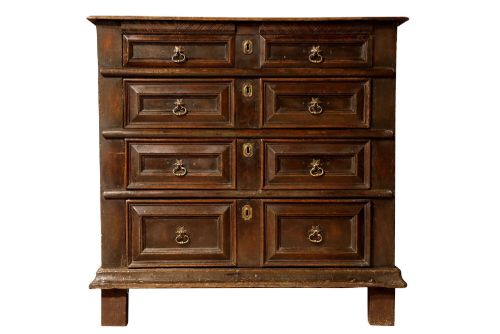
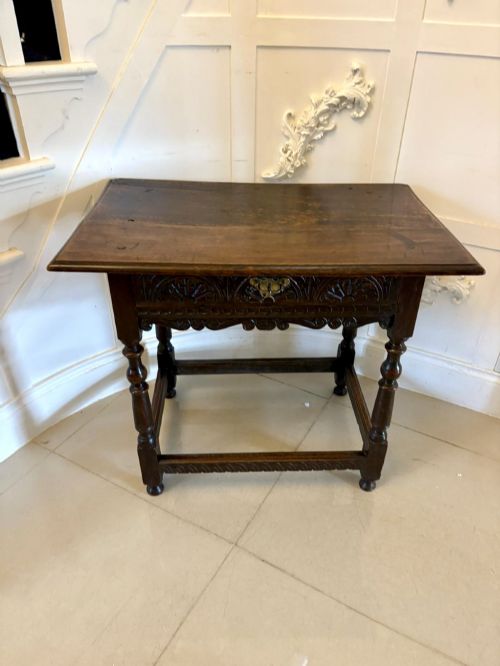
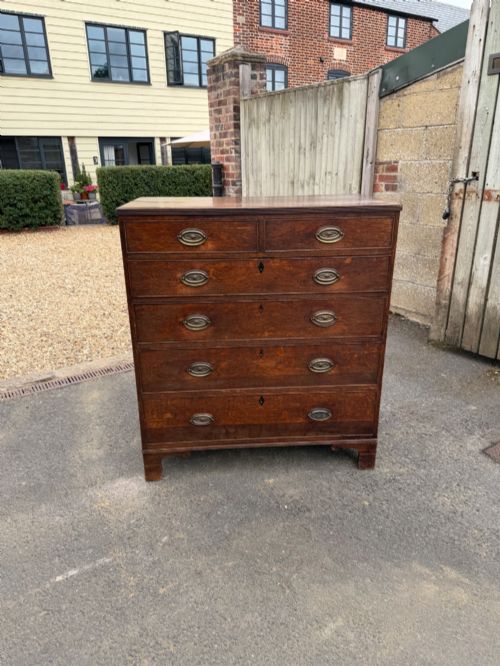
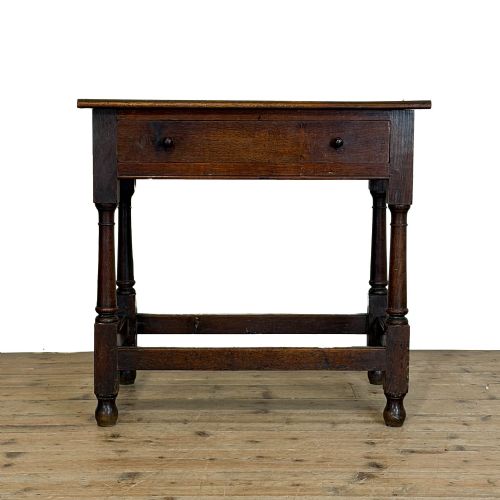
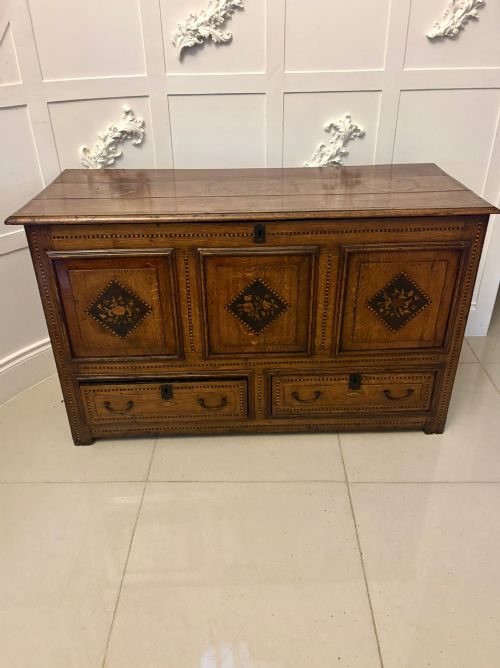
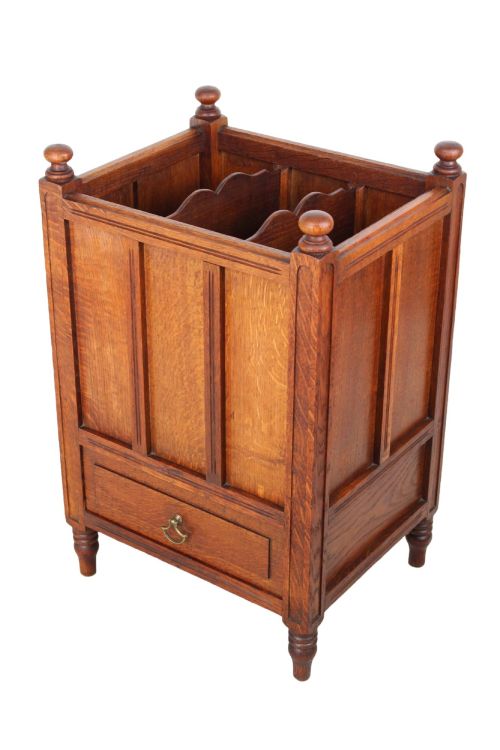
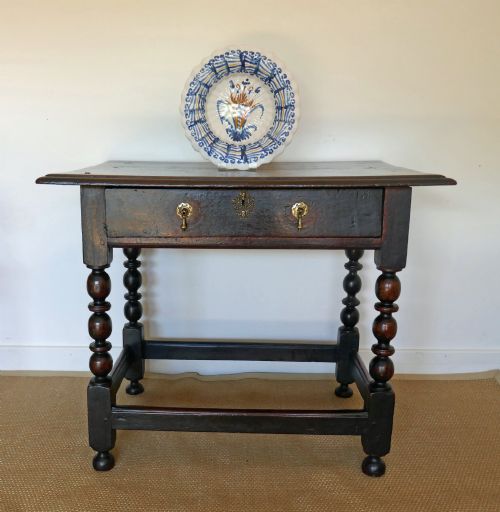
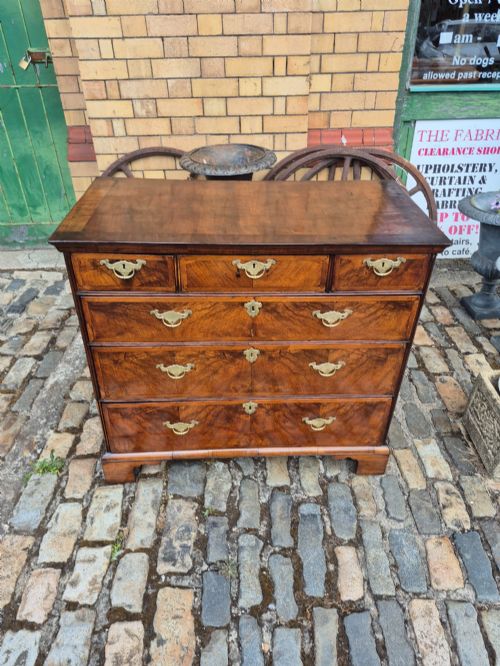
Period oak drawers encompass utilitarian furniture designed for storage, primarily encountered as chests of drawers, mule chests, dressers, and side tables across this collection.
The pieces span multiple centuries, frequently originating from the seventeenth and eighteenth centuries, as well as Georgian, Victorian, and Edwardian eras.
Buyers will frequently meet country house pieces, dwarf chests, and side tables that display the practical utility and regional character of early English cabinet making.
What varies in quality
Quality rests upon the integrity of the timber, the subtlety of the geometric mouldings, and the preservation of original drawer linings and hardware.
Pieces that retain a fine, faded patina and untouched surface finishes command greater appreciation than those with heavily restored or stripped exteriors.
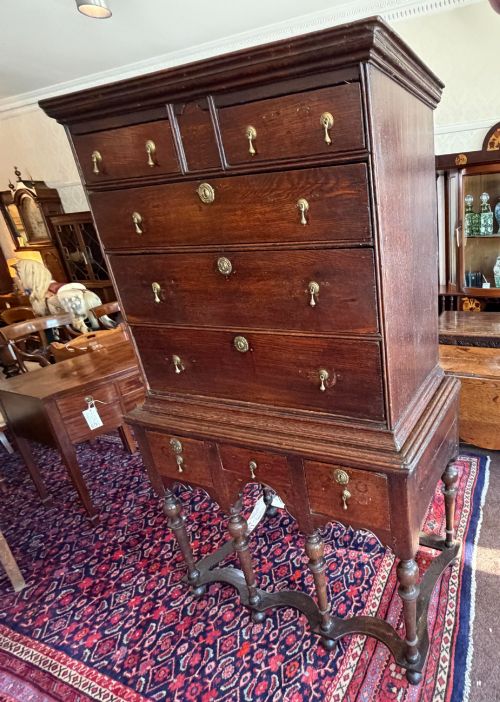
Proportion and scale also dictate worth, with diminutive sizes and well-balanced chests on stands representing superior craftsmanship.
Certain historic bedside chests double as close stools, keeping early domestic conveniences discreetly hidden behind drawer fronts.
Harris Lebus
The Period Oak Drawers Glossary
- Lowboy
- A small side table with drawers, typically raised on four legs, frequently utilised as a dressing or writing table in the eighteenth century.
- Mule chest
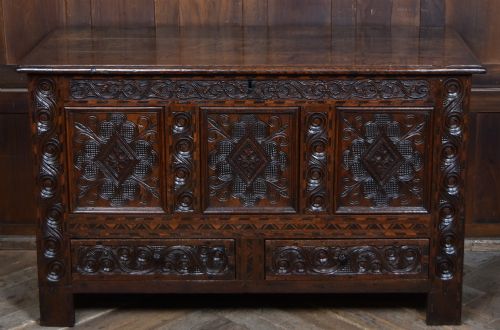
- A storage chest fitted with one or more drawers at the base, combining the storage function of a traditional coffer with drawer accessibility.
- Geometric moulding
- Raised wooden mouldings applied to drawer fronts in rectilinear patterns, characteristic of seventeenth-century joinery.
- Chest on stand
- A tall chest of drawers supported by a separate table-like base with legs, popular during the late seventeenth and early eighteenth centuries.
- Potboard dresser
- A dining room or kitchen sideboard featuring an open lower shelf beneath the drawers, designed for displaying pottery.
Period Oak Drawers: Frequently Asked Questions
How do I date an oak chest?
Dating relies on examining construction methods, such as hand-cut dovetails, timber choice, and hardware styles. Early pieces from the seventeenth century often utilise frame and panel work with heavy mouldings.
Later Georgian examples transition towards cleaner lines, mahogany secondary woods, and standardised drawer proportions that reflect changing domestic fashions.
How do I care for antique oak?
Antique oak benefits from stable indoor humidity and protection from direct sunlight, which can fade the timber. Regular dusting with a dry cloth keeps the surface clean without moisture damage.
Applying a traditional beeswax polish occasionally helps nourish the wood and preserves the natural patina built up over centuries.
Where were these pieces used?
These items originated in country houses, farmhouses, and town dwellings, serving utilitarian storage roles in bedrooms, parlours, and hallways. Chests held linens and garments, while dressers organised tableware.
Today, their robust construction allows them to transition easily into modern living spaces as functional storage furniture.