


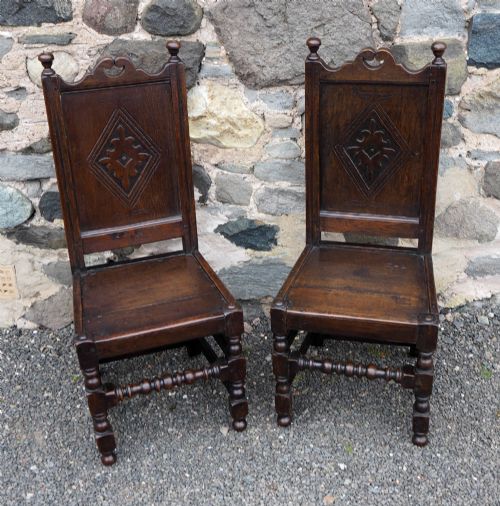
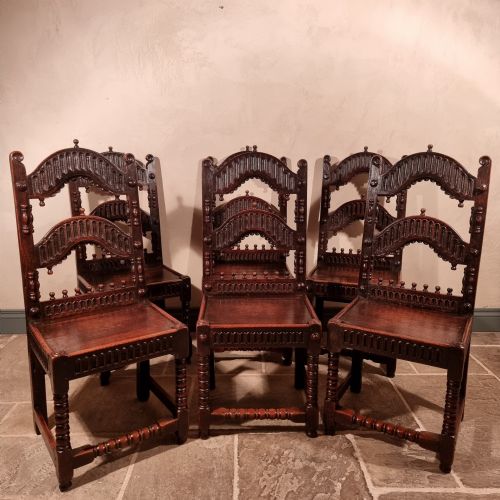


Period Oak Dining Seats
Period oak dining seats offer sturdy construction and rich grain, making them a practical choice for everyday dining and traditional interiors.
Period Oak Dining Seats
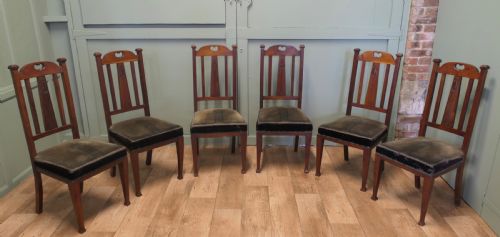
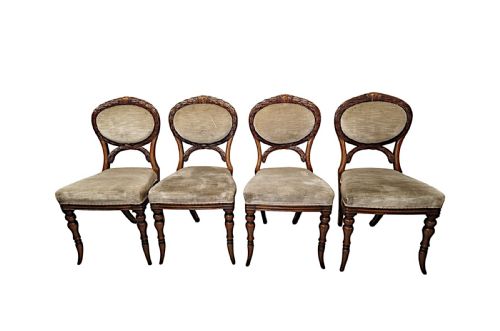
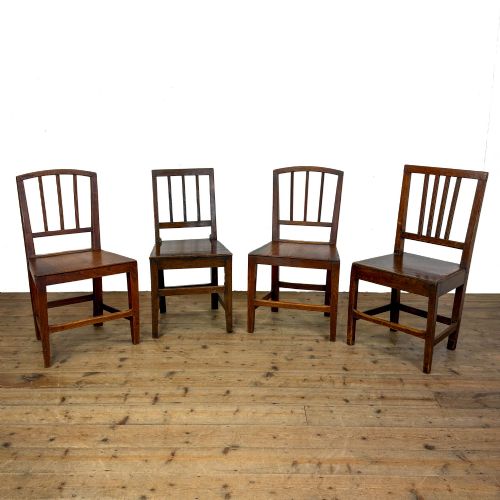
Period oak dining seats comprise dining chairs, side chairs, armchairs, hall chairs, and high chairs produced across the seventeenth, eighteenth, and nineteenth centuries, alongside revivals and twentieth-century interpretations. Buyers encounter these forms gathered in sets of four, six, or eight, as well as occasional pairs and harlequin groups assembled from disparate origins.
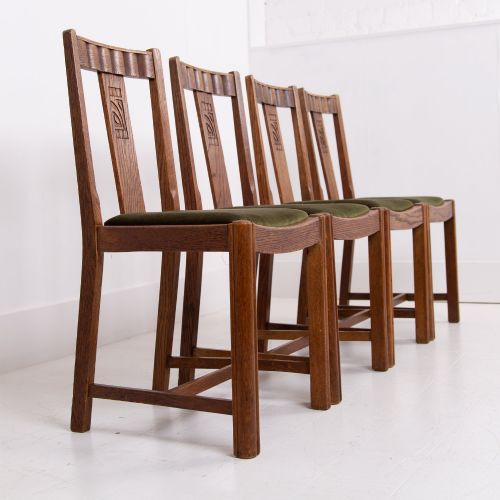
The selection ranges from early joined framework bearing the hallmarks of seventeenth-century craftsmanship to country ladder backs, Georgian country designs, and nineteenth-century Arts and Crafts iterations. Solid oak provides the primary structural timber across these eras, occasionally accompanied by associated dining tables designed to accommodate larger sets.
Construction and Materials
Makers utilised solid oak to build frames through traditional joinery techniques such as mortise and tenon joints, securing them with wooden pins. Turnings, including twist legs and spindle supports, shape the uprights and stretchers, while carved splats and panels ornament the backs.
Seating surfaces incorporate diverse materials to provide support, utilising woven rush and cane alongside drop-in pads and fixed squabs upholstered in fabric, velvet, or tapestry. These seating foundations are integrated directly into wooden frames shaped by regional vernacular traditions and prevailing design movements.
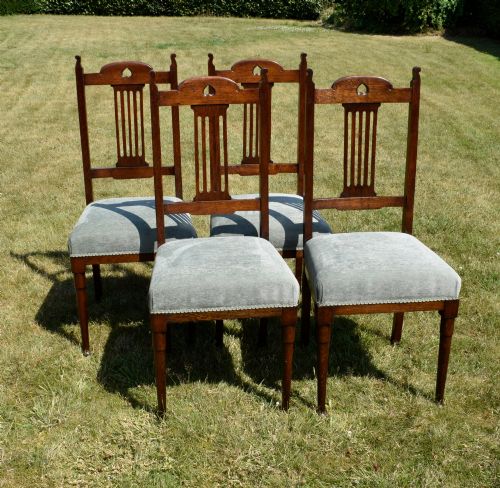
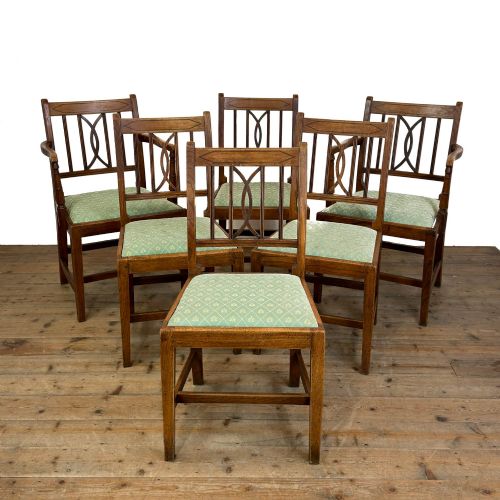
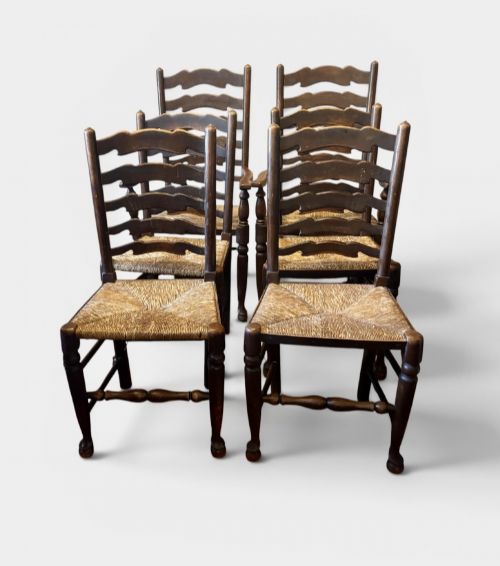
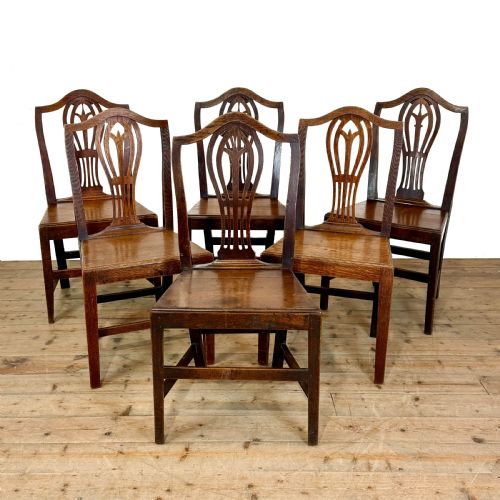
Listings feature oak dining seats spanning the seventeenth century through the Edwardian era, incorporating rush, cane, and fabric upholstery.
Distinctions in Quality
The degree of original survival distinguishes examples, noting how untouched surfaces and period components compare against later replacements or extensive reconstruction within frames. The crispness of carved detail on splats, stiles, and crest rails indicates the maker's competence and the clarity of the underlying design.
Cohesion within a set influences character, as matched groups maintain uniform timber selection and turning profiles, whereas harlequin sets display natural variation across individual components. Structural integrity in the joints and the preservation of original seating materials further separate standard vernacular pieces from masterworks.
Strahan·Charles Bevan·Heals
The Period Oak Dining Seats Glossary
- Splats
- Central vertical wooden strips set within the back of a chair, often shaped, pierced, or carved to provide lumbar support and stylistic decoration.
- Stretchers
- Horizontal wooden braces connecting the legs of a chair to provide structural rigidity and frame stability.
- Ladder back
- A chair back featuring multiple horizontal wooden rails positioned between the upright stiles, reminiscent of a ladder.
- Drop-in seat
- A removable upholstered frame that rests upon a rebated ledge within the seat rails of a chair.
- Harlequin set
- A collection of dining chairs assembled to match in general style and era while exhibiting minor variations in individual design.
Period Oak Dining Seats: Frequently Asked Questions
How do I identify seventeenth-century chairs?
Seventeenth-century chairs display heavy joined oak frames, often featuring pegged mortise and tenon construction, turned supports, and carved wooden panels or splats. These pieces reflect vernacular English or Welsh joinery traditions without the lighter proportions seen in later centuries.
Surface patination and tool marks left by hand-working provide further indication of early origin, distinguishing genuine period construction from later revivals.
What is a harlequin set?
A harlequin set is a collection of dining chairs assembled to function together around a table despite subtle differences in design, turnings, or age. They allow buyers to acquire matching numbers when uniform sets of six or eight are unavailable.
Such groups typically share a general period, material, or regional style to maintain visual harmony within a dining space.
How do rush seats differ from upholstered ones?
Rush seating involves weaving dried marsh grasses tightly around the seat rails to form a durable, textured surface suited to traditional ladder back forms. Upholstered seats utilise fabric, velvet, or tapestry stretched over webbing and padding, offering softer cushioning.
Drop-in upholstery allows the seat frame to be lifted out independently, whereas fixed squabs are secured directly to the chair structure.
Are Arts and Crafts chairs antique?
Arts and Crafts dining seats date primarily from the late nineteenth and early twentieth centuries, reflecting the movement's emphasis on visible construction, honest materials, and vernacular design traditions. While they do not share the early dates of seventeenth-century joined furniture, they constitute a distinct historical period of production.
These chairs frequently showcase golden oak timber, straightforward joinery, and functional forms influenced by earlier country styles.