

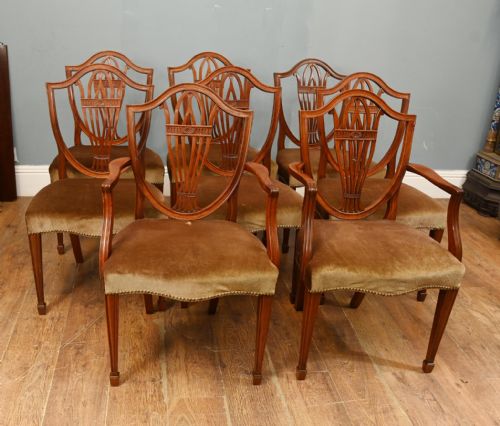


Period Neoclassical Dining Chairs
Period neoclassical dining chairs bring architectural balance and disciplined classical form to a room.
Period Neoclassical Dining Chairs
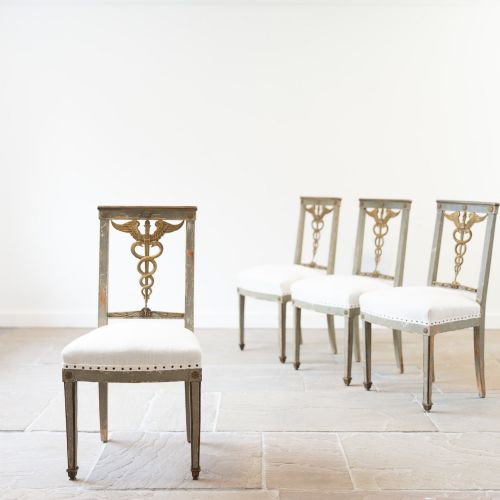
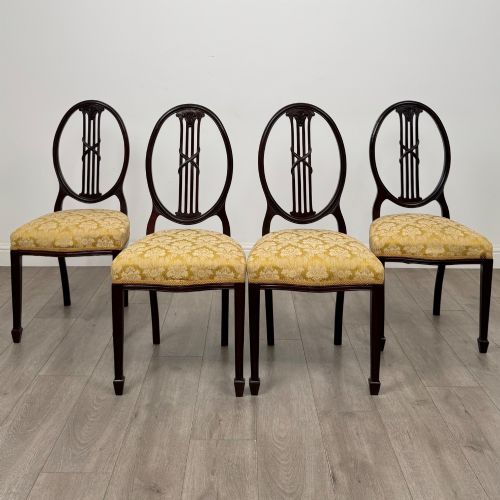
When you search for period neoclassical dining chairs, you are looking at seating shaped by classical antiquity, featuring clean lines and restrained ornamentation. The selection includes sets and pairs spanning the eighteenth and nineteenth centuries, originating from English, French and Northern European workshops.
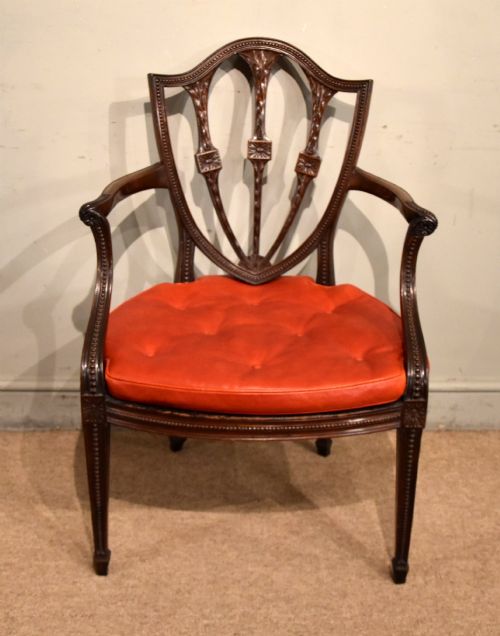
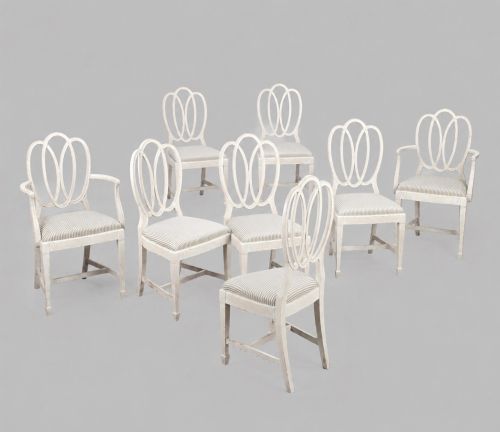
The versions most commonly met on this page include mahogany side chairs and armchairs with shield backs or oval backs, alongside painted or gilt wood salon chairs. These pieces reflect the enduring influence of design vocabularies established during the Georgian, Sheraton and Hepplewhite periods.
Makers and makers' workshops produced these dining chairs in configurations ranging from single pairs to larger suites of eight. The forms include specific regional interpretations, such as French Napoleonic era seating and Northern European variations.
How they were made
Cabinetmakers constructed these chairs primarily using solid mahogany, fruitwood and painted wood, often enriched with carved details. Structural integrity relied on traditional joinery techniques adapted to support upright oval and shield-shaped backs.
Upholstery materials recorded in the listings include fabric, leather and linen, applied to seats designed for formal dining rooms and salons. Brass mounts and gilt wood additions provided the contrasting metallic and gilded highlights characteristic of the style.
Period Neoclassical Dining Chairs Retail Price Guide 2026
Typical asking prices for period neoclassical dining chairs among the pieces listed under this phrase on Sellingantiques today, from the lower quarter to the upper quarter. They describe what is for sale here now, not the wider market.
Some chairs have travelled through three centuries only to end up hosting modern breakfast conversations.
What varies in quality
The distinction between standard examples and finer pieces lies in the crispness of the carving and the proportion of the timber. Superior chairs display refined execution in classical motifs and balanced structural lines without excessive ornamentation.
Consistency across a larger set influences desirability, particularly in matched suites of six or eight dining chairs. The integrity of the original wood and the subtlety of painted or polished surfaces further determine the standing of each piece.
The Period Neoclassical Dining Chairs Glossary
- Shield back
- A chair back shaped like a heraldic shield, popular in eighteenth-century neoclassical design. This form provides a broad surface for carved drapery or feathered motifs.
- Oval back
- A rounded backrest frame often found in French and later revival neoclassical seating. It lightens the visual weight of the chair.
- Side chair
- A chair without arms, designed primarily for use at a dining table. These pieces balance functional seating with formal decorative presence.
- Salon chair
- A smaller, decorative seat intended for reception rooms rather than heavy dining use. These often incorporate painted finishes or gilt wood elements.
- Fruitwood
- Dense timber derived from fruit-bearing trees, used by provincial makers as an alternative to mahogany. It offers a warm tone and fine grain.
Period Neoclassical Dining Chairs: Frequently Asked Questions
How do I spot a Hepplewhite design?
Hepplewhite style chairs are identifiable by their light proportions, tapering legs and characteristic shield or heart-shaped backs. These designs draw heavily on classical symmetry and understated carved ornamentation.
Such chairs often utilise mahogany or fruitwood, reflecting the lighter aesthetic introduced during the late eighteenth century.
Can I mix different chair sets?
Mixing sets requires careful attention to timber tone, height and overall decorative period. Pairing armchairs with simpler side chairs from a similar era maintains visual harmony.
Ensure that the seat heights align correctly for dining use before combining different pieces around a table.
How were these chairs used historically?
These chairs served primarily around formal dining tables in prosperous households, with larger sets accommodating guests during prolonged meals. Salon variants were positioned in drawing rooms for polite conversation.
Their placement reflected the social hierarchy and formal entertaining habits of the period.
What defines French neoclassical seating?
French neoclassical seating often incorporates painted wood, gilt finishes and precise structural geometry inspired by ancient Roman and Greek forms. Upholstered oval backs and sabre legs frequently appear in these pieces.
They reflect the shifting tastes from Rococo extravagance toward archaeological purity during the eighteenth and nineteenth centuries.