
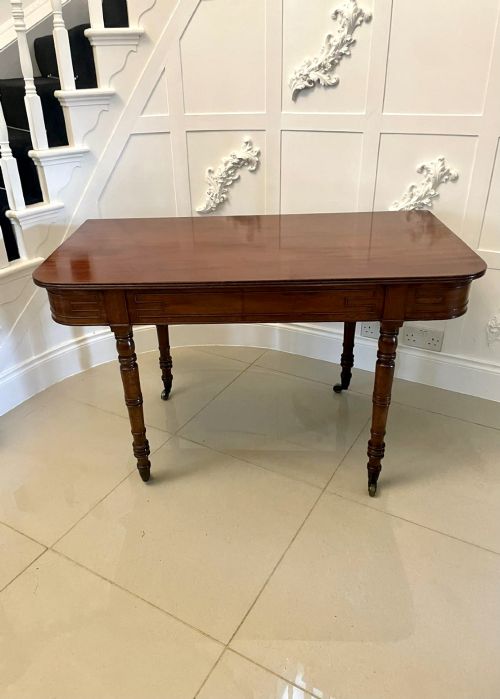
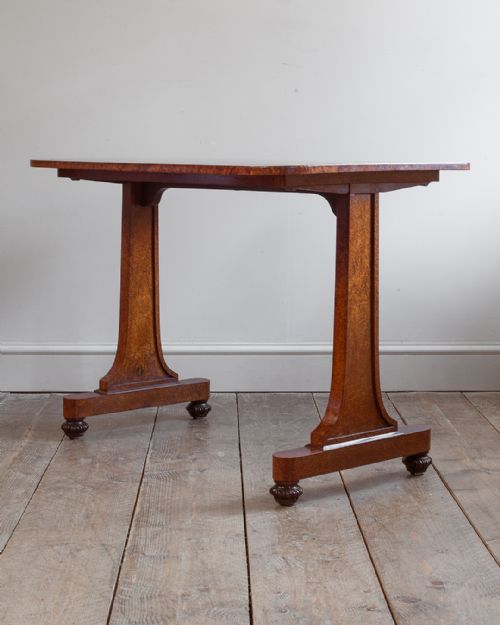
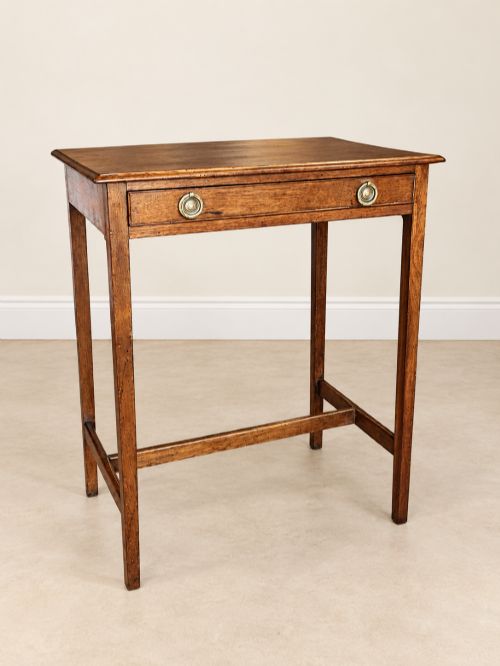
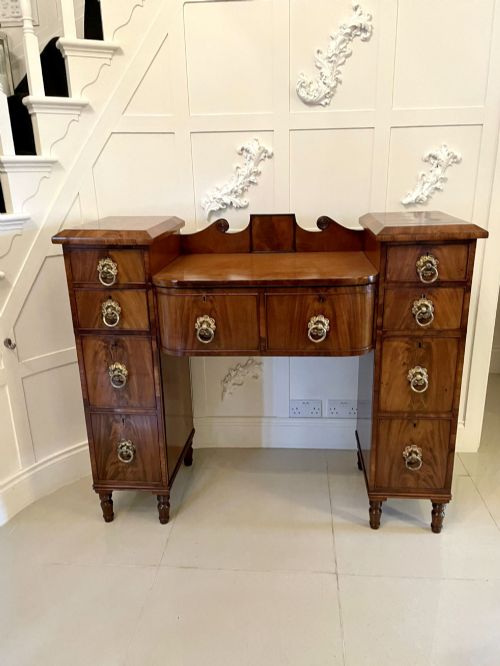



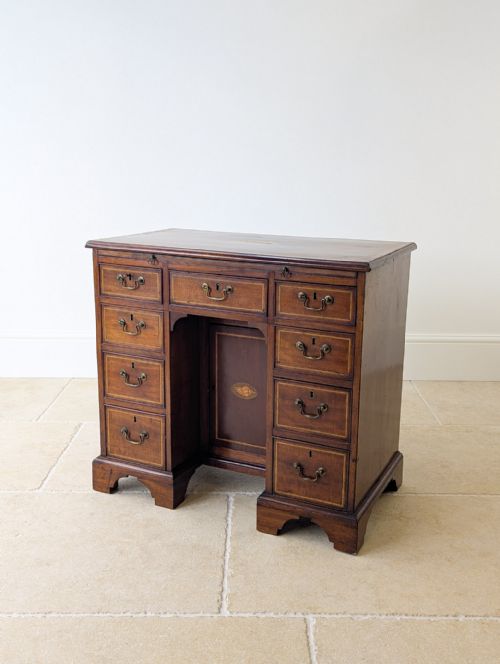
Period Mahogany Writing Table
A period mahogany writing table brings the refined craftsmanship of the Georgian, Regency, and Victorian eras directly into a modern study.
Period Mahogany Writing Table
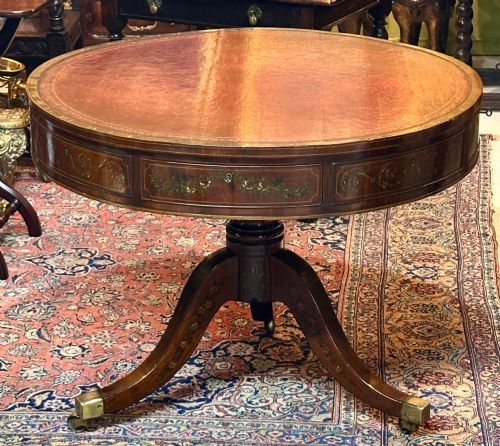
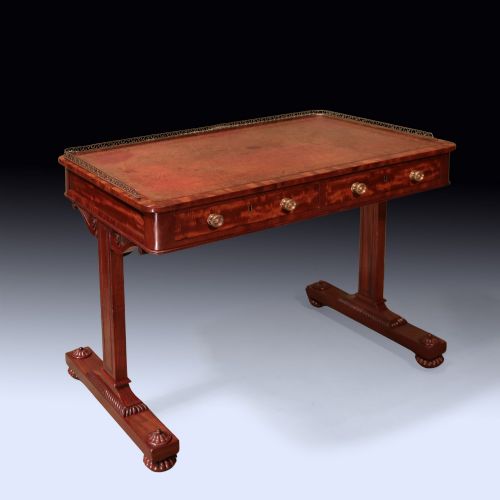
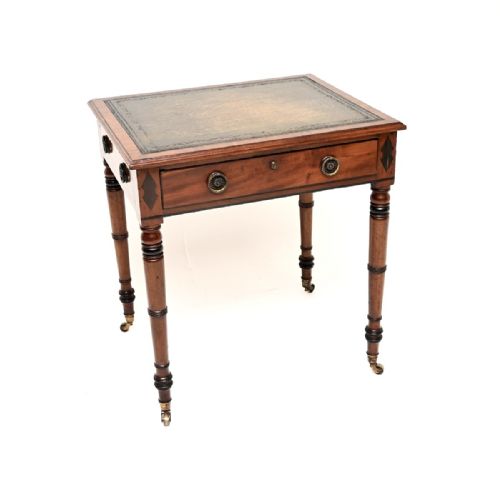
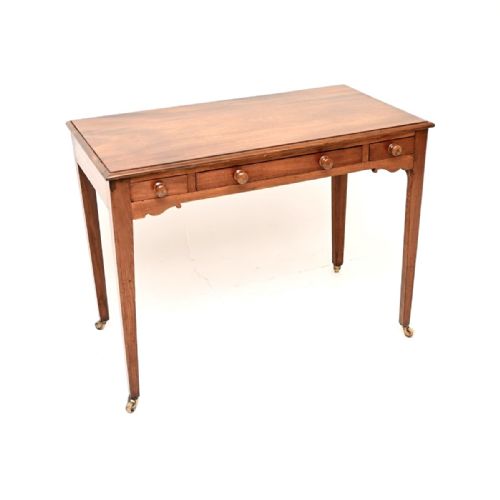
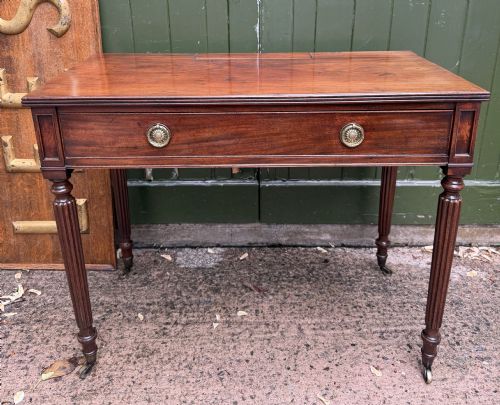
A period mahogany writing table encompasses a diverse range of freestanding desks, library tables, and sofa tables designed for correspondence and reading. These pieces span the eighteenth and nineteenth centuries, emerging primarily from Georgian, Sheraton, Chippendale, Regency, and William IV design traditions. The selection frequently includes drum tables, partners desks, and ladies writing desks alongside simpler side tables adapted for writing.
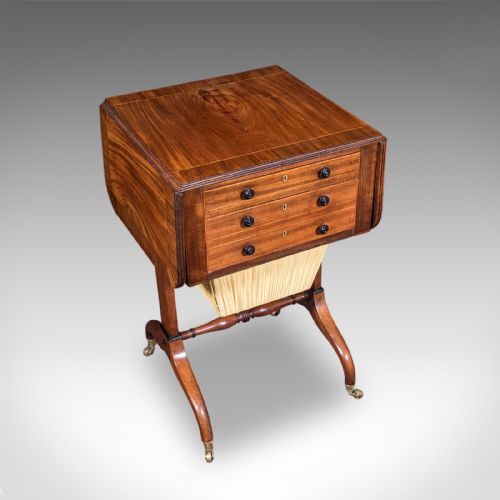
Most examples encountered on this page date from the Regency and George III periods, reflecting a golden age of British cabinet making. Forms vary from compact needlework and chamber tables to expansive double-sided library pieces intended for the centre of a room. Buyers will also find specialised pieces such as tambour desks, kneehole desks, and bonheur du jours.
How they were made
Cabinet makers relied primarily on dense, richly grained mahogany timber, often pairing primary surfaces with oak or secondary pine linings in the drawer construction. Finer examples incorporate contrasting veneers and stringing of satinwood, boxwood, and ebony to outline drawers and borders.
Surfaces intended for writing frequently feature inset panels of tooled leather, whilst structural elements showcase sophisticated turning, bracket feet, and carved end supports such as lyres. Drawers are traditionally joined with hand-cut dovetails, and folding or drop-leaf mechanisms utilise brass hinges and rule joints.
Some nineteenth-century writing tables were built with secret compartments cunningly hidden behind sliding panels for storing private correspondence.
What varies in quality
Quality in these tables is largely defined by the choice of timber and the depth of its natural figuration, particularly on expansive top surfaces and drawer fronts. Cabinet makers who selected premium fiddle-back or flame mahogany elevated simple functional forms into high-status furnishings.
The sophistication of the joinery and secondary detailing also separates standard workshop output from exceptional pieces. Crispness in boxwood inlay, well-proportioned turned legs, original brass hardware, and the integration of secondary woods all distinguish superior execution.
Gillows of Lancaster·John MaClean·George Faulkner Armitage·T. Wilson
The Period Mahogany Writing Table Glossary
- Drum table
- A circular library table containing multiple drawers around the perimeter, frequently supported by a central pillar and tripod legs.
- Partners desk
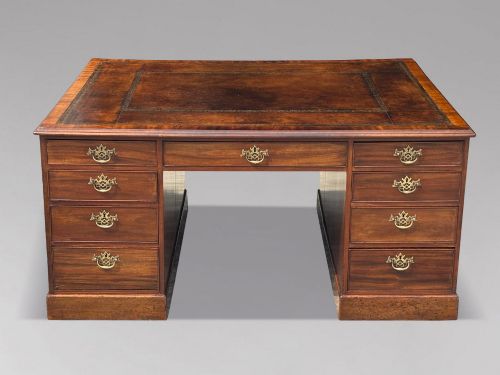
- A large double-sided writing table designed with opposing banks of drawers so two people could work opposite one another.
- Tambour
- A sliding door or shutter constructed from narrow vertical strips of wood glued to a canvas backing, used to enclose desk compartments.
- Bonheur du jour
- A light lady's writing desk featuring a small cabinet or set of pigeonholes and drawers mounted upon the rear of the writing surface.
- Sofa table
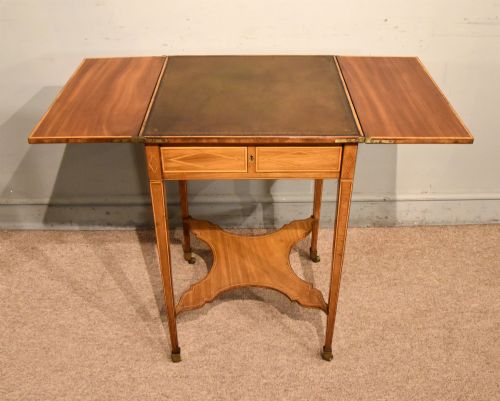
- An oblong occasional table designed to stand in front of a sofa, featuring drop leaves on either end and often fitted with drawers.
Period Mahogany Writing Table: Frequently Asked Questions
Where should I place a library table?
Library tables and larger writing desks are traditionally finished on all sides, making them ideal for positioning in the centre of a room rather than pushed against a wall.
Their generous proportions and double-sided access allow them to serve as a striking focal point in a study or drawing room.
How do I care for an antique leather top?
To maintain the surface of a period writing table, keep it away from direct sunlight and excessive heat sources that can dry out the leather.
Occasional treatment with specialist leather balms helps preserve the suppleness and the gold-tooled borders without damaging the surrounding wood.
What is the difference between a side table and a writing table?
Whilst both pieces share similar rectangular proportions, a writing table is specifically constructed with comfortable knee clearance beneath the drawers for sitting.
Side tables often sit lower or lack the necessary internal depth for a chair, serving instead for display or general storage.