
Traditional Wood Writing Desk
A traditional wood writing desk brings warmth and practical surface area to a study, combining period craftsmanship with daily utility.
Traditional Wood Writing Desk
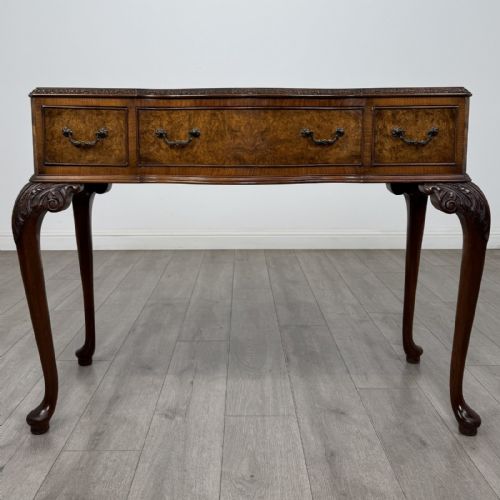
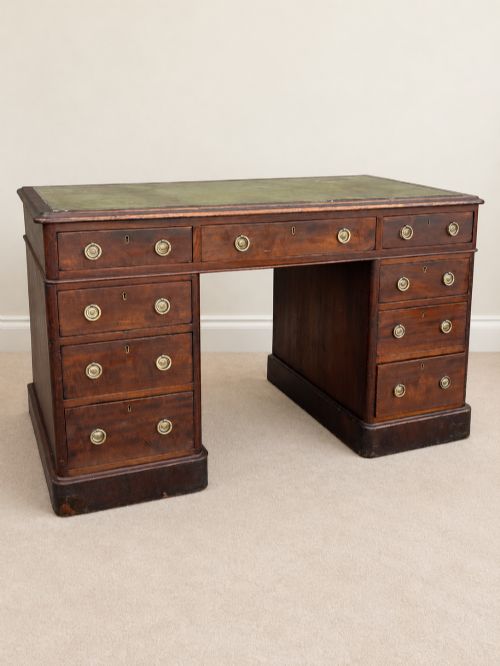
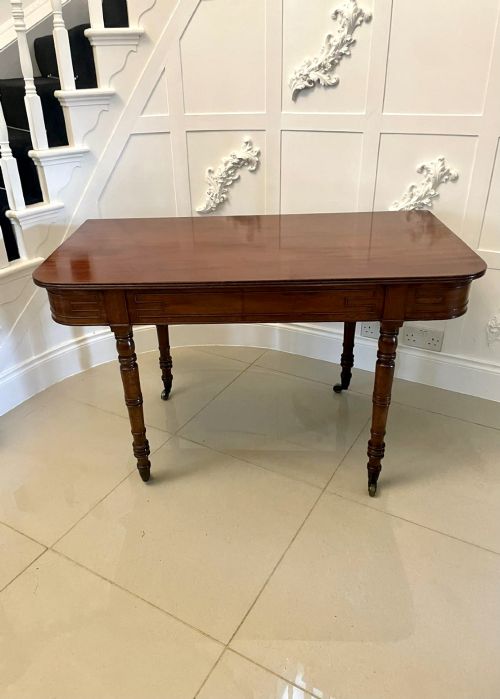
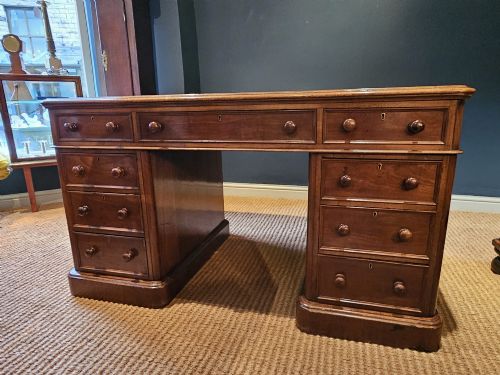
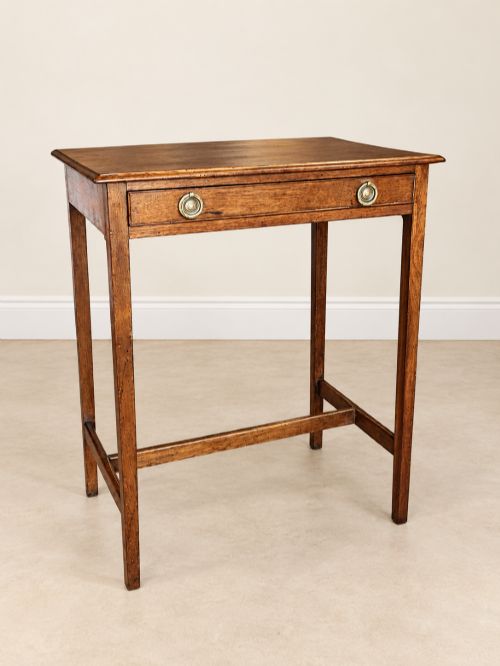
A traditional wood writing desk is a piece of furniture designed for correspondence and paperwork, appearing across several centuries in forms such as pedestals, kneeholes, and side tables. When exploring this selection, buyers frequently encounter Edwardian oak models and Victorian mahogany variations alongside Georgian pieces.
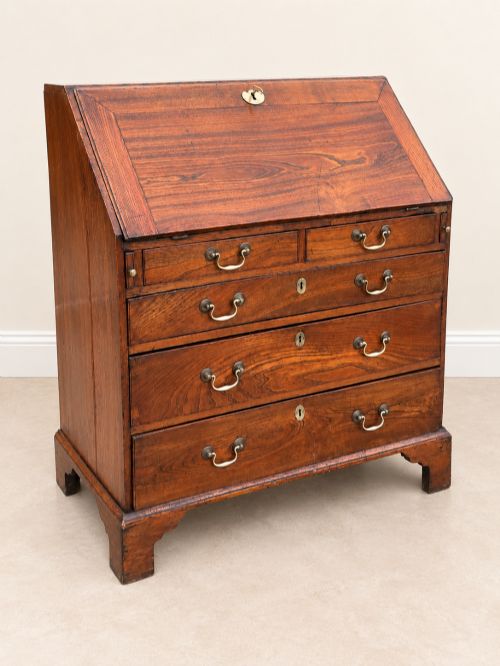
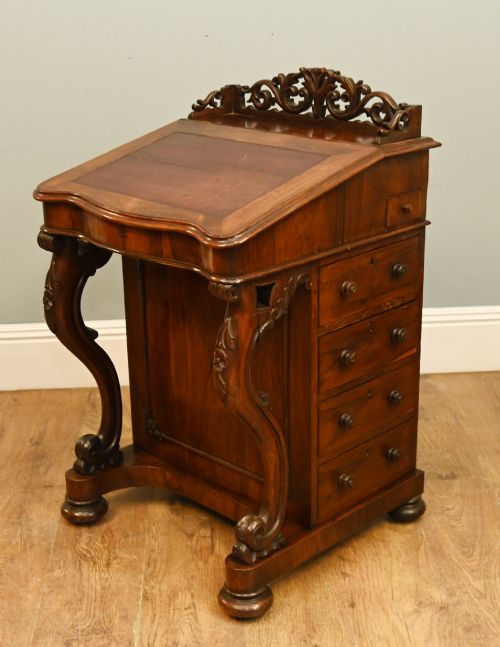
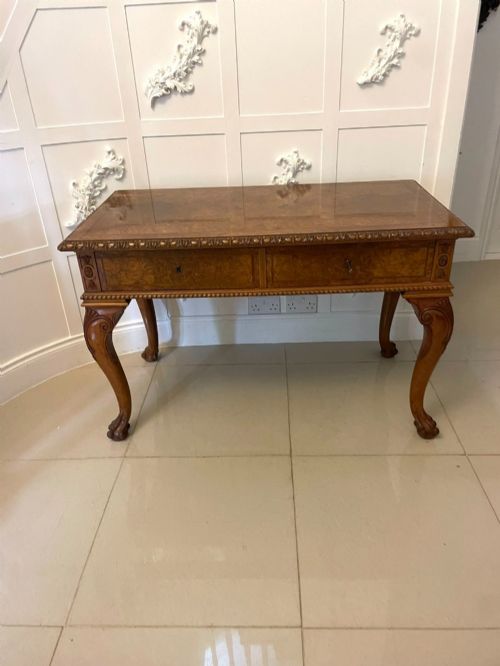
The objects span multiple forms including bureaux, bureau bookcases, and partner's desks, constructed from woods like oak, mahogany, walnut, and burr walnut. These surfaces often incorporate fitted drawers, leather writing inserts, and tambour cylinders.
Origins range from English country workshops to cabinet makers working in the eighteenth, nineteenth, and early twentieth centuries. Regional variations include Jacobean revival styles, Queen Anne revivals, and painted English surfaces.
How they were made
Makers utilised solid timbers and veneers such as flame mahogany, burr walnut, oak, and beech, constructing carcases with dovetailed drawer joints and panelled backs. Surfaces were frequently polished, waxed, or painted to protect the timber grain.
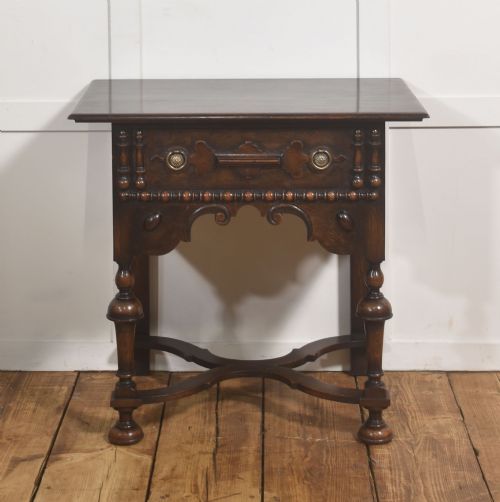
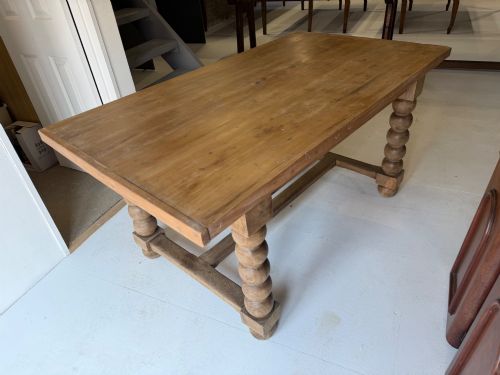
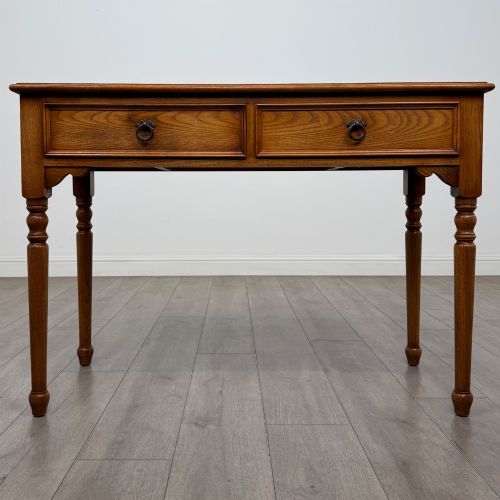
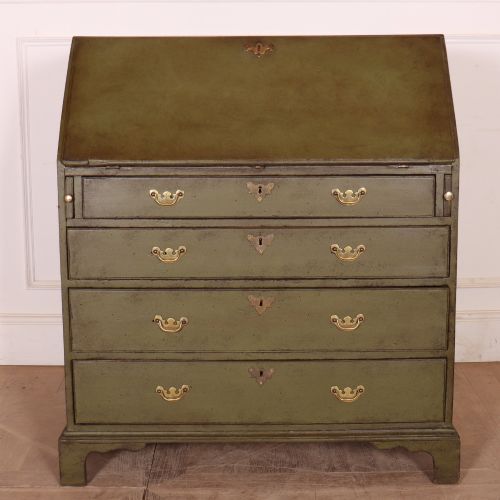
Brass fittings, drop handles, and escutcheons secured drawer fronts, while inset panels of tooled leather provided durable writing surfaces. Turned legs, bobbin legs, and barley twist supports provided the structural underpinnings for tables and desks.
Listings feature woods including mahogany, oak, walnut, burr walnut, rosewood, and beech across the eighteenth, nineteenth, and early twentieth centuries.
What varies in quality
Quality rests in the selection of timber figures, such as matched flame mahogany or burr walnut veneers, and the crispness of carved details like linenfold panels or bobbin turnings. Superior examples display original brass hardware, intact leather inserts, and structurally sound internal drawer carcases.
Construction methods also distinguish standard production from exceptional cabinet work, seen in closely fitted dovetails, smooth drawer action, and the integration of secondary woods. Pieces attributed to documented makers or specific regional workshops carry distinct structural traits.
Trollope & sons·J A Mein Edinburgh Cabinet Maker·Gillows
The Traditional Wood Writing Desk Glossary
- Bureau
- A sloping desk with a hinged flap that opens to reveal compartments and small drawers. It often sits above a chest of drawers or on a stand.
- Tambour
- A flexible shutter made of narrow strips of wood glued to canvas, allowing a cylinder desk top to slide open smoothly.
- Kneehole desk
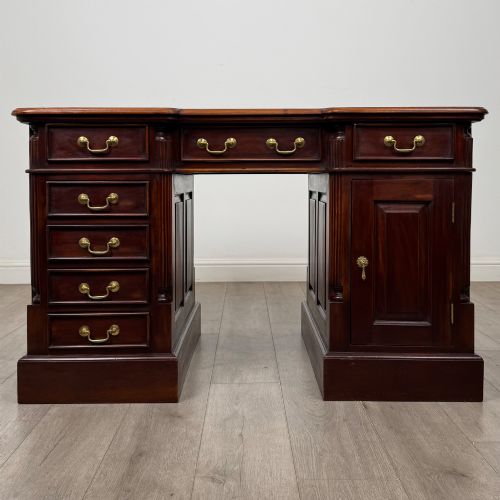
- A compact pedestal desk featuring a central recess for the user's legs, flanked by banks of small drawers.
- Partner's desk
- A large double-sided pedestal desk designed for two people to work opposite each other, featuring drawers and cupboards on both faces.
- Lowboy
- A small table with one or more rows of drawers, commonly used as a side table or dressing table in the eighteenth century.
Traditional Wood Writing Desk: Frequently Asked Questions
How do I identify the period?
Period identification relies on timber choices, construction techniques, and stylistic cues such as hardware and leg turning. Eighteenth-century pieces often feature solid mahogany and fine dovetailing, while Edwardian examples frequently show lighter oak construction.
Examining secondary woods inside drawers and the style of carving helps confirm whether a piece belongs to the Georgian era or a later revival period.
What is a tambour top?
A tambour top consists of narrow slats of wood joined to fabric backing, allowing the writing surface cover to curve along a track and conceal the desk interior.
This mechanism was popular on cylinder desks from the Georgian period onward, offering a neat way to secure correspondence without a heavy hinged lid.
How do I care for the leather?
Leather writing surfaces require gentle cleaning with a slightly damp cloth and occasional treatment with specialist leather balms to prevent cracking. Avoiding direct sunlight helps preserve the colour and tooled gold borders.
Many antique desks retain their original leather inserts, which benefit from minimal moisture and careful maintenance during daily use.
Where were partner's desks used?
Partner's desks were traditionally placed in libraries, studies, or banking halls where two individuals needed workspace facing each other. Their generous proportions accommodate drawers and cupboards accessible from both sides.
These large desks typically date from the Victorian and Georgian periods, constructed in substantial mahogany or walnut.