
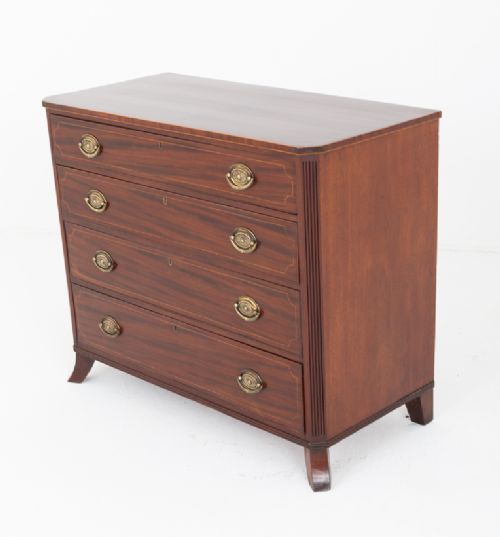

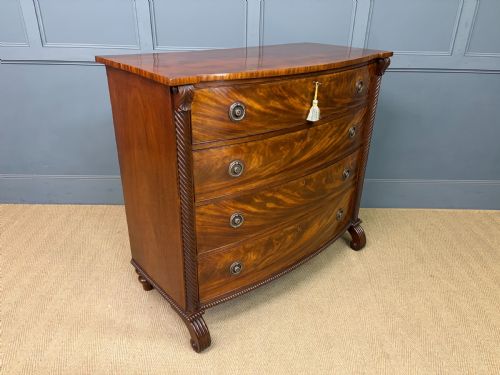
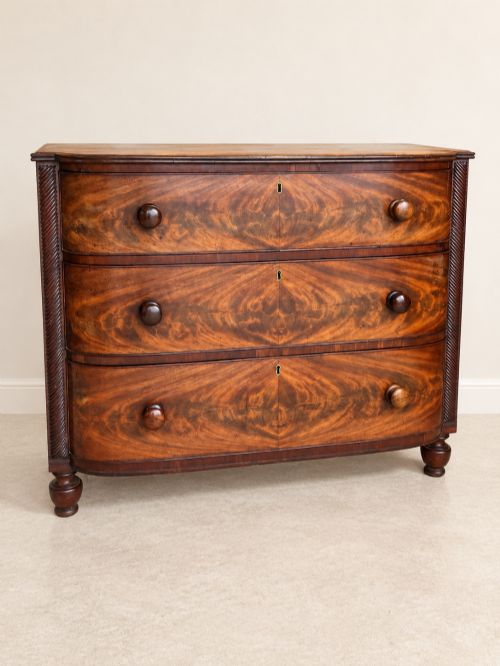
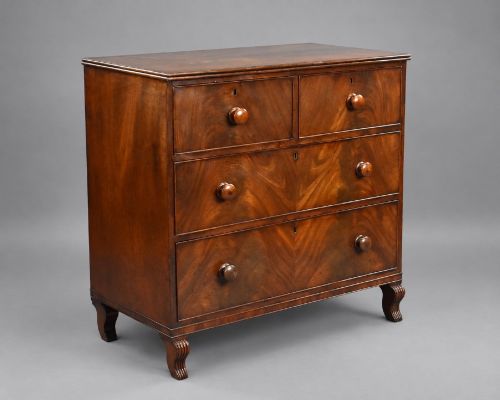
Period Mahogany Tallboy Drawers
Period mahogany tallboy drawers bring architectural presence and deep timber warmth to a room, offering enduring storage through centuries of craftsmanship.
Period Mahogany Tallboy Drawers
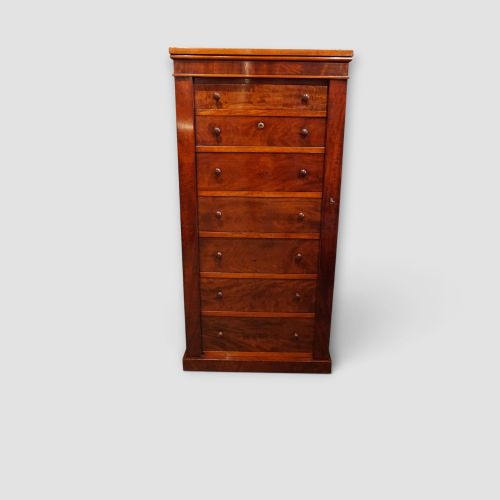
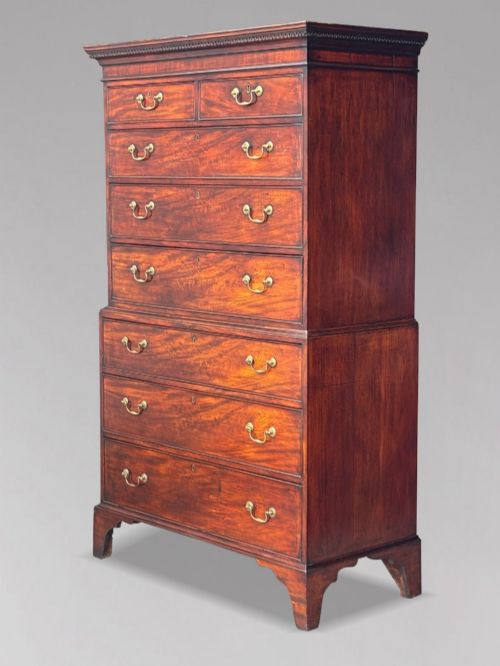
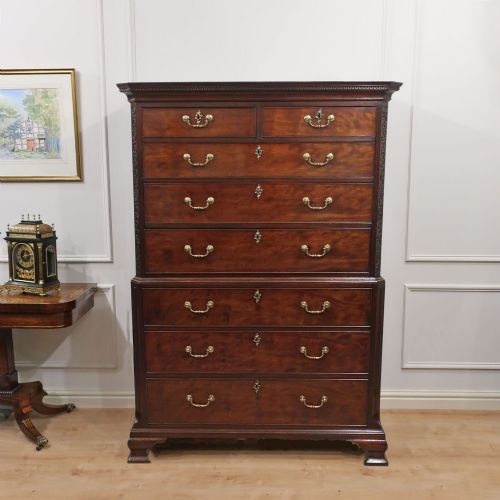
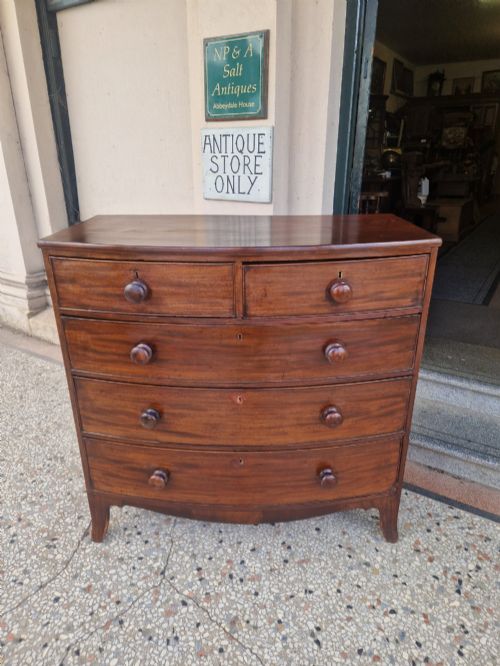
Period mahogany tallboy drawers encompass tall chests, chests on chest, and secretaire tallboys spanning the Georgian, Regency, and Victorian eras. These elevated forms maximise vertical storage while maintaining the proportion and balance characteristic of eighteenth and nineteenth-century cabinet work.
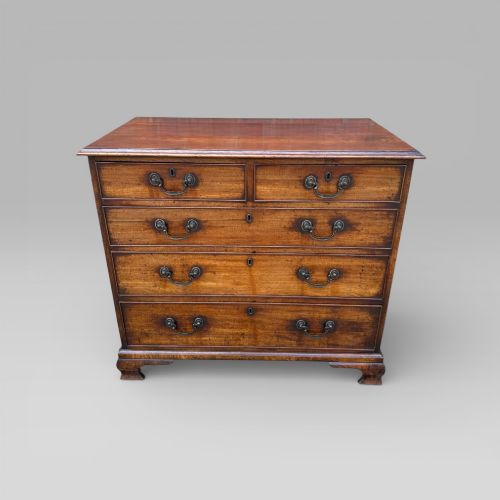
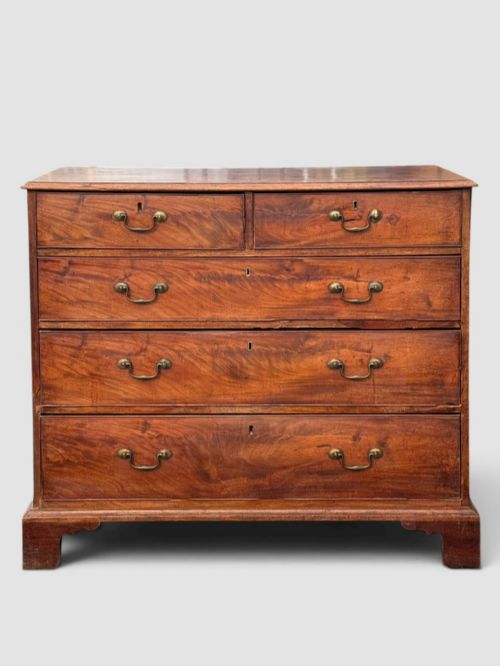
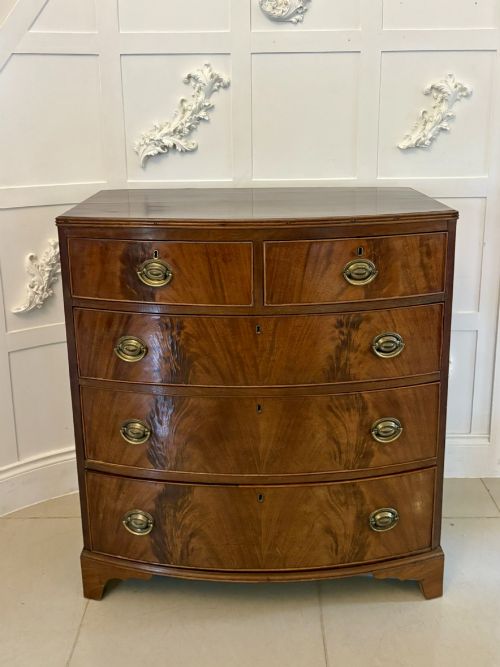
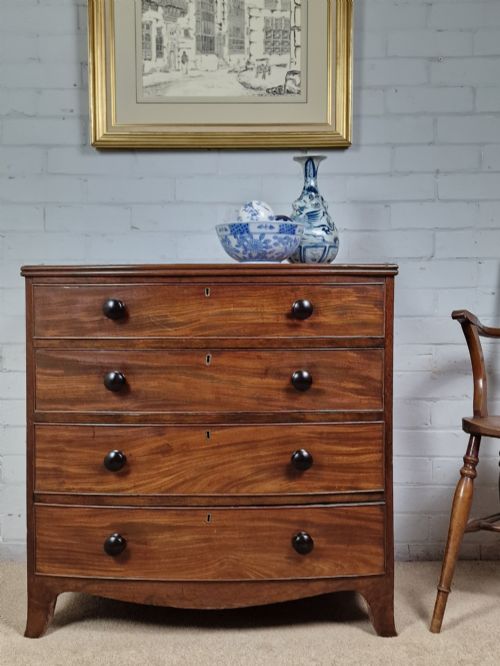
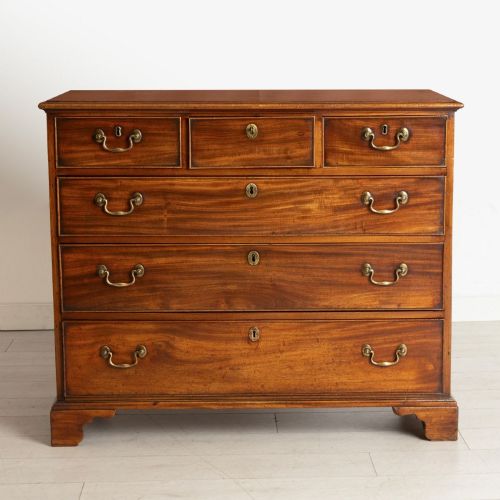
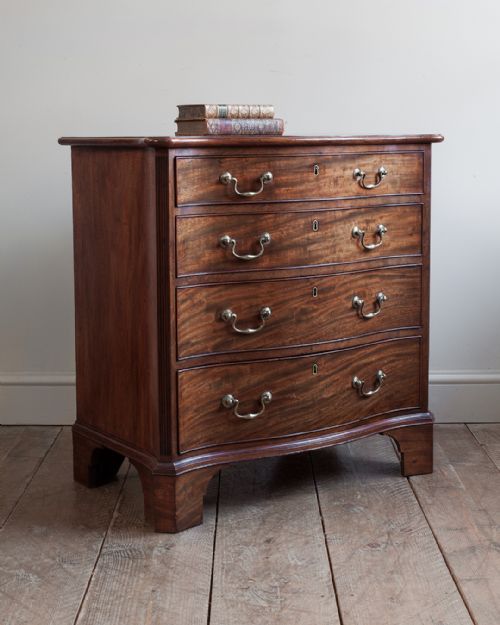
The version most commonly met on this page is the George III or Regency chest on chest, often featuring graduated drawers and solid brass handles. Alongside these grand pieces, smaller variations such as hall chests, bachelor chests, and miniature furniture appear frequently.
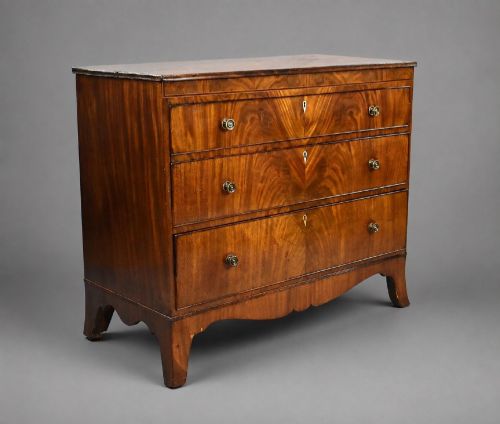
Origins stretch from the eighteenth century into the Edwardian period, incorporating styles like Georgian Chippendale and Grand Regency. Cabinet makers utilised the natural verticality of the tallboy design to showcase figured timber grains and refined bracket feet.
Materials and construction
Makers built these pieces primarily from solid mahogany and flame mahogany veneer, supported by secondary timbers like oak and pine for drawer linings and carcases. Boxwood inlay and brass handles provided contrast and structural reinforcement to the principal surfaces.
Construction techniques relied on precise dovetailing for drawer construction and sturdy bracket feet or plinth bases to support the considerable weight of stacked carcases. Locking flaps, secretaire drawers, and working keys required intricate internal joinery and brass mechanisms.
Miniature tallboys appeared as apprentice masterpieces, built to exact scale to prove a young woodworker's mastery before joining the guild.
Evaluating quality and proportion
Quality rests in the selection of timber figures, such as flame mahogany veneer, and the crispness of boxwood inlay and brass hardware. Superior pieces display harmonious proportions across multiple tiers, with tight dovetail joints and original handles remaining intact.
The division between standard workshop production and finer cabinet work shows in the handling of secondary woods like oak, the retention of working keys, and the integrity of bracket feet. Subtle details like serpentine fronts or secretaire fittings elevate the execution of the form.
J Moorcroft
The Period Mahogany Tallboy Drawers Glossary
- Tallboy
- A tall chest of drawers, often constructed as one chest stacked upon another to provide extensive vertical storage.
- Chest on chest
- A two-part storage unit where a smaller upper chest rests directly upon a larger lower chest, typical of eighteenth-century design.
- Flame mahogany veneer
- Thin slices of mahogany cut to reveal a distinctive undulating grain pattern resembling flickering flames, applied to primary display surfaces.
- Secretaire
- A drawer fitted with a drop-front writing surface and internal pigeonholes, concealing a compact desk within the chest.
- Bracket foot
- A structural support foot shaped like an architectural bracket, commonly used on Georgian and Regency case furniture.
- Boxwood inlay
- Narrow strips of pale boxwood inserted into contrasting dark mahogany surfaces to create linear decorative borders.
Period Mahogany Tallboy Drawers: Frequently Asked Questions
What is a tallboy?
A tallboy is a tall chest of drawers designed to provide substantial vertical storage without taking up excessive floor space. These pieces often combine multiple graduated drawers within a stacked carcase construction.
Historically, they served bedrooms and dressing rooms to hold folded linens and garments. Their elevated stature brought both practical utility and formal elegance to period interiors.
How do I date a mahogany chest?
Dating involves examining timber choices, construction techniques like dovetailing, and hardware styles. Secondary woods such as oak versus pine often indicate the workshop origin and period.
Stylistic cues such as bracket feet, cornice mouldings, and brass handle design provide further chronological markers. Cabinet makers adapted these elements across the Georgian, Regency, and Victorian eras.
What is flame mahogany?
Flame mahogany is a highly figured veneer prized for its dramatic, undulating grain patterns that resemble flickering fire. Cabinet makers applied these decorative veneers to drawer fronts and primary panels.
This technique highlighted the natural beauty of the timber while conserving scarce materials. It remains a hallmark of finer eighteenth and nineteenth-century case furniture.
How do I live with a tallboy?
Living with a tallboy involves placing the piece on level flooring and avoiding direct sunlight to protect the mahogany polish. Regular dusting with a dry cloth maintains the timber surface.
These substantial chests offer versatile storage in bedrooms, hallways, or living spaces. Their vertical proportions make them practical for modern rooms requiring maximum storage with minimal floor footprint.