






Period Mahogany Clock
A period mahogany clock brings rich timber grain and precise mechanical movement into a room, spanning grand proportions and compact mantel designs.

Period Mahogany Clock
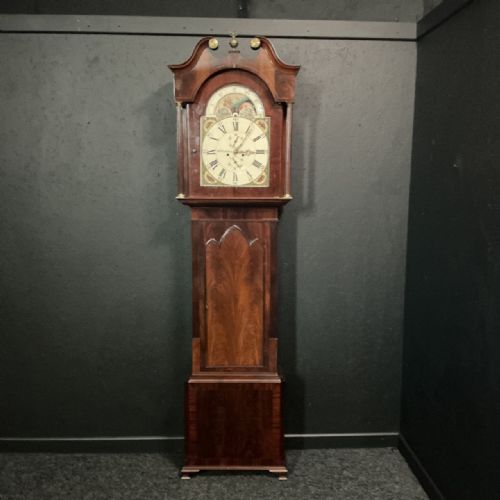
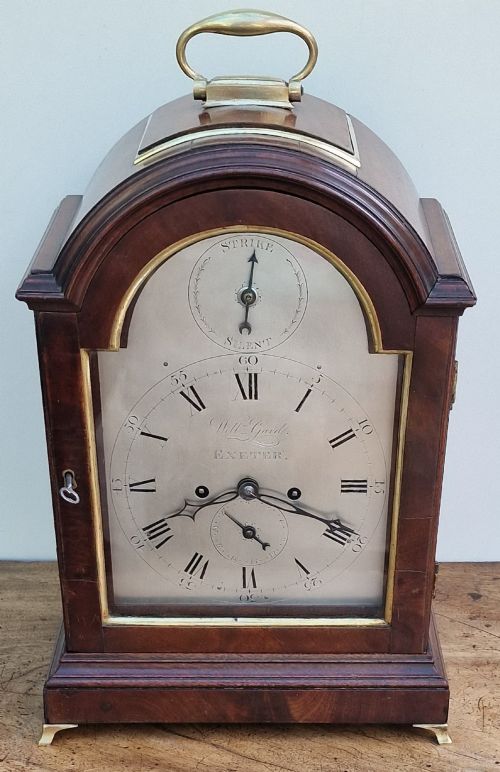
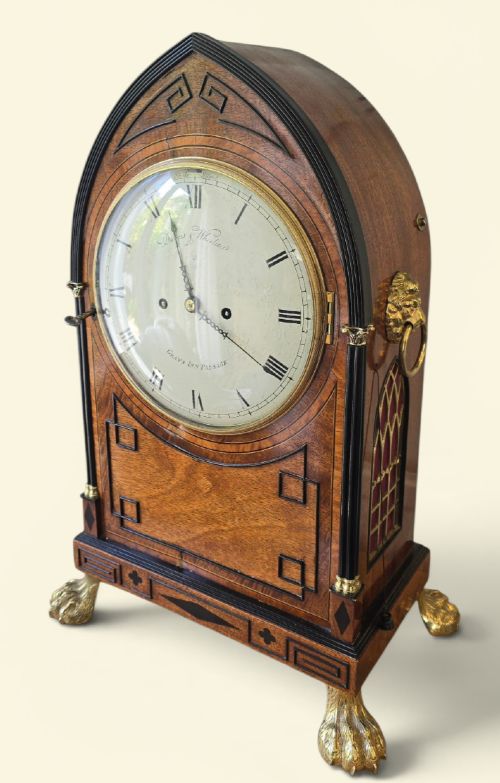
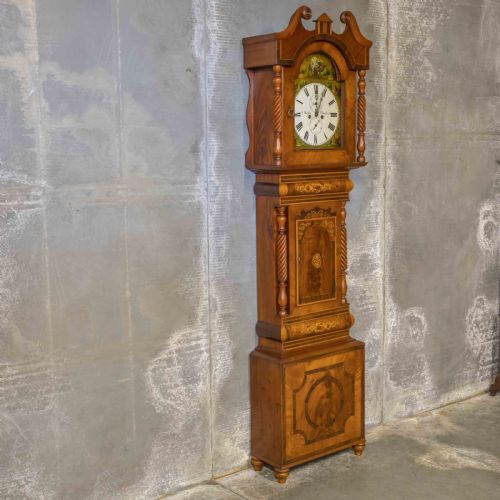
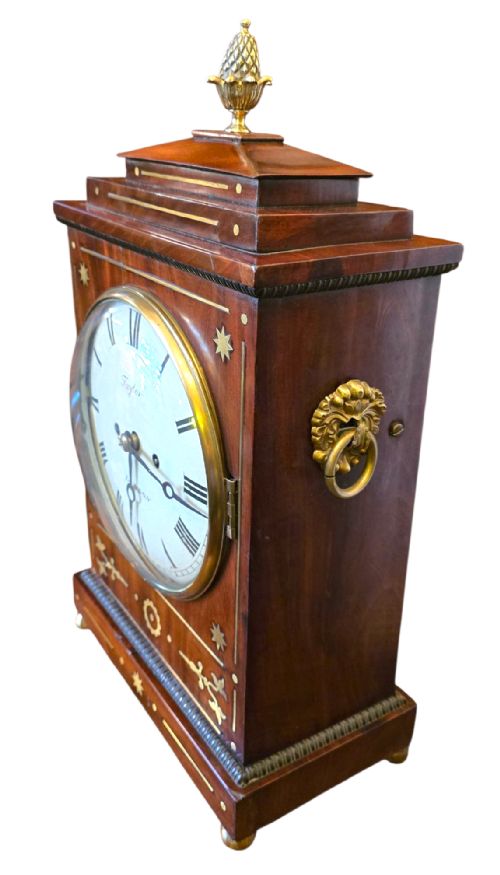
A period mahogany clock appears in several distinct architectural forms, ranging from tall longcase grandfather clocks to smaller bracket, mantel and wall designs. The selection on this page relies heavily on Georgian and Regency examples, alongside Edwardian and later military or interwar pieces.
Longcase clocks dominate the taller scale, often housing brass dials and 8-day movements within fitted wooden floor cases. Bracket and mantel versions offer compact alternatives for desks, shelves and tables, while wall clocks utilise wooden or painted dials for vertical hanging.
The timber casing provides the unifying visual thread, utilising solid mahogany and occasional veneers framed by brass mounts, glass panels and inlaid stringing. Buyers encounter variations in proportion and dial configuration, from arched lancet tops to architectural architectural pediments.
Materials and Construction
Makers constructed these clock cases primarily from solid mahogany and selected veneers, frequently accentuating the primary timber with contrasting inlay lines of boxwood, ebony or satinwood. Brass fittings appear as dial bezels, pendulum bobs, side frets and decorative feet or handle mounts.
Movements rely on traditional mechanical engineering, incorporating brass gear trains, fusee drives to equalise mainspring pull, and verge or anchor escapements. Dials are fashioned from brass, silvered metal, painted enamel or solid wood, protected behind glazed doors.
Period Mahogany Clock Retail Price Guide 2026
Typical asking prices for period mahogany clock among the pieces listed under this phrase on Sellingantiques today, from the lower quarter to the upper quarter. They describe what is for sale here now, not the wider market.
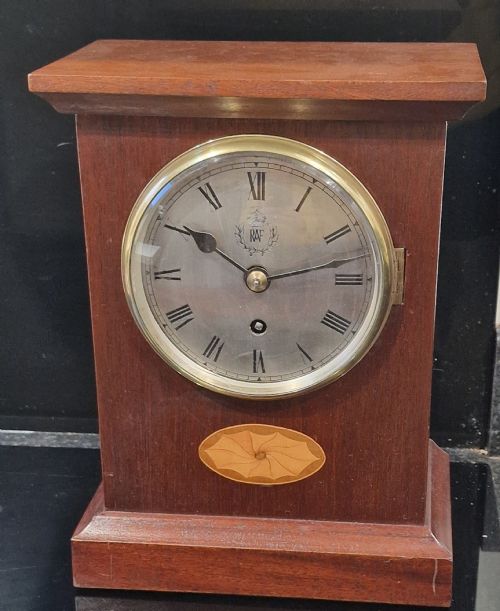
Several military officers evidently required strict timekeeping during conflicts, as evidenced by the inclusion of specialised R.A.F. and interwar mess clocks.
Evaluating the Range
Quality rests upon the crispness of timber carving, the subtlety of brass inlay, and the original integrity of the dial and movement. Better pieces retain matching components and legible maker signatures inscribed upon the brass or painted face.
Desbois and Wheeler·Williams·James Howden and Co·Negretti and Zambra·Richard Reeves
The Period Mahogany Clock Glossary
- Fusee
- A conical pulley connected to the mainspring by a cord or chain, designed to equalise the declining power of the spring as it unwinds. This mechanism helps maintain steady timekeeping throughout the running cycle.
- Verge escapement
- An early type of escapement mechanism controlling the release of the gear train via a crown wheel and pallets. It produces a distinctive ticking rhythm.
- Bracket clock
- A portable table or mantel clock originally designed to sit upon a matching wall bracket. Many feature architectural top details such as bell tops or lancet arches.
- Longcase clock
- A tall floor-standing timepiece enclosing the weight-driven movement and pendulum within a narrow wooden trunk. They are frequently referred to as grandfather clocks.
- Dial
- The face of the clock displaying the hours and minutes. These surfaces utilise materials including brass, silvered metal, enamel and painted wood.
Period Mahogany Clock: Frequently Asked Questions
How do I wind a fusee clock?
Insert the winding key into the aperture on the dial and turn it clockwise until resistance meets you. Care must be taken not to overwind the mechanism.
Most 8-day fusee movements require attention once a week. Maintaining a consistent winding schedule preserves the tension on the chain and internal components.
Where should I place a longcase clock?
Position the longcase against a stable interior wall away from direct sunlight, central heating vents and damp areas. Sudden temperature shifts affect timber expansion and oil viscosity.
Ensure the case stands completely vertical on a firm floor. Levelling the cabinet allows the pendulum to swing evenly and keeps the escapement regular.
How do I identify a Georgian bracket clock?
Examine the case for classical architectural elements such as brass carrying handles, pierced wooden sound frets, and arched wooden bezels. Georgian examples frequently employ solid mahogany with brass bracket feet.
The dial often bears the signature of the maker inscribed on a brass plate or painted surface. Movements from this period commonly utilise verge or early anchor escapements.