

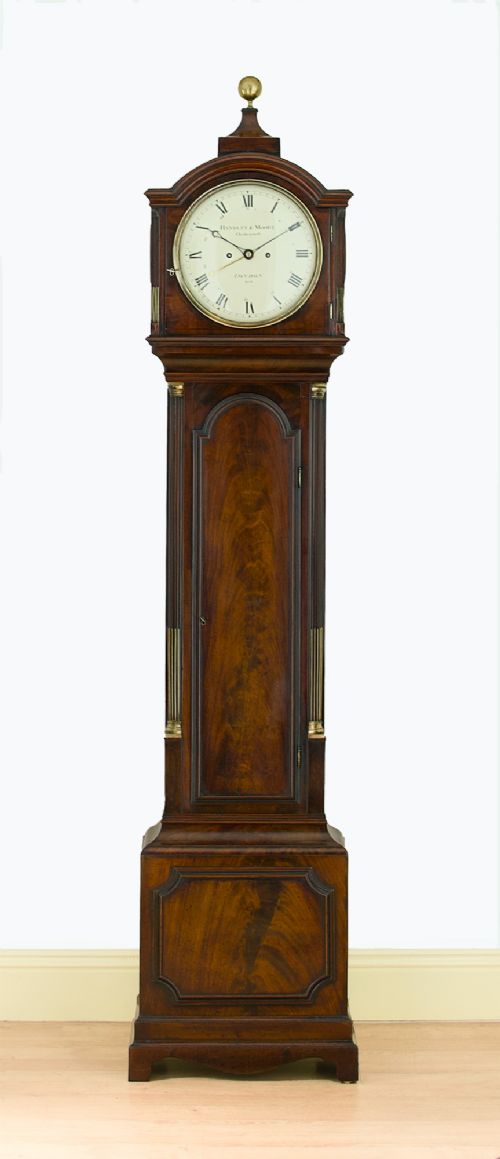
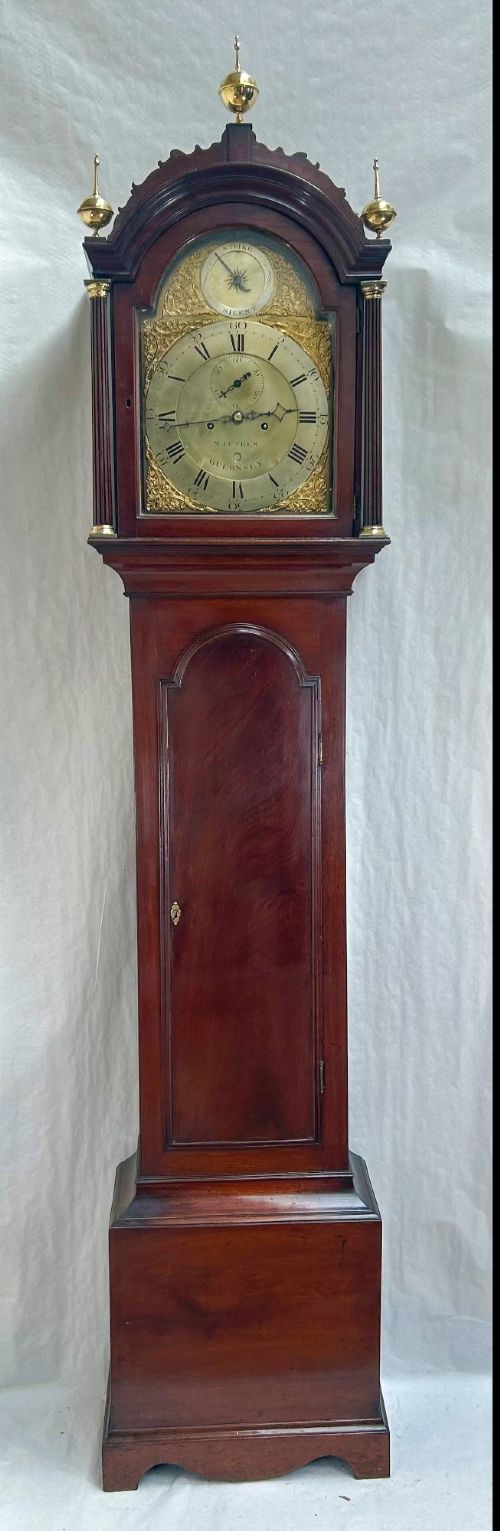

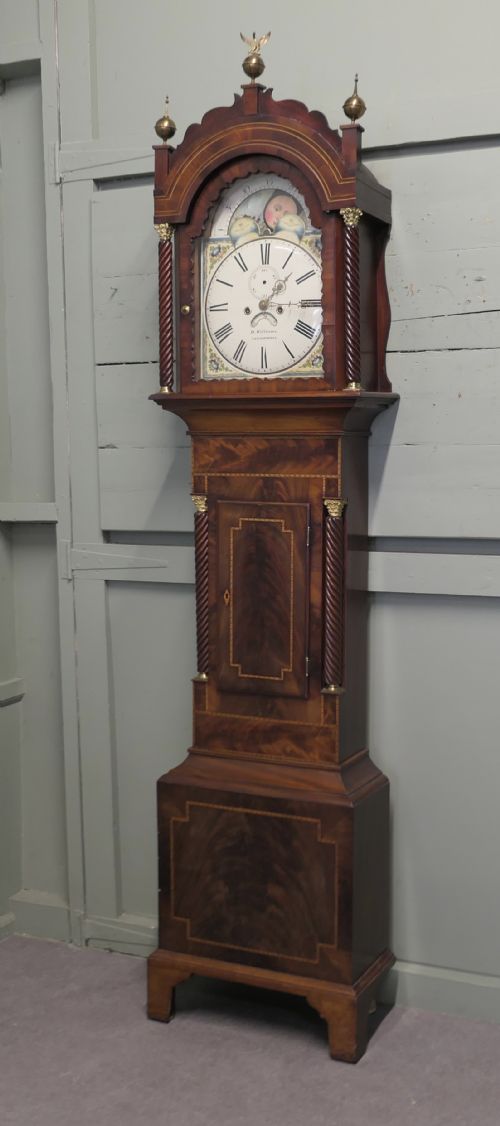


Georgian Long Case Clock
A Georgian long case clock stands as a towering piece of horological furniture, measuring time while anchoring a room with its architectural presence.

Georgian Long Case Clock
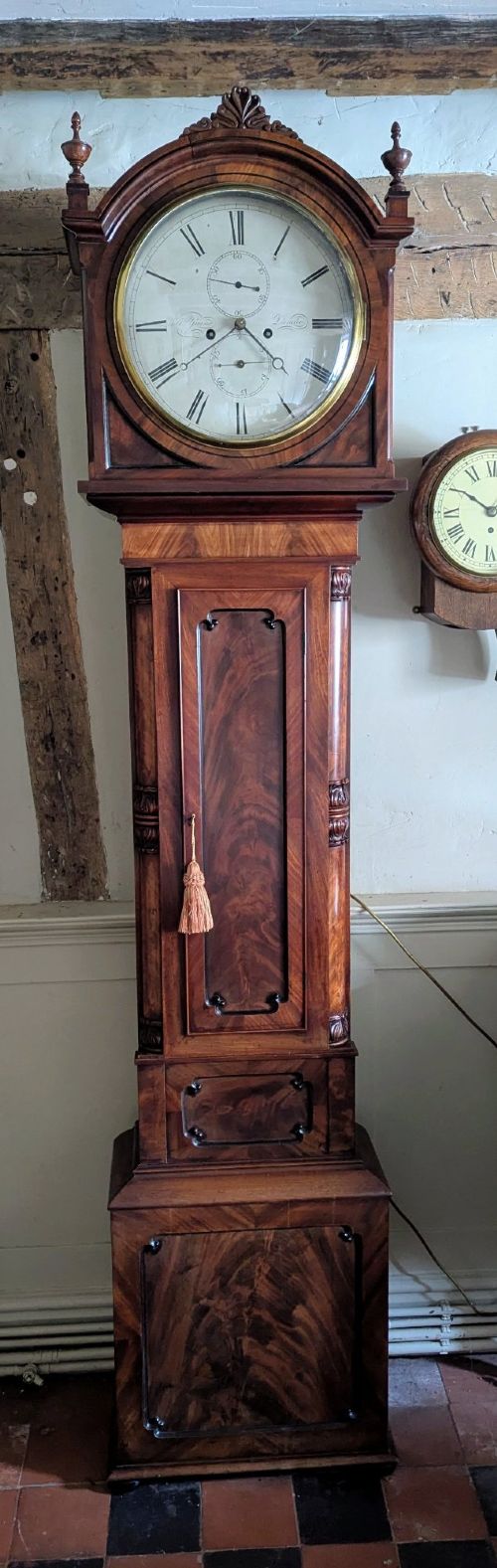
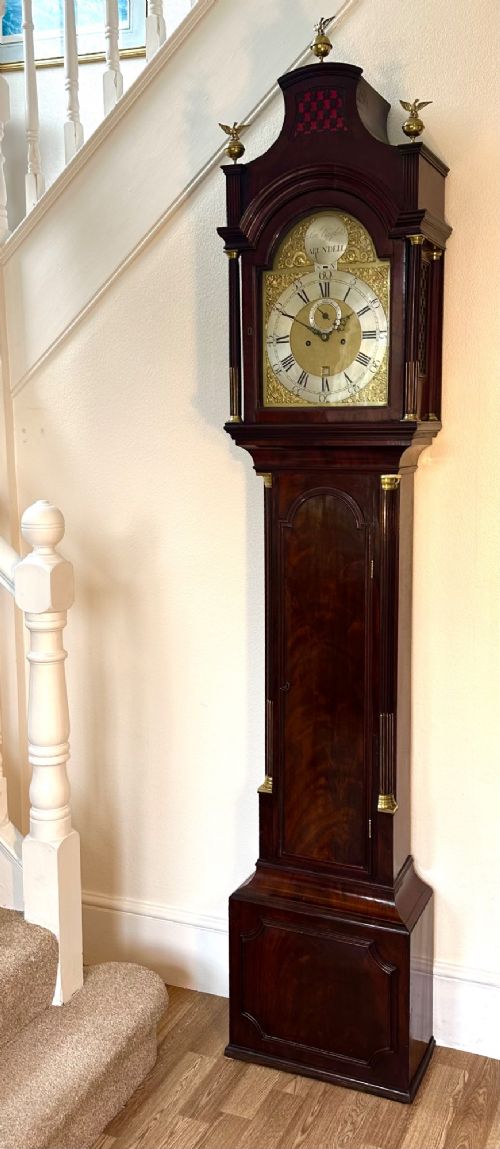
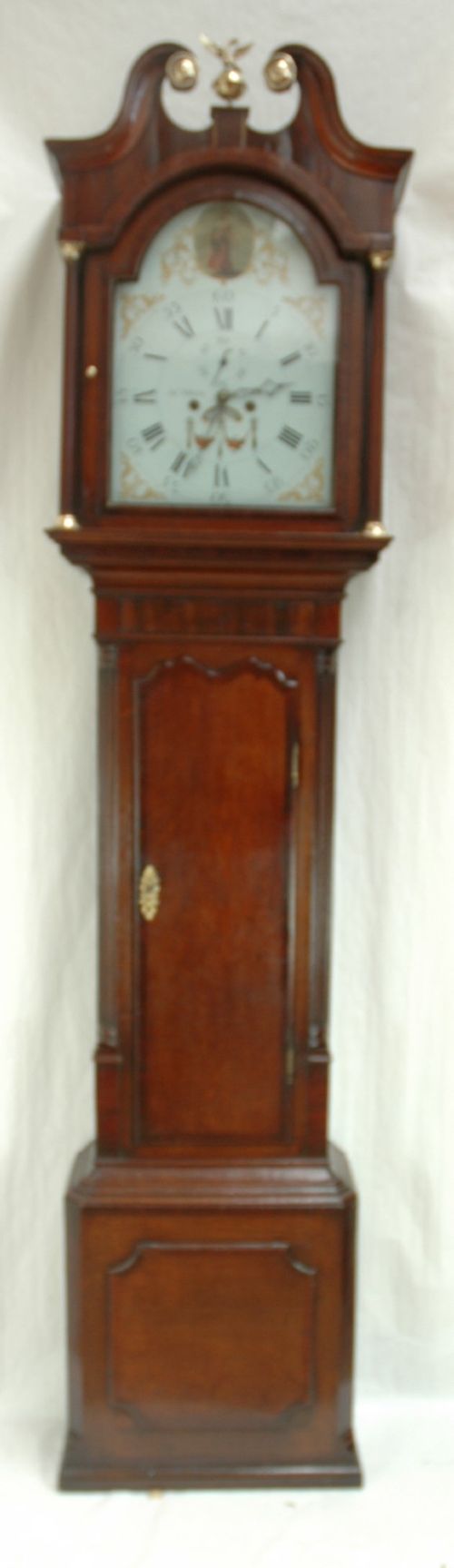
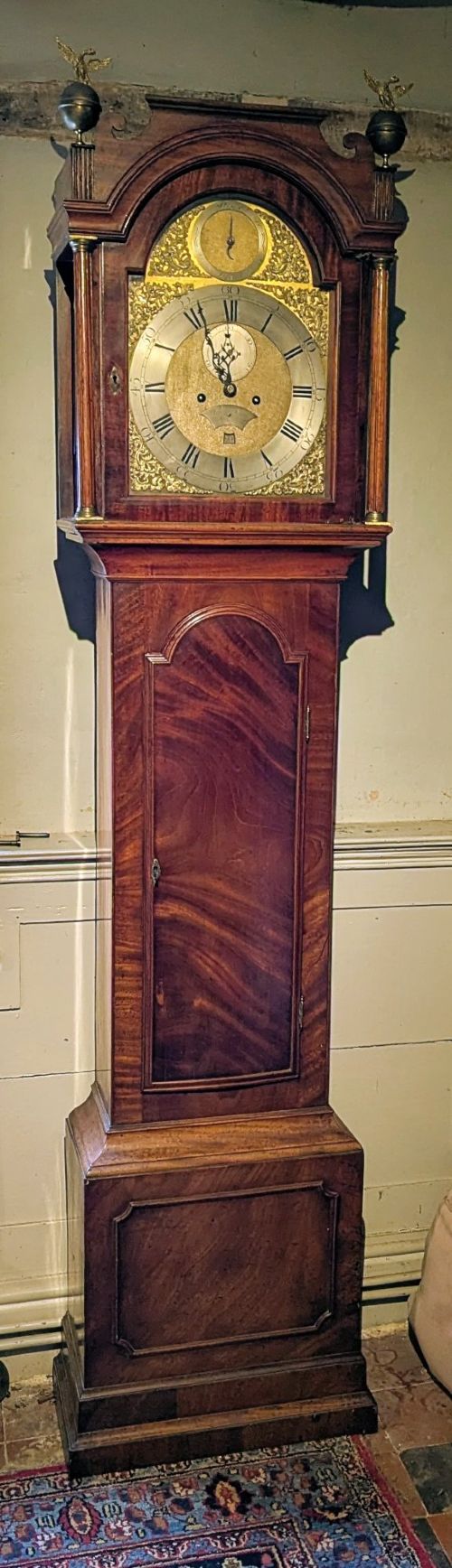
A georgian long case clock is a floor-standing timepiece enclosed in a tall wooden trunk, designed to protect the pendulum and weights. The pieces seen here span the eighteenth and nineteenth centuries, with occasional examples extending into the Edwardian period.
Most entries encountered on this page belong to the Georgian and George III eras, constructed primarily in oak or mahogany. Regional variations from makers across England, Scotland, and Wales appear frequently alongside sophisticated London examples.
The format encompasses straightforward thirty-hour movements as well as complex eight-day mechanisms featuring moon dials, regulators, and automaton displays. Proportion varies from diminutive country cottage models to grand London specimens with arched brass faces.
What varies in quality
The sophistication of the movement dictates much of the standing, separating standard thirty-hour country clocks from complex eight-day London regulators with five-pillar designs. Precision in gear cutting and the presence of subsidiary complications like strike-silent levers or rocking ships elevate the horological merit.
Cabinet work quality reveals itself through timber selection, such as figured mahogany, burr walnut, or crisp crossbanding and brass inlay. Proportion and untouched original surfaces, including early glass and unblemished dial painting, define the finer examples.
Georgian Long Case Clock Retail Price Guide 2026
Typical asking prices for georgian long case clock among the pieces listed under this phrase on Sellingantiques today, from the lower quarter to the upper quarter. They describe what is for sale here now, not the wider market.
The listings show regional diversity, with Scottish makers from Edinburgh and Ecclefechan sitting alongside Welsh and London workshops.
Handley And Moore·Thwaites·Thomas Vernon·William Betagh·Thomas Wagstaffe·Samuel Deacon
The Georgian Long Case Clock Glossary
- Longcase clock
- A tall freestanding weight-driven timekeeper, commonly referred to as a grandfather clock.
- Moon dial
- A subsidiary dial showing the phases of the moon through a rotating painted disc behind two arched apertures.
- Regulator
- A precision timekeeping clock designed for accuracy, often featuring a deadbeat escapement and a pendulum swinging in seconds.
- Crossbanding
- A decorative border of veneer laid perpendicular to the grain of the primary wood surface.
- Chapter ring
- The circular ring on a clock dial bearing the hour numerals.
- Eight-day movement
- A clock mechanism requiring winding approximately once a week rather than daily.
Georgian Long Case Clock: Frequently Asked Questions
How do I wind a long case clock?
Winding involves using a crank key to draw up the weights suspended inside the trunk, taking care not to pull them past the movement at the top.
Most eight-day models require attention weekly, while thirty-hour versions need winding daily or slightly less frequently depending on the gear train.
Where should I place a grandfather clock?
Position the clock against a sturdy interior wall away from direct sunlight, heating vents, and damp exterior surfaces to protect the timber and mechanism.
A stable floor ensures the case stands plumb, which is essential for the proper beat of the pendulum.
What is the difference between oak and mahogany cases?
Oak cases typically reflect earlier provincial or country manufacture, displaying visible grain patterns and robust construction suited to domestic interiors.
Mahogany became the dominant timber for refined urban workshops later in the period, allowing for crisper carving and polished surfaces.
How do I tell an 18th-century clock from a 19th-century one?
Eighteenth-century examples often feature square brass dials with cast spandrels in the corners, whereas nineteenth-century pieces frequently utilise painted arched dials and broader proportions.
Case construction details, such as stringing, inlay styles, and foot design, also shift across the transition from Georgian to Victorian eras.