


Period Magazine Holder
A period magazine holder organises your journals and papers with classical architectural form, bringing traditional craftsmanship directly into a modern sitting room.

Period Magazine Holder
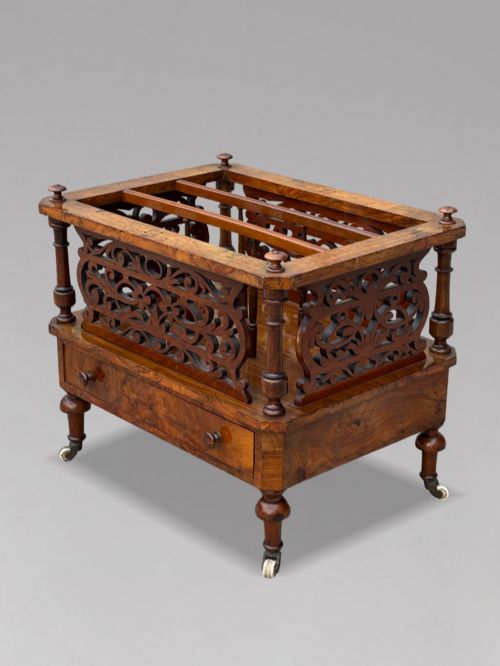
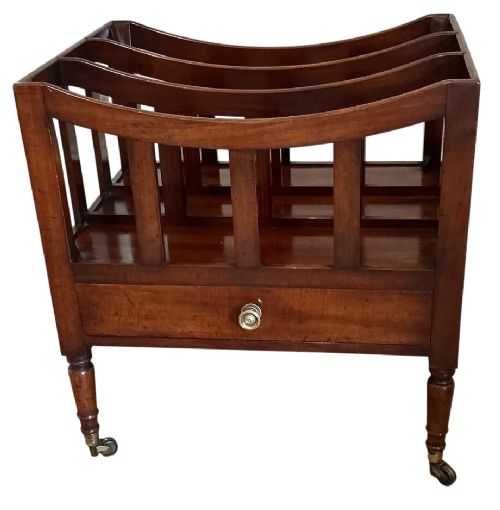
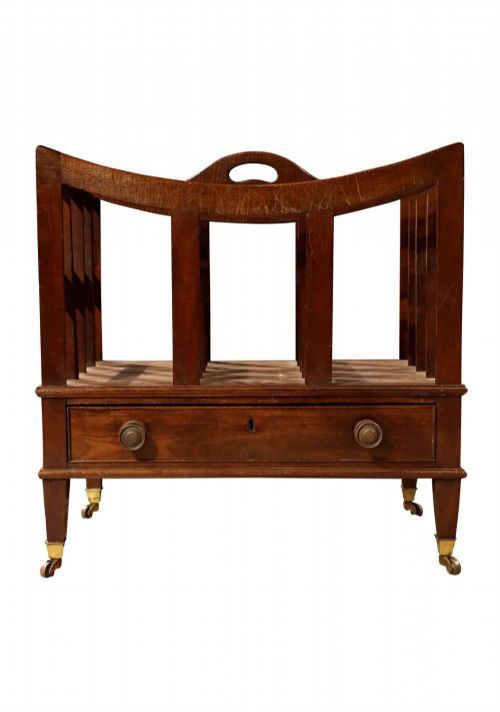
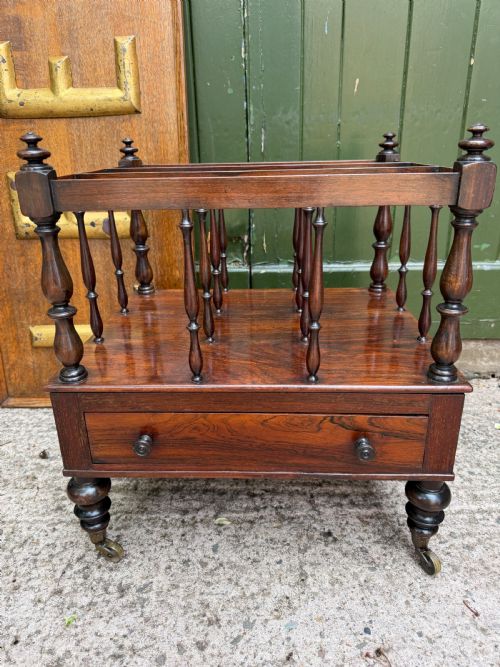
A period magazine holder primarily takes the form of a traditional Canterbury, designed originally to hold sheet music and bound volumes alongside contemporary periodicals. These pieces emerge from periods spanning the Georgian, Regency, and Victorian eras, carrying distinct structural traits from each decade.
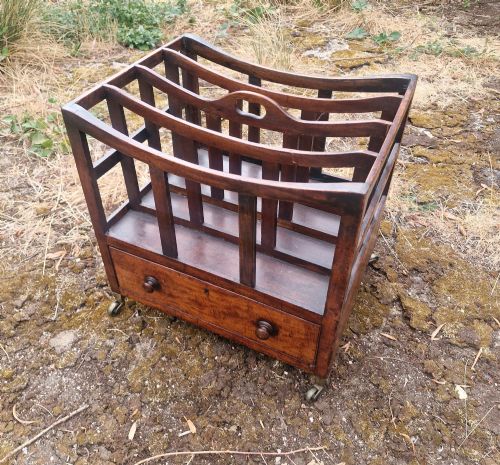
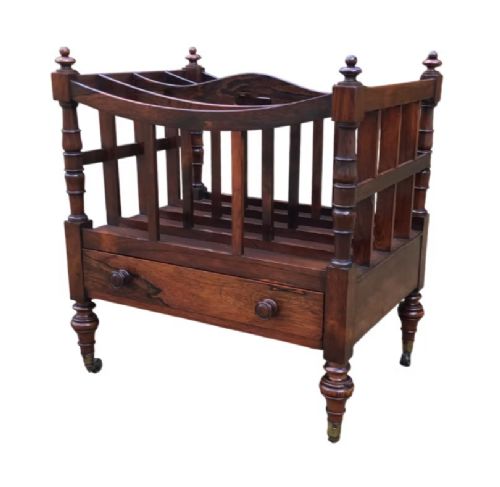
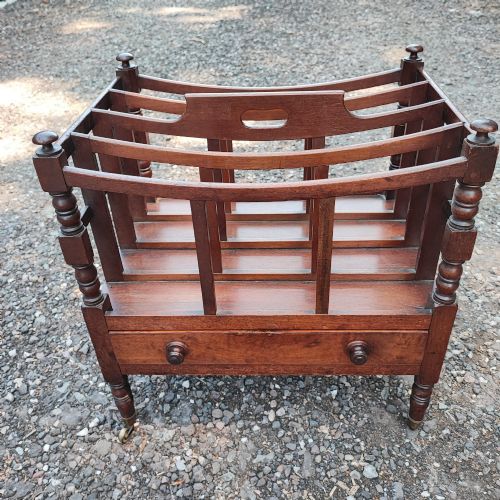
You will encounter mahogany and rosewood framework most frequently on this page, often divided into vertical partitions for sorting papers. Many examples sit upon short turned legs fitted with castors, allowing easy movement across wooden floors and carpets.
Materials and construction methods
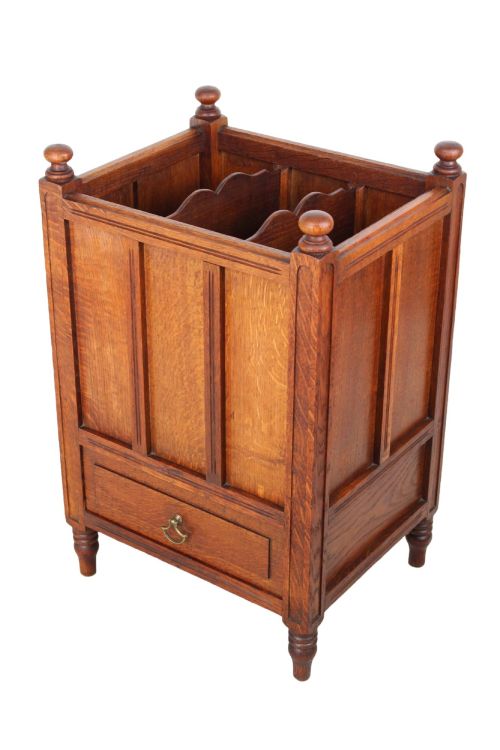
Cabinetmakers utilised dense timbers like mahogany, rosewood, walnut, and oak to build sturdy slatted partitions and supporting drawer units. These woods were chosen for their grain pattern and structural strength, often shaped with curved boat profiles or tiered shelving.
Joinery involved precise mortise and tenon techniques, alongside turned spindles and occasional carved or painted ornamentation. Metal elements such as brass appear in structural rods, carrying handles, and caster fittings.
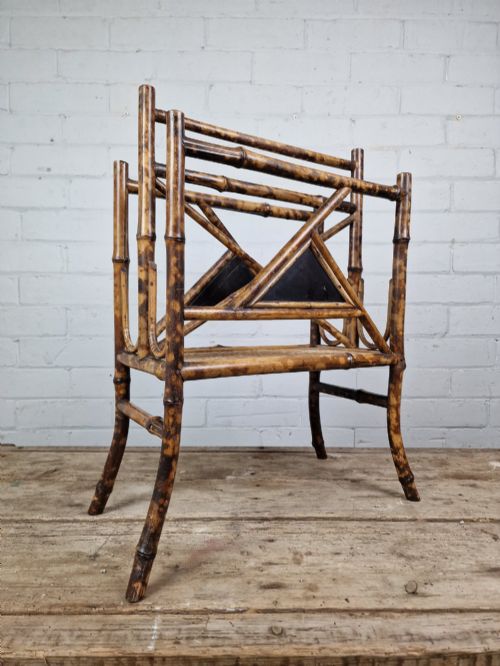
Some nineteenth century makers utilised bamboo alongside lacquered panels, allowing readers to store their journals within a distinctly exotic framework.
Factors determining quality
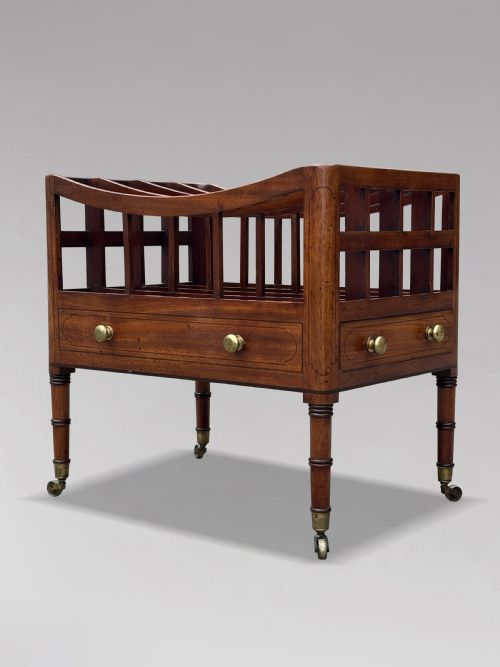
Quality rests upon the selection of timber and the precision of the joinery within the slatted dividers and frame. Finer examples display carefully matched wood veneers, elegant turning on the legs, and integrated base drawers fitted with hand-cut dovetails.
Design sophistication also separates standard items from superior works, with boat-shaped frames, double sizes, and intricate fretwork or carved details commanding greater attention. The inclusion of original brass castors and unblemished wood surfaces indicates careful preservation over centuries.
Gillows
The Period Magazine Holder Glossary
- Canterbury
- A low stand with partitions for holding music sheets or periodicals, often featuring a small drawer below. This piece originated in the late eighteenth century.
- Regency
- A style period dating from the early nineteenth century defined by classical restraint, elegant curved lines, and dark imported timbers such as rosewood.
- Castor
- A small wheel attached to the base of furniture legs to permit rolling. Period examples often utilise brass fixings.
- Aesthetic Movement
- A late nineteenth century design approach focused on art for art's sake, which produced bamboo and mixed material racks.
- Dovetail
- An interlocking joint used in drawer construction. Hand-cut variations indicate older cabinetmaking standards.
Period Magazine Holder: Frequently Asked Questions
What is a Canterbury?
A Canterbury is a traditional stand featuring upright partitions designed to hold sheets of music, books, and periodicals. Many include a shallow drawer at the base for smaller items.
Cabinetmakers first produced them in the late eighteenth century, and they evolved through the Regency and Victorian periods into versatile living room furniture.
How do I date a magazine holder?
Dating relies on examining the timber species, joinery methods, and overall stylistic characteristics of the frame. Regency pieces often feature rosewood and boat-shaped frames, while Edwardian models utilise oak or lighter mahogany.
Checking for hand-cut joints, original brass castors, and period specific decorative motifs helps narrow the exact decade of manufacture.
Where should I place one?
These holders sit well beside armchairs, sofas, or desks where current reading material and journals collect. Their compact footprint allows them to occupy tight corners without cluttering a room.
Keep them away from direct heat sources and strong sunlight to protect polished rosewood and mahogany surfaces from drying out.
Were they always used for magazines?
Makers originally designed these stands to store unbound sheet music near pianofortes in domestic drawing rooms. As the nineteenth century progressed, their function expanded to accommodate newspapers and weekly periodicals.
Victorian households adopted them widely for general reading material, leading to the varied forms seen today.