

Period Joint Stool
A period joint stool is a sturdy wooden seat built with pegged mortise and tenon joints, offering solid historic character to any interior.
Period Joint Stool
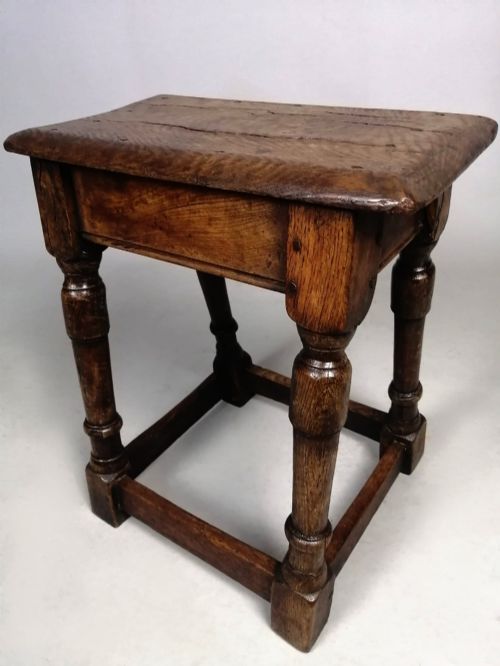
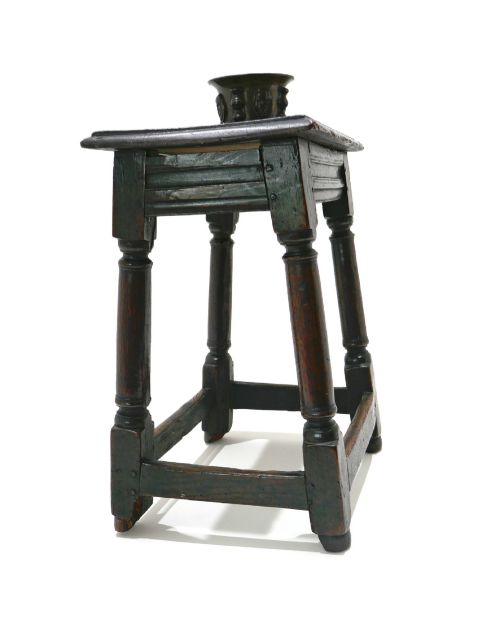
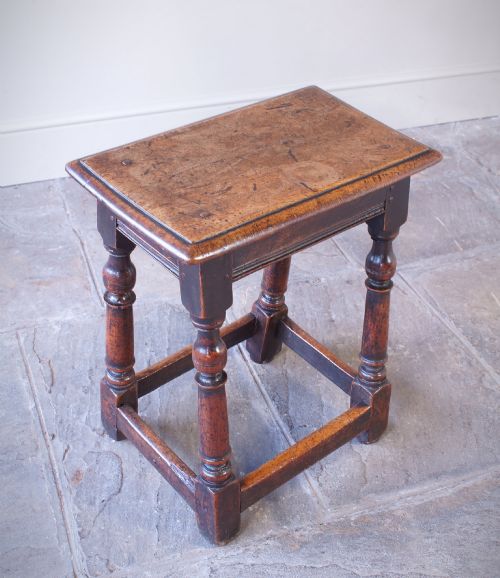
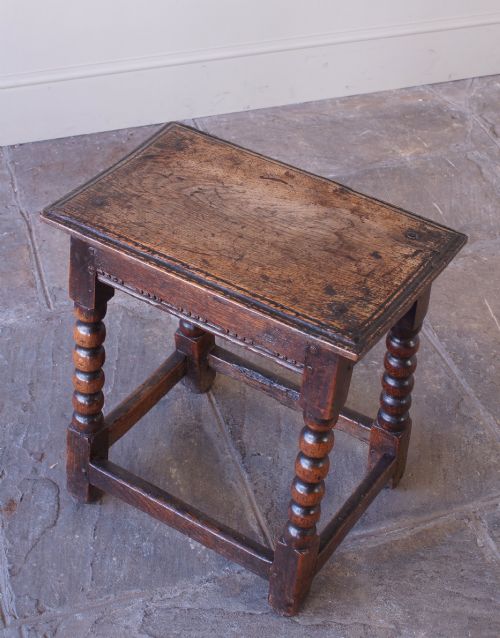
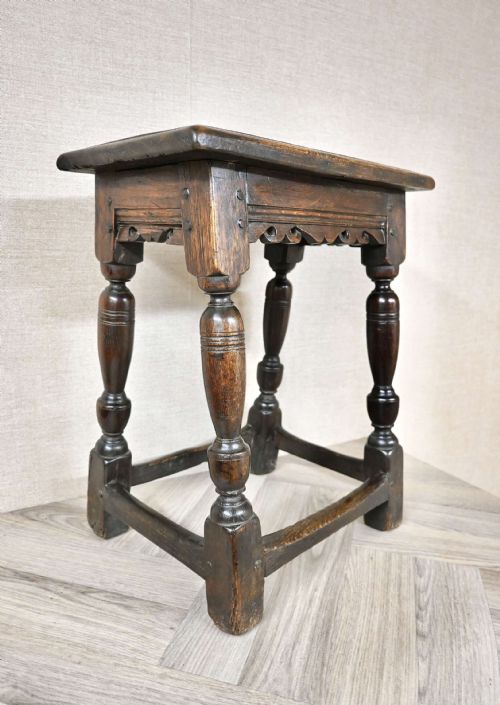
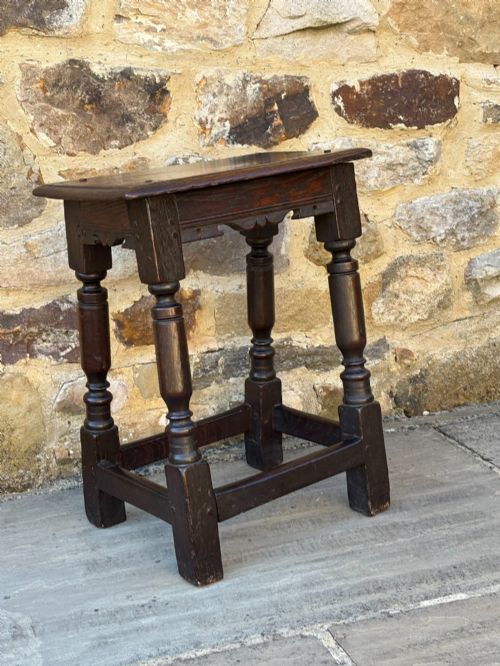
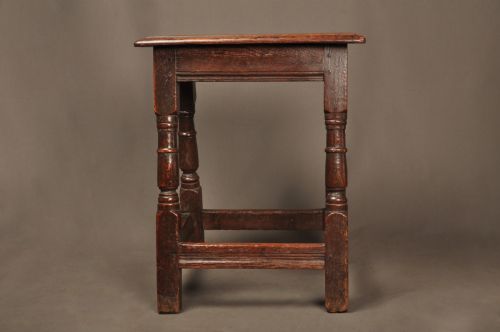
A period joint stool is a rigid seating form constructed with closely fitted components secured by wooden pegs rather than metal nails. These items emerge primarily from seventeenth-century workshops, though later revival periods also produce surviving examples.
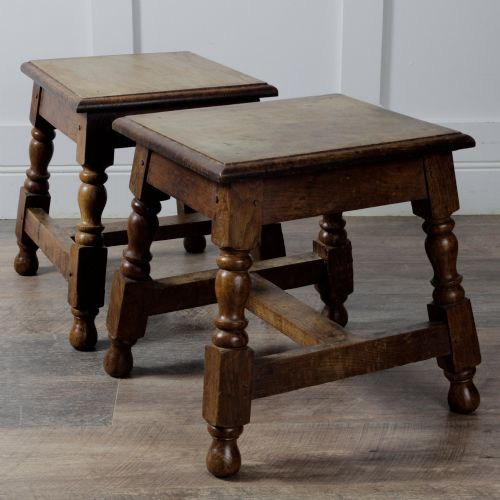
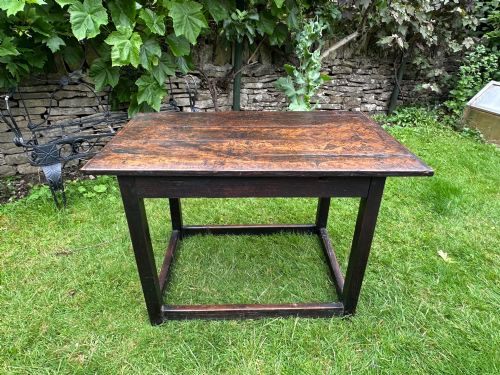
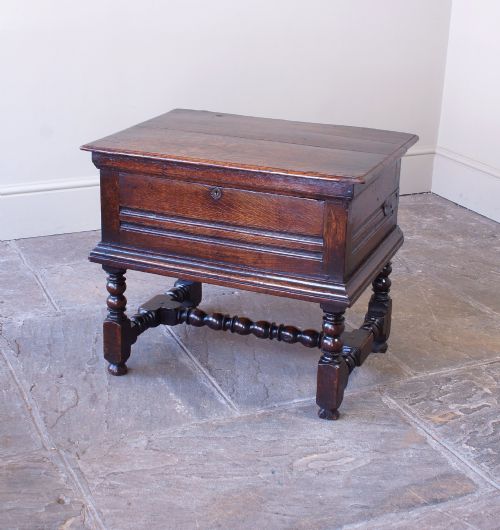
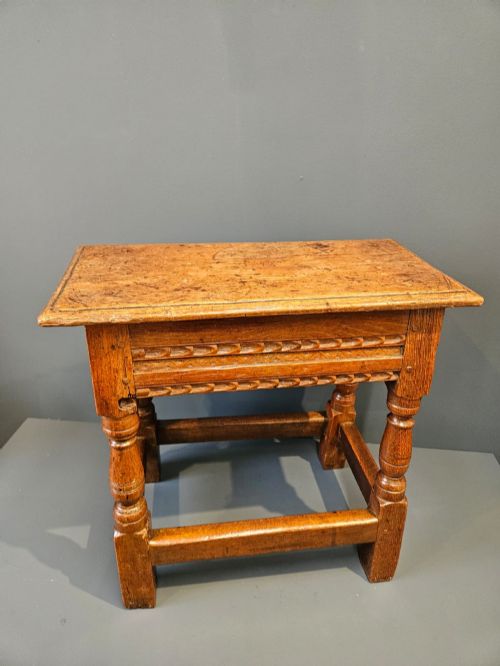
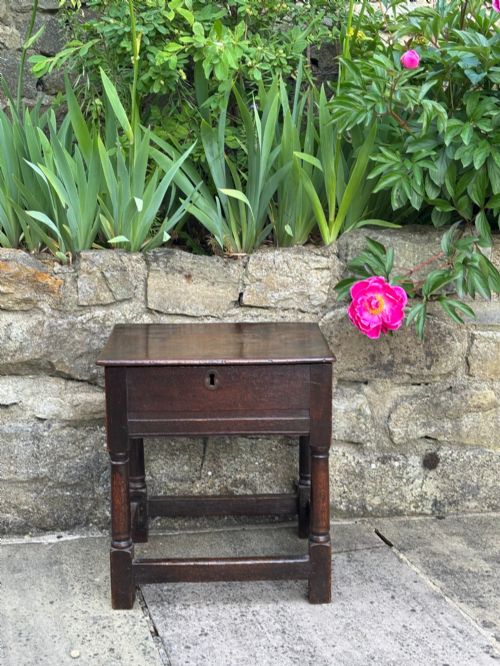
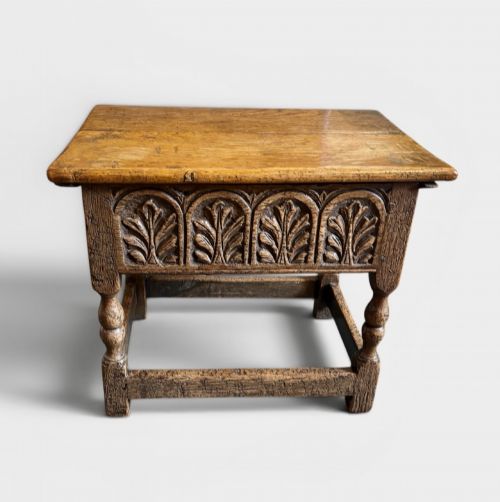
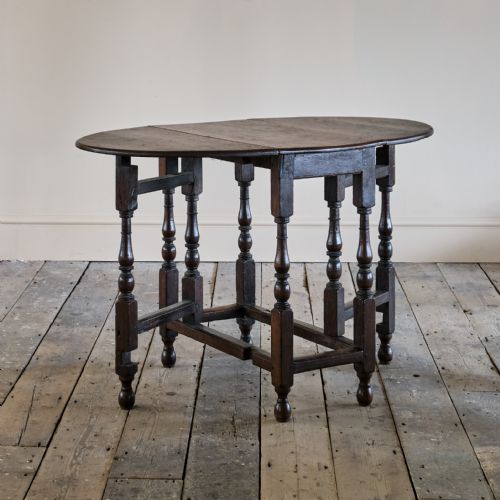
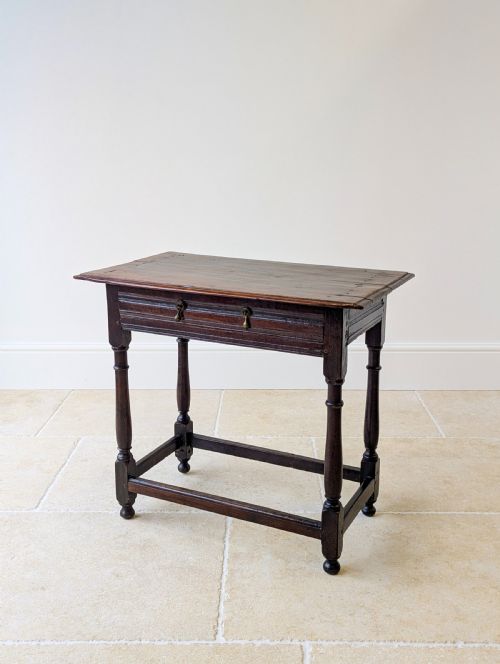
The standard form appearing on this page is a rectangular wooden seat elevated on four turned or straight legs connected by low stretchers. Alongside conventional stools, variations include box stools with enclosed storage beneath the top, close stools, and low side tables.
Most pieces hail from the seventeenth century, built in solid English oak, while subsequent centuries bring revival interpretations in walnut, elm, and oak. Buyers encounter both plain plank tops and carved rails reflecting Jacobean or Commonwealth tastes.
How they were made
Carpenters constructed these seats using thick oak or walnut boards for tops and framing, frequently incorporating elm elements or wooden pegs to secure the mortise and tenon joints. Secondary materials such as brass fittings, iron hardware, and fabric upholstery appear on specific box or close stool variants.
Makers shaped the structural members using hand axes, saws, and drawknives before assembling the frames with tight wooden pins. Surface finishing relied on simple scraping and occasional carving rather than heavy varnishing, allowing the natural grain of the timber to dominate.
Listings feature seventeeth-century, eighteenth-century, and nineteenth-century examples, predominantly rendered in solid oak with occasional walnut and elm variations.
What varies in quality
The distinction between ordinary and superior examples rests on the integrity of the original timber and the crispness of any hand-carved ornamentation. Pieces retaining their primary structural components without extensive timber replacement command greater appreciation among traditionalists.
Proportion and stance dictate visual success, as finer stools maintain balanced rail heights and well-turned legs that avoid clumsy proportions. The presence of untouched surface patination resulting from centuries of handling separates superior survivals from heavily restored specimens.
The Period Joint Stool Glossary
- Joint stool
- A wooden stool constructed with joined framing rather than nailed boards. This term derives from the specialised joinery techniques utilised by early cabinetmakers.
- Mortise and tenon
- A joint formed by inserting a shaped projection into a corresponding cavity. This method creates a rigid structural connection without requiring metal fasteners.
- Box stool
- A seating form featuring an enclosed storage compartment beneath the hinged or removable top. These pieces combine utility with traditional frame construction.
- Stretchers
- Horizontal wooden rails connecting the lower legs of a stool to provide lateral stability. They often double as footrests in seventeenth-century designs.
- Jacobean
- An architectural and decorative style associated with the reign of James the First and subsequent seventeenth-century design. It is characterised by sturdy proportions and geometric carving.
Period Joint Stool: Frequently Asked Questions
How were joint stools used historically?
These versatile items served primarily as seating around dining tables during the seventeenth century and earlier periods. Their rigid construction also allowed them to function as small side tables or platforms for household objects.
In domestic settings, servants and family members utilised them wherever portable, sturdy furniture was required. Box variants provided concealed storage for personal items or linens close to the hearth.
Are these stools comfortable for daily seating?
Period joint stools feature flat wooden tops designed for utility rather than cushioned comfort. Consequently, modern users often employ them as accent tables or occasional display stands rather than long-term seats.
Upholstered variants do appear from the seventeenth century onwards, offering a softer surface for domestic interiors. Most owners appreciate these pieces for their sculptural presence and historic authenticity.
How do I distinguish seventeenth-century oak from later revivals?
Early pieces display distinct tool marks, deep timber patination, and construction methods characteristic of historic joinery. Examination of the peg placement and underside often reveals the honest ageing process of genuine early oak.
Revival examples from the nineteenth or twentieth centuries typically exhibit mechanical uniformity and lighter surface oxidation. Comparing the grain density and timber shrinkage helps clarify the age of the piece.
Where should I place a joint stool at home?
A period joint stool fits easily beside a sofa or armchair to hold books, lamps, or small decorative items. Their compact footprint makes them useful in hallways or small alcoves as accent surfaces.
Avoid positioning them in areas with extreme temperature fluctuations or direct radiator heat to protect the dry historic timber. Simple beeswax upkeep maintains the natural finish without building up heavy chemical layers.