



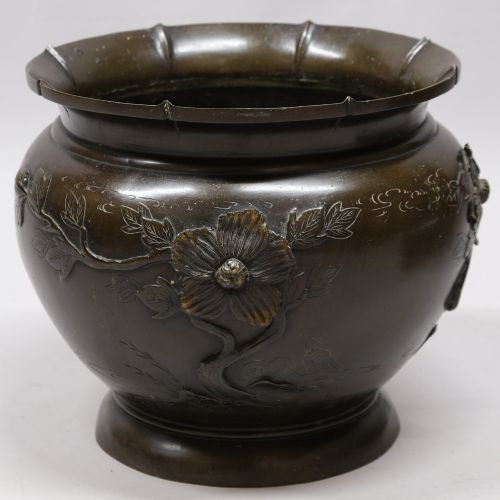


Period Jardiniere
A period jardiniere holds potted plants and flowers, bringing sculptural form and botanical interest into interior spaces.
Period Jardiniere
A period jardiniere serves as a decorative vessel for plants, originating in various forms across the eighteenth, nineteenth, and early twentieth centuries. These pieces encompass large ceramic bowls, metal planters, and dedicated stands designed to elevate greenery within a room.
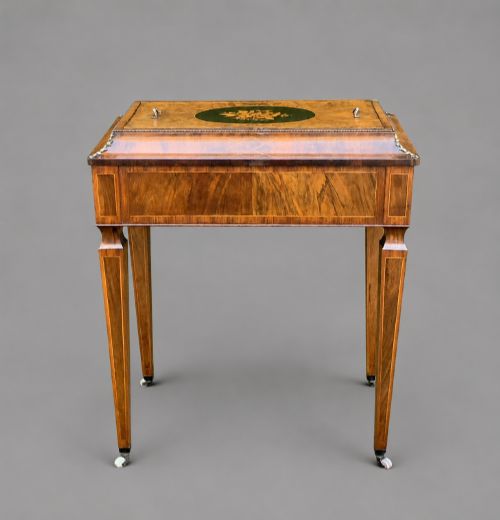
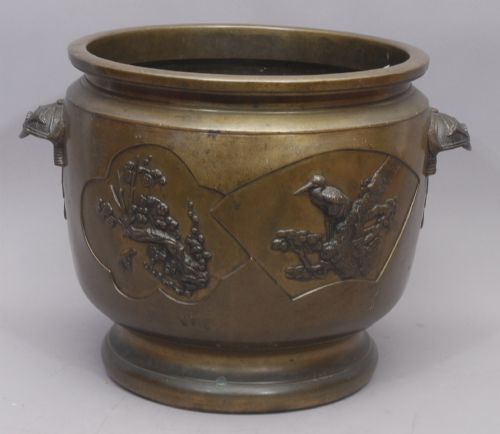
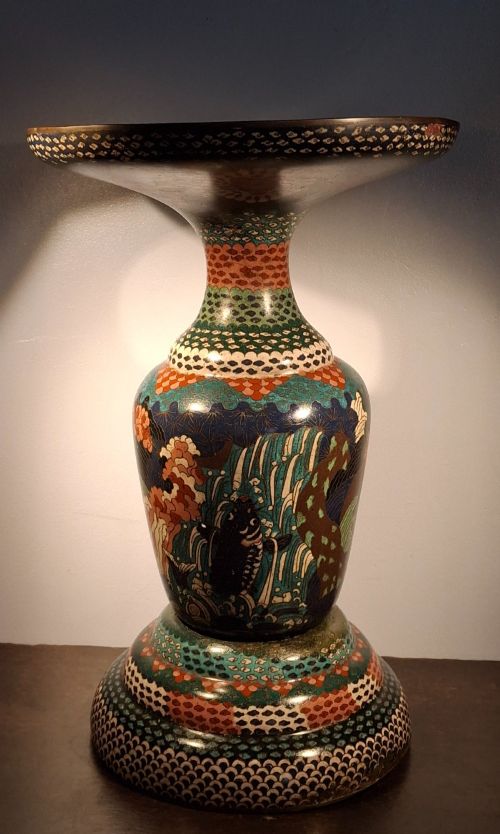
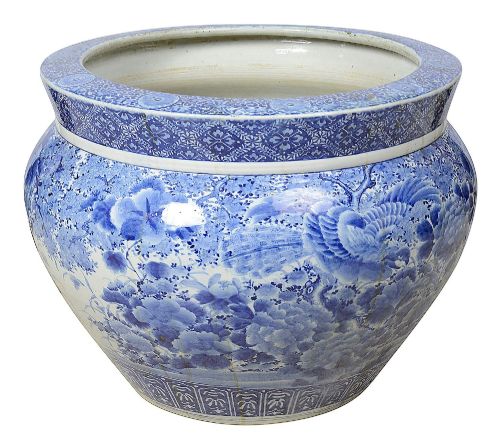
Japanese metalwork and porcelain dominate the selection, alongside English mahogany stands and Chinese enamel vessels. Buyers frequently encounter nineteenth-century bronze bowls from the Meiji period and blue and white porcelain jardiniere designs.
The category extends to matching stands and planters made from hardwood, brass, and stoneware. Each vessel reflects the distinct decorative arts of its manufacturing origin, from Edo period bronze to Georgian mahogany wine coolers adapted for botanical display.
Materials and Techniques
Bronze and brass components undergo casting, hand-engraving, and champlevé enamel work to create textured, decorative surfaces. Artisans shape metal vessels to hold heavy soil and moisture while displaying intricate motifs.
Ceramic pieces utilise porcelain, stoneware, and glaze techniques, seen in Arita Imari wares and Satsuma pottery. Firing processes produce durable, waterproof bodies decorated with hand-painted cobalt blue or polychrome enamels.
Wooden stands employ mahogany, rosewood, and ebonised timber, often featuring marble tops or wirework. Joinery techniques support heavy ceramic and metal bowls, combining structural stability with refined cabinetmaking.
Period Jardiniere Retail Price Guide 2026
Typical asking prices for period jardiniere among the pieces listed under this phrase on Sellingantiques today, from the lower quarter to the upper quarter. They describe what is for sale here now, not the wider market.
The inventory includes Japanese Meiji period bronzes alongside Georgian mahogany wine coolers and Victorian plant stands.
Evaluating Quality
The distinction between tiers rests on the crispness of the casting, the depth of the hand-engraving, and the complexity of the enamel work. Superior metal vessels display sharp relief and secure patination without clumsy repairs.
Ceramic quality depends on the precision of the underglaze painting, the purity of the clay body, and the vibrancy of the glaze colours. Finer examples maintain structural integrity and clear maker signatures or attribution.
Stands and supporting furniture vary according to timber selection, carving depth, and the retention of original brass fittings. Pieces that preserve their matching components and stable joinery command greater attention.
Makuzu Kozan II·Barr Flight And Barr·Thomas King
The Period Jardiniere Glossary
- Jardiniere
- A large ornamental pot or container used for holding flowers or potted plants. These vessels sit on tables or floor stands.
- Champlevé
- An enamelling technique where recessed areas are gouged out of a metal surface and filled with vitreous enamel before firing. This creates intricate patterns of coloured glass fused to bronze or brass.
- Imari
- A style of Japanese porcelain decorated in underglaze blue, iron red, gold, and supplementary colours. Originating in Arita, these export wares feature dense, brocade-like patterns.
- Meiji Period
- The era of Japanese history lasting from 1868 to 1912, characterised by industrialisation and the production of highly detailed decorative arts for export. Metalwork and Satsuma ceramics from this time are widely collected.
- Suiban
- A shallow Japanese basin used for displaying stones or arranging cut plant materials in water. These ceramic or bronze trays often feature in traditional flower arrangement.
Period Jardiniere: Frequently Asked Questions
What is a jardiniere?
A jardiniere is a decorative container designed to hold potted plants or floral arrangements. Unlike ordinary flower pots, these vessels serve as prominent interior ornaments.
They appear in materials such as bronze, porcelain, and mahogany, often accompanied by dedicated stands or tables.
How were antique jardinieres used?
These vessels functioned primarily as indoor plant holders for ferns, palms, and cut flowers. Wealthy households placed them in drawing rooms and hallways to bring nature indoors.
Metal and ceramic versions protected fine furniture from water damage while adding decorative colour and texture to interior schemes.
How do I care for a metal jardiniere?
Bronze and brass vessels require gentle dusting with a dry cloth to preserve their natural patination. Avoid harsh chemical cleaners that strip the historic surface.
Using a waterproof liner inside the vessel prevents moisture from contacting the antique metal or enamel directly during plant watering.
How do I date a Japanese bronze jardiniere?
Dating relies on stylistic markers, manufacturing methods, and specific historical periods such as the Edo or Meiji eras. Heavier bronze pieces with champlevé enamel often point to the late nineteenth or early twentieth century.
Maker signatures, patination characteristics, and casting techniques provide further clues to the exact decade of production.