

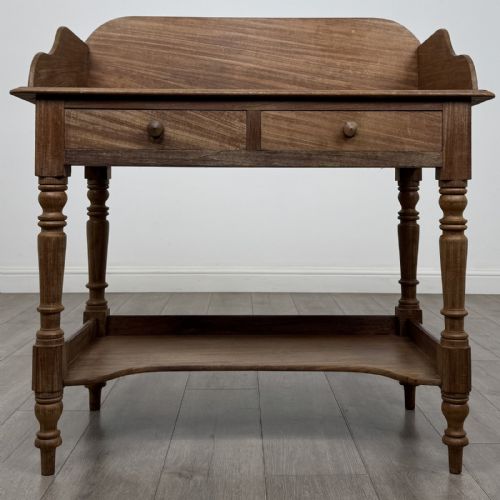
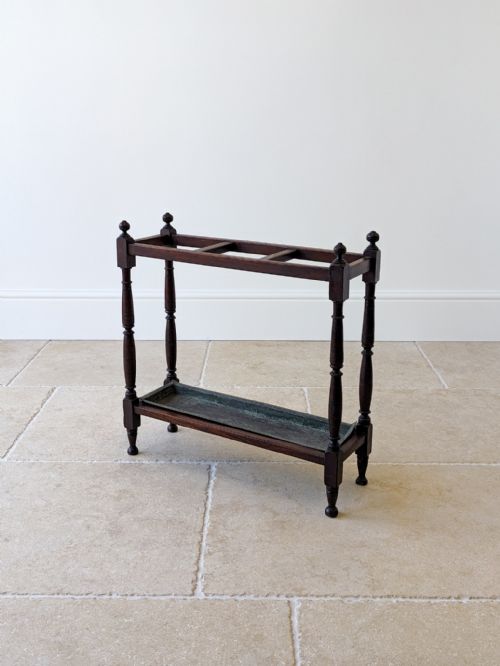

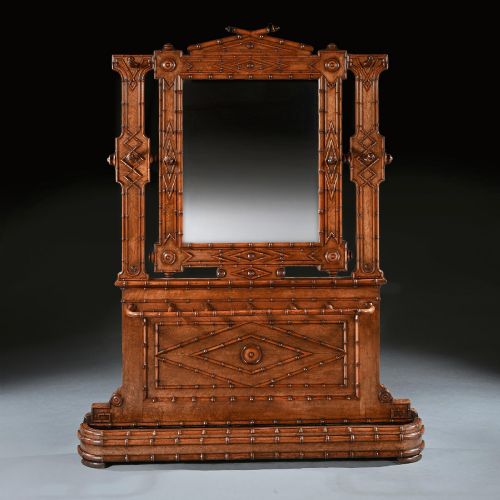
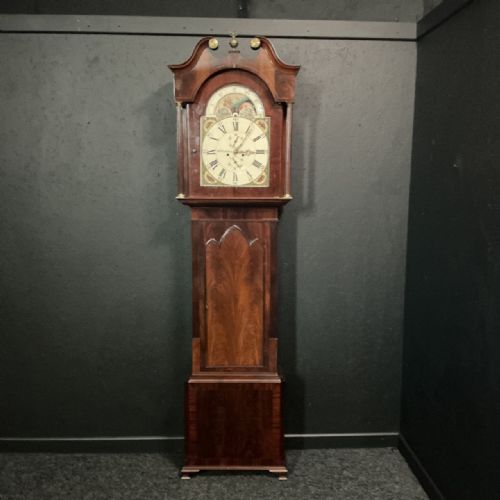


Period Hall Stand
A period hall stand welcomes guests with sturdy hooks, umbrella rings and timber frames shaped across centuries.
Period Hall Stand
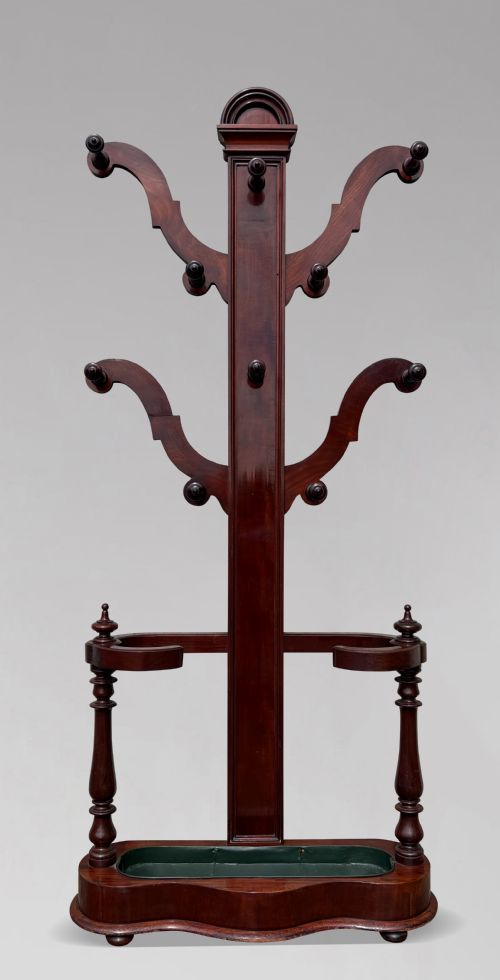
A period hall stand serves as the primary entrance furniture for hanging coats, storing sticks and holding hats. Buyers searching this phrase will find a mix of timber frames, cast iron umbrella holders and brass hook assemblies spanning several eras.
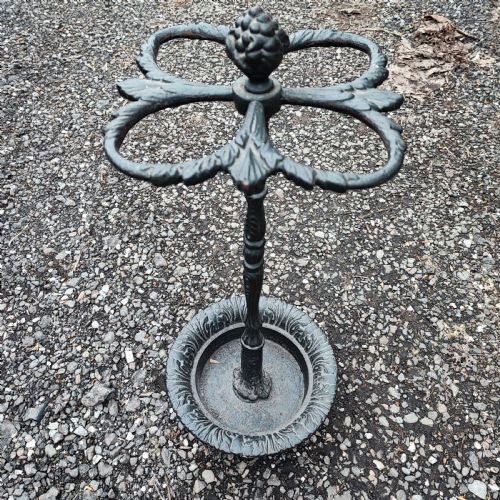
The most common versions on this page date from the Victorian period and the nineteenth century, often constructed in mahogany or durable cast iron. Alongside dedicated hall stands, related pieces like coat stands, stick stands and umbrella stands appear frequently.
Earlier examples stretch back to Regency and Georgian designs, employing rich mahogany or oak. These entrance pieces combine utilitarian function with the distinct decorative styles of their respective eras, from Gothic influences to Aesthetic Movement details.
How they were made
Makers utilised dense timbers such as mahogany and oak to construct the main uprights and back panels, ensuring stability under the weight of heavy winter garments. Joints were typically joined with traditional cabinet-making techniques to withstand daily use in busy hallways.
For umbrella and stick stands, heavy cast iron provided the necessary ballast to prevent tipping when wet items were placed inside. Foundries often marked these metal components directly into the base, utilising sand-casting methods to achieve intricate pierced designs.
Brass hooks and glass or mirrored panels were frequently incorporated into Victorian and later designs to add functional utility and reflective light to narrow entryways. Wood surfaces were finished with traditional polishing methods that highlight the natural grain of the material.
Period Hall Stand Retail Price Guide 2026
Typical asking prices for period hall stand among the pieces listed under this phrase on Sellingantiques today, from the lower quarter to the upper quarter. They describe what is for sale here now, not the wider market.
What varies in quality
Quality in a period hall stand depends largely on the integrity of the original construction and the weight of the materials used. Heavier cast iron bases and dense, well-figured mahogany indicate higher grade manufacturing compared to lighter, utilitarian alternatives.
The presence of maker marks, particularly on cast iron foundations from notable foundries, elevates a piece through documented provenance. Finer examples also retain their original brass hooks, drip pans and bevelled mirror plates rather than modern replacements.
Fischel·Falkirk Foundry·Kenrick
The Period Hall Stand Glossary
- Hall stand
- A piece of entrance furniture combining coat hooks, a mirror, and umbrella storage. These items organise hallway clutter while providing a decorative focal point.
- Stick stand
- A compact holder specifically designed for walking sticks and canes. They are frequently constructed from heavy cast iron to manage damp items.
- Cast iron
- An iron-carbon alloy poured into moulds to create rigid, decorative forms. Foundries utilised this material for its strength and ability to hold intricate patterns.
- Mahogany
- A durable, reddish-brown tropical hardwood favoured by cabinet makers. Its stability makes it suitable for tall entrance furniture.
- Gallery
- A raised wooden or metal rim around the edge of a surface. This feature prevents items from sliding off the top of the furniture.
Period Hall Stand: Frequently Asked Questions
What is a hall stand?
A hall stand is a tall piece of hallway furniture designed to hold outdoor wear. It typically includes hooks for coats, a mirror, and compartments for umbrellas and walking sticks.
Historically placed in the entrance hall of a home, it provided guests and residents with a convenient spot to deposit hats and wet gear upon entering.
How do I clean cast iron?
Cast iron elements require gentle dusting and occasional wiping with a dry cloth to prevent moisture damage. Avoid harsh chemical cleaners that might strip the original finish.
For drip pans located at the base of umbrella stands, remove them carefully to empty accumulated water and clean any metal surfaces underneath.
Where should I place it?
A hall stand belongs in an entryway, foyer, or large hallway where guests naturally arrive and shed their coats. Ensure there is enough clearance around the piece for doors and drawers to function.
Because many examples include mirrors, positioning them opposite a light source helps brighten darker corridors.
Are these pieces original?
The listings on this page span several centuries, including Victorian, Regency, and Georgian periods. Each piece reflects the manufacturing techniques and material availability of its specific era.
Buyers should examine the timber, fixings, and overall construction to understand the age and authenticity of the item.