










Period Glassware
Period glassware brings tactile Georgian and Regency weight to the table, offering drinking vessels and display pieces shaped by centuries of hand-crafting.
Period Glassware
Period glassware centres on drinking vessels and table items originating from the eighteenth and early nineteenth centuries. Buyers searching for period glassware most frequently encounter wine glasses, port glasses, and ale glasses alongside larger vessels like rummers, celery vases, and finger bowls.
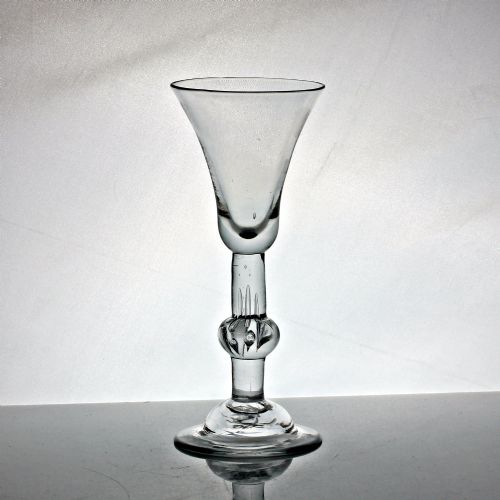
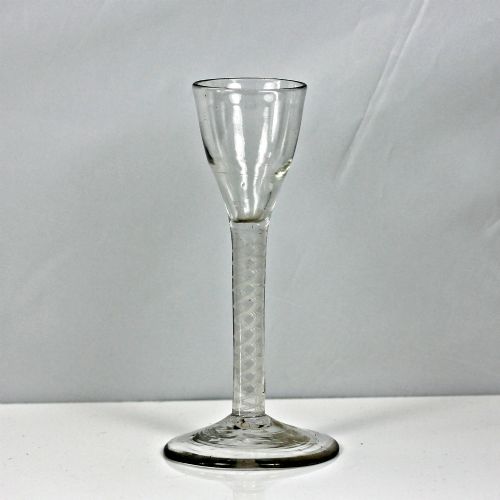
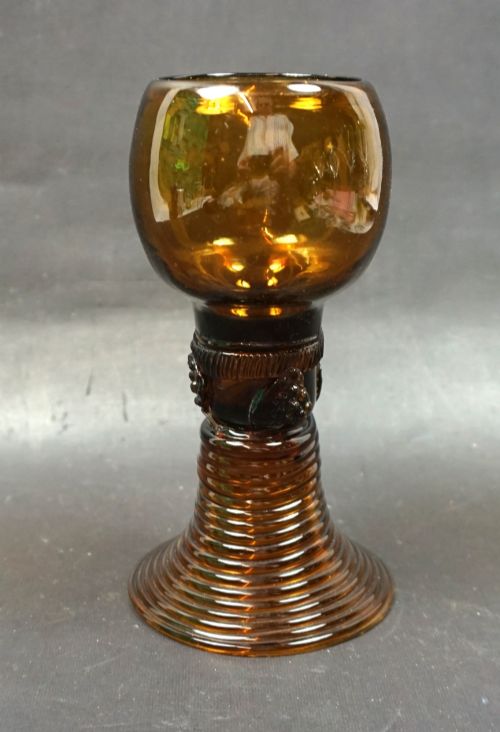
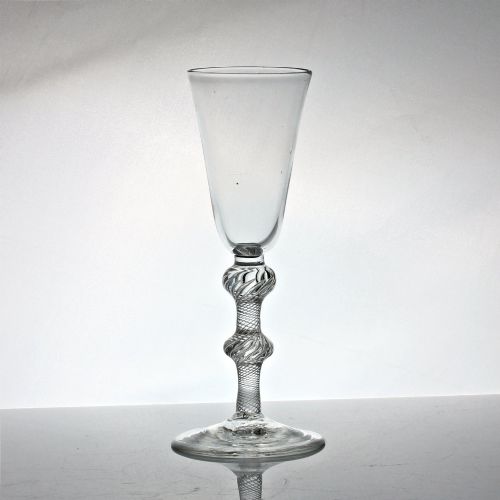
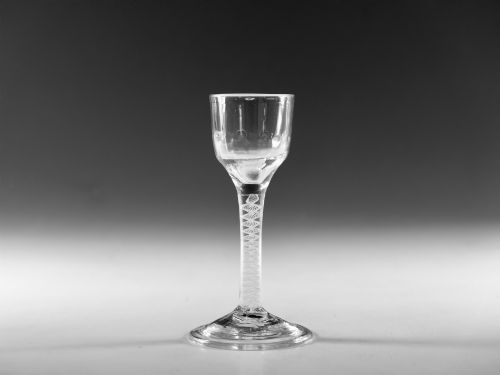
The styles span Georgian baluster and balustroid forms, intricate opaque and air twist stems, and later Regency cut crystal designs. German Baroque influence also appears through coloured roemers with coiled feet.
Most examples hail from English workshops, with occasional Irish and continental European pieces shaping the wider selection. Forms range from slender dwarf ale glasses and gin glasses to wide bowls and miniature patch stands.
Materials and construction
Makers utilised lead crystal, lead glass, and clear glass to achieve the brilliant refractive clarity characteristic of these drinking vessels. Hand-blown lead glass formed the basis for lighter baluster stems, air twists, and opaque twist threads encased within the glass.
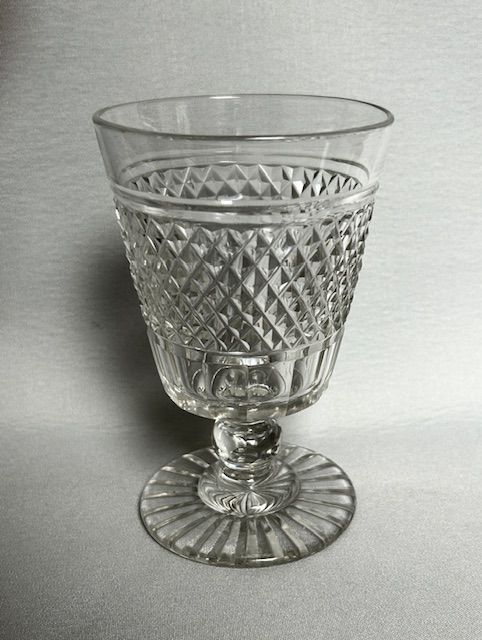
Surface decoration relied heavily on cutting techniques, producing hobnail patterns on heavy rummers and celery vases. Enamel work and opaque enamel added coloured motifs to select pieces, while natural variations arose from hand-blowing methods.
Period Glassware Retail Price Guide 2026
Typical asking prices for period glassware among the pieces listed under this phrase on Sellingantiques today, from the lower quarter to the upper quarter. They describe what is for sale here now, not the wider market.
Listings feature lead crystal, clear glass, and hand-blown lead glass shaped into eighteenth-century baluster stems and nineteenth-century cut crystal.
Assessing quality and form
Quality rests upon the balance of the vessel, the clarity of the metal, and the precision of the stem formation. Superior examples display clean air twists or opaque enamel threads without distortion, alongside well-proportioned bowls and stable folded or domed feet.
The crispness of cut facets on Regency rummers and vases separates finer pieces from softer, worn work. Colour depth in green, amber, and peacock blue vessels also defines the upper tier of decorative output.
The Period Glassware Glossary
- Baluster stem
- A heavy, swelling stem shape reminiscent of architectural balusters, common in early eighteenth-century English drinking vessels. It gives the glass a reassuring heft in the hand.
- Opaque twist
- A stem decoration formed by drawing white or coloured enamel glass rods into threads inside a clear stem. These threads are then twisted into spiral patterns.
- Air twist
- A stem featuring elongated internal bubbles drawn into spiral patterns during the blowing process. This technique creates a delicate optical effect within clear lead glass.
- Roemer
- A continental European drinking vessel, typically of green or amber glass, featuring a rounded bowl and a distinctive coiled foot. German makers produced these heavily during the eighteenth century.
- Celery vase
- A tall decorative vessel on a foot, used on Georgian dining tables to hold stalks of celery. They frequently feature deep cut crystal patterns.
- Pontil mark
- The rough scar left on the base of a hand-blown vessel where the iron rod was detached. Its presence confirms traditional manufacture before mass-grinding became standard.
Period Glassware: Frequently Asked Questions
What is an opaque twist?
An opaque twist is a stem decoration created by enclosing white or coloured enamel glass threads inside a clear glass rod and twisting them into a spiral.
Craftsmen perfected this technique in the mid-eighteenth century to catch the light on formal dining tables.
How do I date a Georgian wine glass?
Dating relies on combining the bowl shape, stem construction, and foot style, such as folded rims or domed bases. Earlier pieces often feature heavy baluster stems, while later decades favoured air and opaque twists.
Handling the glass also reveals the weight and texture of the lead metal typical of specific periods.
What is a rummer?
A rummer is a robust, large-bowled drinking glass designed for ale, rum, or punch during the Georgian and Regency eras. They frequently feature heavy cut decoration around the lower bowl.
Their sturdy proportions made them popular in both homes and public houses.