



Period Fusee Clock
A period fusee clock brings precise mechanical engineering and rich timber or gilt metal into a room, offering dependable timekeeping driven by a spring and chain.
Period Fusee Clock
A period fusee clock encompasses both bracket clocks and wall-hung drop-dial timepieces, spanning the Georgian, Regency, and mid-twentieth century eras. These timepieces were designed for domestic or institutional use, relying on a clean gear train rather than a striking train.
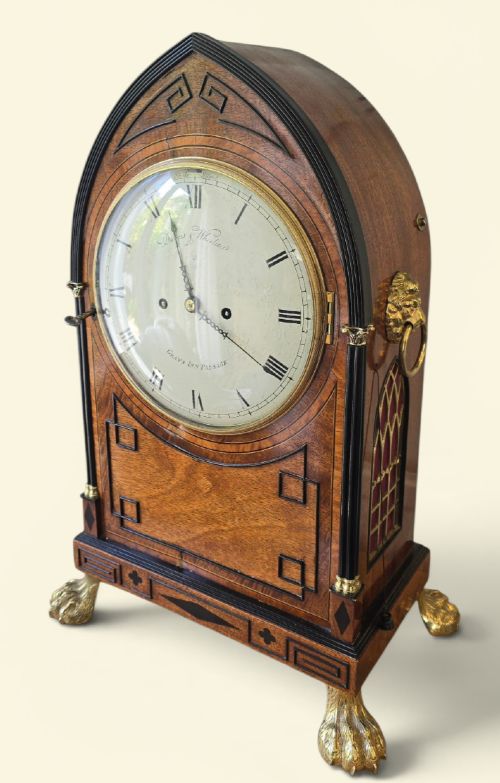
The most common form on this page is the mahogany bracket clock or the drop-dial wall clock with a wooden dial, frequently originating from London makers. Alongside these timber cases, French and English gilt bronze, ormolu, and patinated bronze mantel models appear with figural details.
Makers such as Desbois and Wheeler, Taylor, William Hardy, FB Adams, Baetens, and Fatton Eleve de Breguet represent the standard of workmanship found within this group. Dating ranges from the early nineteenth century down to a 1940 RAF dial wall clock.
Materials and construction
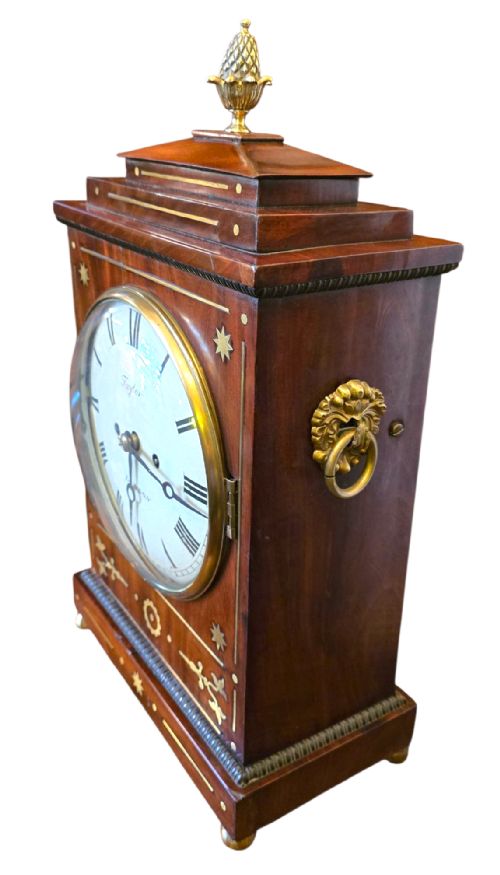
Cases utilise dense hardwoods like mahogany and ebony, frequently enhanced with brass inlay or carved architectural details such as lancet and chamfer tops. Metal models combine cast brass, gilt bronze, patinated bronze, and ormolu to create contrasting surface textures.
The movement relies on a fusee cone and a chain or cord to equalise the decreasing power of the mainspring as it unwinds. Dials are fashioned from painted enamel or wood, protected behind glazed bezels and brass bezels.
Period Fusee Clock Retail Price Guide 2026
Typical asking prices for period fusee clock among the pieces listed under this phrase on Sellingantiques today, from the lower quarter to the upper quarter. They describe what is for sale here now, not the wider market.
Listings span mahogany, brass, glass, enamel, gilt bronze, patinated bronze, ormolu, and ebony across Georgian, Regency, nineteenth century, and nineteen-forty periods.
Distinctions in craftsmanship
Quality separates through the crispness of the cast ormolu and gilt bronze mounts, where finely chased details on figural elements remain sharp and well-defined. In wooden cases, the depth of the mahogany grain and the precision of the brass inlay distinguish finer workshop output.
The sophistication of the movement and the reputation of the signing maker dictate the standing of the piece. Signed dials from notable London workshops reflect a higher tier of horological production than unsigned domestic timepieces.
Desbois and Wheeler·Taylor of London·William Hardy London·FB Adams London·Baetens London·Fatton Eleve de Breguet London
The Period Fusee Clock Glossary
- Fusee
- A conical pulley used in a clock movement to maintain even power as the mainspring unwinds. This mechanism ensures consistent timekeeping across the duration of the wind.
- Bracket clock
- A portable clock designed to sit on a bracket or furniture surface. They typically feature carrying handles and glazed side panels.
- Drop-dial wall clock
- A wall-mounted clock with a circular dial positioned above an extended wooden case. This form was common in offices and public spaces.
- Ormolu
- Finely ground high-carat gold applied to a bronze base through mercury amalgamation. It yields a rich, golden surface texture characteristic of Regency and Empire pieces.
- Lancet top
- A pointed, gothic arch shape used to crown the top of a clock case. It appears frequently on Georgian bracket clocks.
Period Fusee Clock: Frequently Asked Questions
How does a fusee movement work?
A fusee movement uses a conical pulley connected to the mainspring by a fine chain. As the spring loses tension, the chain pulls on a wider part of the cone to maintain consistent torque.
This clever engineering prevents the clock from running fast when fully wound and slow as it runs down.
Where were bracket clocks placed?
Bracket clocks were made to be portable and sat upon wooden wall brackets or heavy furniture surfaces in principal rooms. Their side panels often featured frets so the strike or tick could be heard.
They moved easily from room to room depending on where the household gathered.
How do I identify a Regency clock?
Regency clocks often display rich mahogany cases, brass inlay, and classical gilt bronze or ormolu mounts. Dial designs tend toward clean painted white enamel or dark wood.
The influence of French Empire design also appears in figural motifs like animals and trees.
What is a drop-dial wall clock?
A drop-dial wall clock combines a round dial at the top with a short vertical wooden case beneath it. This shape protected the pendulum and weight or fusee drop.
They were practical timepieces for hallways, offices, and domestic spaces.