

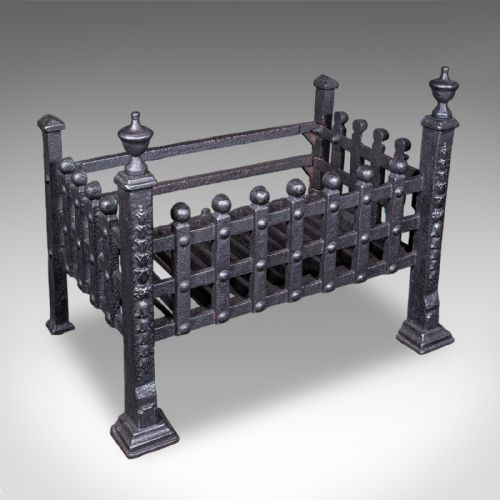


Period Fireplace Basket
These period fireplace baskets bring warmth and architectural character to a hearth, spanning Georgian elegance through to Arts and Crafts simplicity.
Period Fireplace Basket
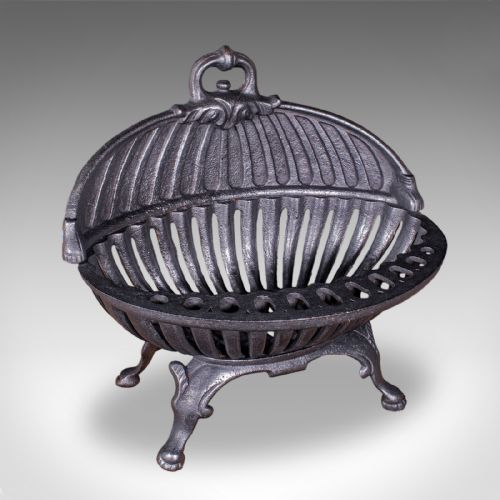
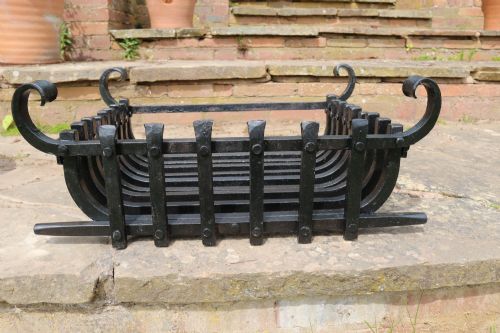
A period fireplace basket serves as the functional hearth centrepiece for burning solid fuel, appearing in various formats from hob grates to free-standing log baskets. When you search for period fireplace basket, you encounter robust structures designed to hold coal or wood safely within an open hearth.
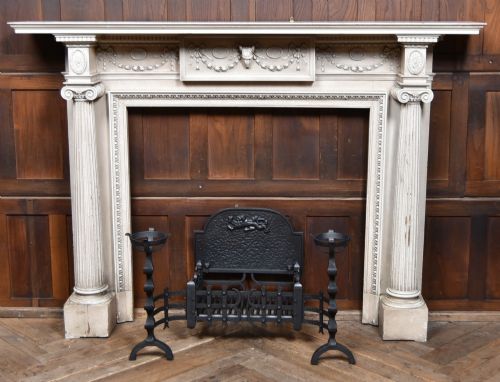
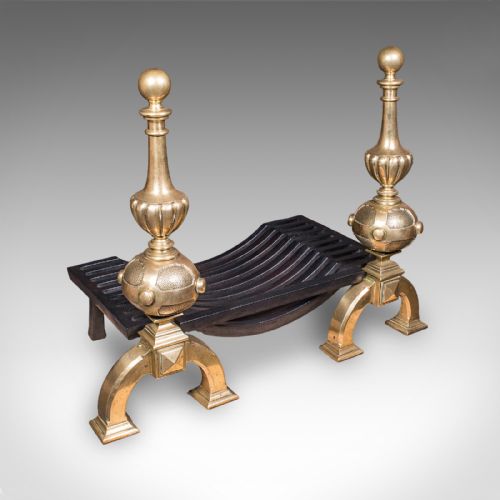
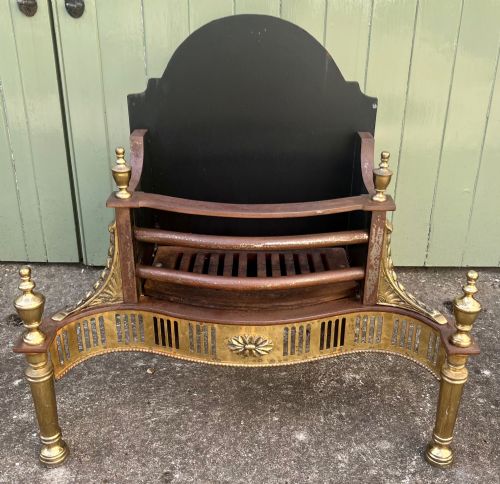
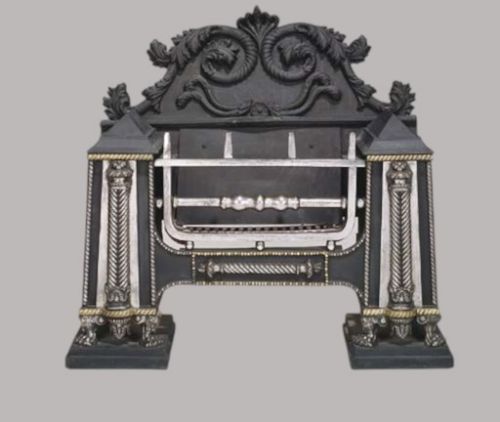
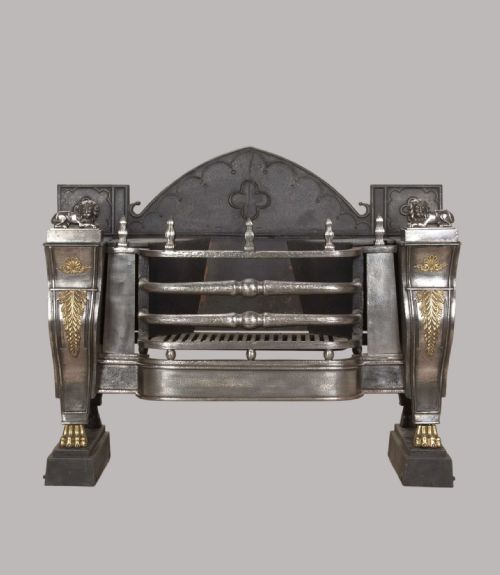
The pieces on this page span the Georgian, Regency, and Victorian eras, alongside later Arts and Crafts and 1930s interpretations. You meet classic hob grates alongside heavier register grates, log baskets, and complete hearth sets equipped with andirons and fire backs.
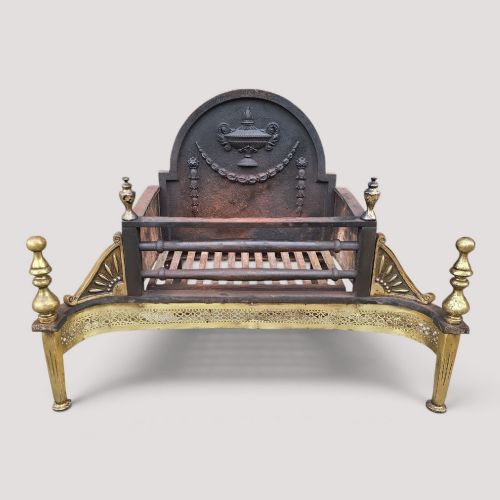
Many examples incorporate decorative back plates, brass ornamentation, and fenders to complete the fireside arrangement. These iron and brass units range from restrained neoclassical designs to robust industrial forms.
Assessing quality in hearth furniture
Quality reveals itself in the weight and thickness of the ironwork, where heavier castings and substantial wrought iron bars indicate superior durability. Finer pieces display crisp detailing in neoclassical brass mounts or hand-forged scrollwork rather than generalized mass-produced moulding.
The integrity of the construction, from tight joints to well-preserved firebricks, separates everyday utility items from finer decorative examples. A well-balanced proportion and harmonious combination of brass and iron distinguish the more considered designs.
Period Fireplace Basket Retail Price Guide 2026
Typical asking prices for period fireplace basket among the pieces listed under this phrase on Sellingantiques today, from the lower quarter to the upper quarter. They describe what is for sale here now, not the wider market.
Several baskets include mulling andirons, quietly prepared for the historical art of warming spiced ale by the fire.
The Period Fireplace Basket Glossary
- Hob grate
- A type of fireplace grate featuring raised side platforms flanking the central fire basket, often used for simmering kettles. These units typically date from the Georgian and Regency periods.
- Andiron
- A horizontal support raised on legs, used in pairs to hold logs in an open fireplace. They often accompany fire baskets and register grates.
- Register grate
- A framed fireplace insert incorporating a movable flap or damper to control the draught up the chimney. They became common in the nineteenth century for improving heating efficiency.
- Fire back
- A heavy iron plate placed against the rear wall of a fireplace to protect the masonry and radiate heat into the room. They frequently feature cast armorial or classical motifs.
- Fender
- A low metal guard placed on the hearth in front of a fireplace to contain rolling embers and protect the floor covering.
Period Fireplace Basket: Frequently Asked Questions
How do I choose the right size fire basket?
Measure the width, depth, and height of your fireplace opening carefully, allowing adequate clearance around the sides and back for safety and airflow. Compare these dimensions against the basket's footprint and fire box capacity.
Keep in mind that heavier grates require solid hearth support and sufficient clearance from combustible surrounds. Consulting a professional installer ensures the piece fits both your opening and your chimney's requirements.
Can I burn real wood in these baskets?
Many of these pieces are designed for solid fuel, but you must inspect the condition of the iron and any firebrick linings before lighting a fire. Some decorative or restored grates serve better for display or use with gas effect fires.
Check the thickness of the metal base and bars to ensure they can handle thermal shock. If in doubt, restrict use to seasoned logs in moderate amounts.
How do I clean cast iron and brass?
Remove surface soot and ash using a soft brush or dry cloth, avoiding harsh chemical cleaners that strip historical patination. Lightly apply specialised grate polish or oil to cast iron to maintain its dark protective finish.
Polish brass components gently with a suitable metal cleaner, taking care not to let residue stain the surrounding iron. Regular, gentle maintenance preserves both the metal and the decorative detail.
What is the difference between Georgian and Victorian grates?
Georgian and Regency grates often display refined neoclassical lines, crisp brass detailing, and balanced proportions inspired by classical architecture. They tend to emphasise elegance alongside utility.
Victorian pieces frequently feature heavier cast iron construction, more ornate surface decoration, and industrial innovations like the register grate. They reflect changing manufacturing capabilities and a taste for robust, substantial hearth furnishings.