

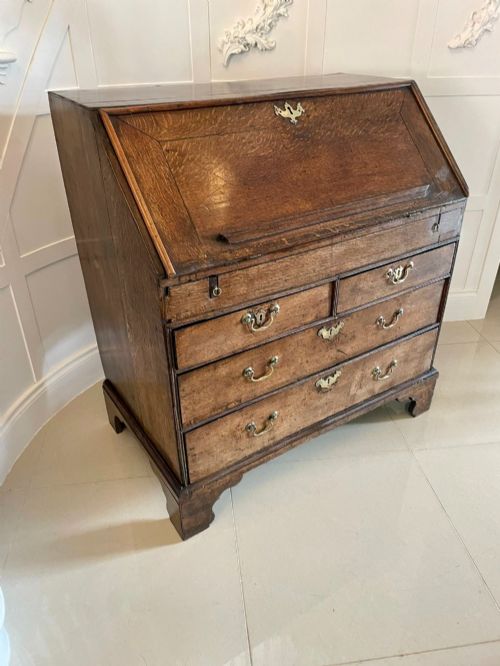
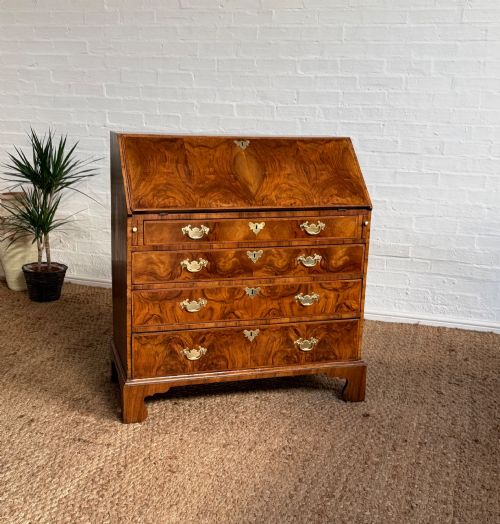
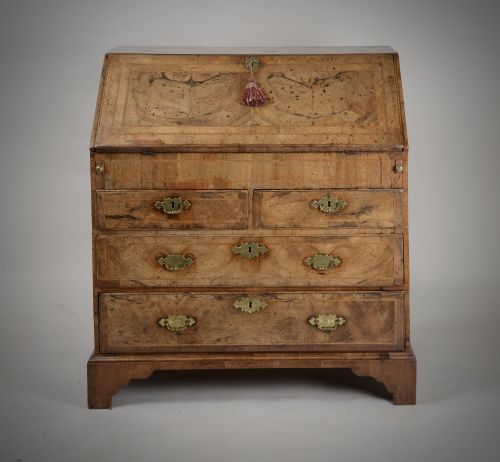
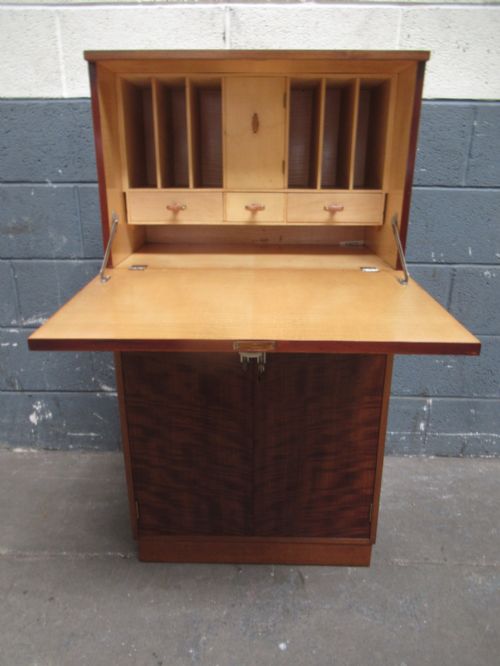






Period Fall Front Bureau
A period fall front bureau offers a fitted workspace that conceals letters and ledgers behind a hinged slope.
Period Fall Front Bureau
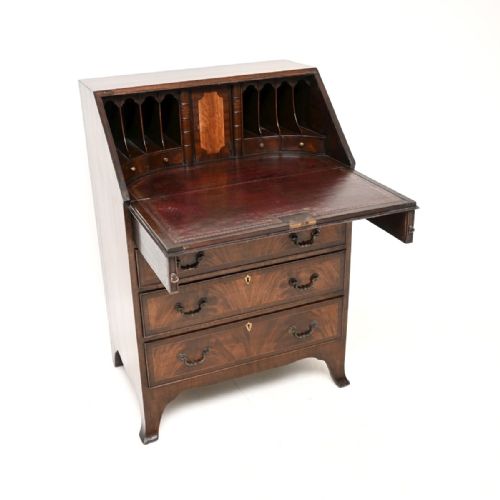
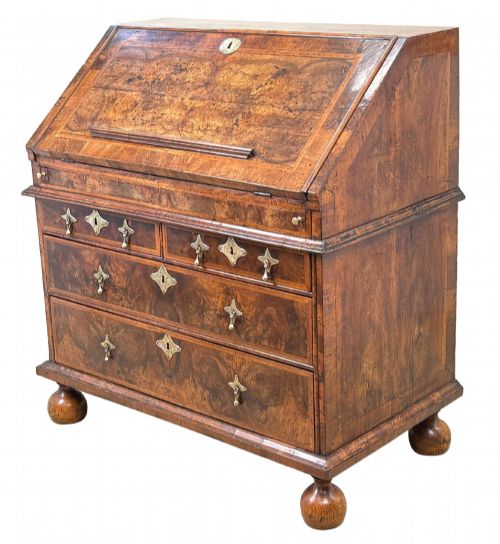
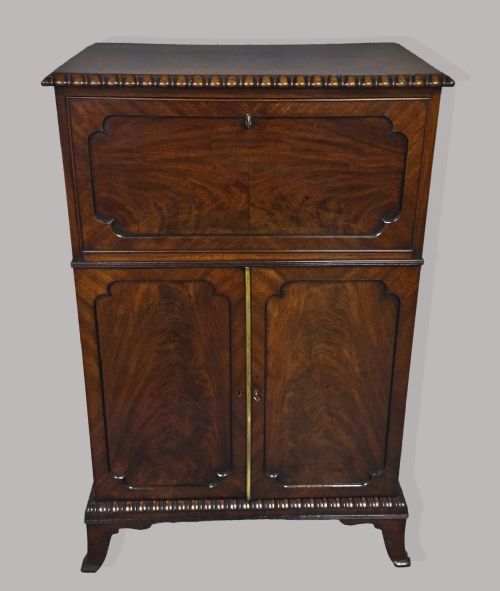
A period fall front bureau provides a private writing surface that folds down from a vertical cabinet. These forms span several centuries, appearing in oak, walnut, and mahogany.
The selections available here range from early oak and walnut examples of the seventeenth century through to Georgian and Regency designs. Most pieces on this page belong to the Georgian and eighteenth century periods, often featuring fitted internal drawers and pigeonholes.
Makers utilised various timber grains, including burr walnut and figured mahogany, whilst some iterations incorporate glass doors in bookcase upper sections. Collectors encounter everything from compact table top versions to large bureau bookcases.
How they were made
Cabinet makers built these desks using solid timbers like oak and mahogany, or applied veneers of walnut and satinwood over secondary woods. Brass hardware, including handles and escutcheons, secures the drawers and fall fronts.
Writers required durable surfaces, leading craftsmen to inset leather panels into the folding writing flaps. Interiors frequently received intricate internal compartments alongside secret drawers.
Period Fall Front Bureau Retail Price Guide 2026
Typical asking prices for period fall front bureau among the pieces listed under this phrase on Sellingantiques today, from the lower quarter to the upper quarter. They describe what is for sale here now, not the wider market.
Many bureau interiors contain hidden sliding panels that only release when you press a secret internal spring.
What varies in quality
Timber selection dictates the visual weight of the piece, with figured veneers and burr walnut commanding attention for their intricate grain patterns. The complexity of the interior joinery, such as shell carvings or removable compartments, separates standard examples from finer commissions.
Proportion and scale also define the standing of a desk, as smaller proportions and untouched patination indicate superior original preservation.
Giles Grendey·Gillows
The Period Fall Front Bureau Glossary
- Fall front
- The hinged writing flap that drops down to form a horizontal desk surface. When closed, it conceals the internal compartments.
- Escritoire
- A writing cabinet, often associated with the late seventeenth century, featuring a fall front or dropping flap. These pieces frequently incorporate numerous internal small drawers.
- Bureau bookcase
- A tall cabinet combining a sloping writing desk below with shelving enclosed by doors above. Some versions utilise mirrored glass within the upper door panels.
- Patina
- The surface sheen and colour developed by wood and polish over centuries of handling and age. Original patination remains a key indicator of untouched condition.
- Secretaire
- A cabinet or desk designed for writing, sometimes housing a fitted drawer that pulls out and drops open to reveal a writing space.
Period Fall Front Bureau: Frequently Asked Questions
What is a fall front bureau?
A fall front bureau is a writing desk featuring a hinged flap that pulls down to reveal internal compartments and a flat writing surface. When closed, the slope stores papers upright out of sight.
These desks evolved from simple box forms into sophisticated cabinetry during the seventeenth and eighteenth centuries, serving both domestic and professional needs.
How do I date a walnut bureau?
Walnut was predominant from the late seventeenth century through the reign of Queen Anne and the early Georgian period. Construction methods, such as the thickness of drawer linings and the presence of cross-banding, help determine the decade.
Early examples often display feather banding and rich figuring, whereas later pieces shifted towards mahogany as the preferred cabinet timber.
Where were bureau bookcases used?
Bureau bookcases stood in libraries, parlours, and private studies where owners managed correspondence and stored bound volumes. The upper bookcase section kept reference books protected behind wooden or mirrored doors.
These taller forms required substantial ceiling height and anchored the room as primary pieces of case furniture.
How do I care for antique timber?
Maintain antique oak, walnut, and mahogany by keeping them away from direct sunlight and sudden humidity shifts. Regular dusting with a soft cloth preserves the historic surface.
Avoid modern silicone polishes, relying instead on traditional wax applied sparingly to nourish the grain without buildup.